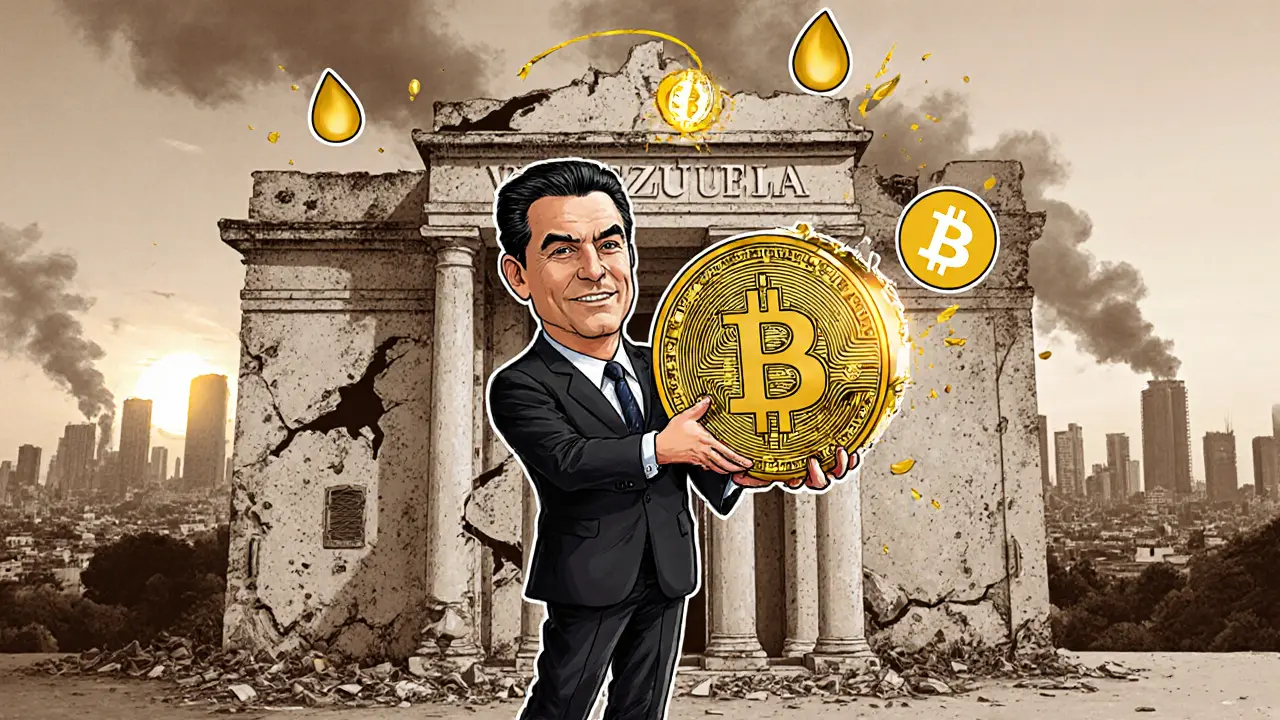
Venezuela Cryptocurrency Sanctions Evasion: How Crypto Is Used to Bypass Restrictions
When talking about Venezuela cryptocurrency sanctions evasion, the practice of using digital assets to skirt U.S. and international financial restrictions. Also known as Venezuelan crypto workarounds, it combines state‑driven policy, private actors, and offshore services. The core challenge is that U.S. sanctions, enforced by OFAC, prohibit any direct dealings with designated Venezuelan entities. Yet the border‑less nature of blockchain lets users move value without a traditional bank, turning a legal blockade into a technical cat‑and‑mouse game.
Key Players and Tools Behind the Evasion Game
The ecosystem revolves around a handful of critical entities. First, cryptocurrency, especially privacy‑focused coins and DeFi protocols, provides the raw medium for value transfer. Second, blockchain analytics platforms such as Chainalysis or Elliptic act as the eyes of regulators, tracing transaction patterns, wallet clustering, and exchange activity. Third, the Venezuelan government leverages state‑backed tokens (like the Petro) and partnerships with foreign miners to create sanctioned‑proof channels. Finally, financial crime compliance teams at exchanges and custodians serve as the gatekeepers, deciding whether to block or allow suspicious flows. These entities form a web of cause‑and‑effect. Venezuela cryptocurrency sanctions evasion encompasses illicit cross‑border transfers, which requires sophisticated blockchain analysis tools to detect. U.S. sanctions influence Venezuela's crypto strategies by pushing the regime toward privacy coins and peer‑to‑peer swaps. Blockchain analytics influences compliance decisions, forcing exchanges to adopt stricter KYC procedures. The interaction between the Venezuelan government and private miners creates a feedback loop: more mining capacity leads to higher on‑ramps, which in turn attracts tighter enforcement from financial crime compliance units.
Understanding this landscape helps you spot the real‑world impact. You’ll see how illicit actors mask source of funds, how legitimate users get caught in the crossfire, and why some exchanges quietly delist Venezuelan tokens while others double down on DeFi bridges. Below, the collection of articles breaks down each piece: from token‑specific risk profiles (like the BEP‑20 WTEC token) to broader regulatory guides (such as Malta’s crypto licensing) and practical how‑tos on reporting scams or navigating airdrops. Together they give you a practical toolbox—whether you’re a compliance officer, an investor, or a curious follower of geopolitics—so you can navigate the fast‑moving world of sanctions evasion with a clearer picture of the players and the technology that fuels it.