Risk-Based Approach in Crypto: How Regulations Shape Your Trades
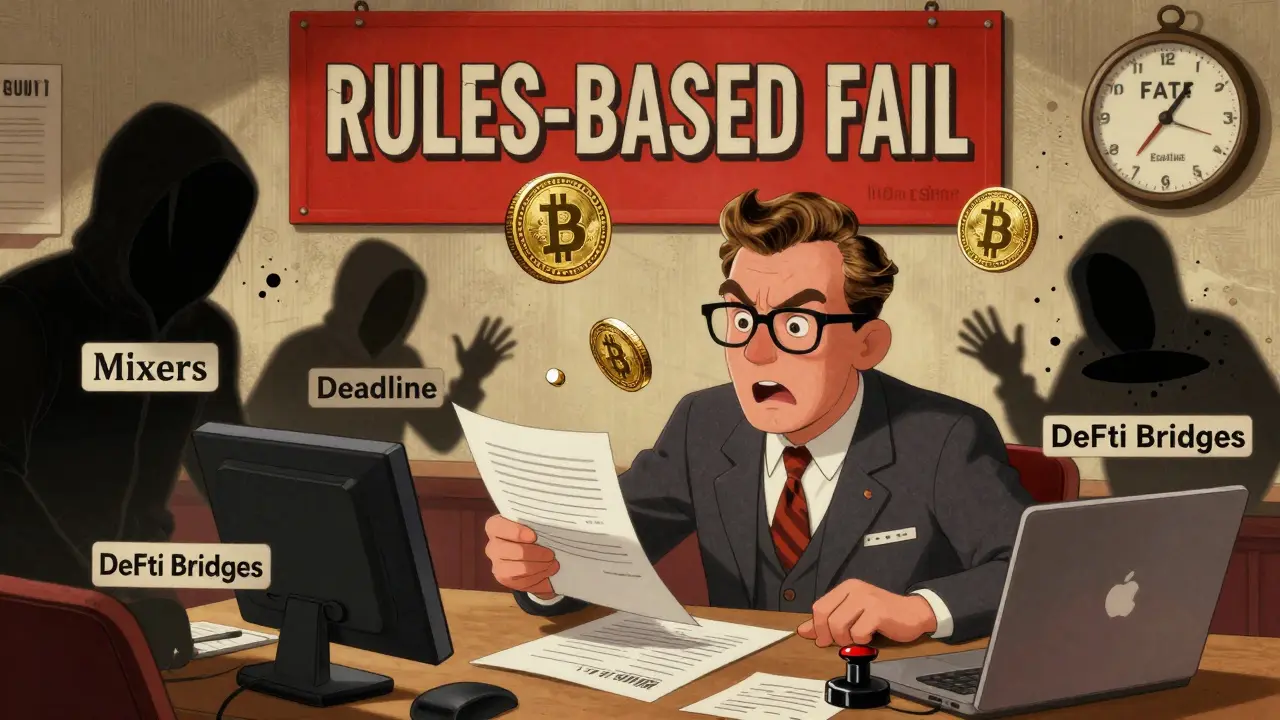
When you hear risk-based approach, a strategy that prioritizes resources toward the most likely or damaging threats rather than applying blanket rules. Also known as risk-oriented regulation, it's how smart governments and exchanges decide where to focus their watchlists, not just who to block. This isn’t about saying ‘no’ to everything—it’s about saying ‘pay attention here’ and leaving the rest alone.
Look at Brazil’s Central Bank: they don’t ban crypto, but they cap transfers at $10,000 and force reporting. That’s a risk-based move—they know most fraud happens in big, anonymous flows, not small P2P trades. China’s different—they banned everything because they saw crypto as a threat to their digital yuan’s control. Thailand jails people for non-compliance because they’ve seen too many scams drain small investors. These aren’t random laws—they’re responses to real patterns of harm.
On the exchange side, platforms like WEEX use Proof of Reserves, a public audit proving they hold users’ assets. Also known as asset verification, it’s a direct tool of a risk-based approach—they prove they’re not running a Ponzi before users even sign up. Meanwhile, Helix Markets and DuckSwap get ignored because they offer zero transparency. No team, no audits, no history—those aren’t just risky, they’re red flags that match known scam patterns.
Even airdrops follow this logic. The SUNI and FDT drops? Zero volume, no team, no roadmap. A risk-based user doesn’t ask ‘how do I claim?’—they ask ‘why does this exist?’ And when the answer is ‘because someone wants your wallet info,’ you walk away. The KOM airdrop by Kommunitas? It ties to real launchpad activity. RACA’s drop rewarded NFT holders with proven engagement. One’s a trap. The other’s a filter.
Smart contracts on Ethereum can cost $150 during spikes. On Solana, it’s a quarter of a cent. A risk-based trader picks the chain that matches their threat level: high-value trades? Pay the fee for security. Small swaps? Go cheap. You’re not just saving money—you’re managing exposure.
And it’s not just about money. Blockchain-based digital identity systems in Estonia and Sweden let you prove who you are without handing over your entire life history. That’s risk reduction at the source—cutting fraud before it starts. Meanwhile, Indian traders moving to Dubai aren’t just avoiding taxes—they’re escaping a system where rules change overnight without warning.
What you’ll find below isn’t a list of crypto news. It’s a map of where risk lives—in regulations, in exchanges, in airdrops, in forgotten tokens. Some posts show you how to spot the traps. Others show you how to use the rules to your advantage. Either way, you’re not just learning crypto. You’re learning how to survive it.