KYC Cryptocurrency: What It Is, Why It Matters, and How It Shapes Your Crypto Experience
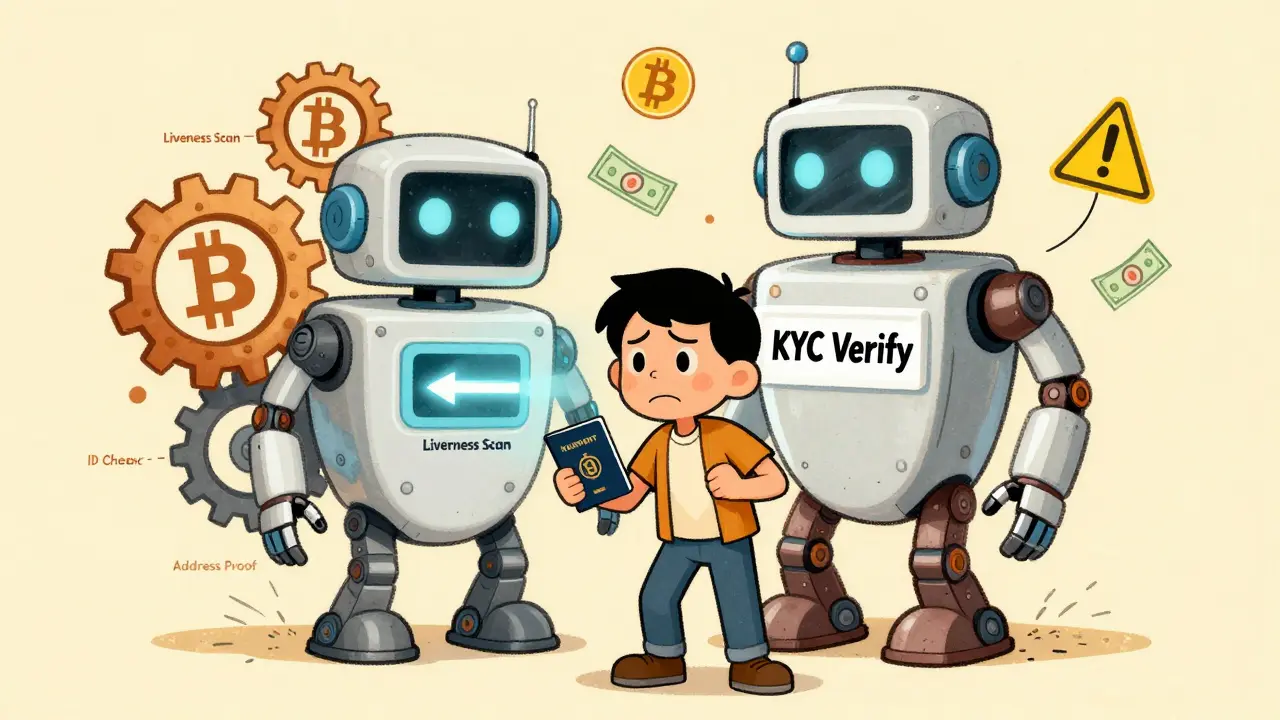
When you sign up for a crypto exchange, you’re often asked to prove who you are—that’s KYC cryptocurrency, the process of verifying a user’s identity before allowing crypto trading or withdrawals. Also known as Know Your Customer, it’s not optional on most platforms—it’s the gatekeeper between you and your coins. If you’ve ever uploaded a photo of your ID or taken a selfie with your passport, you’ve gone through KYC. It’s not just bureaucracy; it’s the reason exchanges like Kraken, WEEX, and Upbit can operate legally in the U.S., Canada, and Europe.
KYC cryptocurrency isn’t just about identity. It’s tied to crypto compliance, the set of rules exchanges follow to avoid fines, shutdowns, or criminal charges. Governments and agencies like the FATF force exchanges to track users, report suspicious activity, and block high-risk countries. That’s why Kraken restricts trading in 14 sanctioned nations, why Brazil caps transfers at $10,000, and why China bans all exchanges outright. Compliance isn’t about trust—it’s about survival. And when exchanges cut corners, they get shut down, like Digitex Futures or Artis Turba.
But KYC isn’t perfect. It doesn’t stop scams—it just moves them. Fake airdrops like FDT Frutti Dino or DeHero HEROES prey on people who skip KYC, thinking they’re getting something for free. Meanwhile, legitimate projects like SATT and KOM use KYC to verify participants and prevent bot farms. The trade-off is simple: more control means less privacy, but also fewer fake tokens and more trust in the system. If you want to trade on regulated platforms, you’ll need to hand over your ID. If you avoid KYC, you’ll likely end up on shady DEXs with no customer support, no insurance, and no recourse if things go wrong.
Some users think KYC is outdated, especially in places like Ecuador or Dubai, where crypto use is high and oversight is low. But even there, the rules are tightening. Thailand now jails non-compliant traders. India’s 30% tax pushed people overseas—not because they wanted to, but because staying meant paying more. KYC cryptocurrency isn’t going away. It’s evolving. And if you want to trade safely in 2025, you need to understand how it works, where it applies, and what happens when you ignore it.
Below, you’ll find real stories from people who’ve dealt with KYC bans, compliance crackdowns, and fake airdrops that look real until you check the fine print. Some posts explain why exchanges block users. Others show how regulators force changes. A few warn you about scams that thrive where KYC is weak. This isn’t theory—it’s what’s happening right now, to real traders, in real countries.