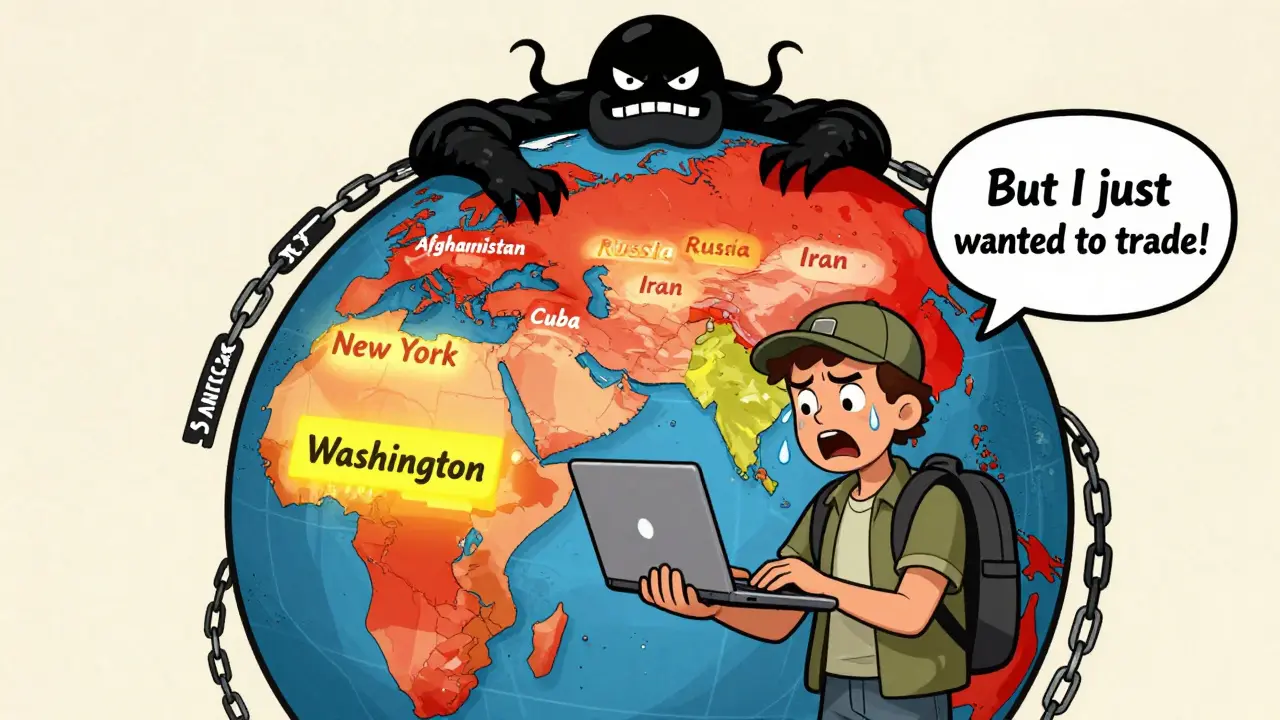
Kraken restricted countries: Where you can't use Kraken and what else is blocked
When you try to sign up for Kraken, a major cryptocurrency exchange that offers spot trading, futures, and staking with strong security. Also known as Kraken Exchange, it's one of the oldest and most trusted platforms for buying and selling crypto. But if you're in certain countries, you won't even get past the registration page. Kraken restricts users from places with strict crypto bans, heavy regulation, or political instability. It’s not random—it’s legal compliance. You won’t find Kraken in China, where all crypto exchanges are outlawed under the digital yuan push. You won’t find it in Iran, North Korea, or Syria, where U.S. sanctions block financial access. Even in the U.S., some states like New York have extra hurdles because of the BitLicense rules.
These restrictions aren’t just about Kraken being picky. They’re tied to crypto regulations by country, laws that dictate who can trade, how funds are reported, and whether crypto is even legal. For example, Brazil limits transfers to $10,000 and demands tax reporting. Thailand threatens jail time for non-compliant platforms. And in Canada, while Kraken is fully legal, users must verify their identity under strict AML rules. These rules shape what exchanges can offer—and where they can operate. Kraken pulls out of regions where the legal risk outweighs the potential users. That’s why you’ll see it available in the EU, Canada, Australia, and most of Latin America, but not in places like Sudan, Cuba, or parts of Southeast Asia with unclear or hostile crypto policies.
It’s not just Kraken. Most big exchanges—Coinbase, Binance, Bitfinex—have similar geo-blocks. But Kraken is upfront about it. No fake workarounds. No VPN-friendly signup pages. If your country’s on the list, you’re blocked. And trying to bypass it with a VPN can get your account frozen or worse. The real question isn’t just "Can I use Kraken?" but "Why is my country blocked?" The answer usually involves sanctions, tax enforcement, or outright bans. And if you’re in one of those places, you’re not alone. People in China trade crypto underground. Brazilians use P2P platforms. Indians move to Dubai to avoid 30% taxes. The crypto world moves around restrictions—but the exchanges? They follow the law.
Below, you’ll find real stories from users affected by these rules—from Chinese traders forced to abandon Binance, to Brazilians hitting transfer caps, to people in banned regions who found legal alternatives. These aren’t theory pieces. They’re lived experiences. You’ll learn where Kraken works, where it doesn’t, and what you can do if you’re stuck on the wrong side of the border.