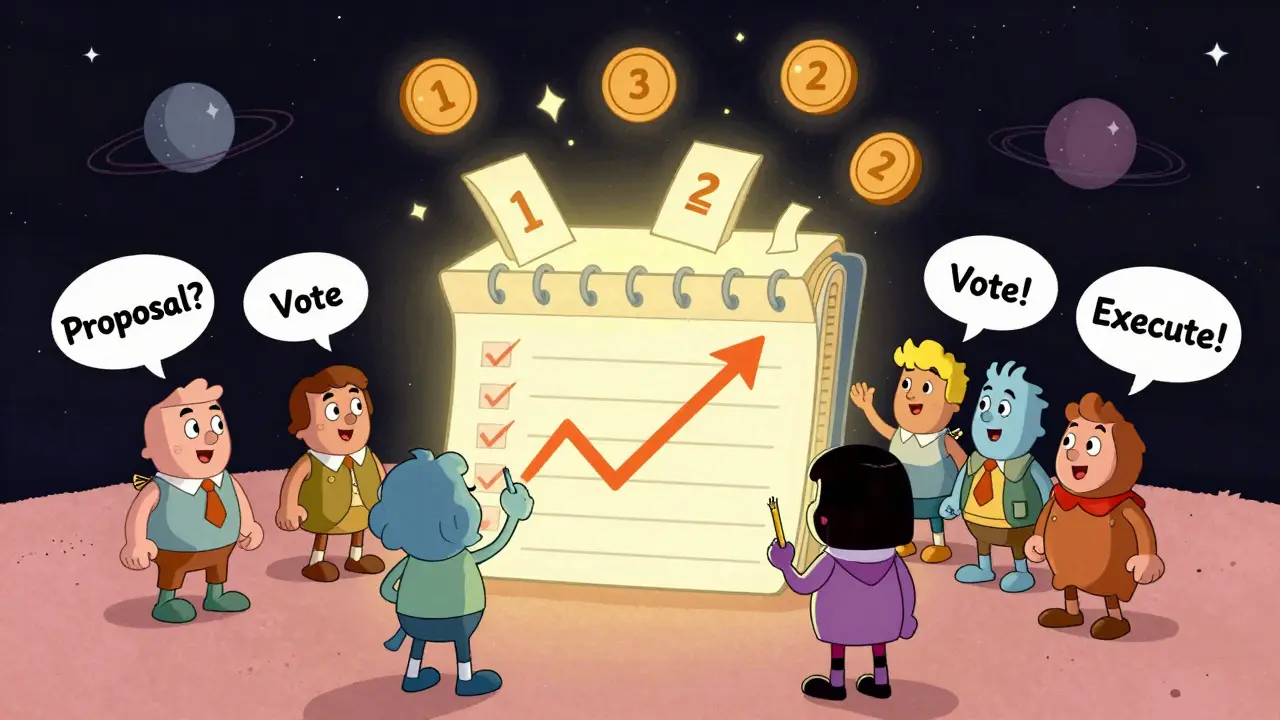
Governance Tokens – The Key to Decentralized Decision Making
When working with governance tokens, digital assets that grant holders voting rights and influence over a blockchain protocol or decentralized organization. Also known as voting tokens, they let community members steer upgrades, fund projects, and set policies.
In many projects, a DAO, a decentralized autonomous organization that runs on smart contracts issues its own governance tokens to distribute power. The tokenomics, the economic design behind token supply, distribution, and incentives of a governance token determines how many votes each participant gets and how voting power can be delegated. Effective voting mechanisms, methods such as quorum, weighted voting, or quadratic voting translate token holdings into concrete decisions.
Because governance tokens sit at the intersection of finance and community, they impact everything from treasury management to protocol security. When a DAO needs to allocate funds for a new feature, token holders vote using the same tokens they earned from early participation or airdrops. This link creates a feedback loop: strong tokenomics attract more users, which boosts voting participation, which in turn improves treasury decisions.
Many projects launch airdrops to distribute governance tokens quickly. An airdrop can spark a surge of new voters, but it also brings risk if many recipients sell immediately. Understanding the airdrop schedule, claim process, and lock‑up rules is essential before you start voting. Our guides on specific airdrops walk you through eligibility, safety tips, and the long‑term impact on token value.
DAO treasury management is another hot topic. A well‑designed treasury uses multi‑signature wallets, transparent budgeting, and regular performance metrics. Governance tokens often act as the accounting unit for these treasuries, so their supply and vesting schedules affect how much capital can be moved without breaking community trust.
When it comes to voting mechanisms, the choice matters. Simple “one token = one vote” is easy but can lead to centralization. Quadratic voting dampens the influence of whales by making each additional vote costlier. Some protocols blend both approaches, letting users delegate voting power to trusted delegates while retaining the right to override decisions.
Regulatory considerations are creeping in, too. Some jurisdictions treat governance tokens as securities if they promise profits from network growth. Knowing the legal landscape helps you decide whether to hold, sell, or use a token for voting. Our compliance guides break down the latest rules in key regions.
Beyond the basics, you’ll find deep dives on token economics, case studies of successful DAO upgrades, and risk assessments for emerging governance token projects. Whether you’re a developer building a new protocol or a community member learning to cast a vote, the collection below gives you practical steps and real‑world examples.
What You’ll Find in This Collection
Below you’ll discover step‑by‑step articles on airdrop claims, tokenomics analysis, DAO treasury best practices, voting mechanism comparisons, and regulatory outlooks. Each piece is written for quick decision‑making, so you can apply the insights right away.
Ready to see how governance tokens shape the future of decentralized finance? Scroll down and explore the full set of guides—all tailored to help you understand, use, and benefit from voting power on the blockchain.