Digital Yuan: What It Is, How It Works, and Why It's Changing Global Crypto
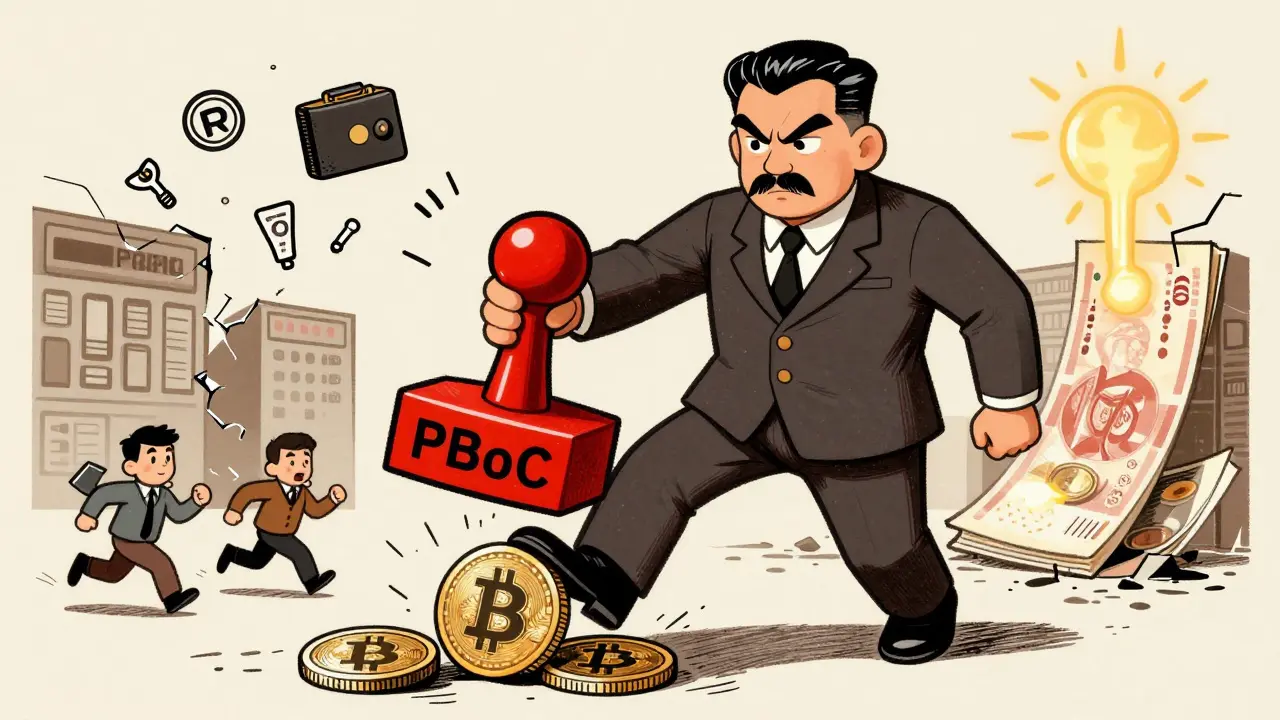
When you hear digital yuan, China's state-backed digital currency issued by the People's Bank of China. Also known as e-CNY, it's not a cryptocurrency—it's a central bank digital currency, or CBDC, a digital form of a nation’s official currency controlled by its central bank. Unlike Bitcoin or Ethereum, the digital yuan isn’t decentralized. Every transaction is tracked, recorded, and can be paused or reversed by the government. This isn’t about innovation—it’s about control.
The digital yuan isn’t just a tech experiment. It’s a geopolitical tool. China has rolled it out in over 200 cities, with over 500 million users and $100 billion in transactions since 2020. It’s built into apps like WeChat Pay and Alipay, and you can use it to pay for groceries, buses, even rent. But here’s the catch: if you’re in China, using any other crypto—Bitcoin, Ethereum, even stablecoins—is illegal. Exchanges like Binance and Coinbase are blocked. Why? Because the digital yuan is designed to replace all other forms of money, including private crypto. It gives the state full visibility into spending habits, prevents capital flight, and shuts down underground financial networks. This is why articles on TokenSummary keep pointing out that crypto exchanges are banned for Chinese residents. It’s not a policy—it’s a replacement.
The digital yuan also affects global markets. Countries watching China’s move are rushing to build their own CBDCs—Sweden’s e-krona, the European digital euro, even Nigeria’s eNaira. But none have China’s scale or enforcement power. For traders outside China, the digital yuan means tighter restrictions on cross-border crypto flows. For investors, it’s a signal: governments are moving fast to reclaim control over money. And for users? It means the days of anonymous, borderless crypto are ending in major economies. The digital yuan isn’t here to compete with Bitcoin. It’s here to make Bitcoin irrelevant inside China—and to set the standard for how money works everywhere else.
Below, you’ll find real-world examples of how the digital yuan shapes crypto policy, blocks exchanges, and forces users to adapt. From banned platforms to tax strategies, these posts show exactly what’s happening on the ground—not theory, not hype, just facts.