
China Crypto Risk Calculator
Activity Selection
Risk Level
Important: This tool estimates legal risk based on China's current policies (as of 2025) but does not provide legal advice.
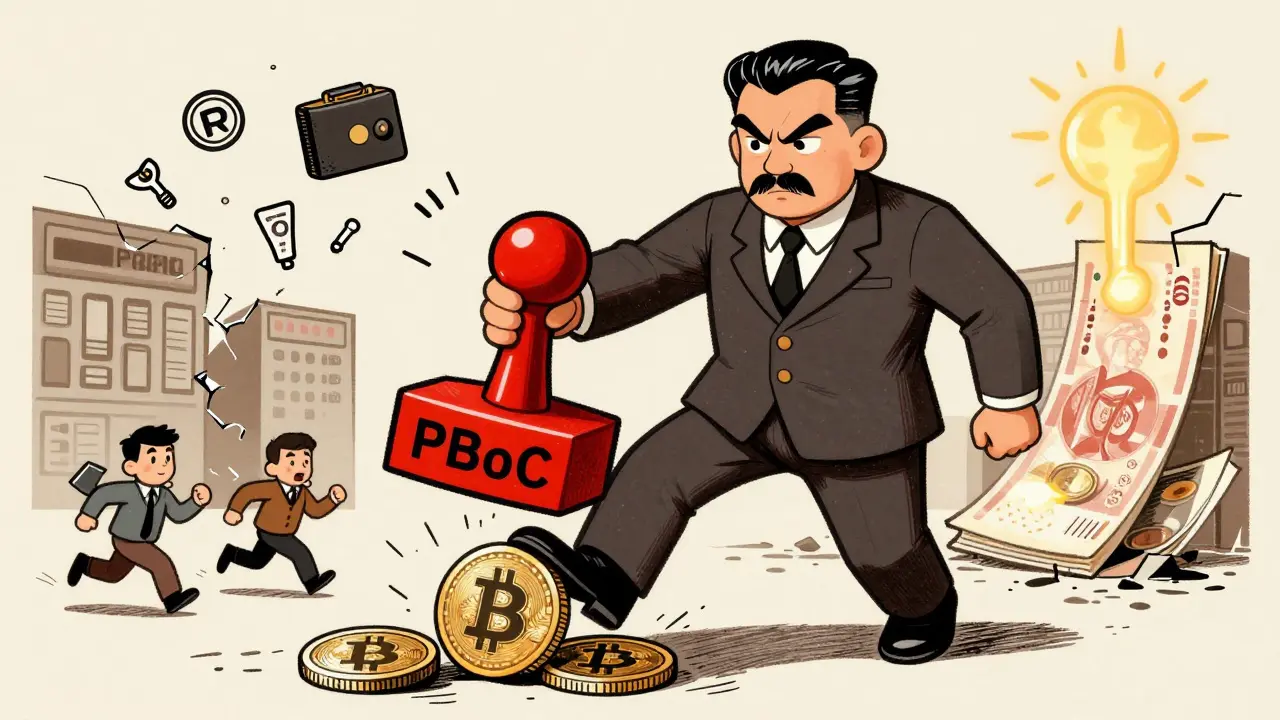
China doesn’t allow cryptocurrency trading. Not legally. Not through banks. Not on domestic exchanges. And since 2021, even using overseas platforms to buy or sell crypto if you’re in China is considered illegal. This isn’t a temporary crackdown. It’s a permanent policy shaped by control, not fear of technology.
How China’s Crypto Ban Started
China’s war on cryptocurrency didn’t begin with Bitcoin. It started with video game currencies in 2009. The People’s Bank of China (PBoC) noticed players were using virtual coins from online games to buy real goods - bypassing the yuan. That’s when they first banned digital currencies from being used as payment. It wasn’t about Bitcoin yet. It was about keeping money under state control. By 2013, Bitcoin had grown too big to ignore. The PBoC, along with other financial regulators, issued a joint notice: banks could no longer process Bitcoin transactions. Bitcoin was labeled a "special virtual commodity," not money. No legal backing. No protection. Just a risky digital item. The market reacted fast. Bitcoin dropped over 30% in days. BTCC, China’s biggest exchange at the time, stopped taking yuan deposits within days. The real turning point came in September 2017. During a Bitcoin bull run, China shut down every domestic cryptocurrency exchange. Initial coin offerings (ICOs) were declared illegal fundraising. The government said they were prone to fraud and threatened financial stability. Over 100 exchanges shut down overnight. BTCC, ViaBTC, and others either closed or moved offshore. Chinese traders didn’t disappear - they just went underground.Why China Banned Crypto - It’s Not About Technology
China doesn’t hate blockchain. In fact, President Xi Jinping called blockchain a "core technology" in 2019 and pushed for its use in supply chains, land registries, and public services. But he made it clear: decentralized crypto? Not allowed. The real reason? Control. China wants to track every yuan. It wants to stop money from leaving the country. And it wants to prevent people from bypassing its capital controls. In 2016, when the yuan weakened, Bitcoin trading in China spiked. People were buying crypto to protect their savings. That scared regulators. Crypto was becoming a way to move wealth out of China without going through banks. That’s unacceptable to a government that tightly manages its currency. The 2021 mining ban made it official. China used to control over 70% of Bitcoin’s global mining power. But mining used massive amounts of electricity - mostly from coal plants. The government called it unsustainable. They shut down mining farms in Sichuan, Inner Mongolia, and Xinjiang. Miners packed up their rigs and moved to the U.S., Kazakhstan, and Russia. But the ban wasn’t really about the environment. It was about removing any infrastructure that could support decentralized finance.What’s Still Allowed - And What’s Not
Here’s the confusing part: you can still hold Bitcoin or Ethereum in China. The law doesn’t say it’s illegal to own crypto. But you can’t trade it. You can’t use it to pay for anything. You can’t exchange it for yuan through banks. And if you run a crypto business, you’re breaking the law. The 2021 ban went further: it declared all cryptocurrency transactions illegal. That includes peer-to-peer trades, over-the-counter deals, and using foreign exchanges via VPN. The government doesn’t arrest individuals for holding crypto, but they monitor bank accounts, internet traffic, and even social media for crypto-related activity. If you’re caught using a VPN to trade on Binance or Kraken, your account could be frozen. Your bank might flag you. Your phone number could be blacklisted. Meanwhile, China’s own digital currency - the digital yuan, or e-CNY - is rolling out fast. It’s not blockchain-based. It’s not decentralized. It’s a government-controlled digital version of the yuan, tracked down to every transaction. You can’t hide it. You can’t anonymize it. And you can’t use it outside China without government approval.
How People Still Use Crypto in China
Despite the ban, crypto isn’t dead in China. It’s just hidden. Millions of Chinese users still hold crypto in hardware wallets or overseas accounts. They use VPNs to access foreign exchanges. Some trade through Telegram groups or peer-to-peer platforms like LocalBitcoins. Others set up shell companies in Hong Kong (before its 2021 crackdown), Singapore, or the U.S. to manage their holdings. Reddit threads and Chinese-language forums are full of guides on how to bypass restrictions. One common method: buy crypto overseas using a foreign bank account, then transfer the funds back to China as a "gift" or "business payment" - though that’s risky. Another: use a trusted friend abroad to buy crypto on your behalf and send you cash in person. The underground market is alive. But it’s not safe. There’s no legal recourse if you get scammed. No protection if your exchange gets hacked. And if the government cracks down harder, your assets could vanish overnight.China’s Global Influence Despite the Ban
Even with a domestic ban, China still shapes the global crypto market. Before the 2021 mining ban, Chinese companies made 80% of Bitcoin mining hardware. Companies like Bitmain and MicroBT still dominate global sales - their factories are in China, their customers are everywhere else. Even after the ban, Chinese engineers designed 90% of the ASIC chips used in mining rigs worldwide. Chinese investors still own billions in crypto through offshore accounts. Chinese venture capital firms that left the market in 2018 are now investing in crypto projects from Singapore, Dubai, and Switzerland. Chinese developers are building DeFi tools and blockchain apps for global users - just not for Chinese citizens. China’s influence is also in regulation. Countries like Russia, Iran, and North Korea watch China’s approach. Some are copying it: ban crypto, launch a state digital currency, monitor everything. China proved you can crush decentralized money without crushing innovation.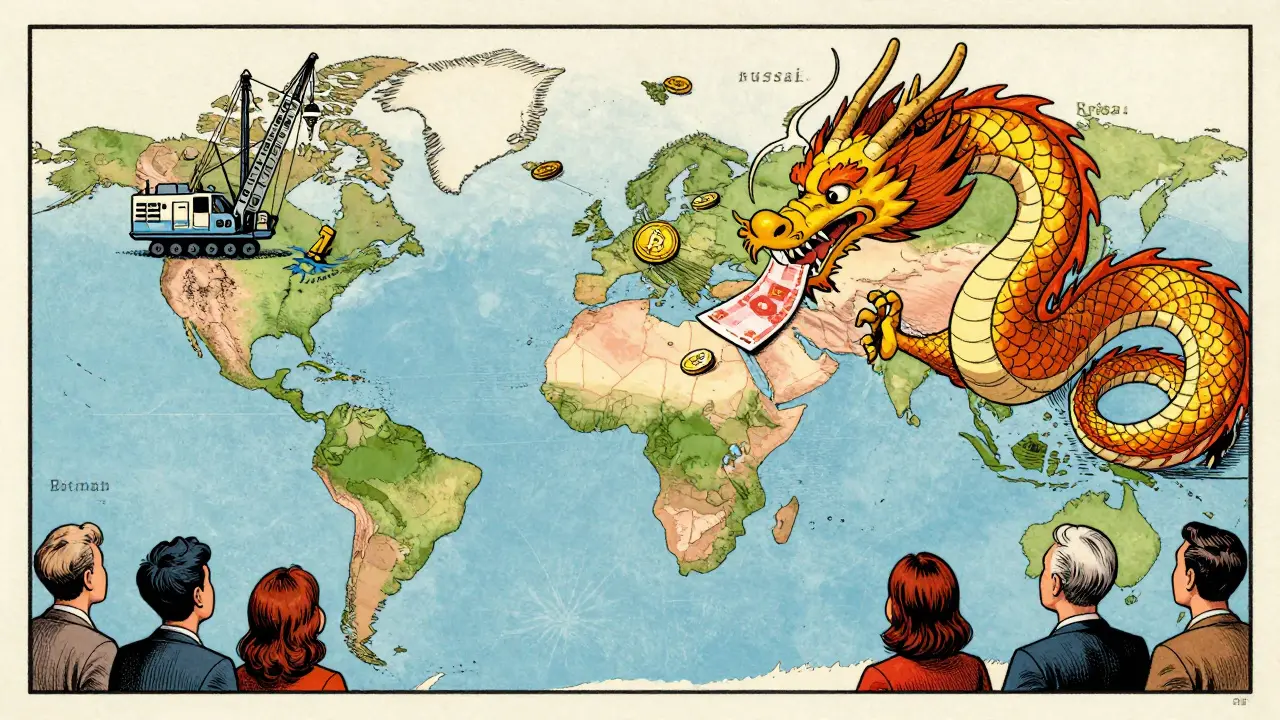
Joe West
December 4, 2025 AT 12:48China’s move makes sense if you think about it from their perspective. They’ve got over a billion people to manage, and crypto introduces chaos into a system built on control. The digital yuan isn’t just tech-it’s a tool for social stability. No more underground capital flight, no more untraceable transactions. It’s not about suppressing innovation-it’s about directing it where the state wants it to go.
And honestly? Most Chinese citizens don’t care. They just want a reliable currency. The ones who care about crypto are the wealthy, the tech-savvy, the global-minded. The rest? They’re using e-CNY to pay for street food and subway rides. That’s the real story.
miriam gionfriddo
December 5, 2025 AT 08:32OMG this is the most unhinged thing I’ve read all week. China banned crypto? So what? They also banned TikTok dances and forced people to wear masks during a pandemic. This is just another authoritarian flex. They don’t hate tech-they hate freedom. And now they’re building a surveillance state with blockchain? No. They’re building a digital prison with a fancy UI. 💀
Brooke Schmalbach
December 6, 2025 AT 16:34Let’s be real-the entire narrative around China’s crypto ban is oversimplified. Yes, control is the motive. But so is economic sovereignty. The U.S. and EU are trying to regulate crypto like a financial product. China is treating it like a national security threat. And honestly? Given their population size, capital flight risk, and banking infrastructure, their approach is more pragmatic than ideological.
Also, the fact that Chinese firms still dominate ASIC manufacturing proves this isn’t about anti-tech-it’s about anti-decentralization. There’s a difference.
rita linda
December 7, 2025 AT 09:11China’s policy is the only rational one. Western nations are clinging to this libertarian fantasy like it’s 2012. Crypto isn’t money. It’s gambling with code. And now we’re seeing the consequences-fraud, volatility, pump-and-dumps. China didn’t ban innovation. They banned financial anarchy. The digital yuan is the future. The rest of you are just screaming into the void while your central banks print trillions.
Frank Cronin
December 8, 2025 AT 12:52Oh wow. China banned crypto. Shocking. Next you’ll tell me they also banned air, water, and sunlight. Honestly, I’m impressed they didn’t outlaw thinking too. Maybe next they’ll mandate that all Bitcoin mining happens in state-approved caves with a government-appointed miner on duty. 🤡
Ben VanDyk
December 10, 2025 AT 00:39China didn’t ban crypto. They banned crypto trading. Big difference. You can still hold it. The article conflates ownership with activity. Also, the mining ban was mostly about energy, not control. Coal-powered rigs in Inner Mongolia? Yeah, that’s a climate liability. The state’s not anti-blockchain-they’re anti-waste.
jonathan dunlow
December 11, 2025 AT 18:02Let me break this down for you real quick-China’s not scared of blockchain, they’re scared of losing control over their currency. Think about it: if every person in China could move their savings into Bitcoin with a tap, the yuan would collapse overnight. That’s not paranoia-that’s economics. The digital yuan? It’s like giving the government a super-powered version of Venmo with GPS tracking on every penny. It’s terrifying… if you value privacy. But if you value order? It’s genius. And let’s not forget-Chinese engineers still build 90% of the world’s mining hardware. So yeah, they’re winning the game even while pretending to lose.
Martin Hansen
December 12, 2025 AT 15:10China’s ban is just the tip of the iceberg. The real story? The West is still pretending crypto is a financial revolution. It’s not. It’s a tax evasion tool for rich guys and a Ponzi scheme for millennials. China saw through it. They didn’t ban tech-they banned chaos. And honestly? I’m tired of people acting like China is the villain. They’re the only country with the guts to say: no, we’re not letting your decentralized fantasy destabilize our economy. Good for them.
Kenneth Ljungström
December 13, 2025 AT 01:59Man I just love how everyone’s acting like China’s the bad guy. Like, sure, their system’s authoritarian-but at least they’re not letting crypto turn into a casino where grandma loses her pension to a meme coin. I get it, freedom sounds nice. But when your currency’s backed by code instead of a central bank, you’re trading stability for vibes. And China? They’re building something that actually works for 1.4 billion people. Not everyone needs to be a degenerate crypto bro. 🤝
Tom Van bergen
December 13, 2025 AT 15:50China banned crypto because they’re afraid of decentralized systems. But they still run the mining hardware market. They still fund the devs. They still control the supply chain. So technically they’re the ones who built the thing they’re trying to kill. That’s not control. That’s irony. And also, the digital yuan isn’t a currency. It’s a loyalty card with a blockchain-shaped logo. Wake up people
Nicole Parker
December 14, 2025 AT 04:45I think what’s being missed here is the cultural context. In China, collective stability outweighs individual financial freedom. That’s not a flaw-it’s a value. In the West, we romanticize autonomy, but we also have 30% of our population living paycheck to paycheck. China’s system, however rigid, ensures that the average citizen isn’t exposed to crypto’s volatility. Maybe we’re the ones who are naive for thinking everyone should be allowed to gamble with their life savings in a decentralized experiment. The digital yuan isn’t a dystopia-it’s a safety net with a screen.
Richard T
December 15, 2025 AT 21:30It’s fascinating how China treats crypto like a public health issue. No trading? Fine. But they still let people hold it. No arrests? No problem. But they monitor everything. It’s not a ban-it’s a containment strategy. And honestly? It’s working. The underground market is thriving but contained. Meanwhile, the digital yuan rolls out to 100+ cities. That’s not a trial. That’s a rollout. And the rest of us are still arguing about whether crypto is money or not. China already solved that.
Sandra Lee Beagan
December 16, 2025 AT 22:22As someone who’s lived in both Canada and China, I can say this: the Chinese government’s approach is less about oppression and more about predictability. People here in the West think crypto = freedom. But in China, freedom = not getting your bank account frozen because you sent 5 BTC to a friend in Hong Kong. The digital yuan gives people convenience without the risk. It’s not perfect-but it’s functional. And honestly? That’s more than most financial systems offer.
nicholas forbes
December 18, 2025 AT 08:22China’s not banning crypto because they hate tech. They’re banning it because they hate uncertainty. And honestly? I get it. Imagine being responsible for the economic stability of a billion people. You don’t let random internet tokens mess with your currency. The digital yuan is their answer to chaos. It’s not evil. It’s just… efficient. And honestly? The fact that Chinese firms still make the hardware? That’s the ultimate power move.
michael cuevas
December 20, 2025 AT 06:18China banned crypto? Cool. So did the IRS. Only difference? The IRS doesn’t have 70% of the mining rigs. China didn’t ban crypto. They just made sure they own the entire supply chain. And now they’re selling the tools to the world while keeping the game to themselves. That’s not control. That’s capitalism with a side of authoritarianism. 🤷♂️
Nina Meretoile
December 21, 2025 AT 13:39It’s not about banning crypto-it’s about building something better. The digital yuan isn’t just a currency. It’s a promise: no more hidden fees, no more delays, no more middlemen. And yes, it’s tracked. But so is your Uber ride or your Amazon order. Maybe we’re the ones who are scared of transparency. China’s not trying to destroy freedom. They’re trying to make money work for everyone. And honestly? That’s kind of beautiful.
Mariam Almatrook
December 22, 2025 AT 12:40One must, with the utmost academic rigor and scholarly detachment, observe that the People's Republic of China has enacted a sovereign monetary policy predicated upon the preservation of fiscal hegemony and the elimination of extralegal capital arbitrage. The demonization of this policy as "authoritarian" is not only intellectually lazy but also a projection of Western liberal hegemony onto a civilization that has, for millennia, prioritized systemic coherence over individual financial autonomy. The digital yuan, as a centrally administered, programmable fiat instrument, represents not a dystopia, but the logical culmination of monetary evolution under a meritocratic, technocratic state. To lament its existence is to lament the inevitability of order.
Barb Pooley
December 23, 2025 AT 08:58Wait… so China banned crypto but still makes all the mining chips? That’s not a coincidence. That’s a trap. They’re letting the West use their tech while they track every transaction. And the digital yuan? It’s not a currency-it’s a spyware app for your wallet. They’re not banning crypto. They’re weaponizing it. Next they’ll be using blockchain to monitor your grocery purchases. I’m not paranoid. I’ve seen the reports.
Stanley Wong
December 24, 2025 AT 21:41I think we’re all missing the point here. China didn’t ban crypto because they’re evil or scared. They did it because they have a different definition of progress. The West wants decentralized money. China wants efficient money. One isn’t better. They’re just different paths. And honestly? The fact that their system works for 1.4 billion people means we should stop acting like their way is wrong. Maybe we’re the ones who are stuck in a fantasy. The digital yuan isn’t perfect-but it’s real. And that counts for something.