Cryptocurrency Regulations China: What’s Banned, What’s Allowed, and What It Means for Users
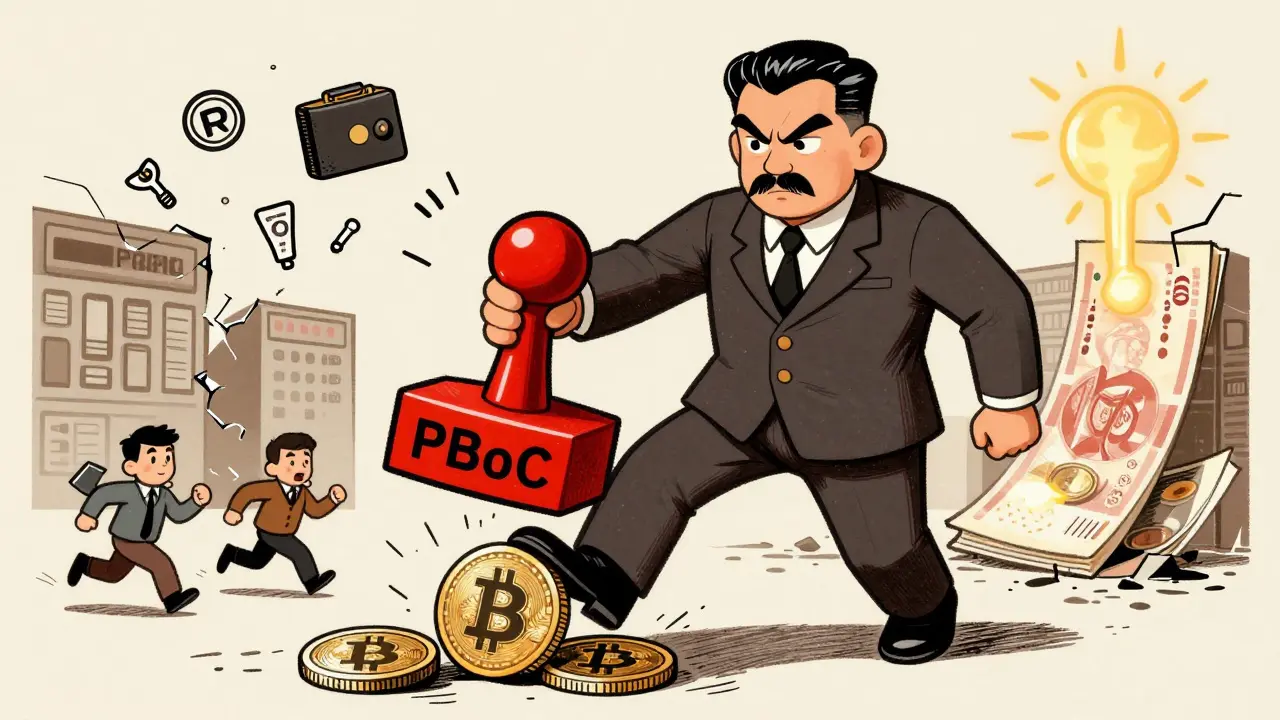
When it comes to cryptocurrency regulations China, the Chinese government’s strict stance on private digital currencies. Also known as China’s crypto ban, it’s one of the most aggressive policies in the world—no exchanges, no trading, no mining, and no access to foreign crypto platforms like Binance or Coinbase. This isn’t just a restriction—it’s a full system replacement. While most countries try to regulate crypto, China decided to erase it from everyday finance and build its own digital alternative: the digital yuan, a state-controlled central bank digital currency (CBDC) issued by the People’s Bank of China. Also known as e-CNY, it’s not blockchain-based like Bitcoin. It’s a direct digital version of the Chinese yuan, tracked by the government, with built-in controls over spending, limits, and even expiration dates.
So what happens if you’re a Chinese citizen trying to use Bitcoin or Ethereum? Legally? Nothing. You won’t get arrested for holding crypto in a private wallet—but you can’t buy it on local platforms, you can’t trade it through banks, and you can’t use it to pay for goods or services. Any exchange operating inside China was shut down by 2021. Even using a VPN to access Binance or Kraken is risky: your bank account could be frozen, your ID flagged, or your internet access restricted. The government doesn’t care if you’re just holding crypto—it cares if you’re moving money outside the system. That’s why the blockchain China, the government’s approved use of distributed ledger tech for supply chains, public records, and financial settlement systems. Also known as state blockchain, it’s thriving—just not for decentralized finance. Companies like Alibaba and Tencent are building private blockchains for logistics and payments, but they’re centralized, monitored, and owned by the state. This isn’t innovation for freedom—it’s innovation for control.
The contrast is stark: while the world debates whether crypto should be taxed or regulated, China eliminated it entirely and replaced it with something more powerful—a currency the state can turn on or off for any citizen. That’s why you won’t find any legal crypto exchanges in China today. You won’t find ads for airdrops or DeFi yields. And you won’t find anyone talking openly about Bitcoin on social media. What you will find are millions of people using the digital yuan through their phones, with transaction limits, spending categories, and government oversight baked in. The future of money in China isn’t decentralized. It’s programmable. And it’s already here.
Below, you’ll find real-world examples of what happens when people try to bypass these rules—and what alternatives actually work under China’s digital economy. Some posts expose fake airdrops targeting Chinese users. Others detail how traders moved abroad to avoid the ban. And a few explain how the digital yuan is quietly reshaping daily life. This isn’t about speculation. It’s about survival in a system that doesn’t just regulate crypto—it erased it.