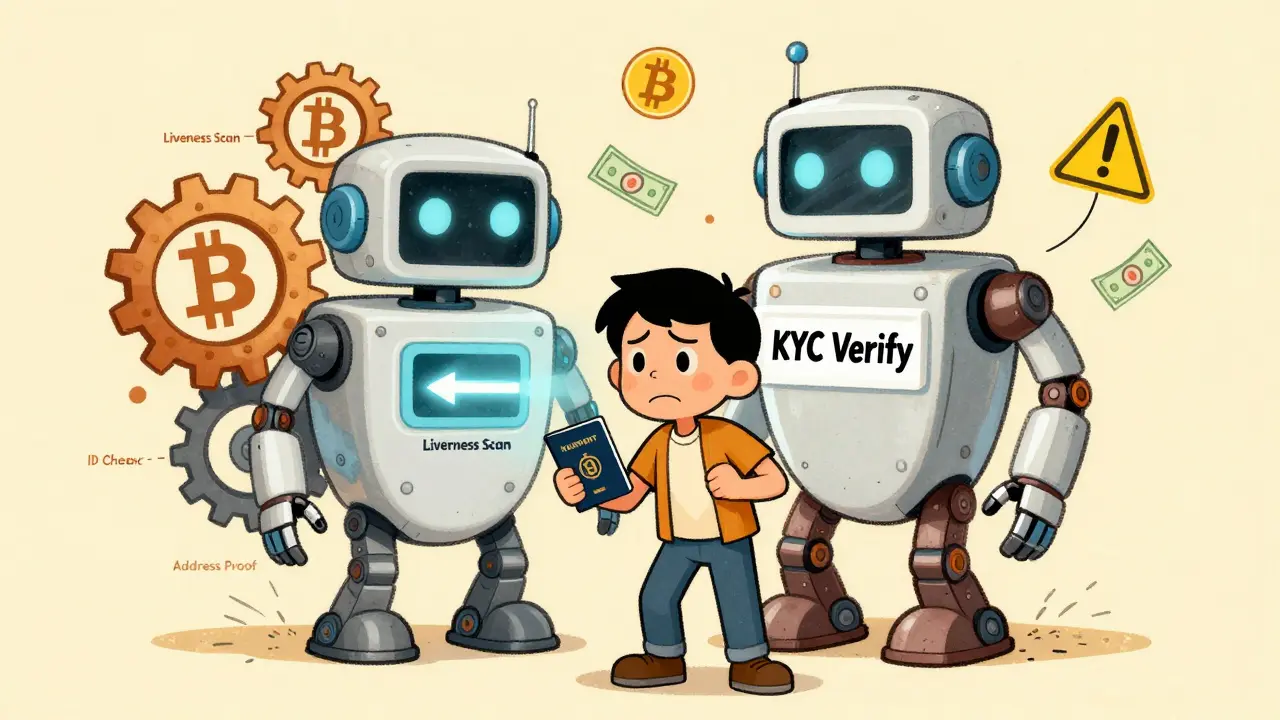
Crypto KYC Process: What It Is, Why It Matters, and How It Affects Your Trading
When you sign up for a crypto exchange, you’re not just creating a password—you’re entering a system built around crypto KYC process, a legal requirement for verifying user identity to prevent money laundering and fraud. Also known as Know Your Customer, it’s the gatekeeper between you and your crypto assets. Without it, platforms like Kraken, WEEX, or Upbit can’t legally operate in most countries. This isn’t optional paperwork—it’s the backbone of modern crypto compliance.
The crypto compliance, the set of rules exchanges follow to meet government standards. Also known as regulatory adherence, it isn’t just about uploading a photo of your ID. It’s tied to global frameworks like FATF’s guidelines and local laws from Brazil’s $10,000 transfer caps to Thailand’s jail-time penalties. Exchanges that skip KYC don’t just risk fines—they get shut down, like Digitex Futures or Artis Turba. That’s why even obscure airdrops like SUNI or FDT now require some form of identity check before you can claim tokens. If a platform skips KYC, it’s usually a red flag, not a feature.
And it’s not just exchanges. DeFi platforms, lending services, and even NFT marketplaces are starting to require KYC to access certain features. Why? Because regulators are catching up. The AML crypto, anti-money laundering systems designed to track suspicious crypto flows. Also known as crypto anti-fraud measures, it is now embedded into every major platform’s backend. Even if you’re just holding Bitcoin or trading meme coins like MICKEY, your activity might still be flagged if your wallet connects to a non-KYC service. That’s why Chinese users can’t use Binance, why Indian traders move to Dubai, and why Brazil limits stablecoin use—everything ties back to compliance.
The VASP compliance, rules that classify crypto platforms as Virtual Asset Service Providers and force them to follow strict reporting rules. Also known as crypto exchange regulations, it means your personal data is collected, stored, and sometimes shared with authorities. It’s inconvenient, yes—but it’s also why your funds are safer on regulated platforms like WEEX than on shady ones like Helix Markets. You’re trading privacy for protection. And in a world where scams like the fake DeHero HEROES airdrop or the dead DOM token prey on the unverified, that trade is worth it.
What you’ll find below isn’t just a list of articles—it’s a map of how crypto KYC shapes everything you do. From banned countries and restricted stablecoins to failed airdrops and shutdown exchanges, every post connects back to this single truth: if you’re in crypto, you’re in compliance. No exceptions. No loopholes. Just facts.