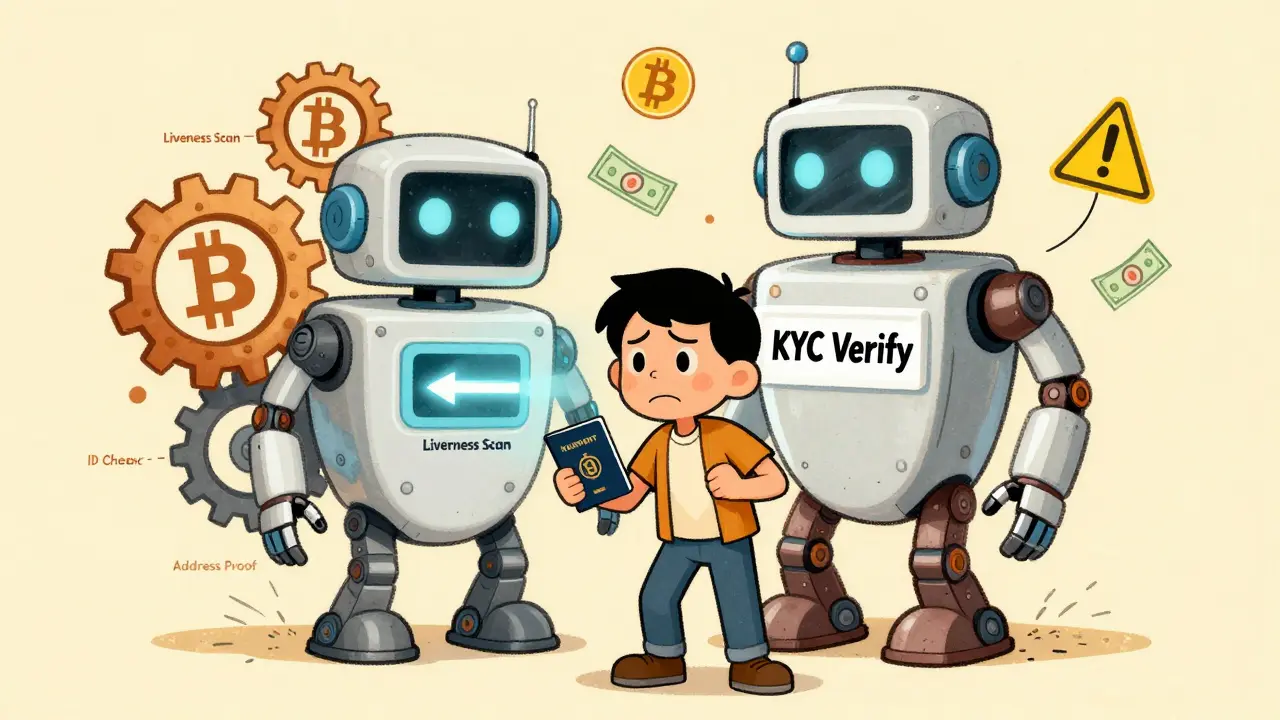
Crypto Identity Verification: What It Is, Why It Matters, and How It Shapes Your Trading
When you trade crypto, crypto identity verification, the process of proving who you are to use a crypto service. Also known as KYC, it’s not just a form you fill out—it’s the gatekeeper between you and the global crypto economy. Without it, exchanges like Kraken and WEEX can’t legally serve you. Regulators in Brazil, Thailand, and the EU demand it. Even DeFi platforms are starting to require it to avoid being shut down.
KYC, Know Your Customer, the standard process for verifying user identity in finance. Also known as crypto identity verification, it’s how platforms stop money laundering and fraud. AML crypto, Anti-Money Laundering rules applied to digital assets. Also known as crypto compliance, it’s what forces exchanges to collect your ID, proof of address, and sometimes even selfies. These aren’t optional. If you’re in the U.S., Australia, or Europe, you’ve already gone through it. If you’re in China, you’re blocked from doing it—because the government banned it outright. And if you’re trying to claim an airdrop on CoinMarketCap, they might ask for it too. The truth? No serious crypto platform can survive without it.
VASP compliance, the legal requirement for crypto service providers to follow financial regulations. Also known as crypto regulatory adherence, it’s why exchanges like Upbit and Helix Markets either restrict users by country or shut down entirely. The FATF guidelines don’t just suggest this—they enforce it. Platforms that ignore it get fined, frozen, or banned. That’s why Kraken blocks trading in 14 countries. Why Brazil caps transfers at $10,000. Why Thailand can jail you for non-compliance. This isn’t bureaucracy—it’s survival.
You might hate it. You might think it’s invasive. But here’s the reality: the same system that stops criminals also protects your funds. Without identity verification, airdrops like SATT or KOM would be flooded with bots. Scams like FDT and DeHero HEROES would run unchecked. Exchanges couldn’t prove they’re not laundering money. And your wallet? It’d be far less safe.
The posts below don’t just list rules—they show you how identity verification plays out in the real world. From how China’s ban forced users underground, to how Brazil’s $10K cap changed trading habits, to why exchanges like Digitex Futures collapsed after ignoring compliance. You’ll see how KYC affects your access to tokens, why some airdrops vanish overnight, and how the rules in one country can make or break your portfolio. This isn’t theory. It’s what’s already happening.