Crypto AML Compliance: What It Is and Why It Matters for Every Trader
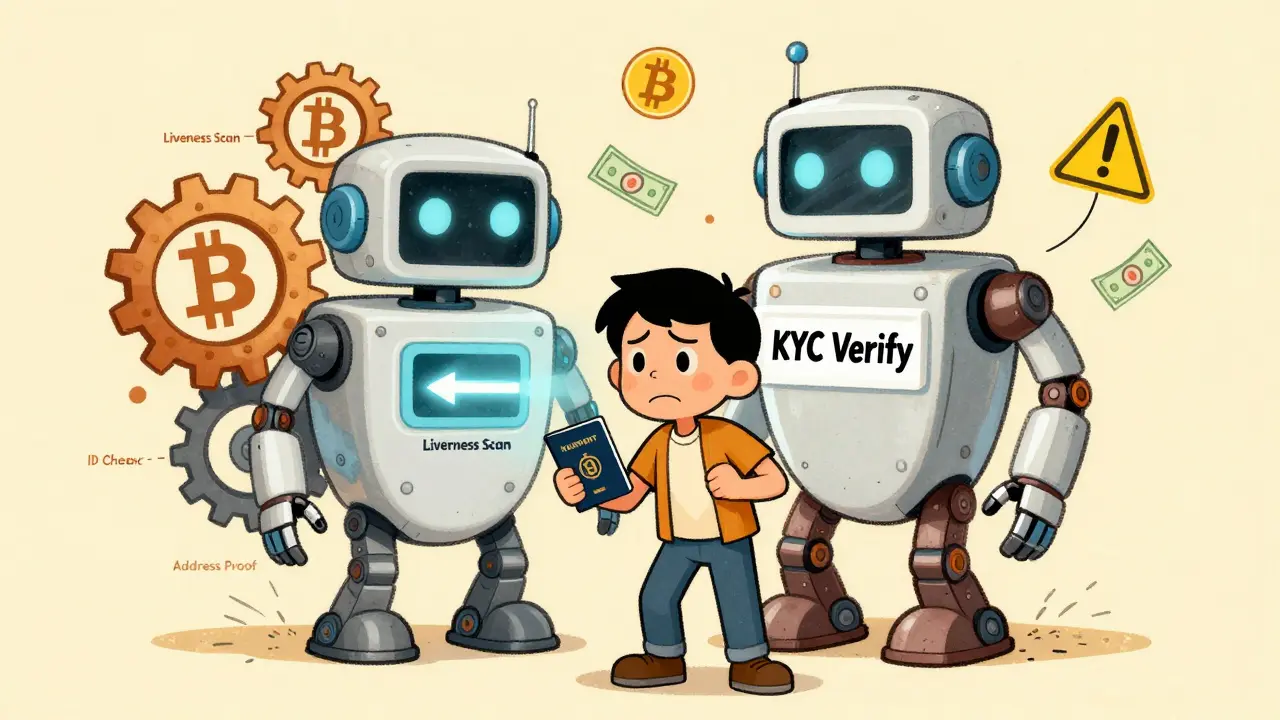
When you trade crypto, crypto AML compliance, the set of rules crypto platforms must follow to stop money laundering and terrorist financing. Also known as anti-money laundering for digital assets, it’s not just paperwork—it’s the reason your exchange hasn’t been shut down by regulators. Every time Kraken blocks a user in a sanctioned country, or Brazil caps transfers at $10,000, that’s crypto AML compliance in action. It’s not optional. It’s the line between staying open and getting banned.
Behind the scenes, platforms use VASP, Virtual Asset Service Providers that include exchanges, wallets, and staking services. Also known as crypto intermediaries, these are the entities legally required to collect user data, report suspicious activity, and verify identities. If you’ve ever uploaded a passport to Binance or Coinbase, that’s VASP compliance kicking in. The FATF, the Financial Action Task Force, a global body that sets anti-money laundering standards for crypto. Also known as the international crypto watchdog, it’s the reason every major exchange follows the same rules—from freezing funds in Russia to delisting privacy coins. Without FATF, crypto would be a free-for-all for criminals. With it, exchanges have to choose: protect users or protect profits.
And it’s not just big exchanges. Even DeFi platforms and airdrops are feeling the heat. When SUNI or FDT suddenly disappear after a CoinMarketCap drop, it’s often because regulators flagged them as unregistered VASPs. When China bans all crypto trading, it’s not just about control—it’s about cutting off any path for money laundering. When Thailand threatens jail time for non-compliance, they’re not bluffing. The same compliance rules that shut down Digitex Futures and Artis Turba are the ones keeping WEEX and Upbit running. This isn’t about bureaucracy. It’s about survival.
You don’t need to be a lawyer to understand this. But you do need to know: if a platform doesn’t ask for ID, it’s not safe. If a token has no team, no roadmap, and no compliance history—it’s a target. Every airdrop you claim, every exchange you use, every wallet you connect—each one walks a line between innovation and illegality. The posts below show you exactly how that line is drawn: which countries are blocked, which tokens got pulled, which exchanges got shut down, and why some projects vanished overnight. This isn’t theory. It’s what’s happening right now. And if you’re trading crypto, you’re already in the middle of it.