China Crypto Ban: What It Means for Traders and the Global Market
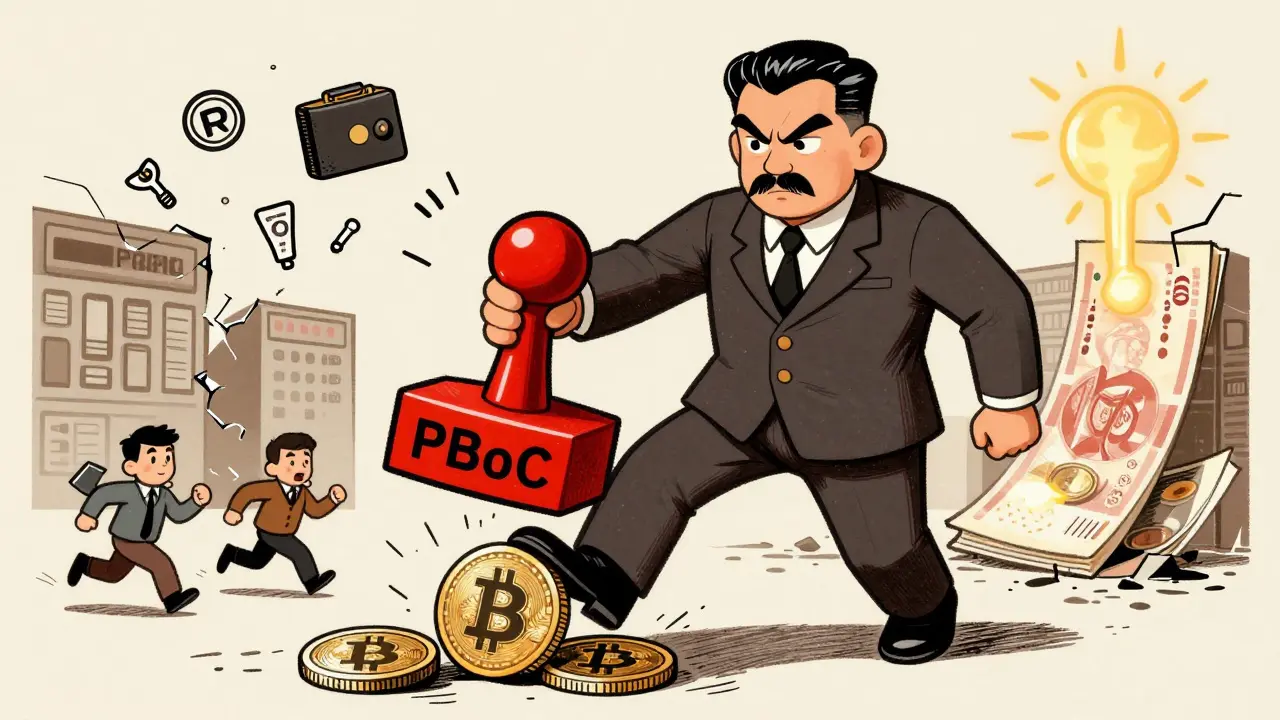
When China banned cryptocurrency trading and mining in 2021, it didn’t just shut down exchanges—it rewrote the rules for how money moves in the digital age. China crypto ban, a sweeping government policy that prohibits all crypto transactions, mining, and exchange services for Chinese residents. Also known as Chinese crypto restrictions, it left millions of traders with no legal way to buy, sell, or hold Bitcoin or Ethereum inside the country. Unlike other nations that regulate crypto, China chose total elimination—no gray area, no loopholes, no exceptions.
This ban didn’t just target Binance or Coinbase. It hit every platform, every wallet, every miner with servers in China. The government didn’t just block websites—it cut off bank accounts tied to crypto activity and forced exchanges to shut down local operations. What replaced it? The digital yuan, China’s state-controlled central bank digital currency (CBDC) designed to replace cash and monitor every transaction. Also known as e-CNY, it’s not just a payment tool—it’s a surveillance system wrapped in code. While the rest of the world debates privacy vs. control, China made its choice: total visibility for citizens, zero anonymity for crypto.
The ripple effects were global. Miners fled to Kazakhstan, the U.S., and Canada. Exchanges moved headquarters out of China overnight. Trading volumes in Asia dropped by 60% in months. But here’s what most people miss: the ban didn’t kill crypto—it pushed it underground and overseas. Chinese traders still access crypto through P2P platforms, offshore wallets, and VPNs. But now, they do it at risk: fines, account freezes, even criminal charges. Meanwhile, the digital yuan, a tool for financial control, not innovation, is being tested in cities, schools, and public transit systems across the country.
What you’ll find in these posts isn’t just news—it’s a map of the fallout. From how traders in China bypass the ban to why every major exchange now blocks Chinese IPs, from the rise of offshore trading hubs to the quiet death of crypto projects that relied on Chinese users. You’ll see real cases: exchanges that vanished, tokens that collapsed, and the one legal path left: the digital yuan. This isn’t theory. It’s what’s happening right now. And if you’re trading crypto anywhere in the world, you’re still feeling the impact of a decision made in Beijing five years ago.