Blockchain Governance
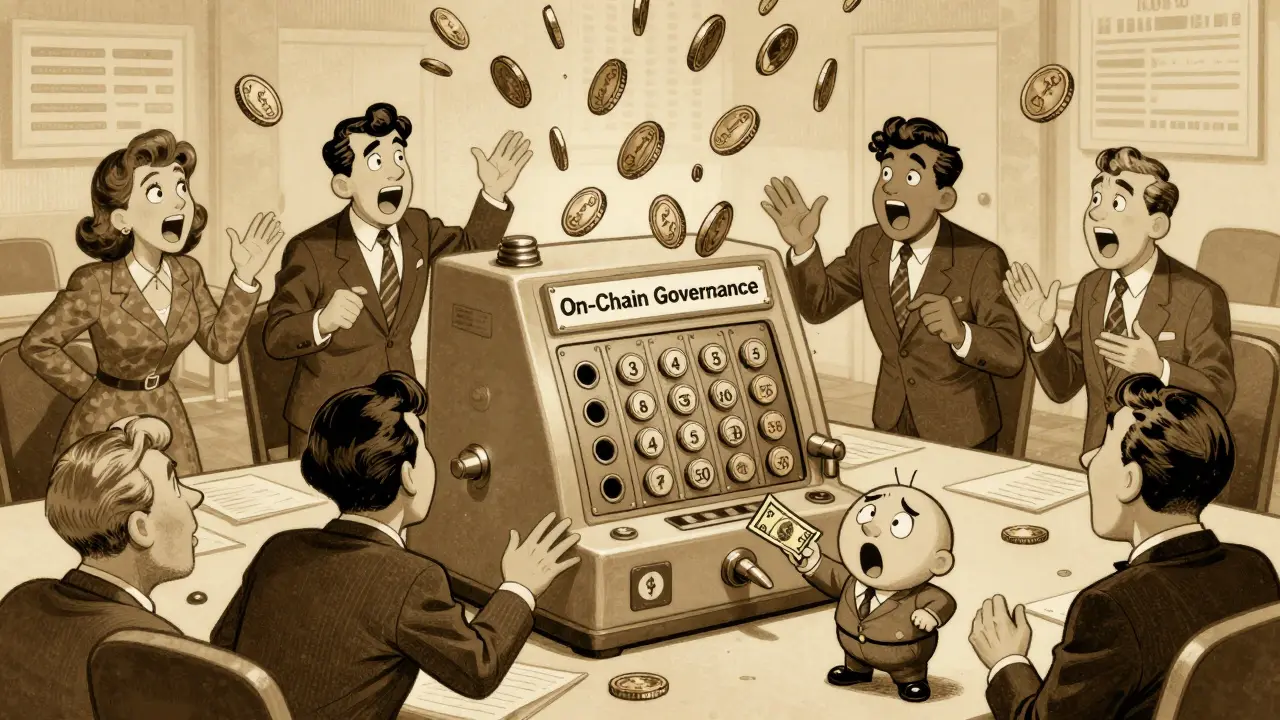
When working with blockchain governance, the set of rules, processes and tools that let a community steer a blockchain’s direction, you’re dealing with a fresh way of making collective decisions. Also known as on‑chain governance, it relies on transparent voting, token‑holder proposals, and smart‑contract enforcement. In plain terms, blockchain governance replaces boardrooms with code, but the goals stay the same: keep the system secure, adaptable, and aligned with user interests.
One of the most common building blocks is the DAO, a Decentralized Autonomous Organization that encodes governance rules into smart contracts. DAOs turn token holders into shareholders who can vote on upgrades, fund projects, or change fee structures without a central authority. Another pivotal piece is the governance token, a digital asset that grants voting power proportionate to the amount held. Together, DAOs and governance tokens form the engine that powers on‑chain voting, resource allocation, and treasury management.
Key Elements of Blockchain Governance
Blockchain governance encompasses decision‑making processes that affect everything from protocol upgrades to fee schedules. Effective governance requires transparent voting mechanisms so participants can verify that their votes are counted correctly. DAO structures influence token holder rights by defining quorum thresholds, proposal timelines, and execution rules. On‑chain voting enables community members to propose and approve changes directly from their wallets, cutting out middlemen and reducing the risk of manipulation. Finally, governance tokens empower participants to allocate resources such as development funds, marketing budgets, or liquidity incentives.
Real‑world examples illustrate how these pieces fit together. The "Mastering DAO Treasury Management" guide shows how multi‑signature wallets, budgeting frameworks, and risk controls keep DAO funds safe while allowing flexible spending. The "How Blockchain Powers Online Voting" article walks through pilot projects where elections are run on public ledgers, offering tamper‑proof audit trails and instant result verification. Meanwhile, the "How Blockchain Improves Clinical Trial Data Management" piece highlights how immutable records and smart‑contract‑based consent boost transparency for researchers and patients alike. All of these use cases share a common thread: a well‑designed governance layer that translates community intent into enforceable code.
When you dive into the posts below, you’ll see a mix of strategic overviews, technical deep‑dives, and step‑by‑step guides. Whether you’re an investor trying to gauge the risk of a new governance token, a developer building a DAO framework, or a regulator curious about compliance, the collection covers the full spectrum of blockchain governance. Use it to sharpen your understanding of voting models, token economics, and the legal nuances that come with decentralized decision making.
Ready to explore specific topics? Below you’ll find detailed articles on everything from DAO treasury best practices to the latest on‑chain voting mechanisms, giving you practical insights you can apply right away.