
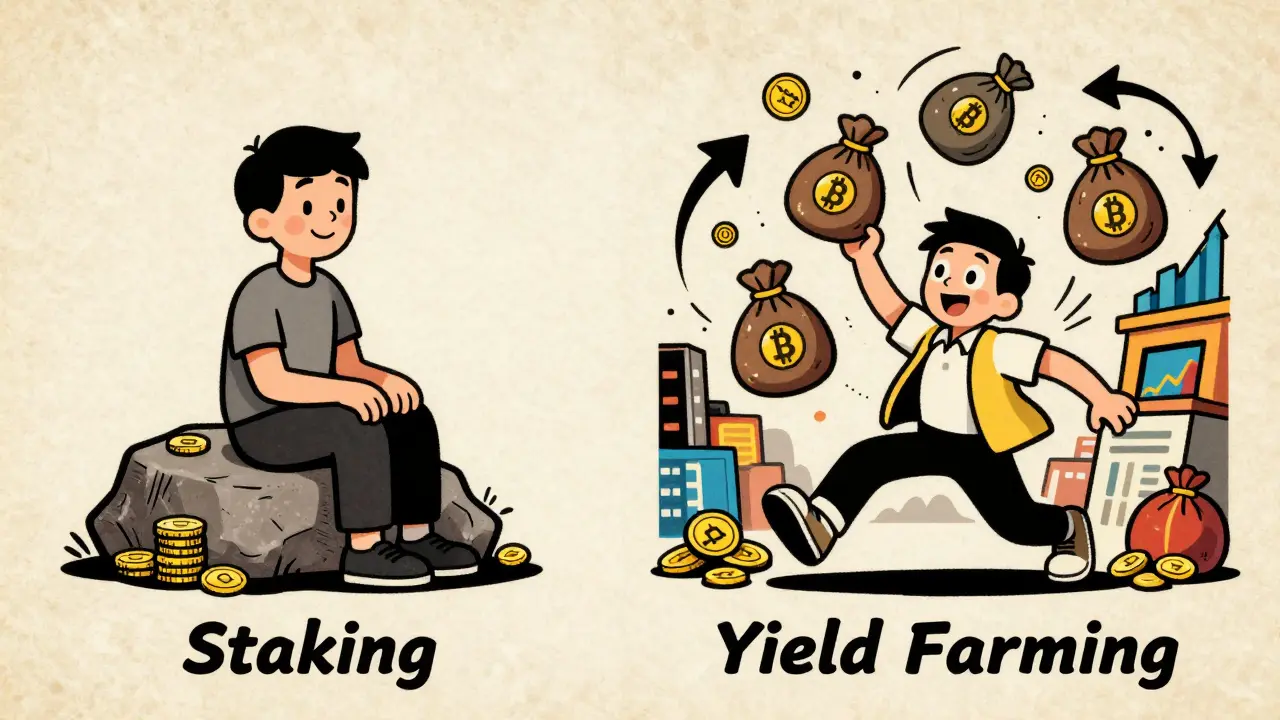
Imagine you have a spare $1,000 sitting in your crypto wallet. You want it to grow, but you don’t want to trade all day. Do you lock it up to secure a network, or do you lend it out to traders on a decentralized platform? This is the core choice between staking and yield farming. Both promise passive income, but they operate like night and day. One is akin to putting money in a high-yield savings account; the other is closer to running a small hedge fund.
If you are looking for stability and simplicity, staking might be your best friend. If you are chasing maximum returns and willing to manage complex risks, yield farming could be your playground. Understanding the difference isn't just about jargon-it’s about protecting your capital while maximizing gains. Let’s break down exactly how these two mechanisms work, where the hidden traps lie, and which one fits your current strategy.
How Staking Works: The Foundation of Proof-of-Stake
At its heart, staking is about security. In traditional banking, banks pay you interest because they lend your money to others. In blockchain, specifically on Proof-of-Stake (PoS) networks, you get paid because you help keep the network honest and operational.
When you stake tokens, you lock them up in a smart contract or delegate them to a validator. These validators process transactions and create new blocks. In return for their work-and for locking up their capital-they receive rewards from the network. Part of those rewards often go back to the people who staked with them.
The beauty of staking lies in its simplicity. You deposit your assets, wait, and watch them grow. The Annual Percentage Yield (APY) is usually predictable, hovering between 3% and 12% depending on the network. For example, Ethereum typically offers around 4-6%, while newer networks like Solana or Cardano might offer slightly higher rates to attract participants.
There are two main ways to stake:
- Solo Staking: You run your own validator node. This requires significant technical knowledge, hardware, and a large amount of capital (e.g., 32 ETH for Ethereum). It gives you full control but comes with the risk of being "slashed"-losing part of your stake-if your node goes offline or behaves maliciously.
- Delegated Staking: You send your tokens to an existing validator. This is easier and requires less capital. However, you rely on the validator’s performance. If they get slashed, your funds can also be at risk.
The key takeaway here is that staking supports the network’s infrastructure. Your reward is essentially a dividend for helping the blockchain function securely.
How Yield Farming Works: Chasing Liquidity Rewards
Now, let’s look at yield farming. This concept exploded during the DeFi boom of 2020. Unlike staking, which secures a blockchain, yield farming provides liquidity to decentralized exchanges (DEXs) and lending protocols.
Think of a DEX like Uniswap or Curve Finance. These platforms don’t have an order book like Coinbase. Instead, they use Automated Market Makers (AMMs). To trade on these platforms, users need pools of liquidity. That’s where you come in.
To farm yields, you deposit pairs of tokens into a liquidity pool. For instance, you might deposit ETH and USDC in equal value. Traders then swap against this pool, paying fees. You earn a portion of those trading fees. But that’s not all. Many protocols incentivize liquidity providers by rewarding them with their native governance tokens. So, you earn fees plus bonus tokens.
This dual-income stream allows APYs to skyrocket. It’s common to see yields ranging from 20% to over 100% in volatile markets. However, this high return comes with a catch: you are taking on the risk that the protocol developers take on less. You are the bank, the trader, and the insurer all rolled into one.
Risk Profile: Impermanent Loss vs. Slashing
If staking is low-risk, yield farming is high-risk. But what does that actually mean for your wallet?
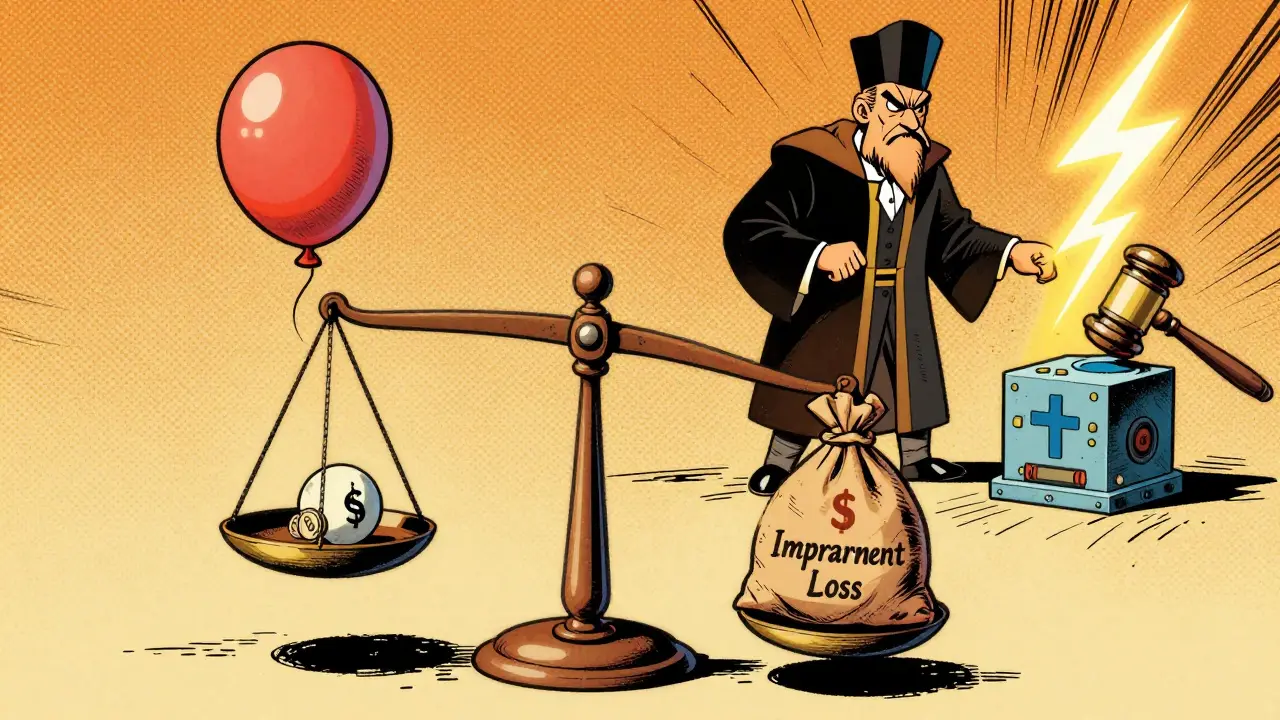
The biggest enemy in yield farming is impermanent loss. This happens when the price of your deposited tokens changes significantly compared to when you deposited them. Because AMMs maintain a constant ratio of assets, if one token pumps hard, the pool automatically sells the winning asset to buy more of the loser to maintain balance. When you withdraw, you end up with fewer dollars than if you had just held the tokens in your wallet.
For example, if you provide liquidity for Token A and Token B, and Token A doubles in price while Token B stays flat, the pool will sell some Token A to buy more Token B. You exit with less Token A than you started with, effectively missing out on the gain. This loss becomes permanent only if you withdraw during the divergence.
Staking has its own risks, though they are different. The primary danger is slashing. If a validator misbehaves-say, by trying to double-spend or going offline for too long-the protocol penalizes them by burning a portion of their staked tokens. As a delegator, you share this pain. Additionally, there is always the risk of the underlying token dropping in value. If ETH drops 50%, your 5% staking reward doesn’t save you from the principal loss.
Another critical risk in yield farming is smart contract vulnerability. DeFi protocols are code. Code can have bugs. Hackers exploit these bugs constantly. In 2021, the SQUID token incident saw prices drop from nearly $2,900 to fractions of a cent in seconds due to a rug pull. While staking on major chains like Ethereum is relatively safe from hacks due to extensive audits, smaller DeFi farms are frequent targets.
Complexity and Time Commitment
Let’s talk about effort. Staking is largely passive. Once you’ve delegated your tokens, you can forget about them for weeks or months. You might check your balance once a week to ensure your validator is still performing well. It’s true "set and forget" investing.
Yield farming, on the other hand, is active. It requires constant monitoring. Why? Because yields change daily. A pool offering 100% APY today might offer 5% next week as new farmers enter and dilute the rewards. Successful farmers must move their capital frequently-a practice known as "chasing yields."
This movement costs money. On Ethereum, transaction fees (gas) can range from $5 to $50 per interaction during peak times. If you’re moving $1,000 across three different pools every week, you could easily spend $100-$200 a month just in gas fees, eating into your profits. This is why many farmers prefer Layer 2 solutions like Arbitrum or Optimism, where fees are pennies.
You also need to understand complex mechanics: impermanent loss calculators, tokenomics, vesting schedules for reward tokens, and re-entry strategies. It’s not just clicking a button; it’s managing a portfolio.
| Feature | Staking | Yield Farming |
|---|---|---|
| Primary Goal | Secure the network | Provide liquidity to DeFi |
| Average APY | 3% - 12% | 20% - 100%+ (volatile) |
| Effort Level | Low (Passive) | High (Active Management) |
| Main Risk | Slashing, Price Drop | Impermanent Loss, Smart Contract Hacks |
| Liquidity | Often locked/unbonding period | Usually liquid (but may incur loss) |
| Best For | Long-term holders, beginners | Experienced traders, risk-takers |
Which Strategy Fits Your Portfolio?
Your choice shouldn’t be binary. Many sophisticated investors use both. Here is a practical framework to decide how to allocate your capital.
Choose Staking If:
- You believe in the long-term future of a specific blockchain (like Ethereum or Solana).
- You want predictable, steady growth without daily stress.
- You are new to crypto and want to minimize exposure to complex DeFi risks.
- You don’t mind locking your funds for short periods (unbonding times).
Choose Yield Farming If:
- You have experience with wallets like MetaMask and understand gas fees.
- You are comfortable with high volatility and potential temporary losses.
- You have time to monitor charts, track APY changes, and move funds.
- You want to maximize returns in a bull market where token prices are rising steadily (reducing impermanent loss impact).
A balanced approach might involve staking 70-80% of your portfolio in established PoS networks for stability, while using 20-30% to farm yields on blue-chip DeFi protocols like Curve or Aave. This way, you capture upside potential without risking your entire stack on a single hack or impermanent loss event.
Navigating the 2026 Landscape
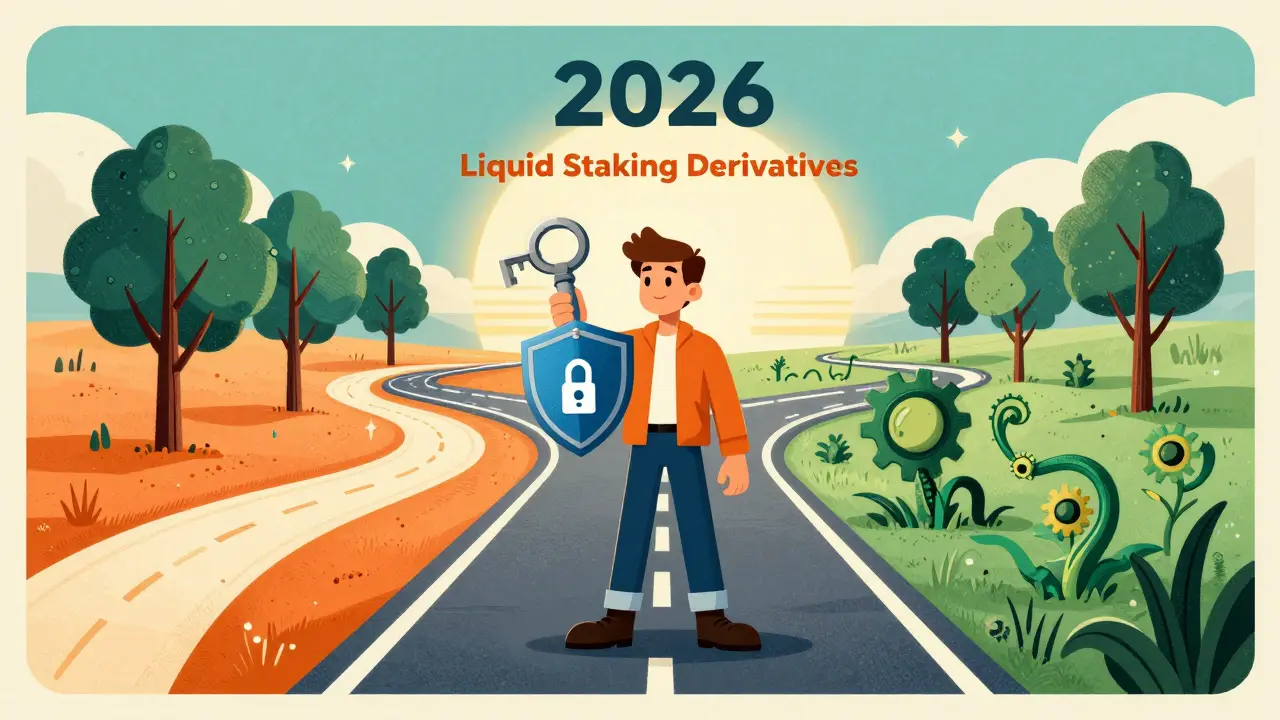
As we move through 2026, the lines between staking and farming are blurring. Liquid Staking Derivatives (LSDs) like Lido allow you to stake ETH and receive a receipt token (stETH) that you can then use in yield farming protocols. This combines the security of staking with the flexibility of DeFi.
Regulatory clarity is also improving. In many jurisdictions, staking is increasingly viewed as a compliant investment activity, whereas yield farming faces stricter scrutiny due to its complexity and association with unregistered securities. Always consult local tax laws, as staking rewards and farming incentives are taxable events in most countries.
Remember, high yields always signal high risk. If a farm promises 1,000% APY, ask yourself: where is this money coming from? Usually, it’s from new investors’ deposits, not sustainable revenue. Stick to protocols with audited code, transparent teams, and long track records. Whether you stake or farm, your first job is capital preservation. Your second job is making it grow.
Is staking safer than yield farming?
Yes, generally. Staking involves lower complexity and fewer vectors for catastrophic loss like smart contract hacks or impermanent loss. However, staking carries the risk of slashing (if you solo stake poorly) and the standard risk of the underlying asset's price dropping. Yield farming exposes you to both market volatility and protocol-specific risks, making it inherently more dangerous.
What is impermanent loss?
Impermanent loss occurs in yield farming when the price ratio of the two tokens in a liquidity pool changes significantly after you deposit them. The automated market maker rebalances the pool, causing you to hold less of the appreciated asset and more of the depreciated one compared to simply holding the tokens in your wallet. The loss becomes permanent only if you withdraw while the price divergence exists.
Can I lose my initial investment in staking?
You can lose value in two ways. First, if the market price of the staked token drops, your total USD value decreases. Second, if you solo stake and your validator node fails or acts maliciously, you can be "slashed," meaning a portion of your staked tokens is burned by the protocol. Delegated staking reduces slashing risk but introduces counterparty risk with the validator.
Do I need a lot of money to start yield farming?
While you can technically start with small amounts, gas fees on networks like Ethereum can eat into profits for small balances. It is often more cost-effective to yield farm on Layer 2 solutions (like Arbitrum or Optimism) or alternative chains (like Solana) where fees are minimal. For meaningful returns relative to effort, many farmers suggest having at least $1,000-$5,000 to diversify and offset transaction costs.
Are staking rewards taxable?
In most jurisdictions, including the US and Australia, staking rewards are considered taxable income at the fair market value on the day they are received. Yield farming rewards are also typically taxed as income. Always keep detailed records of your transactions and consult a tax professional familiar with cryptocurrency regulations in your area.