
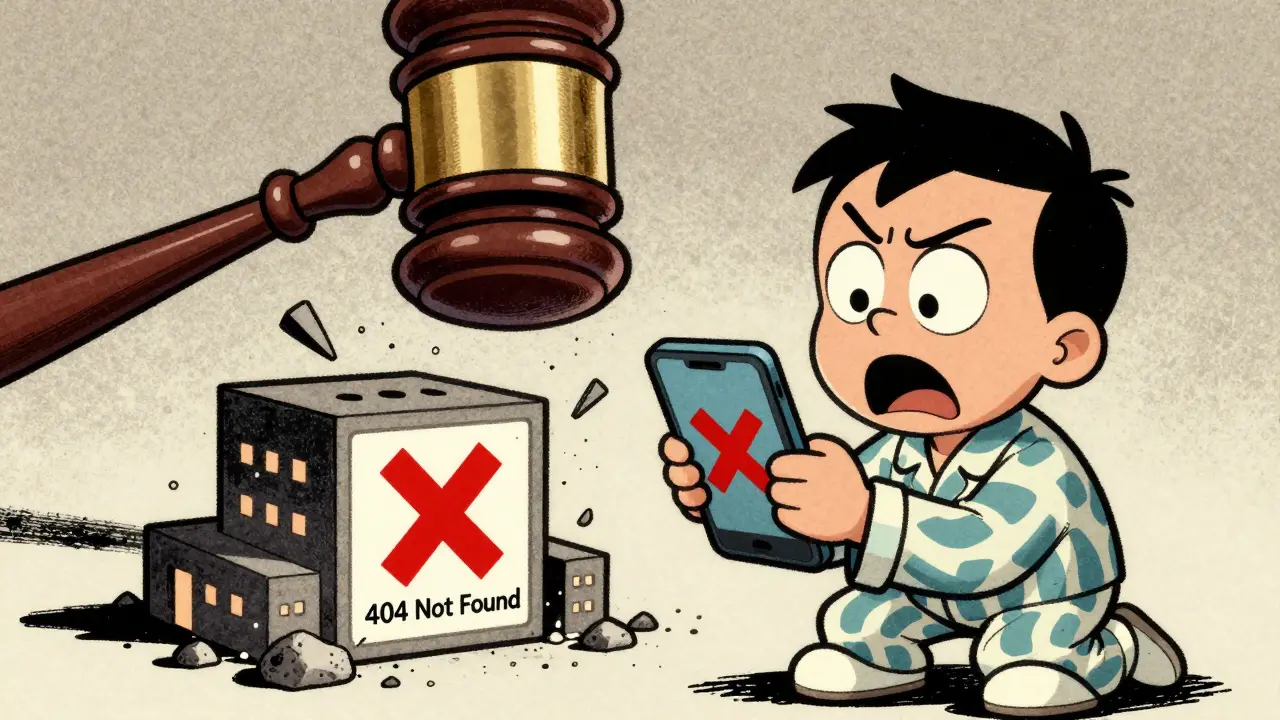
Imagine waking up to find your favorite crypto trading app gone-not because the company went bankrupt, but because a government agency decided it was a threat to national security. This is becoming a common reality in 2026. For years, the allure of "no-KYC" platforms was the promise of total anonymity. But that era is ending fast. Regulators are no longer just sending warning letters; they are pulling the plug on platforms that let users trade without showing an ID.
The core of the conflict is a clash between the original ethos of crypto and the reality of global finance. Authorities view unverified exchanges as open doors for money laundering, terrorism financing, and dodging international sanctions. To them, a platform without identity checks isn't "privacy-preserving"-it's a liability. This shift has turned no-KYC crypto exchange operations into a high-stakes game of cat and mouse where the house is starting to win.
The Global Crackdown: Who is Being Targeted?
We are seeing a systematic effort by governments to eliminate "blind spots" in the financial system. A prime example is India. In 2025, the Financial Intelligence Unit-India (FIU-IND) stepped up its game, issuing notices to 25 offshore exchanges. These platforms, including names like Huione, Paxful, and BitMex, were catering to Indian users without registering under the Prevention of Money Laundering Act (PMLA). The result? The FIU-IND didn't just fine them; they directed the complete takedown of their URLs and apps within the country.
It isn't just Asia. Even traditional "crypto havens" are tightening their grip. In September 2025, the Seychelles government introduced laws requiring all virtual asset service providers to get a license. This forced major players like KuCoin and BTSE to exit the region entirely. When the rules change in these jurisdictions, exchanges often try to "re-domicile"-essentially moving their legal headquarters to places like Costa Rica or the Turks and Caicos Islands-but this regulatory arbitrage is getting harder as countries share intelligence more effectively.
| Exchange | Regulatory Action | Outcome/Response |
|---|---|---|
| KuCoin | DOJ criminal charges & Seychelles law change | Re-domiciled to Turks and Caicos Islands |
| Binance | Multibillion-dollar penalties | Long-term compliance monitoring & leadership changes |
| Coinbase | $100M settlement (NYDFS) | Appointment of independent compliance monitor |
| BitMex/Paxful | FIU-IND non-compliance notices | URL and app blocking in India |
Why Governments Hate No-KYC Platforms
To understand why the hammer is falling, you have to look at what KYC (Know Your Customer) actually does. It's not just about collecting a passport photo; it's about creating a paper trail. Without it, a bad actor can move millions in stolen funds through a series of unverified accounts, making it nearly impossible for law enforcement to track the money.
Consider the scale of the risk. Between 2021 and 2022, fraudsters managed to extract roughly $1 billion from users, often using unregulated venues to wash the loot. When an exchange allows anyone to trade without an ID, they become a magnet for "mule activity" and phishing operations. For a government, this isn't just a regulatory nuance; it's a national security gap. This is why the U.S. Department of Justice (DOJ) filed charges against KuCoin, alleging they operated an unlicensed money transmission business and ignored basic Anti-Money Laundering (AML) policies, allowing over $5 billion in suspicious funds to flow through their systems.

The Shift Toward Compliance: By the Numbers
The industry is reacting quickly because the alternative is death. In 2024, about 85% of centralized exchanges were KYC-compliant. By 2025, that number jumped to 92%. This isn't just because they're afraid of the law; it's a business decision. Institutional investors-the "big money"-won't touch a platform that can't prove where its users are coming from. In fact, 67% of institutional investors now say strong KYC protocols are a deciding factor when choosing a platform.
Interestingly, the "it's too slow and annoying" excuse for avoiding KYC is disappearing. Thanks to AI-driven verification, the average time to get verified on a major exchange dropped from 7 minutes in 2023 to just 3.5 minutes in 2025. When verification takes less time than making a cup of coffee, the barrier to entry for users is virtually gone, leaving no-KYC exchanges with no competitive advantage other than anonymity.
The Domino Effect of a Shutdown
When a government shuts down a no-KYC exchange, the fallout goes beyond just a broken website. There is a massive ripple effect throughout the financial ecosystem. First, there is the "banking de-risking" phase. Banks, credit card networks, and stablecoin issuers are terrified of being accused of facilitating money laundering. If an exchange can't show robust AML controls, the banks simply offboard them. This cuts off the exchange's ability to accept fiat deposits, effectively killing their revenue stream.
Then there's the marketing side. In 2025, most top-tier advertisers and affiliates stopped working with non-compliant platforms. They don't want their brand associated with a site that might be seized by the FBI or FIU-IND next week. This narrows the acquisition channels for these platforms, making it nearly impossible for them to grow their user base legally.
For the user, the risk is even more immediate. If you keep your funds on an exchange that is suddenly shut down by authorities, you aren't just dealing with a technical glitch. You're dealing with a legal freeze. Accessing your assets can become a nightmare of legal battles and bureaucratic red tape, especially if the platform has no legal presence in your home country.

The Future of Trading: Is Anonymity Dead?
Looking ahead to the rest of 2026, the window for running a significant exchange without KYC is closing. We are seeing a transition where identity verification is being treated as essential infrastructure, like electricity or internet, rather than an optional feature. The days of "regulatory arbitrage"-where companies just move to a different island to avoid rules-are fading because international coordination is peaking. Financial intelligence units are now sharing data in real-time.
Does this mean all anonymity is gone? Not necessarily. It's pushing the industry toward a split. On one side, you have the regulated, centralized giants that look and feel like traditional banks. On the other, there is a growing push toward truly decentralized finance (DeFi). However, regulators are already starting to target DeFi platforms that maintain lax supervision. The goal of the authorities is clear: they want every single "on-ramp" and "off-ramp" (where crypto meets real money) to be fully monitored.
Can authorities actually shut down an offshore exchange?
Yes. While they may not be able to seize a server in another country, they can block all access to the platform's URLs and apps within their own borders. They can also pressure payment processors and banks to cut off the exchange's access to the traditional financial system, making it nearly impossible for the exchange to operate in that region.
Why do some exchanges move to the Turks and Caicos or Costa Rica?
These jurisdictions have historically had looser regulatory frameworks for digital assets. By relocating their legal entity, exchanges hope to avoid the strict KYC and AML mandates of larger economies like the US or EU. However, this is a temporary fix as global regulators are increasingly collaborating to close these loopholes.
Is it safer to use a KYC exchange?
From a regulatory and operational standpoint, yes. KYC-compliant exchanges are less likely to be suddenly shut down by governments. Additionally, a 2025 CipherTrace report indicated that robust KYC protocols help reduce crypto fraud risk by about 38% by making it harder for scammers to create fake accounts.
What happens to my funds if an exchange is shut down?
It depends on the nature of the shutdown. If the government seizes the platform's assets or freezes their accounts, your funds could be locked indefinitely. If it's a simple domain block, you might still access your funds via a VPN, but you're still using a platform that is now a target for regulators, which increases your long-term risk.
What is the difference between AML and KYC?
KYC (Know Your Customer) is the process of verifying a user's identity. AML (Anti-Money Laundering) is the broader set of laws and procedures designed to stop the practice of generating income through illegal actions. KYC is essentially a tool used to achieve the goal of AML.
Next Steps for Crypto Users
If you are currently using a no-KYC platform, the smartest move is to evaluate your risk. Ask yourself: if this site disappeared tomorrow, would I be okay with losing the funds currently sitting there? If the answer is no, consider moving your assets to a hardware wallet or a fully compliant exchange.
For those who prioritize privacy, the solution isn't usually to find a "hidden" centralized exchange-which are increasingly rare and risky-but to explore non-custodial wallets and decentralized protocols where you maintain control of your keys. Just be aware that as 2026 progresses, even the bridges between DeFi and the real world are becoming more regulated.
sekhar reddy
April 6, 2026 AT 23:36Omg this is laiterally a disaster!! I cant believe they just block the apps like that... absolute chaos for us traders in India!! 😱
Trish Swanson
April 7, 2026 AT 16:42Makes sense... safety first!!!
Suzanne Robitaille
April 8, 2026 AT 11:32It is truly heartbreaking to see the original dream of financial autonomy crumble under the weight of state surveillance. We are witnessing the death of a digital frontier, replaced by a sterile, monitored landscape where our very identity is the price of admission. It feels like we've traded our freedom for a false sense of security, and the tragedy is that many are cheering for it.
Diana Martín Prieto
April 9, 2026 AT 12:00If you're worried about your funds, definitely look into getting a Ledger or Trezor right now. Moving assets to a non-custodial wallet is the only real way to keep your keys and stay out of the regulatory crossfire. I can help anyone who's confused about how to transfer their coins off these exchanges before the next wave of shutdowns hits.
Susan Payne
April 10, 2026 AT 09:26The utter incompetence of those who believed anonymity could survive in a globalized financial system is staggering. One must wonder why anyone is surprised that governments despise a system specifically designed to bypass their authority. It is an exercise in futility to mourn the loss of these platforms when they were essentially built on a foundation of regulatory negligence.
Siddharth Bhandari
April 10, 2026 AT 19:58For those in India, using a VPN might bypass the URL block, but be careful with the API calls as they can still be flagged. It's better to migrate to a compliant platform or a DEX.
akash temgire
April 12, 2026 AT 01:56This is a necessary step for national security.
Matthew Wright
April 13, 2026 AT 15:39Interesting shift... the AI verification speedup is the real killer here!!! If it's that fast, the only reason to stay no-KYC is if you're hiding something... right???
Arwyn Keast
April 13, 2026 AT 16:00Typical regulatory capture. The state just wants to ensure the big banks keep their monopoly on the ledger. This whole 'security' narrative is just a smokescreen for maintaining a legacy fiat hegemony. Absolute rubbish.
Evan Borisoff
April 15, 2026 AT 08:40The United States must lead the charge in eliminating these shadow exchanges because they are fundamentally incompatible with the strategic interests of our national security and the integrity of the dollar's global dominance in the face of adversarial state actors utilizing these loopholes for illicit funding streams.
Emma Pease-Byron
April 16, 2026 AT 00:32Oh, how quaint. People are actually surprised that the government wants to know who is moving money. The shock is almost as artificial as the 'decentralization' these platforms promised.
Erica Mahmood
April 16, 2026 AT 21:36basically just a liquidity squeeze since the off-ramps are getting choked by the banks
Krystal Moore
April 18, 2026 AT 07:40I'm just so over this! Like, why can't we just have privacy without it being a crime? It's literally so unfair that the government gets to decide what 'safe' means while they fail at everything else!
Sharhonda Walker
April 20, 2026 AT 06:10You should check out some decentralized exchanges if u want privacy but be careful of the rug pulls lol
gladys christine
April 20, 2026 AT 22:07JUST GET A COLD WALLET PEOPLE!!! STOP LEAVING YOUR MONEY IN THE HANDS OF STRANGERS!!!
Manisha Sharma
April 22, 2026 AT 12:40India is finally showing the world how to handle this mess... we are way ahead of the West in terms of digital infrastructure and regualtion... the rest of you are just playing catch up with your outdated laws.
Bruce Micciulla Agency
April 22, 2026 AT 22:27the math just doesnt add up when you look at the cost of compliance versus the risk of seizure and most of these platforms are just running a Ponzi style growth model that cant sustain a 100% KYC requirement without losing 40 percent of their retail user base overnight
Arlen Medina
April 23, 2026 AT 09:18America is the only place that can actually enforce this stuff properly! These offshore islands are joke jurisdictions and it's about time the US DOJ started kicking doors down to protect the financial system!
Taylor Meadows
April 25, 2026 AT 03:58You're all just sheep following the trend. The real question is why you're so eager to give your passport to a company that can be hacked in five minutes.
vijendra pal
April 25, 2026 AT 15:51Bro just use a DEX 🚀🚀 KYC is for boomers!! We move’n different in 2026!! 😂
david head
April 27, 2026 AT 00:48totally agree with the risk assessment part 🙌
Patty Levino
April 27, 2026 AT 18:25It's definitely scary for people who aren't tech-savvy. If you're feeling overwhelmed, just take it slow and move small amounts at a time to a wallet you control. No need to panic, just be cautious.
Alexandra Lance
April 29, 2026 AT 15:35Of course they want your ID 🙄 it's just the beginning of the social credit system integration... follow the money and you'll see who's actually funding these 'regulations' 👁️🤡
Lauren Gilbert
April 30, 2026 AT 03:03I wonder if we are moving toward a future where the very concept of a 'private' transaction becomes a luxury for the ultra-wealthy, while the rest of us are tracked in real-time by algorithms that decide our creditworthiness based on who we trade with. It's a strange paradox that the technology meant to liberate us from central authorities is being absorbed by those very authorities to create a more perfect cage.
Sonya Bowen
April 30, 2026 AT 03:03Self-custody is the only answer.
Carol Prates
May 1, 2026 AT 22:21This is just so typical of the industry! One day it's 'bank the unbanked' and the next day it's 'sorry we need your blood type and a handwritten letter from your grandmother to let you trade $10 of Solana'! Absolute joke!