
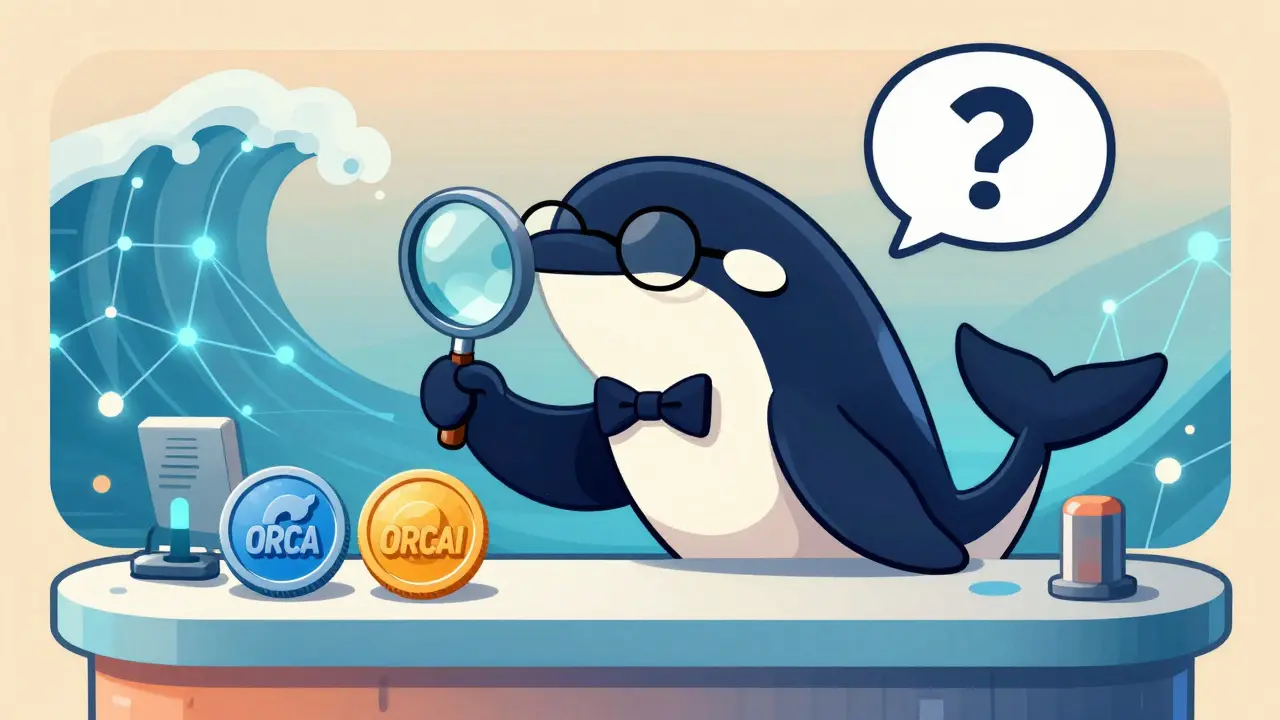
You’ve probably seen the ticker ORCA on your favorite exchange, or maybe you stumbled upon a listing labeled ORCAI and wondered if it’s a different coin entirely. The short answer is no-it’s the same asset. But understanding what drives its value requires looking past the ticker symbol and into the engine powering it: Orca, a decentralized exchange built on the Solana blockchain.
If you are new to crypto, the world of Decentralized Finance (DeFi) can feel like walking into a high-speed trading floor without knowing the rules. Orca was designed specifically to fix that problem. It aims to be the "exchange next door"-a place where you can swap tokens quickly and cheaply without needing a computer science degree. In this guide, we’ll break down what Orca actually is, why the ORCA token matters, and how it fits into the broader Solana ecosystem.
The Identity Crisis: ORCA vs. ORCAI
Before diving into the tech, let’s clear up the confusion in the name. The native token of the Orca protocol is officially called ORCA. However, some centralized exchanges, such as Kraken, list it under the ticker ORCAI.
This isn’t a fork or a scam copycat. It’s simply a naming convention used by certain platforms to distinguish the token from other assets with similar tickers or to comply with internal listing standards. When you buy ORCAI on one platform, you are buying the exact same governance token that powers the Orca DEX. Always check the contract address if you are transferring funds between wallets to ensure they match the Solana Program Library (SPL) standard for ORCA.
What Is Orca? More Than Just a Swap Button
Orca is an automated market maker (AMM) and decentralized exchange (DEX) operating on the Solana blockchain. Founded in 2021 by Yutaro Mori and Grace Kwan, the project was born out of frustration with the high fees and slow speeds of Ethereum-based DeFi protocols at the time.
Here is the core idea: Traditional exchanges use an order book, matching buyers with sellers. Orca uses liquidity pools. You trade against a pool of funds provided by other users. Because it runs on Solana, these trades settle in seconds, not minutes, and cost pennies, not dollars. This makes it highly efficient for everyday trading rather than just large institutional moves.
Orca also acts as a price aggregator. It doesn’t just rely on its own pools; it scans various sources to give you the best possible rate for your swap. Think of it as a travel booking site that compares flight prices from multiple airlines, but for crypto tokens.
Why Build on Solana?
The choice of blockchain is critical to Orca’s identity. Solana is known for its high throughput and low transaction costs. For a DEX, this is a game-changer.
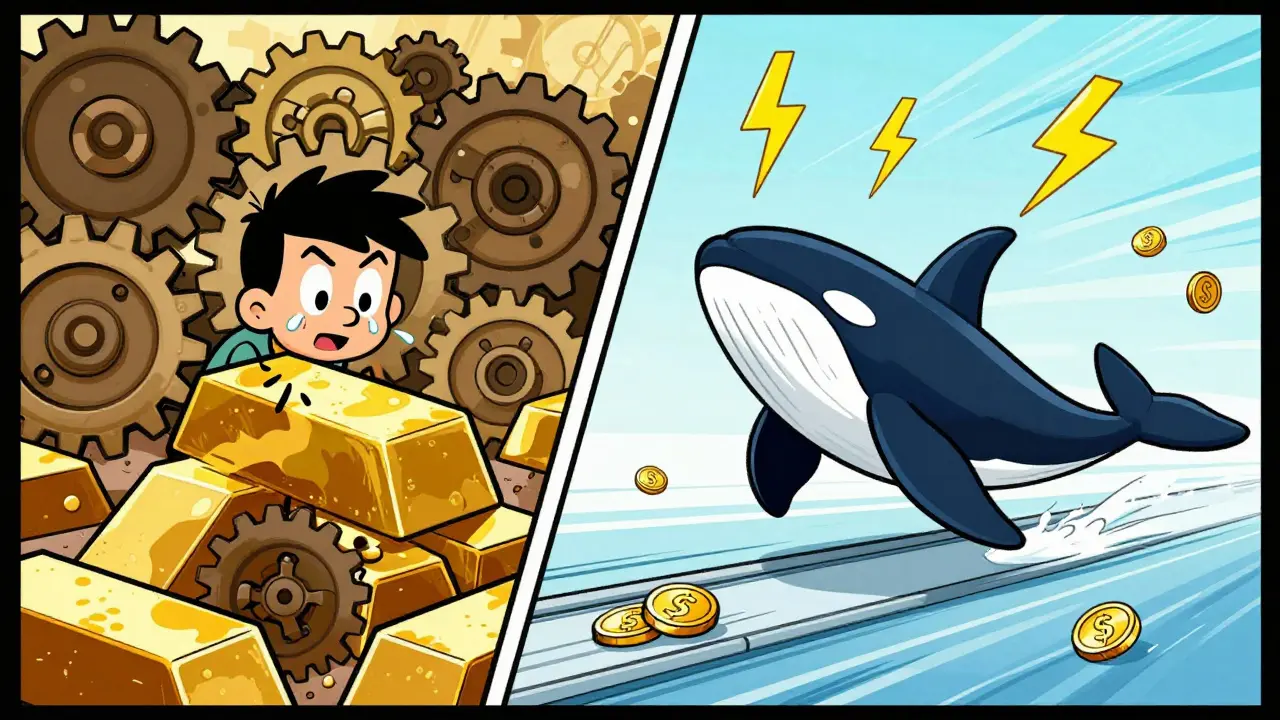
- Speed: Trades finalize almost instantly. If you are trying to catch a quick market move, latency matters. On Ethereum, you might wait for block confirmations that take time. On Solana, via Orca, it’s near-instant.
- Cost: Gas fees on Ethereum can spike to $50 or more during busy periods. On Solana, fees are typically fractions of a cent. This allows for smaller, more frequent trades without eating into your profits.
- Scalability: Solana can handle thousands of transactions per second, meaning the network rarely gets congested even during bull markets.
This infrastructure allows Orca to position itself as "your homepage for buying crypto on Solana," aiming to be the primary entry point for retail users entering the ecosystem.
Understanding the ORCA Token Utility
So, what do you actually get when you hold the ORCA token? It’s not just a speculative asset; it has real utility within the protocol.
| Utility | Description | Benefit to Holder |
|---|---|---|
| Governance | Voting on protocol upgrades and parameter changes. | Influence the future direction of the DEX. |
| Liquidity Incentives | Rewards for providing liquidity to pools. | Earn additional tokens on top of trading fees. |
| Yield Farming | Participating in Aquafarms to maximize returns. | Higher potential yields compared to standard savings. |
Governance is the most significant aspect. As a holder, you have a say in how the protocol evolves. This includes decisions on fee structures, new token listings, and technical upgrades. This decentralization ensures that no single entity controls the exchange.
Incentivizing Liquidity is crucial for any DEX. Without enough money in the pools, trades suffer from high slippage (getting a worse price than expected). Orca distributes ORCA tokens to Liquidity Providers (LPs) who deposit their assets into these pools. This creates a virtuous cycle: better liquidity attracts more traders, which generates more fees, which rewards LPs further.
Key Features: Aquafarms and CLAMM
Orca distinguishes itself from other DEXs through two major technological features: Aquafarms and Concentrated Liquidity AMM (CLAMM).
Aquafarms are Orca’s yield farming mechanism. Instead of just sitting in a pool, you can allocate your liquidity positions to specific farms to earn extra ORCA rewards. It’s designed to be user-friendly, allowing you to see potential returns clearly before committing your capital.
Concentrated Liquidity AMM (CLAMM) is a more advanced feature borrowed from the Uniswap V3 model but adapted for Solana. In traditional AMMs, your liquidity is spread across all possible price ranges (from $0 to infinity). With CLAMM, you can concentrate your liquidity within a specific price range where you expect the token to trade.
For example, if you believe USDC/SOL will stay between $140 and $160, you can deploy your funds only in that band. This makes your capital much more efficient, earning you significantly higher fees for the same amount of deposited assets. However, it comes with risk: if the price moves outside your range, you stop earning fees and face impermanent loss. It requires active management, so it’s better suited for experienced users.
User Experience: Designed for Humans
One of Orca’s biggest selling points is its interface. Many DeFi platforms look like code editors, intimidating for newcomers. Orca focuses on clarity.
- Fair Price Indicator: Before you swap, Orca checks the quoted price against CoinGecko’s data. If the price deviates by more than 1%, it warns you. This protects you from bad quotes or front-running bots.
- Your Tokens Panel: A clean dashboard showing your balances directly in the app, so you don’t have to switch tabs to check your wallet.
- Magic Bar: A search function that helps you quickly find existing trading pairs, reducing friction when navigating hundreds of tokens.
This "user-first" approach has helped Orca grow beyond just crypto natives, attracting retail investors who want exposure to Solana DeFi without the steep learning curve.

Risks and Considerations
No investment is without risk, and Orca is no exception. Here is what you need to watch out for:
- Impermanent Loss: If you provide liquidity, and the price of one token in the pair changes drastically compared to the other, you may end up with less value than if you had just held the tokens in your wallet. This is inherent to all AMMs.
- Smart Contract Risk: While Orca has been audited and is listed on major exchanges like Coinbase and Robinhood, smart contracts can still have vulnerabilities. Always do your own research and never invest more than you can afford to lose.
- Solana Network Stability: Orca relies entirely on Solana. If the Solana network experiences downtime or congestion (which has happened historically), Orca will be affected too.
- Token Supply Confusion: Sources vary on the total supply, with some citing 75 million and others 100 million tokens. Circulating supply hovers around 60 million. Check the latest official documentation for accurate tokenomics, as burns or updates can change these figures.
How to Get Started with Orca
If you’re ready to try it out, here is the basic workflow:
- Get a Wallet: Download a Solana-compatible wallet like Phantom or Solflare. Secure your seed phrase offline.
- Buy SOL: You need SOL to pay for transaction fees. Buy it on a centralized exchange and send it to your wallet.
- Connect to Orca: Go to the official Orca website and connect your wallet. Double-check the URL to avoid phishing sites.
- Swap or Provide Liquidity: Use the swap interface to trade tokens, or navigate to Pools/Aquafarms to start earning yields.
Remember, Orca is a non-custodial platform. This means you control your keys, and therefore your funds. There is no customer support to reset your password if you lose access. Security is your responsibility.
Future Outlook: Regulated Assets on Chain
Orca isn’t resting on its laurels. The team is actively developing infrastructure for regulated assets. Imagine tokenized stocks or bonds being traded on-chain. Orca is building tools that allow issuers of these regulated assets to control who can interact with them directly at the token level.
This could bridge the gap between traditional finance (TradFi) and DeFi, bringing institutional capital onto the Solana blockchain while maintaining compliance. If successful, this positions Orca not just as a crypto exchange, but as a fundamental piece of financial infrastructure for the future.
Is ORCA the same as ORCAI?
Yes, they represent the same underlying asset. ORCA is the standard ticker on most platforms, while ORCAI is used by some centralized exchanges like Kraken to differentiate the listing. They are interchangeable in terms of utility and value.
Is Orca safe to use?
Orca is considered one of the safer DEXs due to its long track record, audits, and listings on major exchanges like Coinbase and Robinhood. However, all DeFi carries smart contract risks and network dependencies. Never invest more than you can afford to lose.
What is the total supply of ORCA?
There is some discrepancy in public data, with sources citing either 75 million or 100 million tokens as the maximum supply. The circulating supply is approximately 60 million. Always verify the latest tokenomics from official Orca channels as supply can change due to burns or protocol updates.
Can I earn passive income with ORCA?
Yes, by providing liquidity to Orca’s pools or participating in Aquafarms. You earn a share of trading fees plus potential ORCA token rewards. Be aware of impermanent loss risks when providing liquidity.
Why does Orca run on Solana instead of Ethereum?
Solana offers significantly lower transaction fees and faster settlement times compared to Ethereum. This makes Orca more accessible for small trades and provides a better user experience with near-instant swaps and minimal gas costs.