

You might have seen Litentry popping up in crypto charts or DeFi discussions, only to find yourself confused by a sudden name change. That’s because Litentry (LIT) officially rebranded to Heima in February 2025, transitioning its token from LIT to HEI. If you are holding LIT or considering buying in, understanding this shift is crucial. It wasn't just a cosmetic update; it marked a strategic pivot from pure identity aggregation to broader chain abstraction and cross-chain asset management.
At its core, the project-now operating under the Heima banner-solves a messy problem in Web3: your digital identity is scattered across dozens of blockchains. You have one wallet on Ethereum, another on Polkadot, and maybe some credentials on Solana. There is no single source of truth for who you are as a user. Litentry was built to fix that by creating a unified, verifiable digital identity that works across these isolated networks while keeping your private data secure.
The Core Problem: Fragmented Digital Identity
Imagine walking into a bank, a hospital, and a government office, and having to prove who you are from scratch every time, with none of those institutions talking to each other. That is the current state of blockchain interactions. This fragmentation creates friction. You cannot easily transfer your credit score from one DeFi lending platform to another. You cannot use your reputation on one social protocol to verify your status on another.
Decentralized Identity (DID) is a system that gives users control over their own digital identities without relying on centralized authorities. Litentry leverages DID principles but adds a critical layer: cross-chain compatibility. Unlike solutions that work only within one ecosystem, Litentry aggregates identity data from multiple sources-including on-chain activity, off-chain credentials, and social profiles-into a single, portable identity profile.
This aggregation allows applications to trust your identity without needing to store sensitive personal data themselves. Instead, they request a verification from the Litentry network. This reduces risk for platforms and improves user experience by eliminating repetitive KYC (Know Your Customer) processes.
How the Technology Works: TEEs and Substrate
The magic behind Litentry’s ability to keep your data private while still verifying it lies in its technical architecture. The system relies on two key components: Trusted Execution Environments (TEEs) and the Substrate framework.
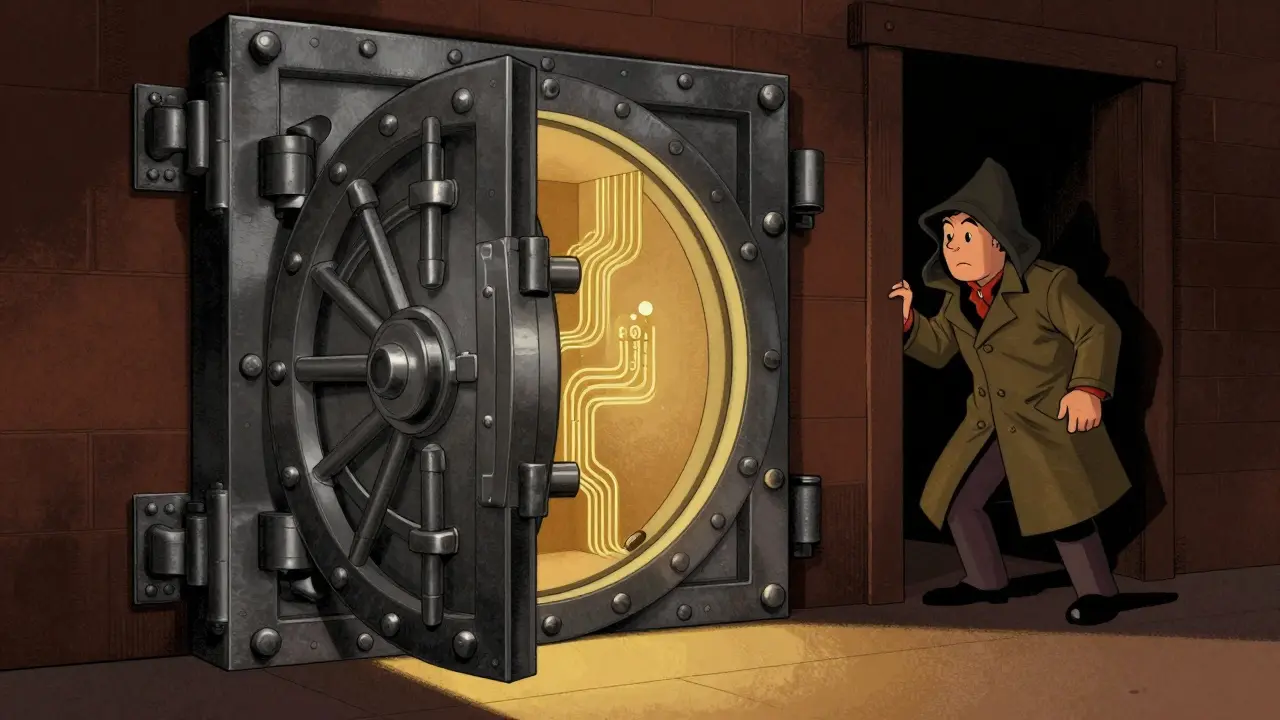
TEEs are isolated areas within a processor that ensure code and data loaded inside cannot be read or modified by external software, including the operating system. Think of it as a secure vault where your identity data is processed. When a DApp requests your credit score, the calculation happens inside this TEE. The DApp receives the result (e.g., "Credit Score: A") but never sees the raw data (e.g., your transaction history). This ensures privacy-preserving computation.
Built on the Substrate framework, which is designed for building custom blockchains, Litentry operates as a parachain on Polkadot. This position gives it native interoperability with other chains in the Polkadot ecosystem. However, it doesn’t stop there. Through its oracle system, Litentry can fetch data from EVM-based chains like Ethereum and Binance Smart Chain, making it truly multi-chain. As of late 2025, it supports 17 different blockchain networks.
The Rebranding: From Litentry to Heima
In February 2025, the team announced a major rebranding to Heima, named after the Icelandic word for "home." This move signaled an expansion beyond just identity. While identity remains the foundation, Heima aims to facilitate seamless cross-chain asset management and transactions-a concept known as chain abstraction.
Chain abstraction means users shouldn't need to know which chain they are transacting on. They should just interact with the application. By integrating identity with asset management, Heima allows users to leverage their verified identity to access better rates, higher limits, or exclusive features across different DeFi protocols automatically. The token changed from LIT to HEI during this transition, though the utility remained largely consistent initially, expanding to include staking rewards for cross-chain services.
Tokenomics: Understanding LIT and HEI
To understand the value proposition, you need to look at the token distribution. The maximum supply was fixed at 100 million tokens. Here is how that pie was originally sliced:
- Ecosystem Development (25%): Used for staking rewards and operational functions.
- Token Sales (20%): Raised funds for initial development.
- Polkadot Crowdloan (20%): Distributed to participants who helped secure the parachain slot.
- Development Team (15%): Allocated to the founders and engineers.
- Foundation (17%): Reserved for exchange listings, market makers, and community events.
- Partnerships & Launchpool (4.5%): Includes allocations for Binance Launchpool and strategic partners.
The HEI token serves three main purposes. First, it is used for governance, allowing holders to vote on protocol upgrades. Second, it is required for staking, which secures the network and earns rewards. Third, it acts as a fee payment method for certain identity verification services, although many integrations abstract this cost away from the end-user.
Comparison: Litentry vs. Competitors
The decentralized identity space is crowded. How does Litentry (now Heima) stack up against alternatives like Polygon ID or BrightID?
| Feature | Litentry / Heima | Polygon ID | BrightID |
|---|---|---|---|
| Primary Tech | TEE + Oracle | Zero-Knowledge Proofs (ZKPs) | Social Graph Verification |
| Cross-Chain Support | 17+ Chains (High) | Primarily Polygon/EVM | Single Chain Focus |
| Privacy Model | Hardware-based (TEE) | Cryptographic (ZKP) | Social Proof |
| Best Use Case | DeFi Credit Scoring | Private Authentication | Humanity Verification |
| Processing Speed | ~8.7 seconds | ~2.3 seconds | Variable |
Polygon ID uses zero-knowledge proofs, which are mathematically elegant and don't rely on hardware security modules. This makes them more transparent to some developers but potentially slower to implement for complex cross-chain queries. Litentry’s TEE approach is faster for processing large datasets but introduces a reliance on hardware manufacturers (like Intel or AMD), which some purists view as a centralization risk. Dr. Emily Chen from MIT noted this trade-off, praising Litentry's privacy model while flagging the hardware dependency.
BrightID takes a completely different route, focusing on proving you are a unique human through social connections. Litentry is less about "are you human" and more about "what is your financial and digital reputation." This makes Litentry particularly valuable for DeFi applications that need to assess creditworthiness without traditional banking data.

Real-World Adoption and Use Cases
As of October 2025, 147 DApps have integrated with Litentry. The majority (68%) are in the DeFi sector. For example, platforms like Acala and Parallel Finance use Litentry to provide personalized loan rates based on a user’s cross-chain behavior. If you have a strong history of repaying loans on one platform, Litentry can help prove that to another platform, potentially lowering your interest rate.
User feedback highlights both the convenience and the complexity. On Reddit, users praised the IdentityHub app for saving hours of manual verification when connecting wallets to multiple DApps. However, critics pointed out that the setup process can be daunting for beginners, taking up to 2.5 hours for new users. Additionally, some users expressed concern about the "black box" nature of TEEs, wanting more transparency into exactly what data is being processed.
Risks and Challenges
No technology is perfect. Litentry faces several hurdles. First, there is the issue of regulatory uncertainty. Global laws regarding digital identity and data privacy are evolving rapidly. If regulations tighten around cross-border data flows, Litentry’s model could face compliance challenges.
Second, there is the competition from established players. Chainlink has entered the verifiable credentials space with significant resources. While Litentry has a first-mover advantage in the Polkadot ecosystem, competing in the broader EVM space requires continuous innovation. In July 2024, a security audit found medium-severity vulnerabilities in the credential issuance process, which were patched quickly, but such incidents highlight the risks inherent in complex smart contract systems.
Finally, enterprise adoption remains low. Only three Fortune 500 companies were using Litentry for internal identity management as of mid-2025. Bridging the gap between crypto-native users and traditional enterprises is a significant challenge that will determine long-term growth.
Future Outlook: What’s Next for Heima?
The roadmap for Heima through late 2025 is ambitious. Key developments include the integration of zk-SNARKs (zero-knowledge succinct non-interactive arguments of knowledge) to enhance privacy further, scheduled for November 2025. This would combine the best of both worlds: the speed of TEEs with the cryptographic proof of ZKPs.
A mobile identity wallet application is also expected by December 2025, aiming to make identity management accessible to non-technical users. Analysts project a 300% growth in user base by 2026, driven by the increasing demand for cross-chain solutions. However, price predictions vary widely, with estimates ranging from $0.35 to $0.85 per HEI token by Q2 2026, depending on adoption rates.
Did Litentry (LIT) get hacked?
No, Litentry has not suffered a major hack resulting in fund loss. However, like many smart contract projects, it undergoes regular security audits. In July 2024, Blockchain Security Labs identified three medium-severity vulnerabilities in the credential issuance process, which were promptly patched in version 2.3.1. Always check the latest audit reports before interacting with any DeFi protocol.
Why did Litentry change its name to Heima?
The rebranding to Heima in February 2025 reflected a strategic expansion beyond just identity aggregation. Heima aims to provide chain abstraction and cross-chain asset management, allowing users to manage assets and identities seamlessly across different blockchains. The token symbol also changed from LIT to HEI.
Is Heima (HEI) a good investment?
Investing in crypto carries high risk. Heima occupies a niche but growing market in decentralized identity. Its success depends on widespread adoption of cross-chain DeFi and the ability to compete with larger players like Chainlink and Polygon. Analysts predict potential growth, but prices are volatile. Do your own research and consider your risk tolerance.
How does Litentry protect my privacy?
Litentry uses Trusted Execution Environments (TEEs) to process identity data. This means your sensitive information is calculated in a secure, isolated hardware environment. Applications receive only the verification result (e.g., "Verified") without seeing your underlying personal data. Future updates will also integrate zero-knowledge proofs for enhanced privacy.
Can I use Litentry on Ethereum?
Yes. Although Litentry launched as a Polkadot parachain, it supports cross-chain functionality. It has integrations with Ethereum, Binance Smart Chain, and 15 other networks. You can use your Litentry identity to interact with DApps on these various chains.
kamal ifrani
May 25, 2026 AT 18:51another day another rebrand to hide the fact that the tech is fundamentally flawed and the team is just burning cash on marketing instead of fixing the actual security holes in their smart contracts
Bill Gunn
May 26, 2026 AT 21:38Hey there! 👋 I actually think you're being a bit harsh on the marketing front. The TEE integration is pretty cool stuff, even if it does rely on Intel/AMD hardware which is a bit of a centralization risk. But hey, progress is progress right? 🚀
kamal ifrani
May 28, 2026 AT 04:03progress? you call trusting big tech hardware for privacy progress? its a joke and anyone who buys into this narrative is just donating to VCs while pretending they are early adopters of decentralization
Debbie Lewis
May 29, 2026 AT 16:00i guess we will see how it plays out but i am keeping an eye on the zk-SNARKs integration coming up
Dianne Wright
May 30, 2026 AT 21:27oh my god can someone explain why they changed the name again it is so confusing and annoying i just want to know if my tokens are safe or if i am going to lose everything because some guy decided he liked the word home better than litentry
Joe Clements
June 1, 2026 AT 08:04Hey Dianne, don't worry too much! The token swap from LIT to HEI was automatic for most exchanges. Your holdings should be fine, just check your exchange wallet to make sure the symbol updated correctly. It's a bit of a hassle but nothing fatal.
Rosie Morris
June 1, 2026 AT 09:57yeah i had issues with binance not updating fast enough but eventually it sorted itself out just be patient sweetie
trisya hazriyana
June 2, 2026 AT 11:34the whole chain abstraction narrative is just buzzword soup designed to pump the price before the inevitable dump but sure let us pretend that identity aggregation is the holy grail of defi when liquidity fragmentation is the real issue
Sam Dashti
June 2, 2026 AT 19:15I mean, look at it this way: if they can actually pull off seamless cross-chain credit scoring, that's a massive UX win. Right now, bridging assets is a headache, so having a unified identity layer that abstracts away the chain complexity sounds like a dream come true for retail users, even if the tech is still maturing.
trisya hazriyana
June 4, 2026 AT 01:59dream come true or nightmare fuel where your data is locked in a black box TEE that you cannot audit? i prefer zero knowledge proofs thank you very much
Eric Grosso
June 5, 2026 AT 11:07does anyone else think the setup time of 2.5 hours is crazy long for something supposed to be user friendly
stalin brian
June 6, 2026 AT 01:04it is kinda steep for newbies but once you get the hang of it the IdentityHub app saves you time in the long run by not having to KYC every single dapp separately
Edith Mair
June 6, 2026 AT 14:09The comparison table in the article is misleading. Polygon ID is faster because ZKPs are optimized for specific proofs, whereas Litentry is aggregating raw data. Comparing them directly ignores the fundamental architectural differences. Also, claiming BrightID is 'single chain focus' is outdated; they have expanded significantly since 2023.
lorna erni
June 7, 2026 AT 14:10stop nitpicking Edith and admit that Heima has better cross-chain support right now face it they are winning the interoperability game while you guys are stuck in silos
Craig Swanson
June 8, 2026 AT 05:49Lorna, please keep it civil. We are here to discuss technology, not start flame wars. Edith makes a valid point about the technical nuances of ZKP vs TEE processing speeds. Let's focus on the roadmap updates instead.