
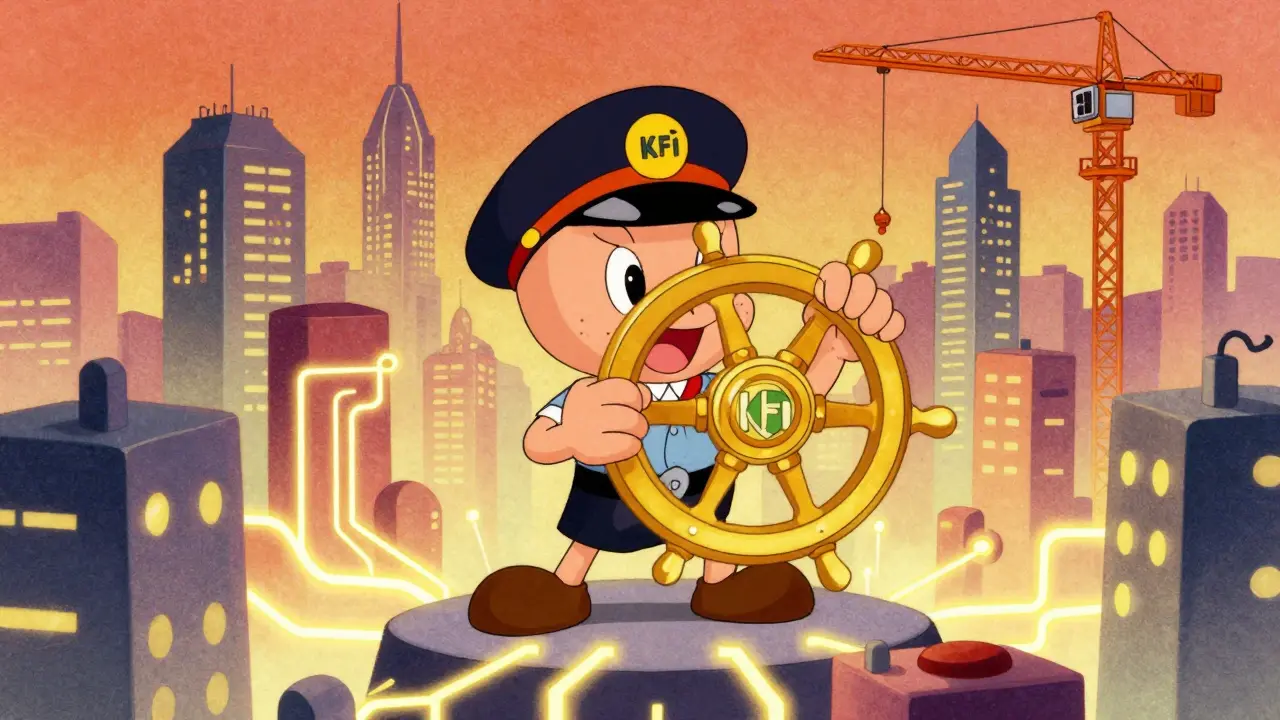
Imagine owning a piece of a digital city where you get to vote on the building codes, the tax rates, and which new businesses are allowed to open. That is essentially what holding Klever Finance (KFI) is like within its own ecosystem. While most people enter the crypto world looking for coins that act like digital cash, KFI is different. It is a governance token, meaning its primary purpose isn't to buy coffee or pay for services, but to give holders a seat at the decision-making table for the Klever Blockchain.
The Basics: What Exactly is KFI?
KFI is a governance token designed to manage the decentralized finance infrastructure of the Klever ecosystem. If you are used to tokens like Bitcoin, where the value comes from scarcity and use as a store of value, KFI operates on a different logic. Its value is tied to the power it grants the holder to shape the future of the network.
The token lives on KleverChain, which is a Layer 1 blockchain. Think of KleverChain as the foundation-the actual road and piping-while KFI is the steering wheel. Holders can vote on protocol configurations, such as how much applications should charge in fees or which new peer-to-peer apps get the green light to launch on the chain. Essentially, if you own KFI, you aren't just a user; you're a strategic ally in the ecosystem's growth.
The Dual-Token System: KFI vs. KLV
One of the most confusing parts for newcomers is the relationship between KFI and KLV. They aren't competitors; they are partners in a symbiotic relationship. To understand this, you have to look at their specific roles:
- KLV is the utility token. It is used for "gas" (paying for transactions) and energy. If you want to move assets or interact with a smart contract, you pay in KLV.
- KFI is the governance token. It is used strictly for voting and high-level decision-making. You don't use KFI to pay for a transaction; you use it to decide how the transaction system itself should work.
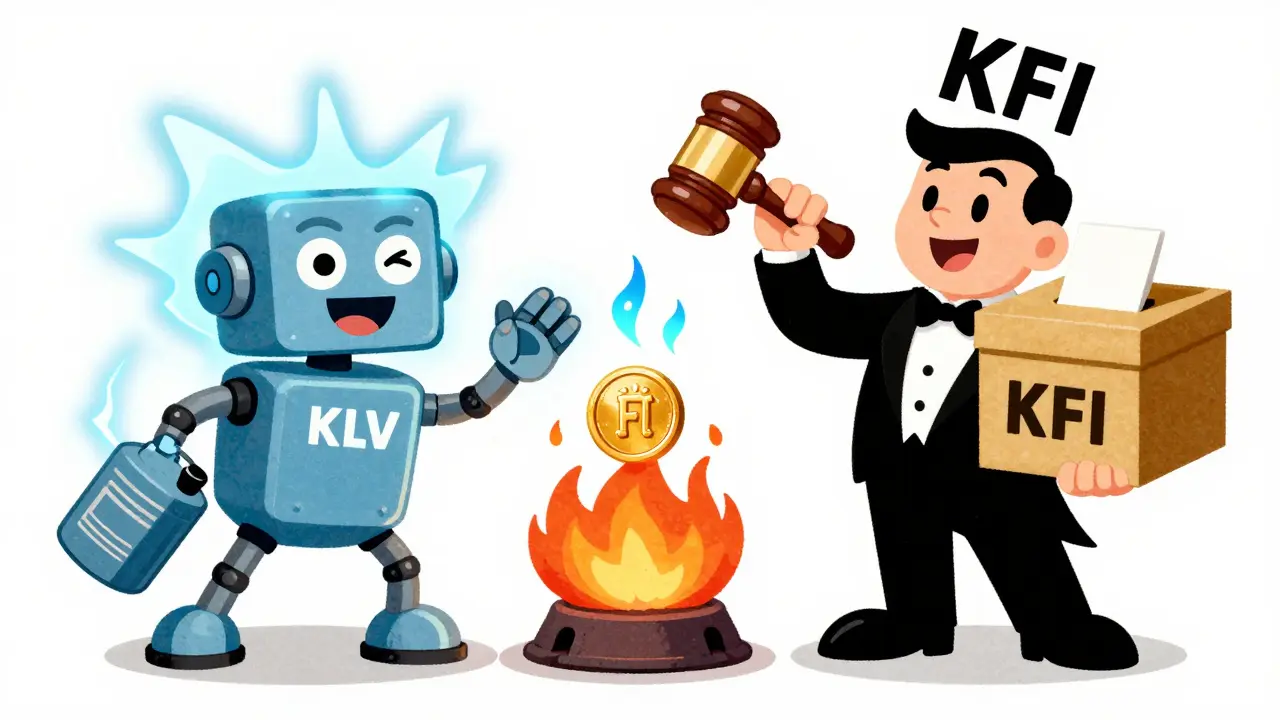
The most interesting part of this setup is how KFI is created. Klever uses a unique mining mechanism where KLV holders can put their tokens into daily mining pools to earn KFI. Here is the kicker: the KLV used to mine KFI is burned-permanently removed from the supply. This creates a deflationary effect on KLV while expanding the governance power of KFI holders.
| Attribute | Klever Finance (KFI) | Klever (KLV) |
|---|---|---|
| Primary Role | Governance & Voting | Utility & Gas Fees |
| Main Use Case | Deciding protocol upgrades | Paying for network transactions |
| Acquisition | Mining via KLV pools | Trading / Market Purchase |
| Impact on Supply | Expanding governance | Deflationary (Burned for KFI) |
How to Actually Use KFI
If you've acquired some KFI, you won't find a "Buy Now" button for physical goods. Instead, your interaction happens through the Klever Wallet. This is the gateway that allows you to manage your assets and participate in on-chain voting.
The process of governance isn't as simple as clicking a like button on social media. It requires engaging with the governance portal to review proposals. For instance, the KFI-001 proposal, which passed with over 87% approval, focused on enabling community-controlled protocol upgrades. By voting, you're essentially deciding if the network should move toward more decentralization or implement specific new features.
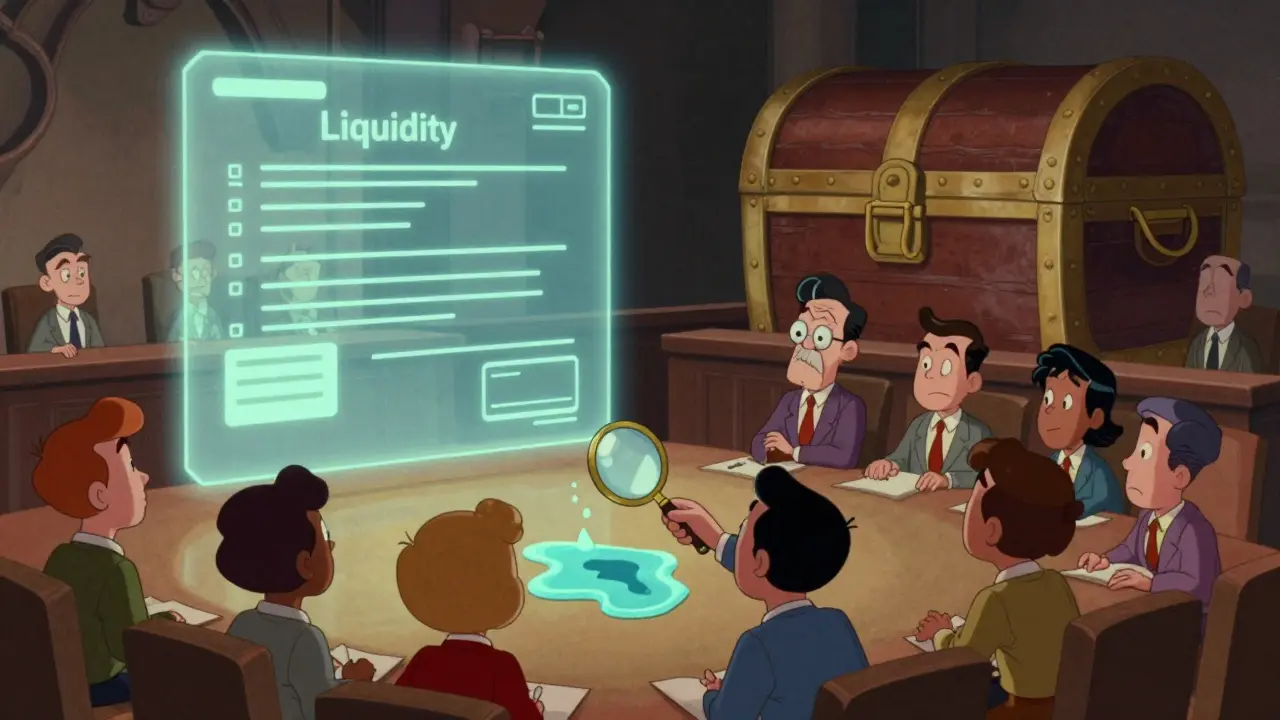
However, there is a practical hurdle: liquidity. Because KFI is not listed on as many major exchanges as giants like Uniswap (UNI) or MakerDAO (MKR), trading can be difficult. You might encounter significant "slippage," which is the difference between the expected price of a trade and the price at which the trade is actually executed. In some cases, a $1,000 trade could see 15% slippage, making it a risky move for those not familiar with low-liquidity markets.
The Risks and Reality Check
While the theoretical vision of KFI is impressive, the data tells a more complicated story. As of early 2024, KFI has struggled with adoption. Market rankings have plummeted, and trading volumes are often very low-sometimes ranging from only $700 to $8,000 in a 24-hour period. For a coin to thrive, it needs a bustling marketplace; without that, the "governance power" is only as valuable as the ecosystem it governs.
There are also concerns about power distribution. Some security researchers have pointed out that a large portion of the voting power-potentially up to 73%-is held in foundation wallets. This leads to a critical question: is the governance truly decentralized, or is it a formality where the foundation holds the real keys? While the Klever team disputes these claims, it's a point of contention for serious investors.
From a regulatory standpoint, there's the "Howey Test" to consider. Because KFI offers staking rewards, some legal experts suggest it could be classified as a security in certain regions. This means it could face stricter regulations than a simple currency, which could affect where it can be traded and how it is marketed.
Future Outlook: What's Next for KFI?
The roadmap for Klever Finance is ambitious. The team is pushing for a "KFI staking v2" implementation, which aims to use dynamic reward allocations based on how much the ecosystem is actually growing. They are also eyeing cross-chain governance capabilities, which would allow KFI holders to potentially influence things outside their own immediate blockchain.
Whether KFI survives and thrives depends on one thing: adoption. Right now, it's a niche tool for a small group of dedicated users. If the KleverChain can attract a wave of new peer-to-peer applications, KFI becomes the most valuable tool for those developers and users. If it stays a ghost town, the governance tokens are essentially voting on an empty room.
Is KFI the same as KLV?
No. KLV is the utility token used for gas fees and network operations. KFI is the governance token used exclusively for voting on the future of the ecosystem and protocol changes.
How can I get KFI tokens?
KFI can be acquired through exchanges or mined by adding KLV tokens into daily mining pools within the Klever ecosystem. Note that KLV used for mining is burned to create KFI.
What are the risks of investing in KFI?
The primary risks include very low liquidity (making it hard to sell without losing value), high concentration of voting power in foundation wallets, and potential regulatory classification as a security.
What does "governance" actually mean in this context?
Governance means that KFI holders can vote on things like application fees, new feature implementations, and the approval of new apps that want to run on KleverChain.
Where can I store my KFI?
The most common and integrated way to store KFI is using the Klever Wallet, which is designed specifically to handle the assets and voting mechanisms of the Klever Blockchain.
Next Steps for Users
If you are a Klever Finance (KFI) holder or considering becoming one, your path depends on your goals:
- For Governance Seekers: Head to the Klever Governance Portal. Review the active proposals and see how your voting power can actually change the network.
- For KLV Holders: Explore the mining pools. If you are bullish on the long-term governance of the network, burning some KLV to earn KFI might be an attractive strategy.
- For Traders: Be extremely careful with order sizes. Use limit orders rather than market orders to avoid the high slippage associated with KFI's low liquidity.
Matthew Morse
April 23, 2026 AT 08:10basically a ghost town with fancy words
Larry Yang
April 24, 2026 AT 23:31The liquidity is a joke. Try to sell more than a few hundred bucks and you'll see your profit vanish into thin air due to slippage. It's almost comical how they call this a finance ecosystem when the volume is practically non-existent. Just another low-cap project pretending to have a roadmap while the foundation hoards the votes. Classic.
Gloris Young
April 25, 2026 AT 01:48Klever Wallet makes it pretty easy to get started though! 🌟
Yvette P
April 25, 2026 AT 20:40Oh sure, because nothing says 'decentralized' like a foundation holding 73% of the voting power while the retail plebs fight over crumbs in a liquidity pool that's basically a puddle. I'm absolutely thrilled to see another Layer 1 attempt to reinvent the wheel by creating a governance token that's essentially a fancy paperweight until some magical wave of adoption hits. The 'KFI staking v2' is just a buzzword to keep people from dumping their bags while the devs figure out how to actually attract a dApp that isn't a mirror of another failing project. It's a masterclass in obfuscation using a dual-token system where you burn the utility token just to get a vote in a room where the foundation already decided the winner before the meeting even started. Absolutely brilliant strategy if your goal is to maximize confusion and minimize actual utility. I can't wait for the regulatory body to swoop in and decide this is a security, making the whole 'global digital city' a gated community with a very expensive entry fee. Truly a visionary approach to blockchain failure.
Jason M
April 27, 2026 AT 17:02Wait, 73% controlled by the foundation?! This is a tragedy! How can we talk about empowerment when the keys are held by so few! We need a massive shift toward true community ownership or the whole vision is just a mirage!
Jagdish Sutar
April 29, 2026 AT 09:00It's helpful to understand that these early stages are often messy. Many projects start with centralized control to ensure stability before gradually handing the reins to the community. It is a learning process for everyone involved.
Doc Coyle
May 1, 2026 AT 06:02Burn tokens to get votes. That is a bad way to do things. Simple as that.
Ali Tate
May 3, 2026 AT 00:12only a fool would touch this trash garbage coin lol
Mary Tawfall
May 3, 2026 AT 08:13I still believe in the vision! If a few good apps launch, everything changes fast. Keep hoping for the best!
Liz Ariza
May 5, 2026 AT 03:49The burn mechanism is actually pretty spicy! 🔥 It's a bold move to link the two tokens like that. I'm just vibing with the idea of a deflationary KLV supply 🌈✨
Sarah Ingrams
May 5, 2026 AT 10:17sounds like a lot of risk for a small reward
Candace Sherrard
May 6, 2026 AT 09:40It makes me wonder about the nature of governance in a digital space where the value is derived from the perception of power rather than actual utility. If the room is empty, as the post suggests, then the act of voting becomes a performative ritual rather than a strategic decision, which is a fascinating commentary on the current state of DeFi where we value the mechanism of control over the actual object being controlled.
Kyle Bush
May 6, 2026 AT 12:34USA TO THE MOON! 🇺🇸🚀 I don't care about the foundation, I care about the gains! Let's goooo! 🤑💥
Hannah Rubia
May 7, 2026 AT 23:13One must acknowledge that the slippage mentioned is a significant barrier to entry for institutional investors. It would be prudent to utilize limit orders exclusively to mitigate the risks associated with such low liquidity.
Tara Aman
May 8, 2026 AT 14:56I'm totally down to help new people figure out the mining pools! Let's all grow together!
Jennifer L
May 8, 2026 AT 18:36I feel so much anxiey about the regulatry part... if the Howey test fails, it could be a disaster for the small holders who just want to help the project grow 😭
Ellie Drews
May 10, 2026 AT 06:43Just take it slow everyone. No need to rush into buying if you're not comfortable with the risks.
debashish sahu
May 12, 2026 AT 05:28The dual token approach is common in this industry although the implementation here seems quite specific to their own chain