
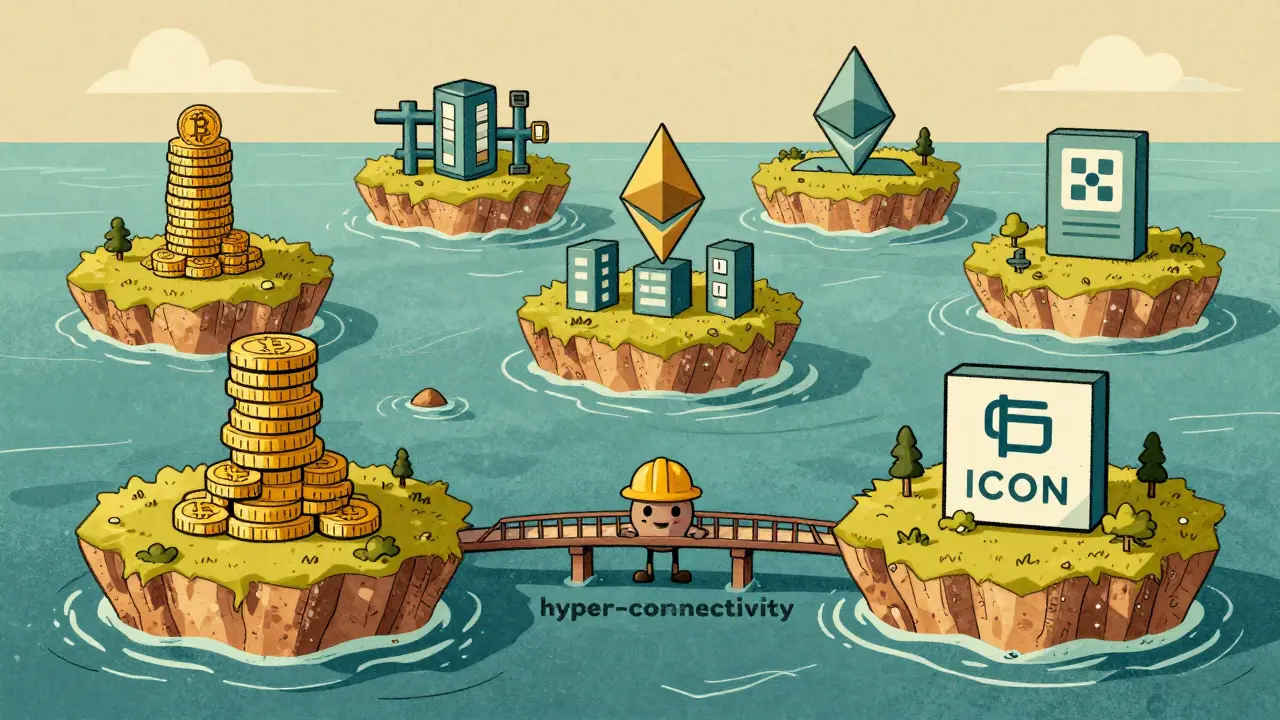
There is a common confusion in the crypto space right now. You might have heard of Iconic, a separate cryptocurrency project that has seen extremely low trading volumes and near-zero market capitalization recently. However, when people ask about "ICON" in the context of established blockchain technology, they are almost always referring to ICON (ICX), a major decentralized platform founded in 2017. These are two completely different entities. This guide focuses on the latter: the ICON blockchain and its native token, ICX, which aims to connect disparate blockchains into one unified network.
If you are wondering whether ICON is still relevant in 2026, or how its unique governance model works, you need to look past the price charts and understand the architecture. ICON was built with a specific vision: to create a "digital nation" where different economic actors can issue their own value systems while remaining interconnected. Let’s break down what this actually means for users, developers, and investors.
The Core Vision: Hyper-Connectivity
Founded by Min Kim through the Switzerland-based ICON Foundation, the platform launched its mainnet in January 2018. The core problem ICON tries to solve is fragmentation. In the early days of crypto, every blockchain was an island. Ethereum couldn’t talk to Bitcoin; private enterprise chains couldn’t interact with public ones. ICON’s mission is "hyper-connectivity."
Imagine a world where your healthcare provider’s private blockchain, your bank’s permissioned ledger, and a public DeFi protocol all communicate seamlessly. That is the goal. ICON provides the infrastructure-the "Nexus Protocol"-that allows these independent networks (called Communities) to interoperate without compromising their individual rules or privacy settings. Unlike other platforms that try to force everyone onto one chain, ICON respects the sovereignty of each community while enabling value transfer between them.
How the ICON Network is Structured
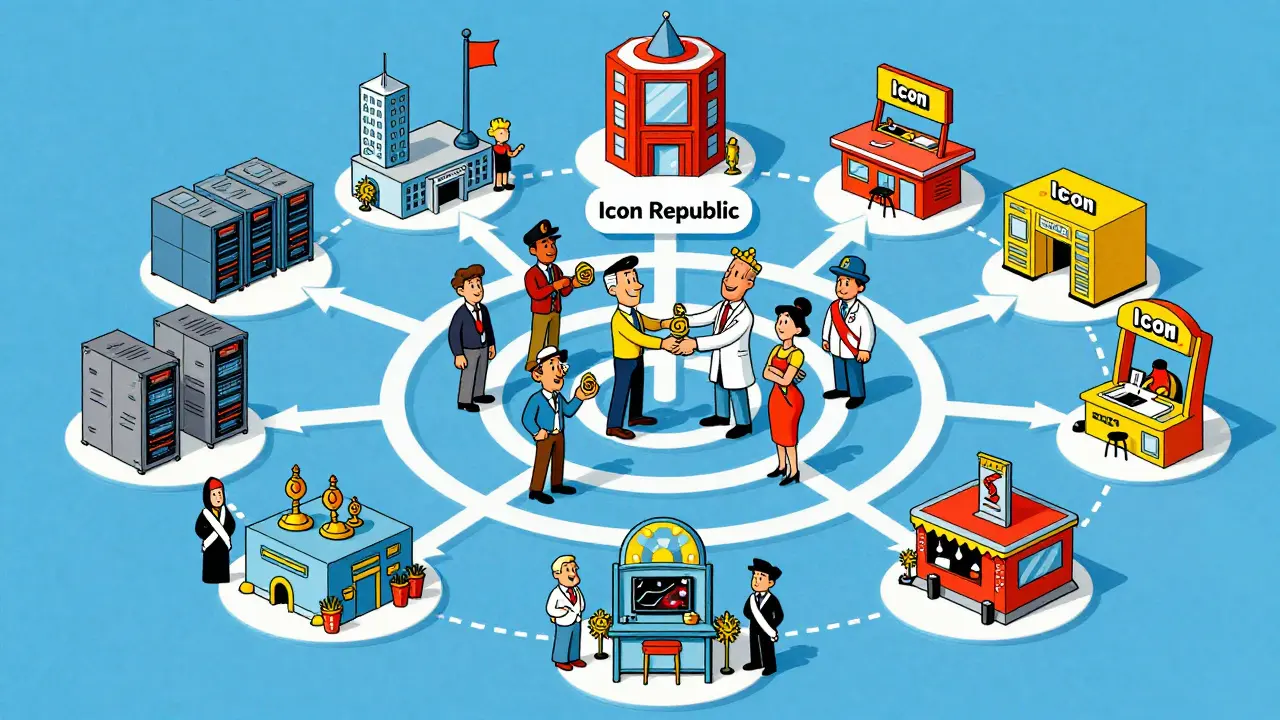
To achieve this connectivity, ICON uses a complex but logical structure composed of five key components. Understanding these helps you see why the system is designed the way it is.
- Icon Republic: This is the governing body of the entire network. It makes decisions about upgrades and operations. It is not controlled by a single company but by representatives elected from various communities.
- Icon Communities: These are individual blockchains within the larger ecosystem. Each community can have its own consensus algorithm, rules, and governance. For example, a government might run a secure, slow community, while a gaming app runs a fast, public one.
- Community Representatives (C-Reps): Elected nodes from each community who act as ambassadors. They vote on behalf of their community in the Icon Republic and receive ICX rewards for maintaining security.
- Community Nodes (C-Nodes): The technical infrastructure providers for each community. They validate transactions and maintain the blockchain’s integrity.
- Citizen Nodes: Regular users who hold ICX tokens. They don’t have voting power directly but can delegate their stake to C-Reps, Dapps, or projects to influence governance and earn rewards.
The ICX Token: More Than Just Fuel
The native cryptocurrency of the platform is ICX. It serves three primary functions:
- Transaction Fees: Like ETH on Ethereum, you need ICX to pay for gas fees when executing smart contracts or transferring assets.
- Governance: ICX holders can lock their tokens to participate in the network’s decision-making process. This is not just a symbolic vote; it directly impacts reward distribution.
- Value Representation: Through smart contracts, ICX can represent the value of other assets across different chains, facilitating cross-border and cross-chain payments.
Unlike Bitcoin, where miners compete using expensive hardware, ICON uses a Delegated Proof-of-Stake (DPoS) consensus mechanism. This is more energy-efficient and allows for faster transaction processing. The network claims to handle thousands of transactions per second, making it suitable for high-volume applications like mobile payments or supply chain tracking.
IISS: The Unique Economic Model
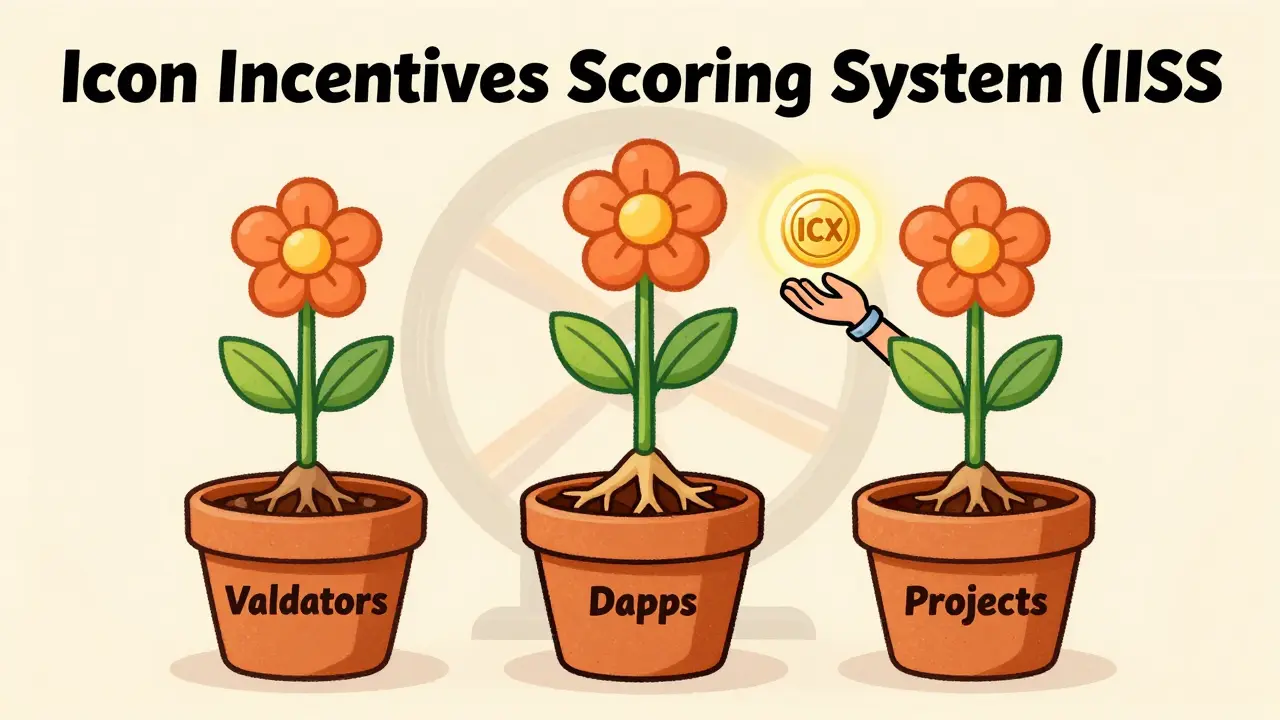
One of ICON’s most distinctive features is the Icon Incentives Scoring System (IISS). Most blockchains distribute new coins only to validators or miners. ICON distributes rewards to anyone contributing to the ecosystem’s growth.
Here’s how it works: Every time a block is produced, new ICX is minted. Instead of going solely to validators, this supply is distributed based on an "I-Score." Your I-Score is calculated based on how much ICX you’ve staked and where you’ve delegated it. You can delegate your stake to:
- Public Representatives: Validators securing the main network.
- Dapps: Decentralized applications you use and believe in. By delegating to a Dapp, you help it gain visibility and security, and you earn a share of the rewards.
- EEP Projects: Ecosystem Expansion Projects funded by the foundation to build critical infrastructure.
This creates a flywheel effect. Users want to support good projects because they get rewarded for it. Developers want to build quality apps because they attract stakers who boost their I-Scores. It aligns incentives in a way that pure mining models do not.
| Feature | ICON (ICX) | Ethereum (ETH) | Bitcoin (BTC) |
|---|---|---|---|
| Consensus Mechanism | Delegated Proof-of-Stake (DPoS) | Proof-of-Stake (PoS) | Proof-of-Work (PoW) |
| Interoperability Focus | High (Cross-chain via Nexus) | Medium (Layer 2 solutions) | Low (Primarily store of value) |
| Reward Distribution | IISS (Users, Devs, Validators) | Validators & Stakers | Miners Only |
| Transaction Speed | Thousands TPS | ~15-30 TPS (L1) | ~7 TPS |
| Primary Use Case | Enterprise & Cross-chain Apps | DeFi & NFTs | Digital Gold |
Market Reality: Price and Performance
We need to address the elephant in the room: ICON’s market performance. After its ICO in September 2017 raised $43 million, ICX hit an all-time high of approximately $0.58 in February 2018. Since then, the price has experienced significant volatility and long-term decline.
As of mid-2026, ICX trades at fractions of a cent, with a market cap that reflects diminished retail interest compared to its peak years. While the technology remains robust and the IISS model is innovative, the token has struggled to retain value against competitors like Polkadot, Cosmos, and Ethereum L2s that also focus on interoperability.
This doesn’t mean the tech is broken. It means the market has shifted. Investors today prioritize active development velocity, total value locked (TVL) in DeFi, and real-world adoption metrics over theoretical potential. ICON has faced challenges in attracting large-scale institutional partnerships and mainstream developer mindshare in a crowded field.
Is ICON Still Relevant?
For developers, yes. If you are building an application that requires strict data privacy but needs to interact with public blockchains, ICON’s architecture offers a sophisticated solution. The ability to run private consortium chains that bridge to public networks is a powerful feature for enterprise clients in sectors like finance, healthcare, and logistics.
For traders, however, caution is advised. The liquidity is lower than major caps, and the price action has been bearish for several years. Always conduct your own research (DYOR) and consider the opportunity cost of holding ICX versus other interoperability-focused tokens.
Getting Started with ICON
If you want to experiment with the network, here are the practical steps:
- Get a Wallet: Download the official ICONex wallet (available on iOS, Android, and Desktop). It supports both ICX and ERC-20 tokens, making it versatile.
- Acquire ICX: Buy ICX from a reputable exchange that lists it. Ensure the exchange supports withdrawals to the ICON network to avoid losing funds due to wrong network selection.
- Delegate Your Stake: Once your ICX is in ICONex, go to the delegation section. Choose whether to support Public Representatives, specific Dapps, or EEP projects. This activates your participation in the IISS system.
- Explore Dapps: Browse the ICON dApp store within the wallet to see what applications are running on the network, from games to financial tools.
Is Iconic (ICON) the same as ICON (ICX)?
No, they are completely different. "Iconic" refers to a separate, obscure cryptocurrency with very low market activity. "ICON" (ticker: ICX) is the established blockchain platform founded in 2017 focused on cross-chain interoperability. Always check the ticker symbol to ensure you are interacting with the correct asset.
How does the IISS reward system work?
The Icon Incentives Scoring System (IISS) distributes newly minted ICX to participants based on their "I-Score." This score is determined by how much ICX you stake and whom you delegate it to (validators, dApps, or projects). Unlike traditional mining, regular users earn rewards simply by supporting the ecosystem’s growth.
Can I use ICON for cross-chain transactions?
Yes, ICON’s core strength is interoperability. Using the Icon Nexus Protocol, assets and data can be transferred between different blockchain communities within the ICON ecosystem. However, direct bridging to non-ICON blockchains often requires third-party bridges or wrapped assets, so always verify the security of any cross-chain tool you use.
Why has ICX price dropped so much since 2018?
ICX peaked during the initial ICO hype cycle in 2018. Since then, the crypto market has matured, and competition in the interoperability sector has intensified. Platforms like Polkadot and Cosmos have captured significant market share. Additionally, ICON has faced slower adoption rates among retail investors compared to DeFi-centric chains, leading to reduced demand and lower valuations.
Is ICON safe to use?
The ICON blockchain itself is secure, using a Delegated Proof-of-Stake consensus with robust fault tolerance. However, as with any crypto platform, risks exist in smart contract vulnerabilities, phishing attacks, and user error. Always use the official ICONex wallet, enable two-factor authentication, and never share your seed phrase.