
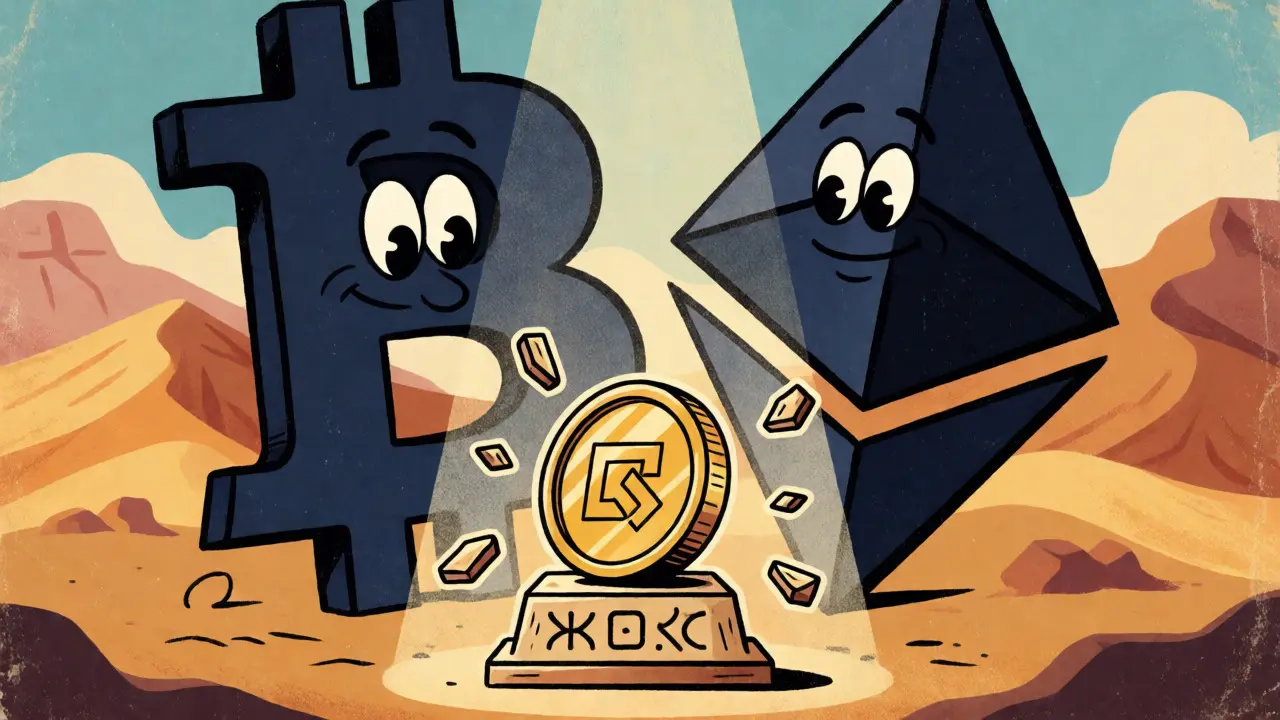
Have you ever wondered why some cryptocurrencies seem to pop up out of nowhere with big promises but tiny footprints? Global Commercial Business (GCB) is one of those assets. It’s not Bitcoin, and it’s definitely not Ethereum. But for users in the Middle East and Africa, it might be more relevant than the giants. So, what exactly is this coin? Is it a scam, a hidden gem, or just another utility token looking for a home?
This article breaks down the GCB ecosystem without the fluff. We’ll look at how it works, where you can trade it, and whether its claims about financial inclusion hold water. If you’re thinking about buying, holding, or just curious about this mid-cap asset, here’s everything you need to know.
The Core Concept: More Than Just a Token
Global Commercial Business (GCB) isn’t just a digital currency; it’s the fuel for a broader fintech platform called GCBEX. Think of GCB as the loyalty points and transaction fee medium for an exchange that targets emerging markets. The project positions itself as a solution for regions with under-served banking infrastructure, specifically focusing on the Middle East and Africa.
The idea is simple: use crypto to bypass traditional banking hurdles. GCB aims to provide fast, secure, and cheap transactions for people who might not have easy access to global financial systems. It’s part of a growing trend of "exchange tokens," similar to how Binance uses BNB or KuCoin uses KCS. However, GCB operates on a much smaller scale, with a market capitalization that fluctuates wildly depending on the day and the data source.
Dual-Chain Technology: BSC and Tron
One of the most technical aspects of GCB is its dual-chain deployment. This means the same token exists on two different blockchains simultaneously. Why do this? It increases accessibility. Some users prefer the low fees of Tron, while others are already deep in the Binance Smart Chain (BSC) ecosystem.
Here is how the technology splits:
- Binance Smart Chain (BSC): GCB runs as a BEP-20 token. The contract address is
0x84f70be4DEb029d5f8AACBeAcC74c4dC10737342. This version has 18 decimal places. - Tron Network: On Tron, it’s a TRC-20 token. The contract address is
TPN3AXU6GH9abi7xKchewq4jTuSFLGjq5i. It also uses 18 decimals.
Having both versions allows the project to tap into two massive user bases. However, it also complicates things. You need to be careful when transferring funds. Sending BSC GCB to a Tron address (or vice versa) without a bridge will result in lost coins. Always check which chain your wallet supports before making a move.
Tokenomics: Supply, Price, and Discrepancies
If you’ve looked up GCB on different sites, you’ve probably noticed something weird: the numbers don’t always match. This is common for smaller projects, but it’s worth understanding why.
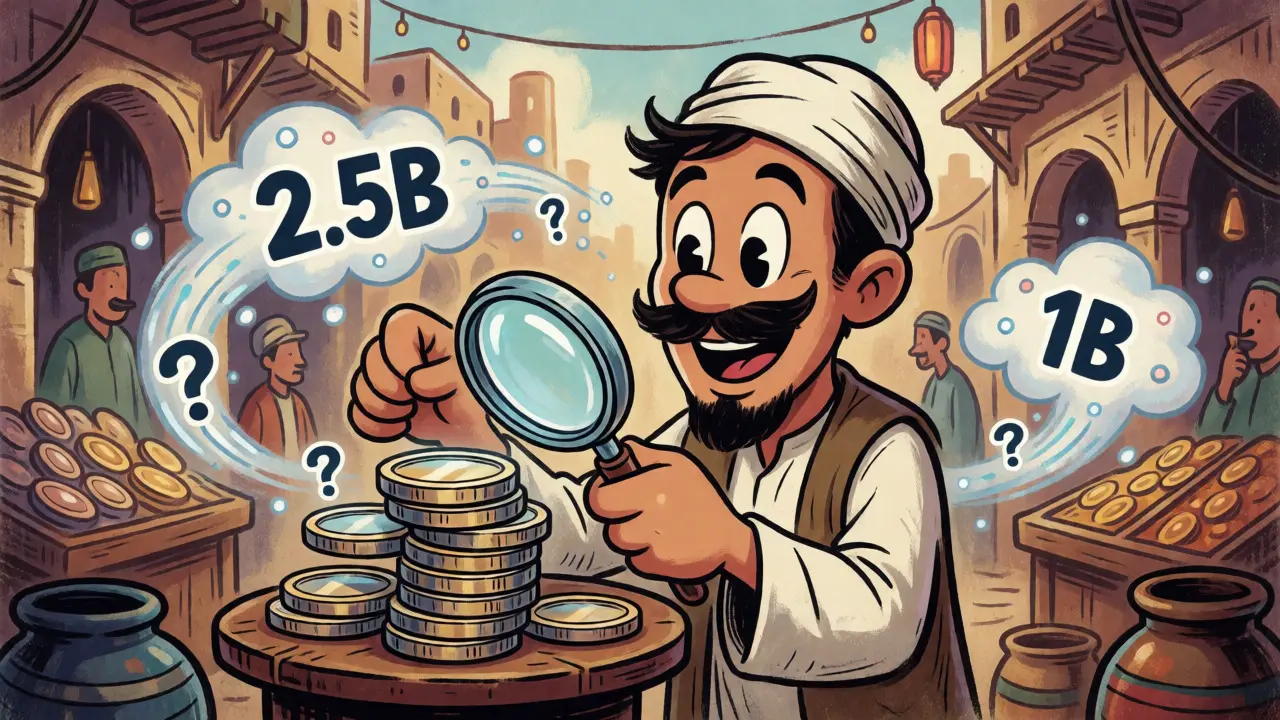
According to official documentation, the total maximum supply is 2.5 billion tokens. Of these, 1.3 billion are on BSC, and 1.2 billion are on Tron. Most major trackers like CoinGecko and CoinMarketCap agree with this figure. They report a circulating supply of roughly 1.2 billion tokens, meaning nearly half of all possible GCB coins are already in circulation.
However, some platforms like Cryptohopper list a max supply of only 1 billion. This discrepancy matters because it affects calculations like Fully Diluted Market Cap. If you assume there are only 1 billion tokens left to mint, you might think the price has more room to grow than if there are 1.3 billion more waiting in the wings.
| Metric | Value / Range | Source Context |
|---|---|---|
| Max Supply | 2.5 Billion (Official) 1 Billion (Some Aggregators) |
Check primary docs vs. third-party data |
| Circulating Supply | ~1.2 Billion | Consistent across major trackers |
| Price Range (2025-2026) | $0.008 - $0.104 USD | High volatility observed |
| Market Cap | $10M - $124M USD | Depends heavily on current price snapshot |
| Ranking | ~#314 (Peak April 2025) | Mid-cap status |
The price history shows extreme swings. In April 2025, GCB hit around $0.104 per token. By September 2026, prices had dropped significantly, hovering near $0.008 on some exchanges. This kind of volatility is typical for low-liquidity assets. One large sell-off can crash the price by double digits because there aren’t enough buyers to absorb the volume.

Utility: What Can You Actually Do With GCB?
A cryptocurrency needs a reason to exist beyond speculation. For GCB, the utility is tied directly to the GCBEX platform. Here’s how holders use the token:
- Trading Fee Discounts: Paying fees in GCB usually costs less than paying in stablecoins or fiat. This is standard for exchange tokens.
- Loyalty Tiers: Holding more GCB unlocks higher tiers, offering better perks like withdrawal limits or support priority.
- Liquidity Mining: Users can stake GCB in liquidity pools to earn rewards. This helps keep trading pairs active on the exchange.
- Referral Bonuses: The platform incentivizes growth by rewarding users who bring in new traders with GCB bonuses.
- Investment Products: The white paper mentions integration with investment services, suggesting GCB might be used to participate in specific yield-bearing products within their ecosystem.
It’s a closed-loop system. The value proposition relies entirely on people wanting to use GCBEX. If the exchange fails to attract users, the demand for the token drops. Unlike Bitcoin, which has value due to scarcity and network effect, GCB’s value is derived from the service it provides.
Risks and Red Flags
No discussion of GCB is complete without addressing the risks. First, transparency is mixed. While the smart contracts are public on BSCScan and Tronscan, independent audits are hard to find in mainstream news. Most information comes from the project’s own white paper (V2.0), last updated in April 2025.
Second, liquidity is thin. Daily trading volumes often sit below $1,000 on some aggregators. This means you might struggle to sell a large amount of GCB without moving the price against yourself. Slippage is a real danger here.
Third, regulatory clarity is vague. The project targets emerging markets, which often have evolving crypto laws. There’s no clear mention of licenses in jurisdictions like the US, EU, or even specific Gulf states in the available summaries. If regulators crack down on unlicensed exchanges in target regions, GCB could face headwinds.
Finally, community engagement seems limited. Major social platforms don’t show massive organic discussion compared to top-tier projects. Without a loud, active community, marketing efforts fall on the company itself. If they stop promoting, interest can fade quickly.
How to Buy and Store GCB
If you decide to invest, you won’t find GCB on Coinbase or Kraken. It’s primarily listed on niche exchanges and decentralized platforms compatible with BSC and Tron.
To buy GCB, you typically need to:
- Acquire BNB (for BSC) or TRX (for Tron).
- Send these to a wallet that supports the respective chain, like MetaMask (for BSC) or TronLink (for Tron).
- Use a Decentralized Exchange (DEX) like PancakeSwap (for BSC) or Sun.io (for Tron) to swap your base coin for GCB.
- Alternatively, check centralized exchanges that list GCB, such as Bybit or specific regional platforms, though availability varies.
Storage is straightforward. Since it’s a BEP-20 and TRC-20 token, any standard wallet supporting those standards will work. Hardware wallets like Ledger or Trezor generally support these chains, adding a layer of security. Never leave significant amounts on an unknown exchange unless you trust them completely.
Final Verdict: Who Is This For?
GCB is a high-risk, high-reward play for those who believe in the specific vision of GCBEX. It’s not for passive investors looking for stability. It’s for speculators who understand micro-cap dynamics and want exposure to the fintech sector in emerging markets.
If you’re in the Middle East or Africa and actually use the GCBEX platform, holding GCB makes sense for fee discounts. If you’re outside those regions and don’t use the exchange, you’re purely betting on the token’s speculative value. Given the price volatility and data inconsistencies, treat it as money you can afford to lose.
Is Global Commercial Business (GCB) a good investment?
GCB is a speculative mid-cap asset. Its value depends on the adoption of the GCBEX platform. While it offers utility through fee discounts and staking, it faces risks like low liquidity, price volatility, and inconsistent data reporting. It suits risk-tolerant investors familiar with emerging market crypto trends.
Which blockchains does GCB operate on?
GCB is deployed on two networks: Binance Smart Chain (as a BEP-20 token) and the Tron network (as a TRC-20 token). Both versions have 18 decimal places, but they require different wallets and addresses.
What is the total supply of GCB tokens?
Official documentation states a maximum supply of 2.5 billion tokens (1.3 billion on BSC and 1.2 billion on Tron). However, some third-party trackers incorrectly list 1 billion. Always verify with the official white paper or smart contract data.
Where can I buy GCB crypto?
GCB is available on decentralized exchanges like PancakeSwap (for BSC) and Sun.io (for Tron). It may also be found on select centralized exchanges like Bybit, but it is not widely listed on major platforms like Coinbase or Binance.com.
Does GCB have any independent audits?
Publicly accessible information regarding comprehensive, third-party code audits is limited. Most claims rely on the project's own white paper and documentation. Prospective investors should review the smart contracts themselves on blockchain explorers for verification.
sri harni
September 2, 2026 AT 08:33honestly this coin feels like it is trying too hard to be important
i see so many of these in india where people just hype up a token with no real use case and then everyone buys because they think they will get rich quick but usually they just lose money