
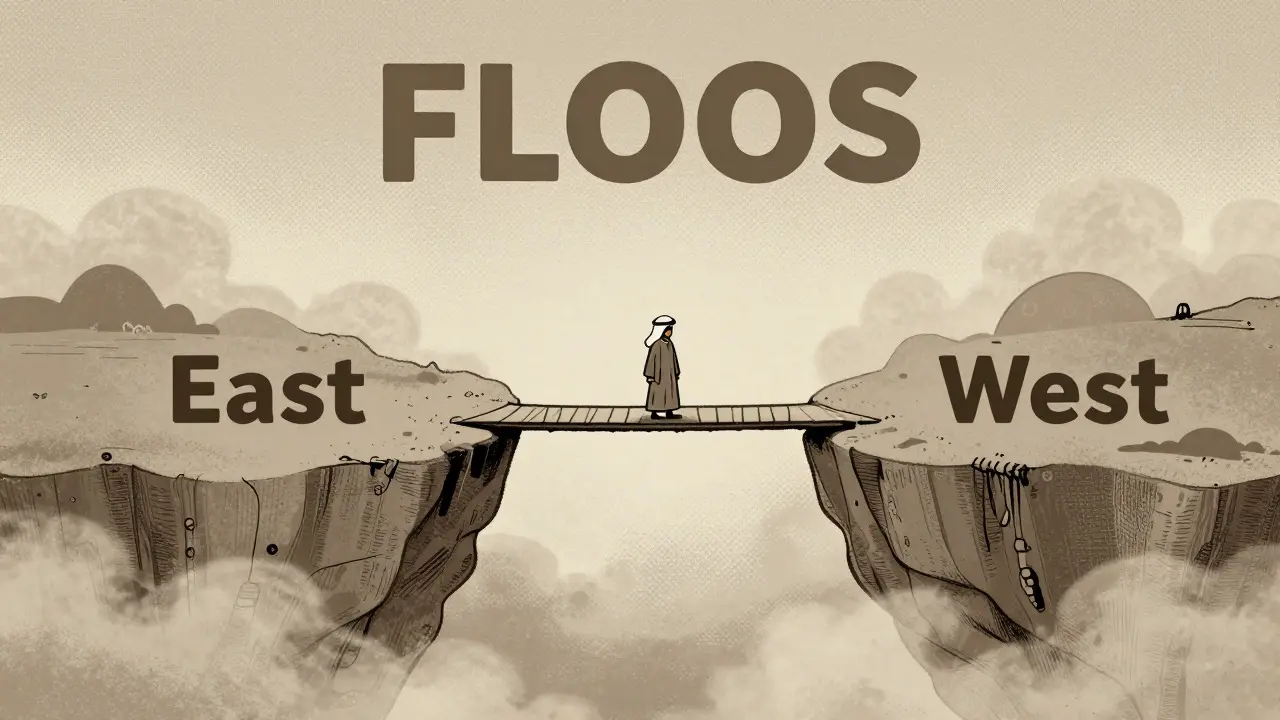
You’ve probably heard of Dogecoin or Shiba Inu. Maybe you even dabbled in Pepe. But have you seen FLOOS? It’s a cryptocurrency that claims to do something different: bridge the cultural gap between Eastern and Western communities through the lens of Arab culture. On paper, that sounds noble. In practice, it’s a high-risk micro-cap token with very little liquidity and almost no community noise. Before you buy even one satoshi worth of FLS, you need to understand exactly what you’re getting into.
This isn’t just another meme coin chasing trends. It has a specific mission statement. But does that mission translate into value? Let’s break down the facts, the numbers, and the risks associated with this obscure ERC-20 token.
What Is FLOOS (FLS)?
Is FLOOS a serious investment?
No. FLOOS is classified as a memecoin with extremely low market capitalization and liquidity. It carries significant risk of total loss.
FLOOS operates as an ERC-20 token on the Ethereum blockchain. If you know how to use MetaMask or Trust Wallet, you already know how to hold FLS. There is no new blockchain here, no proof-of-stake mechanism, and no complex smart contract architecture. It is a standard utility token built for simplicity, which also means it relies entirely on community hype rather than technological innovation.
The project’s stated goal is unique in the crypto space. Most meme coins are about dogs, frogs, or internet jokes. FLOOS aims to reduce cognitive differences between East and West by promoting Arab culture. That’s its "value proposition." However, looking at the data from late 2025 and early 2026, there is little evidence of active cultural initiatives funded by the token. The promise exists, but the execution remains largely theoretical.
Tokenomics: Supply and Circulation
When evaluating any crypto, supply matters. For FLOOS, the math is straightforward but tells a cautionary tale about distribution.
- Total Supply: 924,103,681 FLS tokens.
- Circulating Supply: 100% of the total supply is currently in circulation.
- Inflation: None. Since all tokens are already out, there is no inflationary pressure from new minting.
Having 100% of the supply circulating means there are no locked tokens for developers or future team allocations-a common red flag in many projects. This suggests the team dumped everything at launch. While that prevents future dilution, it also means there is no "skin in the game" holding the price up. You are buying from a pool where everyone else could theoretically sell at any moment.
Price History and Market Performance
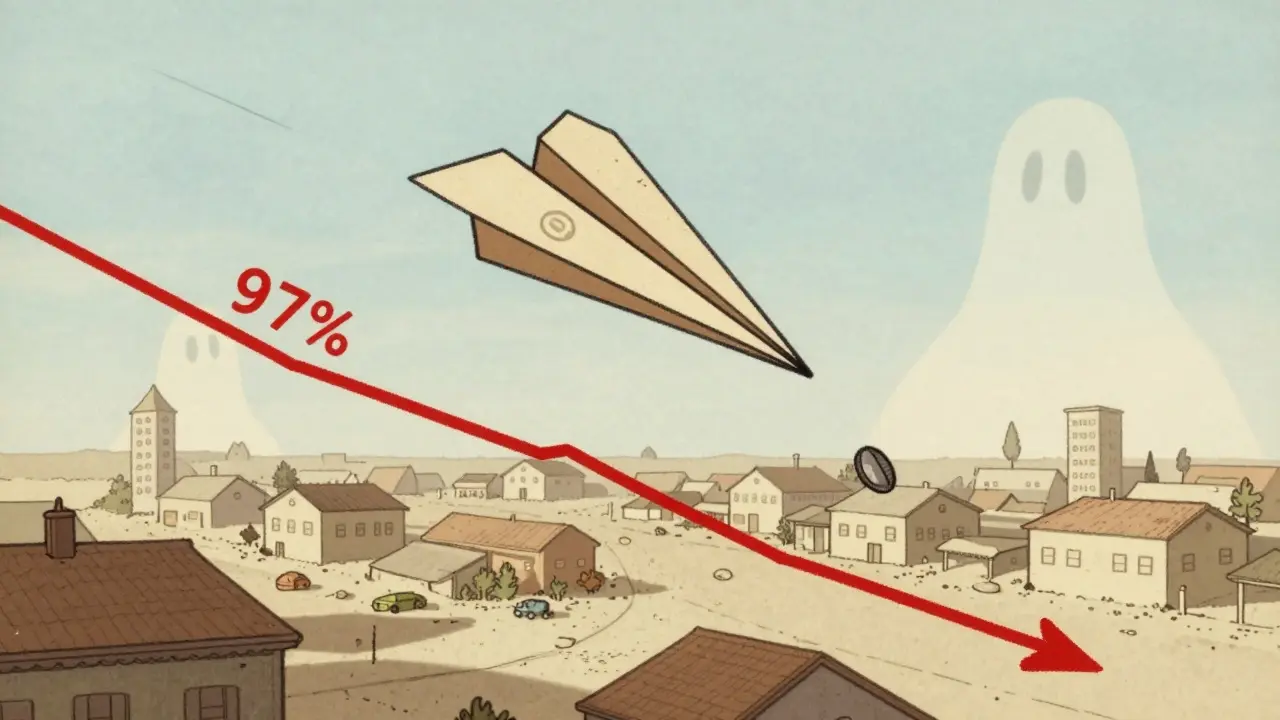
If you look at the charts, FLOOS looks like a ghost town. The token reached its all-time high (ATH) of $0.010319 back on October 3, 2024. As of mid-2026, the price hovers around $0.000150. That is a drop of over 97% from its peak.
Here is what the current market data reveals:
| Metric | Value | Context |
|---|---|---|
| All-Time High | $0.010319 | October 3, 2024 |
| Current Price Range | $0.000123 - $0.000172 | Highly volatile across exchanges |
| Market Cap | ~$142,000 - $159,000 | Micro-cap status |
| 24h Volume | $160 - $17,000 | Extremely low liquidity |
| Ranking | #6,500 - #9,400 | Bottom tier of global rankings |
The discrepancy in trading volume is alarming. One platform might show $160 in daily volume while another shows $17,000. This inconsistency usually indicates wash trading or fragmented liquidity pools. With a market cap under $160,000, FLOOS is not just small; it is negligible compared to giants like Bitcoin or even established memes like Dogecoin.
Liquidity Traps: Why Buying Is Harder Than Selling
Here is the trap most beginners fall into: seeing a low price ($0.00015) and thinking, "It’s cheap!" But price per token doesn’t matter. Market depth does.
FLOOS trades on select exchanges including Binance, MEXC, and Raydium. It is notably absent from Coinbase, which often serves as a gatekeeper for legitimacy. On decentralized platforms like Raydium, the order book is thin. If you try to buy $1,000 worth of FLS, you might slip the price by 5% or more because there aren’t enough sellers at your desired price point.
Imagine trying to buy a house in a neighborhood where only one other person lives. You can set the price, but if they leave tomorrow, you’re stuck. That is the reality of FLOOS. The bid-ask spread-the difference between what buyers offer and sellers ask-is likely wide. You enter a trade, and immediately you are underwater due to slippage.
Community and Sentiment: The Silence Is Loud
Meme coins live and die by their communities. Dogecoin has millions of followers. Shiba Inu has a dedicated army. What does FLOOS have?
Almost nothing. A search across Reddit, Twitter, and specialized crypto forums yields virtually zero discussion. There are no active Telegram groups, no Discord servers with thousands of members, and no GitHub repositories showing development activity. For a project launched with such a specific cultural mission, the silence is deafening.
Without a community, there is no organic marketing. Without organic marketing, there is no new demand. And without demand, the price drifts downward until it hits zero. The lack of user feedback on platforms like Trustpilot or G2 further confirms that retail interest is near non-existent.

Risk Assessment: Should You Buy FLS?
Let’s be blunt. FLOOS is a speculative asset with high risk. Here is why experts remain bearish:
- Low Liquidity: You may not be able to sell when you want to.
- No Utility: Beyond being a "conversation starter," there is no app, game, or service using FLS.
- Competition: It competes with thousands of other meme coins that have better branding and larger budgets.
- Regulatory Uncertainty: Micro-caps are often the first targets for regulatory scrutiny when markets tighten.
Analysts from CoinCodex project continued volatility with a potential downside of 25% in the short term. Some models suggest a possible rebound to $0.000305 by early 2026, but this represents a high-risk gamble, not an investment strategy. The probability of FLOOS maintaining relevance beyond mid-2026 is estimated at less than 20% based on historical patterns of similar micro-cap tokens.
How to Trade FLOOS (If You Must)
If you decide to take the plunge despite the risks, follow these steps to minimize friction:
- Choose the Right Exchange: Check MEXC or Binance for the best available liquidity. Avoid obscure DEXs unless you understand slippage settings.
- Use Limit Orders: Never use market orders. Set a limit price to avoid buying at the top of a thin order book.
- Check Gas Fees: Since FLS is an ERC-20 token, transactions happen on Ethereum. Ensure gas fees don’t eat up your entire trade amount.
- Start Small: Only invest money you are prepared to lose entirely. Treat it as entertainment, not savings.
Frequently Asked Questions
Is FLOOS listed on Coinbase?
No. As of late 2025 and early 2026, FLOOS is not listed on Coinbase. It is primarily traded on Binance, MEXC, and Raydium.
What blockchain does FLOOS use?
FLOOS is an ERC-20 token, meaning it runs on the Ethereum blockchain. You will need an Ethereum-compatible wallet to store it.
Why is the FLOOS price so low?
The low price reflects its tiny market cap (~$150k) and lack of demand. Unlike Bitcoin or Ethereum, there are few buyers, keeping the price suppressed.
Does FLOOS have any real-world utility?
Currently, no. Its primary purpose is symbolic-promoting Arab culture. There are no known apps, services, or staking mechanisms attached to the token.
Is FLOOS a scam?
There is no definitive evidence of a scam, but the lack of transparency, community, and utility makes it highly risky. Proceed with extreme caution.