
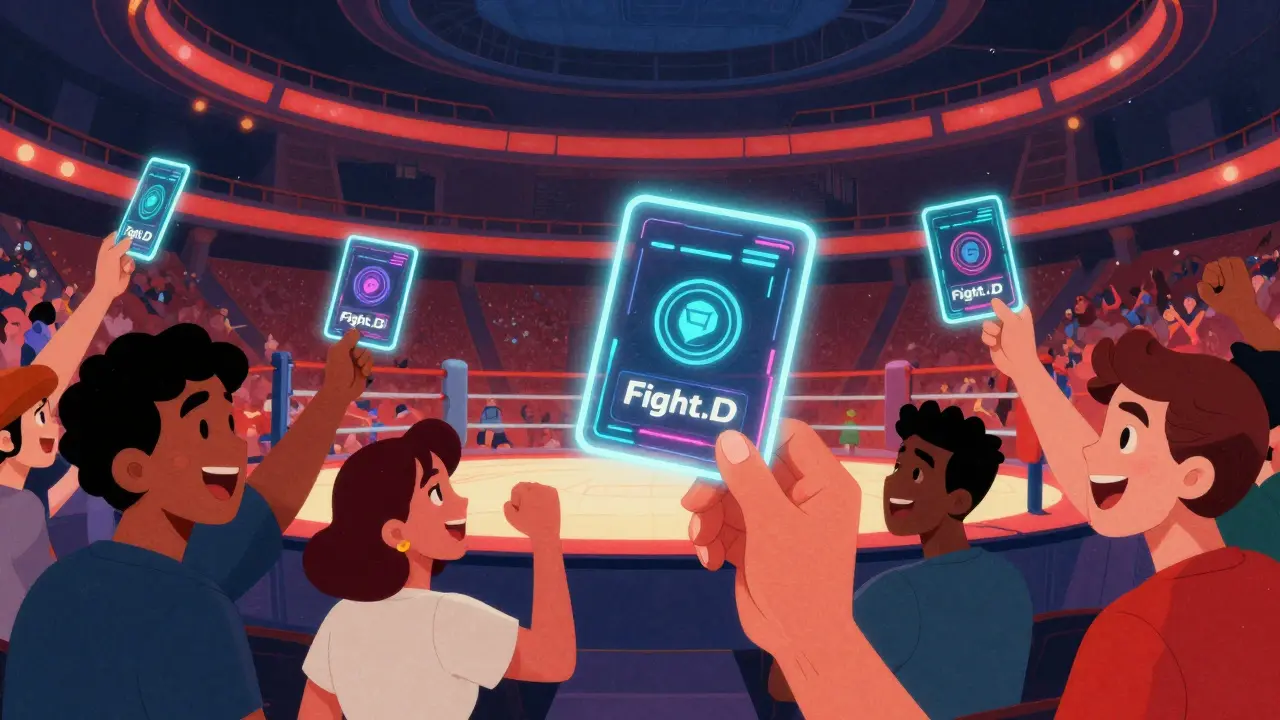
Imagine a world where your loyalty to a fighter or your history as a combat sports fan isn't just a memory or a social media follow, but a digital asset you actually own. That is the core idea behind FIGHT is a Web3 ecosystem token built on the Solana blockchain designed to serve as the digital home for combat sports. It isn't just a speculative coin; it is the engine for a platform that blends fan engagement, identity, and licensed collectibles into one arena. By partnering with heavyweights like the UFC, the project aims to move the massive energy of combat sports fans onto the blockchain.
The Three Pillars of the FIGHT Ecosystem
To understand how the FIGHT crypto coin actually works, you have to look at it as a three-part machine. It isn't just about the token; it's about the infrastructure supporting it. The system relies on three distinct elements to create value for the user.
- Fight.ID: This is a portable, on-chain identity system. Think of it as a digital passport for the combat sports world. Whether you are a fan or a professional fighter, your Fight.ID tracks who you are and what you've achieved across the ecosystem.
- Fighting Points (FP): Unlike the main token, these are non-transferable. You can't sell them or trade them. They act as a reputation score, proving how engaged you are with the community. The more you participate, the more FP you earn, which unlocks premium access.
- $FIGHT Token: This is the liquid asset. It's used for governance (voting on the project's future) and as an access key to enter the authenticated Fight.ID community.
This structure creates a loop: you use $FIGHT to get in, you earn Fighting Points to build your reputation, and your Fight.ID proves your status to the rest of the world. It's a way of turning fandom into a measurable, digital credential.
Technical Foundation: Why Solana?
The team chose Solana is a high-performance blockchain known for its incredible speed and very low transaction costs as the base layer. In a world of digital collectibles and rapid-fire fan interactions, waiting ten minutes for a transaction to clear-or paying $20 in gas fees-would kill the user experience.
Because Solana can handle thousands of transactions per second, users can trade licensed digital collectibles or update their Fight.ID status in real-time. This makes the ecosystem feel more like a modern app and less like a slow database. If the project were on a slower chain, the "commerce rails" used for selling tickets and merchandise would be too clunky for the average fan to use.
Tokenomics and Supply Mechanics
When looking at the numbers, FIGHT is designed to be deflationary, meaning the supply is managed to prevent endless inflation. The maximum supply is capped at 10 billion tokens. As of now, about 2.05 billion tokens are circulating, which is roughly 21% of the total limit. This means a significant portion of the supply is still locked or not yet released, which can lead to volatility depending on the unlock schedule.
| Attribute | Value |
|---|---|
| Maximum Supply | 10 Billion FIGHT |
| Circulating Supply | ~2.05 Billion FIGHT |
| Blockchain | Solana |
| Token Type | Deflationary Governance Token |
| All-Time High (ATH) | $0.06075 (Jan 2025) |
One interesting part of the tokenomics is the "burn" mechanism. Projects and brands that want to run campaigns for the Fight.ID community often have to burn $FIGHT tokens to acquire Fighting Points. Burning tokens removes them from circulation forever, which theoretically puts upward pressure on the price if demand for those campaigns increases.
Real-World Use Cases: More Than Just Trading
Most people enter the crypto space looking at a price chart, but the real value of FIGHT lies in its utility. The ecosystem is built around actual licensed properties, which is rare in the Web3 space. For example, the partnership with UFC Strike is a licensed digital collectible series featuring official combat sports memorabilia and trading cards allows fans to collect authentic assets that have real-world ties to the biggest fighting organization on earth.
Beyond collectibles, the token facilitates several other "jobs":
- Partner Distributions: Brands can target the authenticated community for giveaways or exclusive drops.
- Fighter Communities: Fighters can create their own hubs, allowing them to connect with fans without a middleman taking a massive cut.
- Commerce Rails: The platform is building ways to handle ticket sales and official gear purchases directly through the blockchain.
- Governance: Holders can vote on how the community-governed treasury is spent, such as funding new growth grants.
Market Volatility and the Price Puzzle
If you check the price of FIGHT across different exchanges, you might get a headache. There is a strange gap in data. While some platforms like CoinMarketCap and KuCoin show prices in the $0.003 range, others like CoinGecko report prices as low as $0.0002. This is a red flag for any investor and usually indicates "liquidity fragmentation."
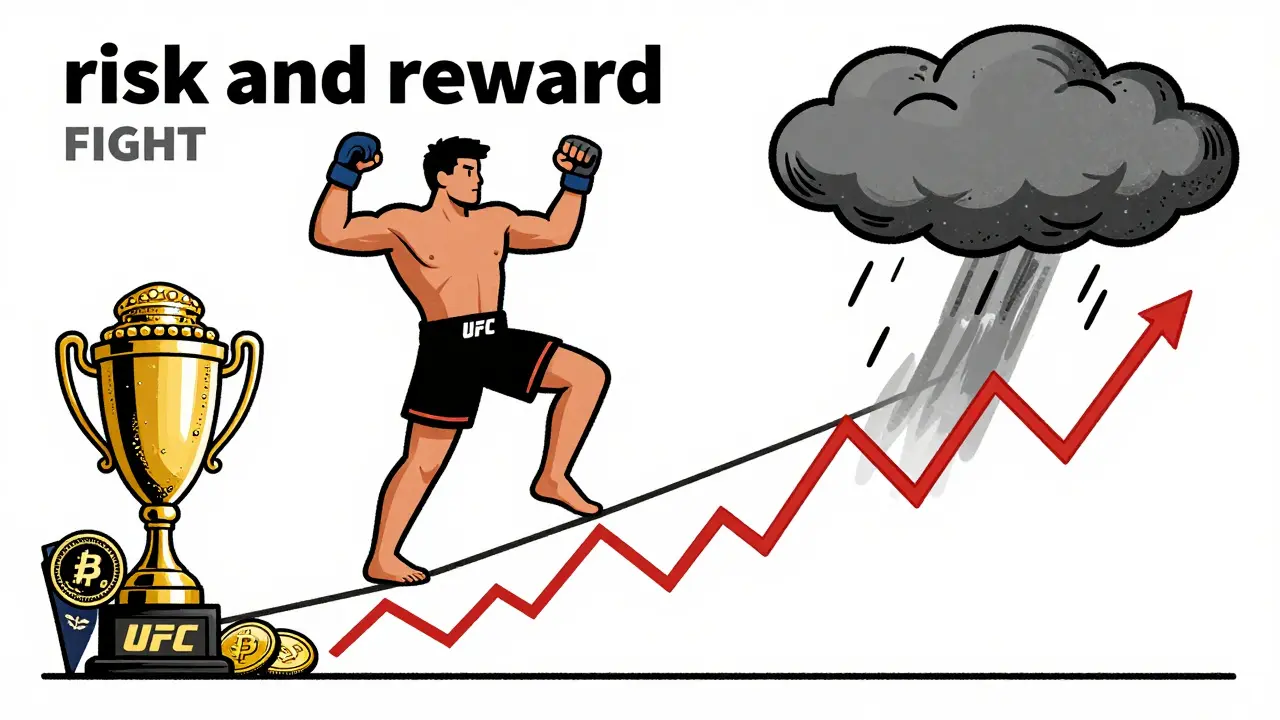
Essentially, this means the token might be trading on different pools or exchanges that aren't communicating well, or there may be different versions of the token. Combined with the fact that the price has dropped significantly from its January 2025 peak, it shows that FIGHT is a high-risk, high-reward asset. It has the prestige of the UFC license, but it lacks the steady institutional adoption needed to stabilize the price.
Risks and Considerations
No investment is without risk, and FIGHT has a few specific ones you should know. The biggest is the "dependency risk." Because the project relies heavily on licensed IP from organizations like the UFC, a contract dispute or a failure to renew a license could strip the ecosystem of its primary attraction. If the licenses go away, the digital collectibles lose a lot of their appeal.
There is also the matter of liquidity. With a relatively small market cap compared to the giants of the crypto world, a few large "whale" sells can send the price swinging wildly. If you're looking at this as a long-term play, you're betting on the adoption of Web3 by sports fans-a group that isn't always tech-savvy.
Is FIGHT a safe investment?
Like most early-stage Web3 tokens, FIGHT is highly volatile. While it has strong partnerships and a clear use case, its price has dropped significantly from its all-time high. It should be treated as a high-risk asset.
What is the difference between $FIGHT and Fighting Points (FP)?
$FIGHT is a tradable cryptocurrency used for governance and access. Fighting Points (FP) are non-transferable reputation markers that you earn through activity; you cannot sell FP for money.
How does Fight.ID benefit fighters?
Fight.ID gives fighters a portable identity they own. This allows them to build a direct relationship with their fanbase, manage their own community, and potentially monetize their brand without relying entirely on traditional promoters.
Why is the price different on different websites?
This is likely due to liquidity fragmentation or data errors across aggregators. Some sites may be tracking different pools of the token or updating their data at different intervals.
What blockchain does FIGHT use?
FIGHT is built on the Solana blockchain to take advantage of its high speed and low transaction fees, which are essential for collectibles and frequent community interactions.
What to do next?
If you're a combat sports fan, the best way to approach this isn't just by buying the coin, but by exploring the Fight.ID system. See if the licensed collectibles actually add value to your fandom. For those looking at the financial side, keep a close eye on the 24-hour volume across multiple exchanges to ensure you aren't trading in a low-liquidity environment.
If you encounter issues with price discrepancies, avoid using a single data source. Cross-reference the price on the actual exchange where you intend to trade (like KuCoin or Bybit) rather than relying solely on a tracking site. This ensures you know exactly what you're paying in real-time.
Mike Word
April 26, 2026 AT 00:57The integration of Solana seems logical given the need for high throughput in fan interactions. It is interesting how they are attempting to bridge the gap between traditional sports fandom and on-chain identity.
Jennifer Taylor
April 26, 2026 AT 17:29This is just a way for them to track us. First it is a digital passport then they know everything about where you go and who you like. Big Brother is just using the UFC to get our data. Wake up people
Doc Coyle
April 27, 2026 AT 00:57The price discrepancies mentioned are simply a result of basic market inefficiency. Anyone with a modicum of financial literacy knows that liquidity fragmentation is common in low-cap tokens. It is quite simple really.
Alex Hunter
April 28, 2026 AT 18:13For those just getting into this, remember that utility is what keeps a project alive during the bear markets. The Fight.ID concept is a great way to let fans prove their loyalty without just spending money. It's a cool approach to community building.
Mike Krasner
April 30, 2026 AT 09:49who cares about a digital passport for fighting lol sounds like a scam to me just buy the tickets and watch the fight stop making everything a token
Hannah Rubia
May 2, 2026 AT 06:31I would like to add that for potential investors, it is imperative to conduct thorough due diligence regarding the token unlock schedule. A significant portion of the supply remaining locked can lead to substantial price volatility upon release, which is a critical factor to consider for long-term stability.
Clair Geary
May 3, 2026 AT 22:03omg this sounds like a wild ride for sports fans! i love the idea of having a digital trophy case for all the fights i've seen... such a sparkly way to keep memories alive ✨
Keith Garcia
May 4, 2026 AT 11:40The sheer audacity of calling this an "ecosystem" is laughable 🙄. It is a pedestrian attempt to monetize nostalgia through a fragile blockchain. One cannot help but find the lack of institutional stability utterly pedestrian. 💅
Jagdish Sutar
May 6, 2026 AT 10:44It is wonderful to see combat sports reaching a global digital audience. This could be a great way for fighters from different countries to connect with fans worldwide without the need for expensive intermediaries.
Miranda Jamieson
May 7, 2026 AT 10:30You people are delusional if you think this isn't a pump and dump. Look at the price drop since January. You're not "investing" in a sport, you're gambling on a joke of a coin. Get a grip.
Caiaphas Konkol
May 7, 2026 AT 11:18The fragmentation of liquidity is an obvious smokescreen. They are likely manipulating the price across different pools to trap retail investors while the elites exit their positions. It is a classic shell game played with digital beads.
Kathleen Bergin
May 9, 2026 AT 10:50I already know how this works. It's just a token. If the UFC leaves, the coin goes to zero. That's just the way it is.
Charlie Queen
May 10, 2026 AT 17:48Love the energy here! 🥊 Whether it's a moonshot or a slow burn, the tech is moving forward. Let's see where this goes! 🚀🔥
Sarah Ingrams
May 11, 2026 AT 19:48i feel for people who bought at the top... that drop is brutal
Guy Bianco
May 12, 2026 AT 02:02I believe it is important to maintain a balanced perspective on these ventures. While the risk is high, the utility provided by the Fight.ID could revolutionize fan engagement if implemented correctly. :)