
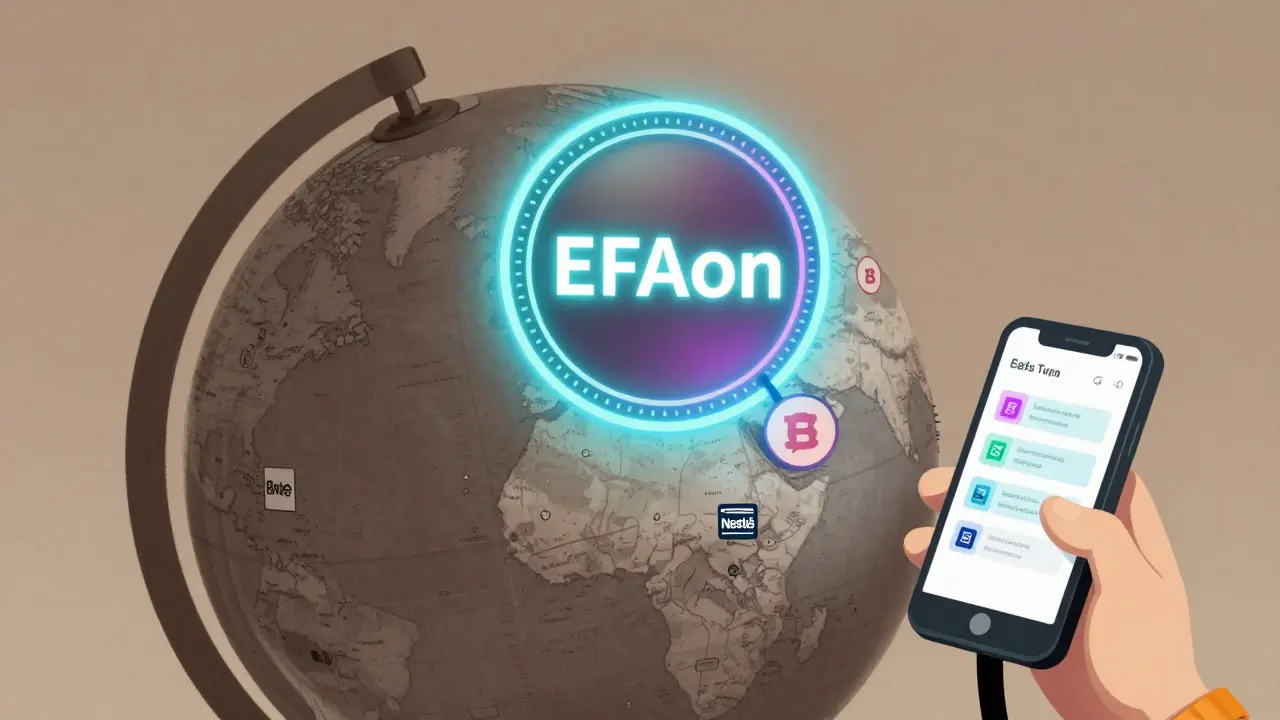
You want exposure to international stocks, but you don't want to deal with traditional brokerage hours or geographic restrictions. That is exactly what EFAon is designed for. It is a blockchain-based token that gives you economic access to the iShares MSCI EAFE ETF, one of the most popular funds for tracking developed markets outside the US and Canada.
Unlike buying the actual ETF shares through a broker like Fidelity or Schwab, EFAon lives on the Ethereum blockchain. This means you can trade it 24 hours a day, five days a week, using a crypto wallet instead of a bank account. As of June 2026, this isn't just a theoretical concept-it's an active asset backed by real ETF shares, managed by Ondo Finance.
How Does EFAon Actually Work?
To understand EFAon, you first need to understand what it is tracking. The underlying asset is the iShares MSCI EAFE ETF (ticker: EFA). This fund tracks large- and mid-cap companies in Europe, Australasia, and the Far East. Think of giants like Nestlé, Toyota, and ASML. It explicitly excludes US and Canadian companies.
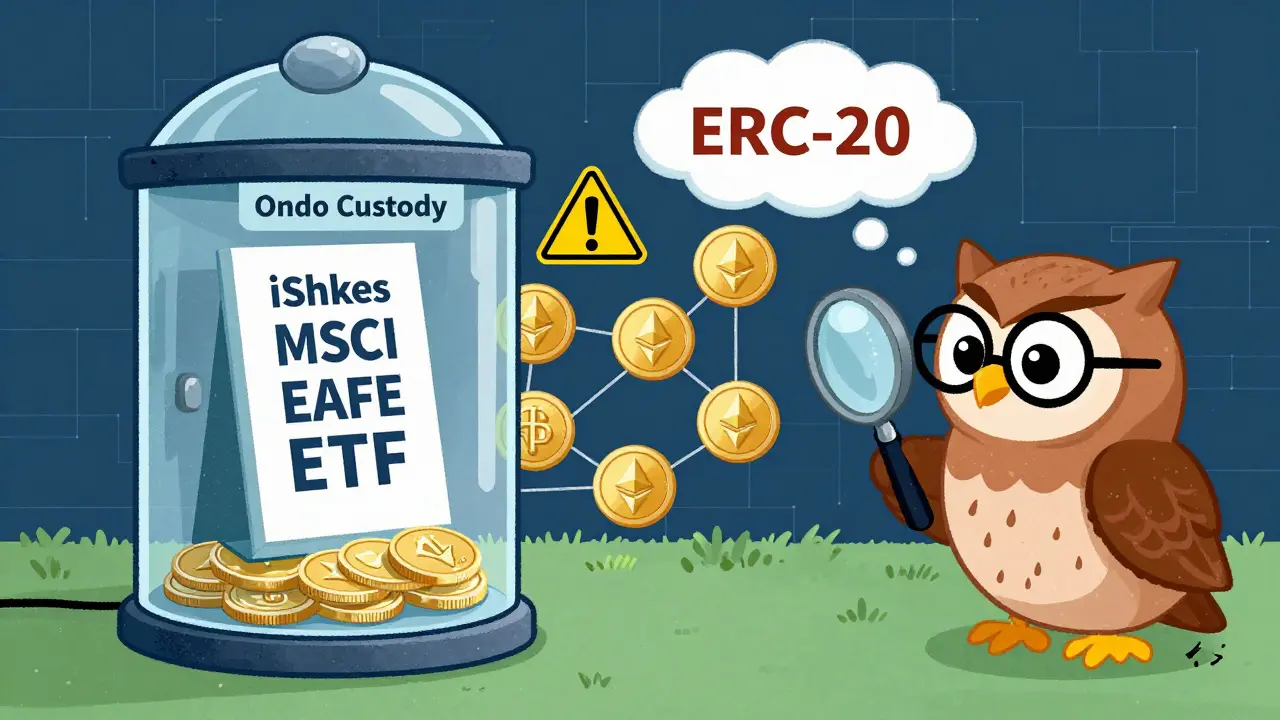
Ondo Finance takes those physical ETF shares and locks them up in custody. Then, they issue ERC-20 tokens on the Ethereum network that represent ownership in those shares. When you buy EFAon, Ondo holds the actual EFA shares behind the scenes. If you sell your EFAon, the token is burned, and the value returns to the pool backing the fund.
This setup creates a bridge between traditional finance and crypto. You get the diversification of an international equity fund, but you hold it as a digital asset. The dividends from the underlying stocks are reinvested, so your token value should theoretically track the performance of the EFA ETF closely, minus any fees.
Who Is EFAon For?
The primary audience for EFAon is non-US investors who want access to US-listed securities without navigating complex cross-border brokerage rules. Traditionally, if you lived in Australia, Japan, or Germany, buying US ETFs could involve high fees, currency conversion hassles, or outright restrictions.
EFAon removes those barriers. Because it trades on public blockchains, anyone with an internet connection and a compatible wallet can participate. However, there is a catch: compliance. Platforms like MetaMask and Ondo Global Markets enforce geo-blocking. If you are in the United States, you likely cannot buy EFAon due to SEC regulations regarding unregistered securities. This product is built for the global market, excluding US residents.
For crypto-native traders, EFAon also offers a way to hedge against Bitcoin volatility. Instead of holding only volatile crypto assets, you can allocate a portion of your portfolio to stable, dividend-paying international equities via EFAon, all while staying within your DeFi ecosystem.
Where Can You Buy and Trade EFAon?
As of mid-2026, EFAon is available across several major platforms. The easiest entry point for many users is through integrated wallets like MetaMask and Phantom. These wallets allow you to swap USDC for EFAon directly on the Ethereum mainnet. You don't need to open a separate exchange account; you just connect your wallet and execute the swap.
If you prefer centralized exchanges, EFAon was listed on WEEX in April 2026. This allows users to trade EFAon pairs using traditional order books, which might feel more familiar if you have experience with stock trading. Other aggregators and decentralized exchanges supporting Ondo’s ecosystem may also offer liquidity.
Before you buy, check your eligibility. MetaMask, for instance, requires users to be in supported non-US jurisdictions. The platform will perform checks to ensure you are not restricted by local laws or US sanctions.

Costs and Fees to Watch Out For
Nothing in finance is free, and EFAon is no exception. There are two main layers of costs:
- The Underlying ETF Fee: The iShares MSCI EAFE ETF has its own expense ratio (typically around 0.32%). This cost is deducted from the fund itself, meaning the price of the ETF-and thus the value of your token-grows slightly slower than the raw index return.
- Platform and Network Fees: Ondo Finance charges a service fee for minting and redeeming tokens. Additionally, because EFAon runs on Ethereum, you must pay gas fees for transactions. During times of high network congestion, these gas fees can add up, especially for smaller trades.
When swapping on MetaMask or other DEXs, you will also see a slippage tolerance and potentially a small spread charged by the liquidity provider. Always review the transaction details before confirming to avoid overpaying.
Risks You Should Know Before Investing
While EFAon offers convenience, it introduces new risks that don't exist when you simply buy EFA shares at a broker.
- Custodial Risk: Your token is only as good as the shares held in custody. If Ondo Finance or its custodian partners fail, go bankrupt, or act maliciously, your claim on the underlying ETF shares could be jeopardized. You are trusting a centralized entity with your assets.
- Smart Contract Risk: EFAon is an ERC-20 token. Like any smart contract, it could contain bugs or vulnerabilities that hackers might exploit. While Ondo audits their code, no system is 100% immune to exploits.
- Regulatory Uncertainty: The legal status of tokenized securities is still evolving globally. Governments could change rules, potentially restricting access or forcing delistings. This is particularly relevant for non-US investors whose home countries may have unclear stances on crypto-backed securities.
- Liquidity Risk: While EFAon has decent volume, it is nowhere near as liquid as Bitcoin or even the underlying EFA ETF. In a market crash, you might find it harder to sell large amounts of EFAon quickly without affecting the price.
EFAon vs. IEFAon: Which One Do You Need?
You might notice another similar token: IEFAon. This is the tokenized version of the iShares Core MSCI EAFE ETF. Both track international developed markets, but there are subtle differences.
| Feature | EFAon (iShares MSCI EAFE) | IEFAon (iShares Core MSCI EAFE) |
|---|---|---|
| Underlying Index | MSCI EAFE Index | MSCI EAFE IMI Index |
| Market Cap Coverage | Large and Mid-Cap only | Large, Mid, and Small-Cap |
| Expense Ratio (Approx.) | Higher (~0.32%) | Lower (~0.07%) |
| Best For | Investors preferring established legacy benchmarks | Investors wanting broader diversification and lower costs |
Generally, IEFAon is considered more efficient due to its lower fee and inclusion of small-cap stocks. However, EFAon remains popular because the original EFA ETF is one of the most recognized names in international investing. Choose based on whether you prioritize low fees (IEFAon) or brand familiarity (EFAon).
Is EFAon a Good Investment in 2026?
EFAon isn't a speculative crypto coin hoping for a 100x moonshot. It is a financial tool. Its value moves with the global stock market, specifically non-US developed economies. If you believe that international equities will outperform US tech stocks in the coming years, EFAon is a convenient vehicle to bet on that thesis.
It is also part of a larger trend. Ondo Finance has expanded its platform to include over 200 tokenized assets, including major US stocks like Apple and Tesla. By early 2026, the platform had secured over $620 million in total value locked. This institutional growth suggests that tokenized RWAs are becoming a permanent fixture in the crypto landscape, not just a passing fad.
However, do not invest money you cannot afford to lose. The combination of market risk, regulatory risk, and technology risk makes this a sophisticated product. It is best suited for investors who already understand both traditional ETFs and basic crypto mechanics.
Can US residents buy EFAon?
No. Due to US securities regulations, platforms like Ondo Finance and MetaMask restrict access to US residents. You must be located in a supported non-US jurisdiction to purchase EFAon.
Does EFAon pay dividends?
Yes, but indirectly. The underlying iShares MSCI EAFE ETF collects dividends from its holdings. These dividends are reinvested into the fund, which increases the net asset value (NAV) of the ETF. Since EFAon tracks the ETF's price, your token value grows to reflect these reinvested dividends.
What happens if I lose my private key?
If you lose access to the wallet holding your EFAon, you lose access to your investment permanently. Unlike a traditional brokerage, there is no customer support team that can reset your password or recover your funds. Always store your seed phrase securely.
Is EFAon backed by Bitcoin or Ethereum?
No. EFAon is backed 1:1 by shares of the iShares MSCI EAFE ETF held in custody by Ondo Finance. It is a Real-World Asset (RWA) token, not a cryptocurrency native to a blockchain.
How does the price of EFAon compare to the actual EFA ETF?
The price of EFAon should closely mirror the share price of the EFA ETF, adjusted for any minor discrepancies caused by trading spreads, timing differences, or platform fees. Significant deviations would indicate arbitrage opportunities or liquidity issues.