
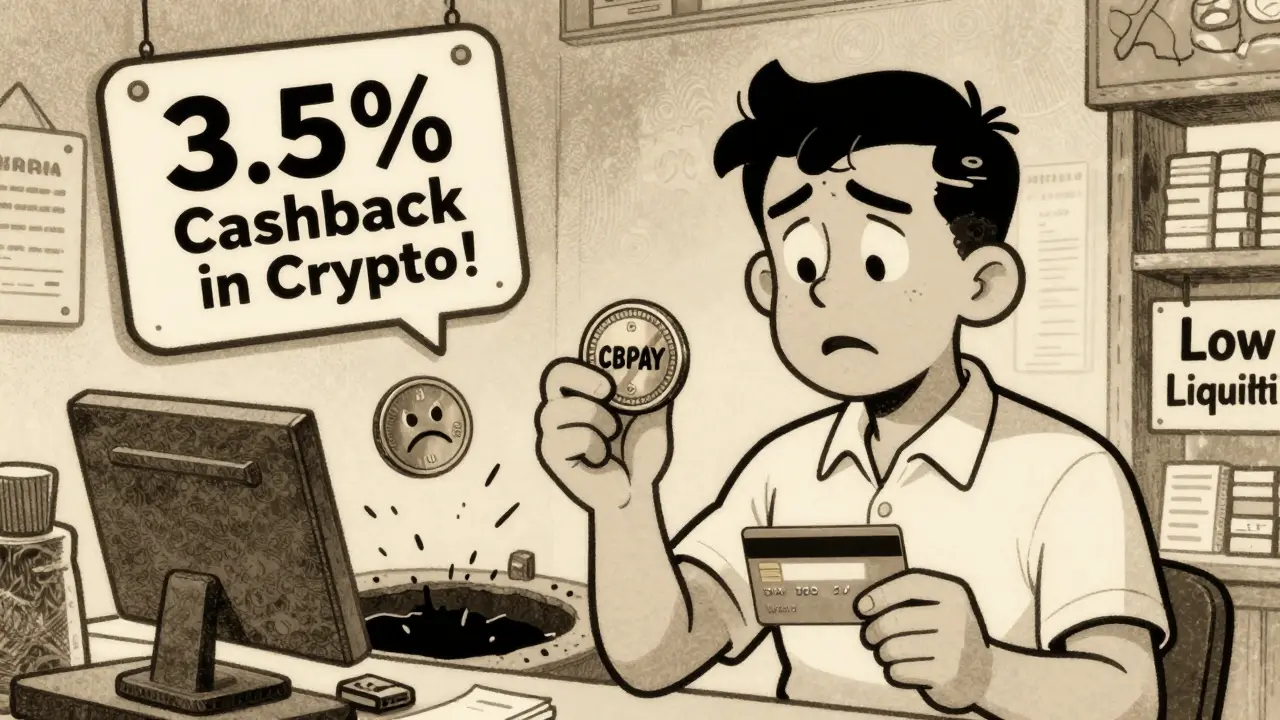
CBPAY Global (CBPAY) is a cryptocurrency designed to act as a payment token that rewards users for spending and holding it. It was launched in early 2024 by Coinbar.io, with the goal of making crypto easier to use in everyday transactions. Unlike Bitcoin or Ethereum, CBPAY isn’t meant to be a store of value-it’s built to be spent. The project tries to fix a common problem in crypto payments: people don’t use crypto because there’s no real incentive. CBPAY says it solves that with its RSH system-Rewarding Spending and Holding.
How CBPAY Works: The RSH System
At the heart of CBPAY is something called RSH: Rewarding Spending and Holding. This isn’t just a marketing term. It’s the core mechanic that tries to keep users engaged. Here’s how it breaks down:
- Spending rewards: When you use CBPAY to pay at a partnered merchant, you get back a portion of the transaction in CBPAY tokens-sometimes up to 3.5%. Think of it like cashback, but paid in crypto instead of dollars.
- Holding rewards: If you keep CBPAY in a non-custodial wallet and stake it, you earn more tokens over time. This is meant to encourage people to hold, not just sell.
- Merchant discounts: Businesses that accept CBPAY pay lower fees than they would with credit cards or PayPal. PayPal charges 2.9% + $0.30 per transaction. CBPAY claims to be cheaper, but doesn’t publish exact numbers.
- Token burns: A small part of every transaction fee is used to burn (destroy) CBPAY tokens. This reduces the total supply over time, which could theoretically push the price up.
This multi-layered system sounds smart on paper. But in practice, it’s complicated. Users have to track spending rewards, staking rewards, referral bonuses, and merchant commissions-all while dealing with a token that’s hard to buy or sell.
Tokenomics: Supply, Price, and Market Data
CBPAY has a total supply of 40 billion tokens. That’s huge. But only about 3.68 billion are in circulation right now. The rest are locked up for future releases, team allocations, or ecosystem growth.
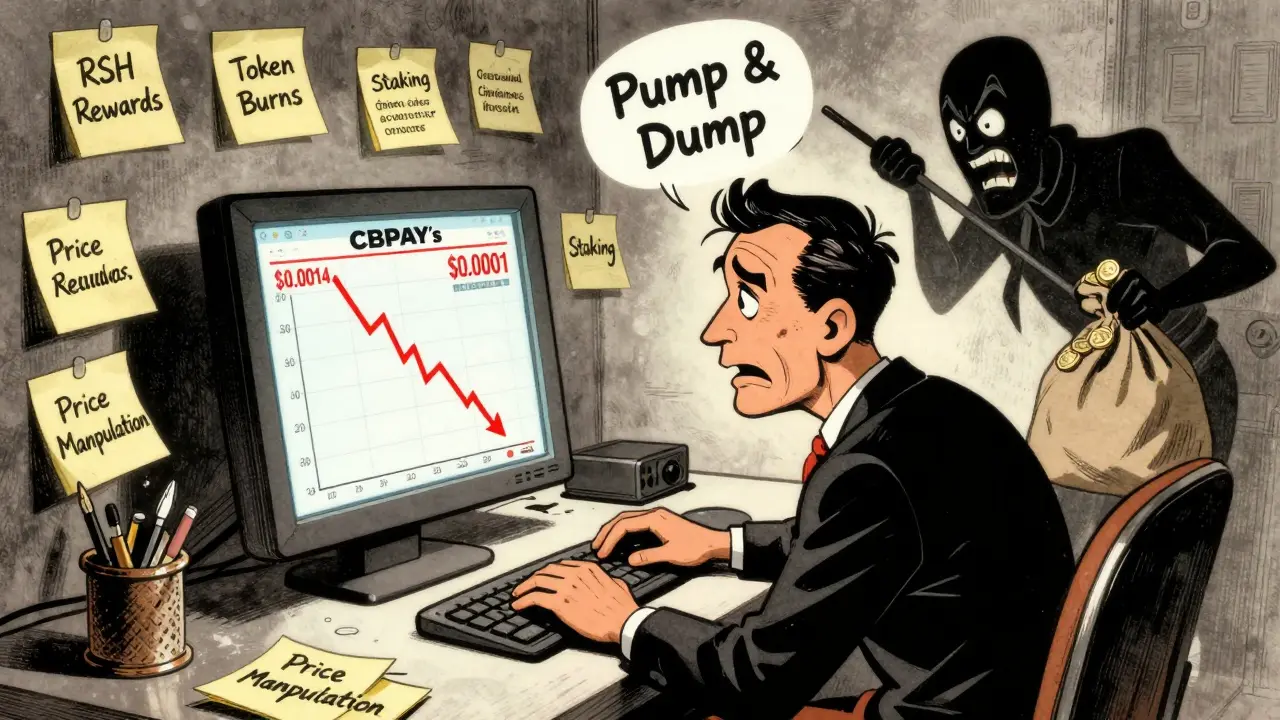
As of October 2025, CBPAY trades at around $0.0001344. That’s down from its all-time high of $0.001439 in June 2024-a drop of over 90%. Its market cap is just $767,911, which puts it at #2001 among all cryptocurrencies. For comparison, XRP (#7) has a market cap of over $20 billion.
Trading volume is where things get alarming. On most days, CBPAY trades less than $600 in 24 hours. That’s less than a single Bitcoin transaction. Low volume means two big problems:
- Liquidity crunch: If you want to sell your CBPAY, you might not find a buyer. One Reddit user said they had to sell at 30% below market price just to get out.
- Price manipulation risk: With so little trading activity, a single large buy or sell can swing the price by 20% or more. That’s not a market-it’s a gambling table.
Who Uses CBPAY? Real Adoption vs. Claims
CBPAY’s website says it’s used by merchants worldwide. But reality looks different.
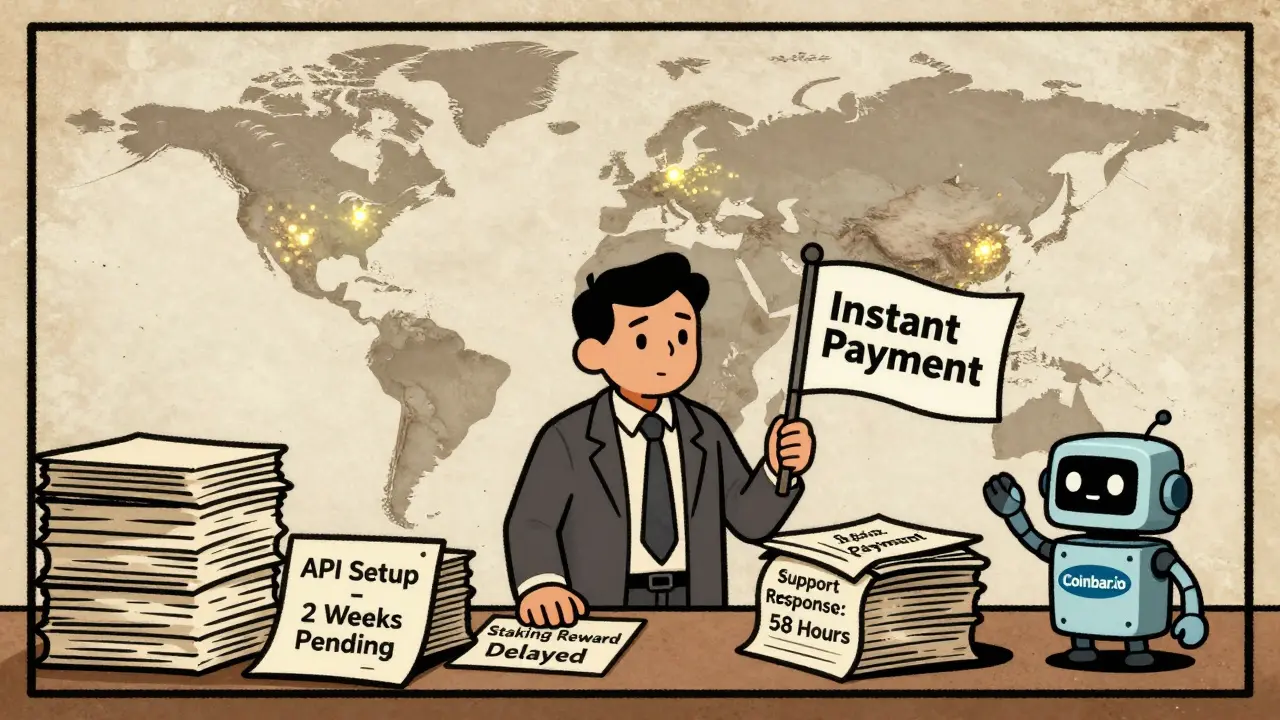
As of September 2024, only about 1,200 merchants globally accepted CBPAY. Most of them are small shops in Southeast Asia and Eastern Europe. There are no big brands, no Amazon, no Walmart, no Uber. No Fortune 500 company has publicly listed CBPAY as a payment option.
Merchants who do integrate it report delays. The official process says API setup takes 2-3 days. User reports say it often takes 1-2 weeks because of verification backlogs. Support is slow-email responses average 58 hours.
On the consumer side, the crypto-back rewards sound great. But to use them, you need to:
- Own a compatible wallet (like MetaMask or Coinbar’s own wallet)
- Find a merchant that accepts CBPAY
- Wait for rewards to appear (some users reported delays)
- Deal with transaction confirmations that take over 17 minutes on average
That’s a lot of friction for a 3.5% cashback. Most people just stick with their credit card.
How CBPAY Compares to Other Crypto Payment Projects
There are dozens of crypto payment tokens out there. Here’s how CBPAY stacks up:
| Feature | CBPAY | Stellar (XLM) | Bitcoin (via OpenNode) | Coinbase Commerce |
|---|---|---|---|---|
| Daily Trading Volume | $582 | $120M+ | $45M+ | $18M+ |
| Merchant Fees | Unspecified (claimed lower) | N/A (peer-to-peer) | 1% flat | 1% |
| Consumer Rewards | Yes (up to 3.5%) | No | No | No |
| Staking Rewards | Yes | Yes | No | No |
| Market Cap (Oct 2025) | $767K | $20B | $1.2T | $1.1B |
| Adoption Level | 1,200 merchants | 100,000+ merchants | 15,000+ merchants | 50,000+ merchants |
CBPAY’s biggest weakness isn’t its idea-it’s execution. Other projects have proven volume, real adoption, and reliable infrastructure. CBPAY has promises.
Red Flags and User Complaints
The numbers tell one story. User experiences tell another.
- Trustpilot rating: 2.1/5 from 43 reviews. Complaints focus on withdrawal delays and unresponsive support.
- Telegram group: Down from 3,200 members in June 2024 to 2,843 in October 2024.
- Staking issues: 18% of users reported incorrect or delayed staking rewards.
- Price manipulation: 68% of Binance users who traded CBPAY said price moves felt artificial.
- Community sentiment: RootData found 58% of voters had negative views on CBPAY, mostly due to liquidity.
There are no major audits, no third-party security reviews, and no public roadmap updates since late 2024. The project’s website still lists Q4 2024 goals-none of which have been verified as completed.
Is CBPAY a Good Investment?
Some crypto analysts predict CBPAY could hit $0.006 by 2031 or even $0.0115 by 2033. But those are speculative guesses. No methodology is shared. No historical data supports them.
Realistic assessment? CBPAY is a high-risk, low-liquidity token with minimal real-world use. It’s not a payment system-it’s a speculative asset with a complicated reward structure that most people can’t or won’t use.
If you’re looking to use crypto for everyday spending, stick with established options like Stellar, Bitcoin via OpenNode, or even stablecoins on PayPal. If you’re looking to invest, CBPAY’s current profile matches the definition of a “pump-and-dump” candidate: low volume, high volatility, unclear roadmap, and weak adoption.
The tokenomics look clever. The incentives are well-designed. But without real trading volume and merchant adoption, it’s just a theory on paper.
Final Thoughts
CBPAY Global isn’t a scam. It’s a project with a clear goal: make crypto payments practical. But it’s failing at execution. The numbers don’t lie-trading volume is too low, merchant adoption is too small, and user trust is too fragile.
If you’re curious, you can try it. Download the Coinbar Pay app. Earn a few rewards. But don’t invest money you can’t afford to lose. And don’t expect to cash out easily. In crypto, the best ideas don’t always win. The ones with real traction do.
Is CBPAY a real cryptocurrency or a scam?
CBPAY is a real cryptocurrency with a public blockchain presence, token contract, and trading activity. But it’s not a scam in the traditional sense-it’s a high-risk project with weak adoption. The team exists, the code is live, and transactions work. However, its extremely low trading volume, poor liquidity, and lack of verifiable merchant growth raise serious red flags. It’s not a scam, but it’s not a reliable investment or payment tool either.
Can I use CBPAY to pay for everyday purchases?
Technically, yes-but only if you find a merchant that accepts it. As of late 2024, fewer than 1,200 businesses globally accept CBPAY. Most are small online shops or local stores in Southeast Asia. You won’t find it at Amazon, Uber, or even small cafes in the U.S. or Australia. The rewards system sounds great, but the practical use is nearly nonexistent.
Why is CBPAY’s trading volume so low?
Low volume is the result of weak demand and limited exchange support. CBPAY trades mostly on small, lesser-known exchanges. It’s not listed on Binance, Coinbase, or Kraken. Without major exchange support, most traders can’t access it easily. Plus, the token’s price is extremely volatile and lacks clear fundamentals, so institutional and retail investors avoid it. Low volume creates a vicious cycle: no liquidity discourages buyers, which keeps volume low.
What’s the difference between CBPAY and Bitcoin for payments?
Bitcoin is a decentralized digital currency with massive adoption, high liquidity, and global recognition. CBPAY is a utility token designed to reward spending and holding. Bitcoin payments are simple: send BTC, get goods. CBPAY payments require you to earn rewards, stake tokens, and use a specific wallet. Bitcoin has 50,000+ merchants. CBPAY has 1,200. Bitcoin’s network is battle-tested. CBPAY’s is still theoretical.
Should I stake CBPAY to earn rewards?
Staking CBPAY might earn you more tokens, but it’s risky. Many users report delays in receiving rewards, and some have seen staking calculations change after the fact. Since CBPAY’s price can swing 20% in a day, any rewards you earn could lose value quickly. Plus, if the project fades, your staked tokens could become worthless. Only stake if you’re okay with losing your entire investment.
Is CBPAY likely to grow in value in 2026?
There’s no evidence CBPAY will grow meaningfully in 2026. Its price has dropped 90% since its peak. Trading volume remains near $600/day-far below the $10,000 minimum experts say is needed for a functional payment token. Without major exchange listings, merchant partnerships, or a public roadmap update, there’s no catalyst for growth. Any price predictions above $0.001 are speculative fantasy, not analysis.
Taylor Holloman.
March 17, 2026 AT 18:18Bryan Roth
March 19, 2026 AT 07:52sai nikhil
March 21, 2026 AT 06:34Sahithi Reddy
March 22, 2026 AT 10:17George Hutchings
March 23, 2026 AT 17:38Henrique Lyma
March 23, 2026 AT 23:30Steph Andrews
March 24, 2026 AT 23:04Kira Dreamland
March 26, 2026 AT 21:21Brenda White
March 27, 2026 AT 10:17Tobias Wriedt
March 28, 2026 AT 16:16Manali Sovani
March 29, 2026 AT 21:48Konakuze Christopher
March 31, 2026 AT 09:07S F
April 2, 2026 AT 08:01Angelica Stovall
April 2, 2026 AT 22:00Prakash Patel
April 2, 2026 AT 23:32Zachary N
April 3, 2026 AT 20:32Elizabeth Kurtz
April 4, 2026 AT 22:33john peter
April 6, 2026 AT 11:41Marc Morgan
April 7, 2026 AT 18:40Anastasia Thyroff
April 8, 2026 AT 15:39Shreya Baid
April 9, 2026 AT 07:31