
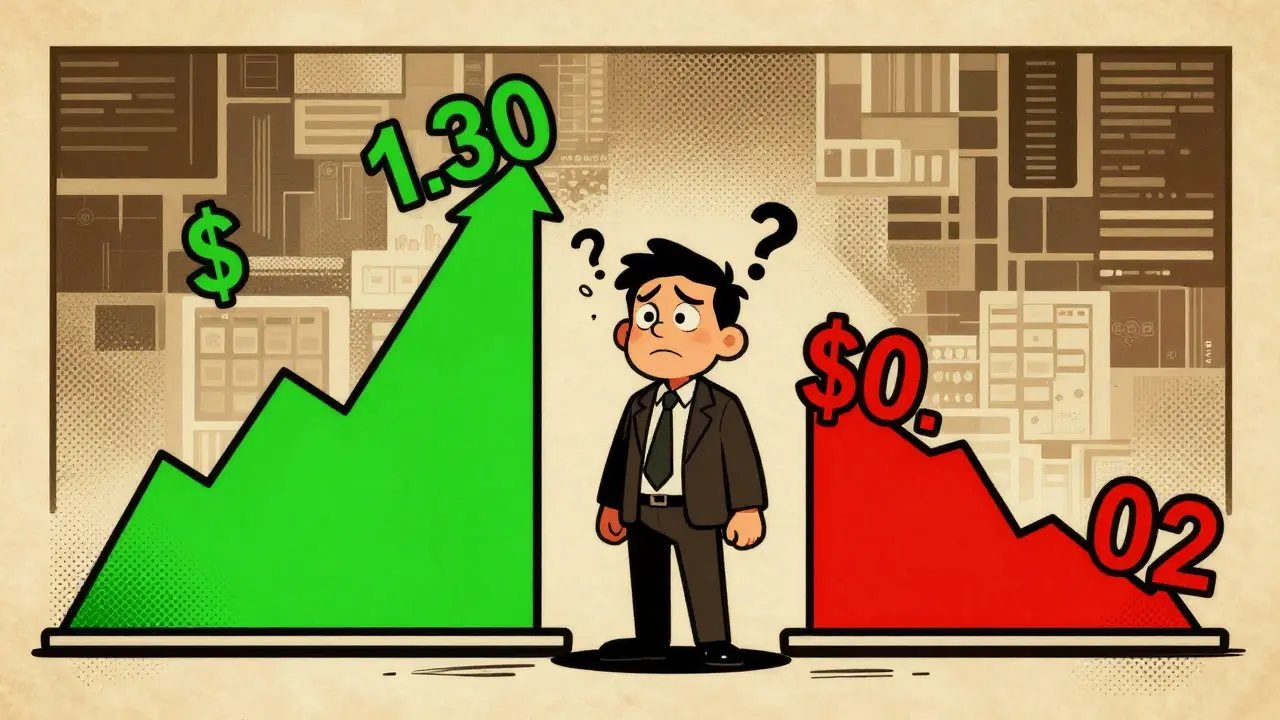
Have you ever looked at a crypto chart and wondered why the price looks completely different on two reputable websites? If you’ve been tracking Asymmetry Finance (ASF), you might have seen exactly that. One site says it’s worth $1.30, another says $0.02. It’s confusing, frustrating, and honestly, a bit scary if you’re thinking about putting money into it.
This isn’t just a glitch in your browser. It’s a sign of how fragmented liquidity can be in decentralized finance (DeFi). But beyond the price noise, what is Asymmetry Finance actually doing? Is it just another governance token hoping for hype, or does it solve real problems in the crypto ecosystem?
In this guide, we’ll strip away the jargon. We’ll look at the three main products powering the protocol: the ASF governance token, the inflation-resistant USDaf stablecoin, and the afCVX yield optimizer. By the end, you’ll know whether this project fits your investment strategy or if you should keep scrolling.
The Core Problem: Inflation and Illiquidity in DeFi
To understand Asymmetry Finance, you first need to understand the pain points it tries to fix. Traditional stablecoins like USDT or USDC are great-they hold their value. But they don’t protect you from fiat currency inflation. If the dollar loses purchasing power over five years, your USDT does too.
On the other hand, yield farming often comes with strings attached. You lock up your capital for months, risking smart contract bugs or market crashes while waiting for rewards. This is where Asymmetry Finance steps in. The protocol aims to offer stability that fights inflation and yields that don’t trap your money.
Product 1: The ASF Governance Token
The ASF token is the native asset of the Asymmetry Finance ecosystem. Think of it as your membership card to the club. Holding ASF doesn’t just mean you own a speculative asset; it means you have a voice.
Here’s how it works:
- Governance Rights: Holders can vote on proposals that shape the future of the protocol. This includes changes to fee structures, new integrations, or treasury management.
- Revenue Sharing: Depending on active governance votes, locked ASF tokens can share in the protocol’s revenue. This aligns the interests of users and developers.
- Boosted Rewards: Locking your tokens often unlocks higher APYs in other parts of the ecosystem, such as the stablecoin vaults.
The total supply of ASF is fixed at 51 million coins. This deflationary cap means no one can print more tokens out of thin air, which theoretically supports scarcity. However, the circulating supply-currently reported between 9.8 million and 11.4 million across different trackers-means a significant portion is still locked or yet to be released.
Product 2: USDaf - The Anti-Inflation Stablecoin
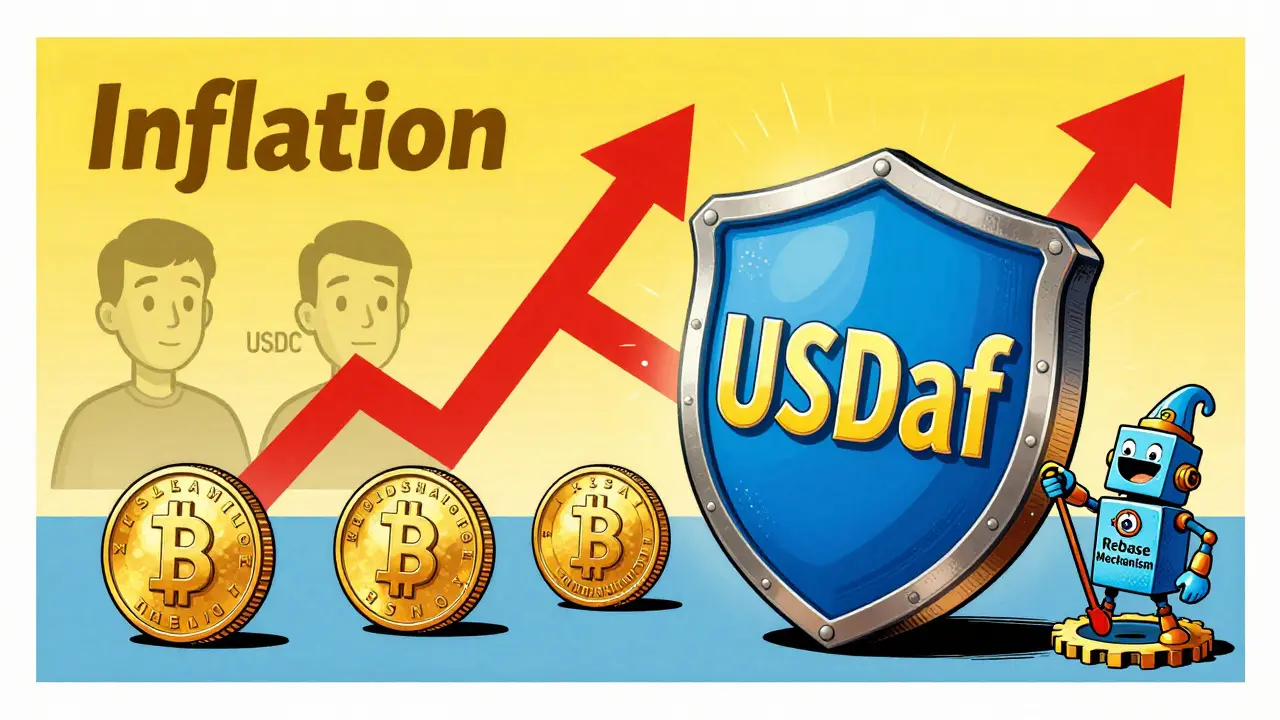
If you follow DeFi closely, you’ve probably heard of Ampleforth. It’s known for its rebase mechanism, which adjusts supply to maintain price stability relative to an index. Asymmetry Finance partnered with Ampleforth to create USDaf, a fully decentralized, USD-denominated synthetic stablecoin.
But USDaf isn’t just a clone of DAI. It’s designed specifically to counter inflation. Here’s the technical breakdown:
| Feature | USDC / USDT | USDaf |
|---|---|---|
| Collateral Type | Fiat reserves (Centralized) | SPOT (Decentralized Crypto) |
| Inflation Hedge | No (Fixed Peg) | Yes (Rebase Mechanism) |
| Liquidation Risk | Low (but relies on central audits) | Moderate (Algorithmic CDP model) |
| Redeemability | Instant via exchange | Always redeemable, no cool-down |
USDaf uses a Collateralized Debt Position (CDP) model. Users deposit SPOT (Ampleforth’s volatile token) as collateral to mint USDaf. Because it relies on a single collateral type rather than a basket of assets, it avoids the complexity and potential oracle manipulation risks associated with multi-collateral systems. The goal is fair market-value liquidations and minimal cascading failures.
Product 3: afCVX - Liquidity Without Lockups
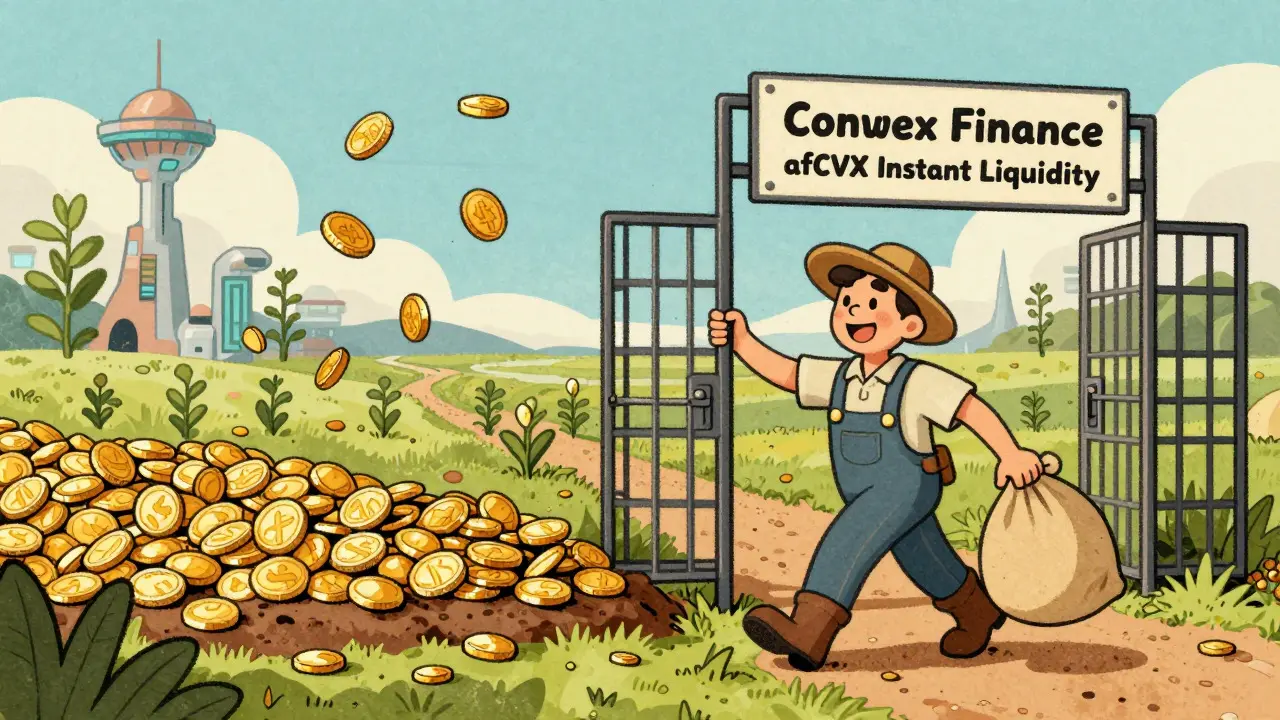
Convex Finance (CVX) has long been a favorite for yield farmers because it boosts rewards from Curve Finance. But there’s a catch: to get those boosted rewards, you usually have to stake CVX for a set period. Your capital is illiquid. If Bitcoin crashes tomorrow, you can’t easily sell your CVX to rebalance.
afCVX solves this. It provides high-yield staking solutions for Convex Finance but eliminates the lengthy lockup periods. You get instant liquidity. You can enter and exit positions without waiting weeks for your stake to unlock. This integration allows you to participate in high returns while maintaining full control over your capital efficiency.
The Price Puzzle: Why Do Numbers Differ So Much?
Let’s address the elephant in the room. As of mid-2026, data sources show wild discrepancies for the ASF token price. Some aggregators list it around $1.24-$1.33, while others show prices as low as $0.018. What gives?
This isn’t necessarily fraud-it’s likely a combination of liquidity fragmentation and data synchronization delays. ASF trades on multiple venues:
- Bilaxy CEX: Handles roughly 40% of the volume.
- Uniswap V2/V4: Ethereum-based DEX trading pairs.
- Curve Finance: Another major liquidity hub.
When liquidity is split across these platforms, arbitrage bots usually keep prices aligned. But if trading volume is low on one specific pair, the price can drift. Additionally, some data providers may be pulling from outdated or less liquid pools. Always check CoinGecko or CoinMarketCap directly, and compare them with on-chain data from Etherscan if possible. Don’t trust a single number blindly.
Yields and Returns: What Can You Earn?
For many users, the draw of Asymmetry Finance is the yield. The protocol offers estimated Annual Percentage Yields (APY) that are attractive compared to traditional savings accounts:
- USDaf Vaults: ~16.32% APY
- sAmpUSD Vaults: ~15.87% APY
These yields are generated through automated harvesting and auto-compounding mechanisms. The system optimizes distribution across underlying Stability Pools, meaning you don’t have to manually reinvest your earnings every day. The compound effect kicks in automatically. Plus, since the vaults are always redeemable with no cool-down periods, you aren’t trapped if you need cash quickly.
Risks to Consider Before Investing
No DeFi project is risk-free. Before you bridge funds to Ethereum or Arbitrum to interact with Asymmetry Finance, consider these factors:
- Smart Contract Risk: Like all DeFi protocols, ASF relies on code. If there’s a bug in the CDP logic or the yield optimizer, funds could be lost. Audits are crucial, so check if recent audits have been published by firms like CertiK or OpenZeppelin.
- Volatility of Collateral: Since USDaf is backed by SPOT, a massive crash in SPOT’s price could trigger liquidations if not managed correctly. While the single-collateral model reduces complexity, it also concentrates risk.
- Price Data Confusion: The discrepancy in pricing makes it hard to assess true market sentiment. Low liquidity can lead to high slippage when you try to buy or sell large amounts.
- Regulatory Uncertainty: Synthetic stablecoins are under increasing scrutiny globally. Changes in regulation could impact the usability of USDaf in certain jurisdictions.
How to Get Started with Asymmetry Finance
If you decide to proceed, here’s a practical step-by-step guide:
- Set Up a Wallet: Use MetaMask or Rabby Wallet. Ensure you’re connected to the Ethereum network (or Arbitrum if supported).
- Buy ASF or ETH: Purchase ASF on a centralized exchange like Bilaxy or buy ETH on Coinbase/Binance to swap on Uniswap.
- Bridge Funds (if necessary): If interacting with L2 versions of the protocol, use a trusted bridge like Across or Hop Protocol.
- Connect to the Dashboard: Go to the official Asymmetry Finance website. Connect your wallet.
- Mint or Stake: Choose your path. Deposit SPOT to mint USDaf, or stake ASF to earn governance rights and boosted yields.
Final Thoughts: Is ASF Worth Your Attention?
Asymmetry Finance isn’t trying to be the next meme coin. It’s building infrastructure for a more resilient DeFi economy. The combination of an inflation-hedging stablecoin (USDaf) and flexible yield tools (afCVX) addresses genuine user complaints about rigidity and purchasing power loss.
However, the price volatility and data inconsistencies require caution. Do your own due diligence. Verify the current APYs on the live dashboard, check the latest audit reports, and never invest more than you can afford to lose. In DeFi, transparency is key, but verification is even better.
What is the total supply of ASF tokens?
The total supply of Asymmetry Finance (ASF) tokens is fixed at 51 million. This cap ensures scarcity, though the circulating supply currently ranges between 9.8 million and 11.4 million depending on the data source.
Is USDaf safe to use?
USDaf is built on a decentralized Collateralized Debt Position (CDP) model using SPOT as collateral. While it reduces reliance on centralized custodians, it carries smart contract risk and exposure to the volatility of the underlying SPOT asset. Always review recent security audits before depositing large sums.
Why do ASF prices differ across websites?
Price discrepancies arise due to fragmented liquidity across exchanges like Bilaxy, Uniswap, and Curve. Low trading volume on specific pairs can cause price drift, and data aggregators may pull from different, sometimes outdated, sources. Always cross-reference multiple platforms.
Can I unstake my ASF tokens instantly?
While the USDaf and sAmpUSD vaults offer instant redemption with no cool-down periods, standard governance staking may have lock-up terms depending on the specific reward tier chosen. Check the current terms on the Asymmetry Finance dashboard before locking your tokens.
What is the purpose of afCVX?
afCVX allows users to earn high yields from Convex Finance without the traditional long-term lockup periods. It provides instant liquidity, enabling investors to access their capital quickly while still benefiting from optimized yield strategies.