

Remember the days when buying a cryptocurrency felt like finding a hidden vein of gold? For many players, Alaska Gold Rush (CARAT) promised exactly that. It’s a micro-cap token built around a virtual mining game where you dig for digital riches. But if you’ve checked the price lately, you might be wondering why it isn’t making headlines anymore. As of mid-2026, CARAT trades at fractions of a cent, far removed from its early hype.
This guide breaks down what CARAT actually is, how the play-to-earn mechanics work, and whether there is still value left in this specific corner of the crypto world. We will look at the hard numbers, the token supply schedule, and the real-world risks involved in trading or playing with such a volatile asset.
The Core Concept: Mining in a Virtual World
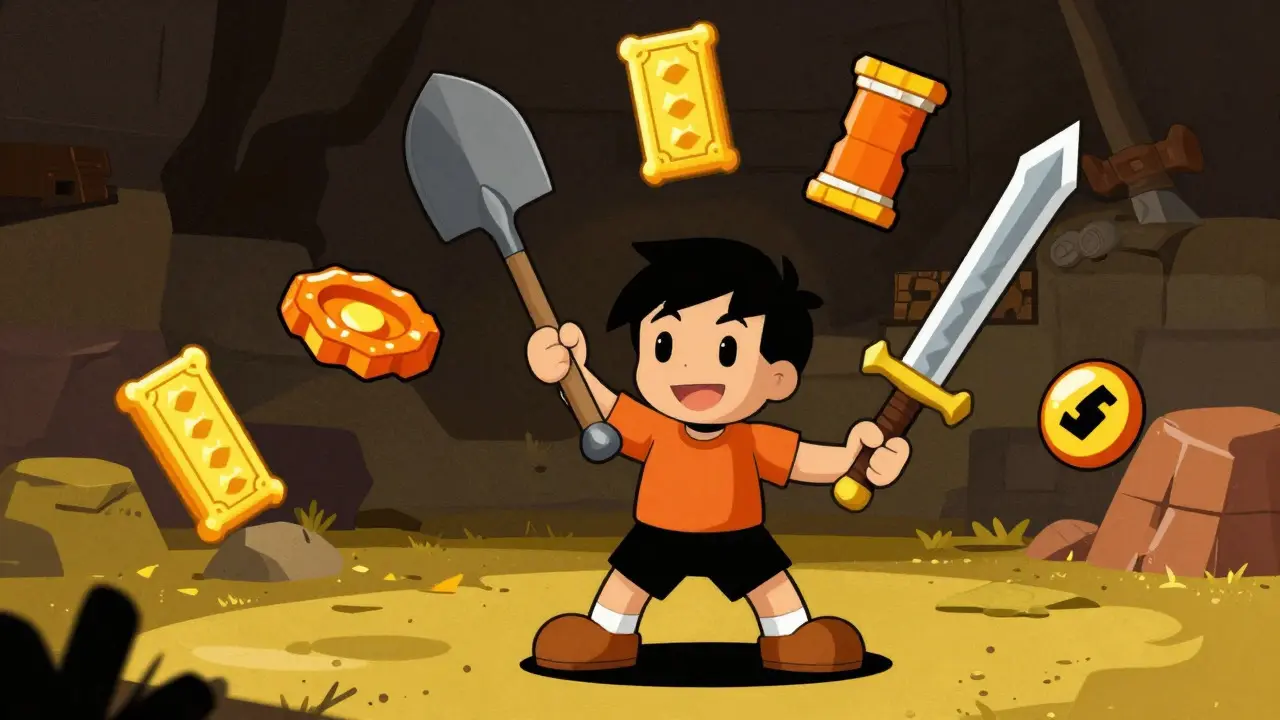
Alaska Gold Rush is not just a coin; it is an ecosystem designed around gameplay. The project operates on a dual-token model, which is common in the GameFi sector. You have CARAT, which acts as the primary store of value and governance tool, and a secondary token called GOLD.
In simple terms, GOLD is likely used for daily transactions and small rewards within the game, while CARAT represents the "pinnacle of wealth." Think of GOLD as your pocket change and CARAT as the savings account or high-value equipment you are trying to acquire. Players earn these tokens by engaging in specific activities:
- Gold Mining Adventures: Completing resource-gathering missions in the game.
- PVP Battles: Competing against other players in combat scenarios.
- NFT Crafting: Creating or upgrading non-fungible tokens that boost your mining yield and combat stats.
The logic here is straightforward: you invest time or money into better NFT gear, which helps you mine more CARAT, which you can then sell on exchanges. However, the sustainability of this loop depends entirely on new players entering the system to buy out the rewards older players are selling. Without fresh blood, the economy tends to deflate.
Tokenomics: Supply, Vesting, and Inflation
To understand why the price moves the way it does, you need to look at the tokenomics. This is where the math gets interesting-and potentially risky for holders. The total supply of CARAT is capped at 1,000,000,000 tokens. However, not all of them were available on day one.
The initial total supply minted was approximately 936.36 million CARAT. These tokens are distributed across five main groups: investors, the foundation, community rewards, public sale participants, and liquidity pools. A critical detail is the vesting schedule. Only about 5.3% of the total supply was unlocked at the Token Generation Event (TGE). The rest is locked up and released over a four-year period.
| Metric | Value / Percentage | Notes |
|---|---|---|
| Max Supply | 1,000,000,000 CARAT | Hard cap, non-inflationary after full emission |
| Total Minted Supply | 936,362,231 CARAT | Allocated to stakeholders |
| Circulating Supply (Mid-2026) | ~890,000,000 CARAT | Approximately 94.7% of total minted |
| Community Allocation | 40% | Used for P2E rewards, staking, marketing |
| Vesting Schedule | 4 Years | 42.29% released in Year 1, remainder over Years 2-4 |
By mid-2026, data from trackers like CoinGecko and Kraken shows that roughly 890 million CARAT are in circulation. This means the majority of the tokens are now unlocked and available for trading. When a large percentage of supply hits the market simultaneously, it often creates selling pressure unless demand spikes equally. This explains why the price has struggled to maintain high levels despite the "capped" nature of the token.
Price History and Current Market Status (2026)
If you bought CARAT during its peak, the journey has been rough. Like many GameFi projects launched during the 2021-2023 boom, CARAT experienced a massive surge followed by a steep decline. Its All-Time High (ATH) was recorded in April 2023 at approximately 189.68 KRW (around $0.15 USD depending on the exchange rate at the time).
Fast forward to July 2026, and the picture looks very different. Here is how the metrics stack up across major platforms:
- Spot Price: Trading between $0.00028 and $0.00039 USD.
- Market Cap: Approximately $280,000 to $320,000 USD.
- Ranking: Hovering around #4,000 to #4,800 on global crypto lists.
- Volatility: Extreme. Daily swings of 10-15% are common, with occasional weekly jumps of over 100% due to thin liquidity.
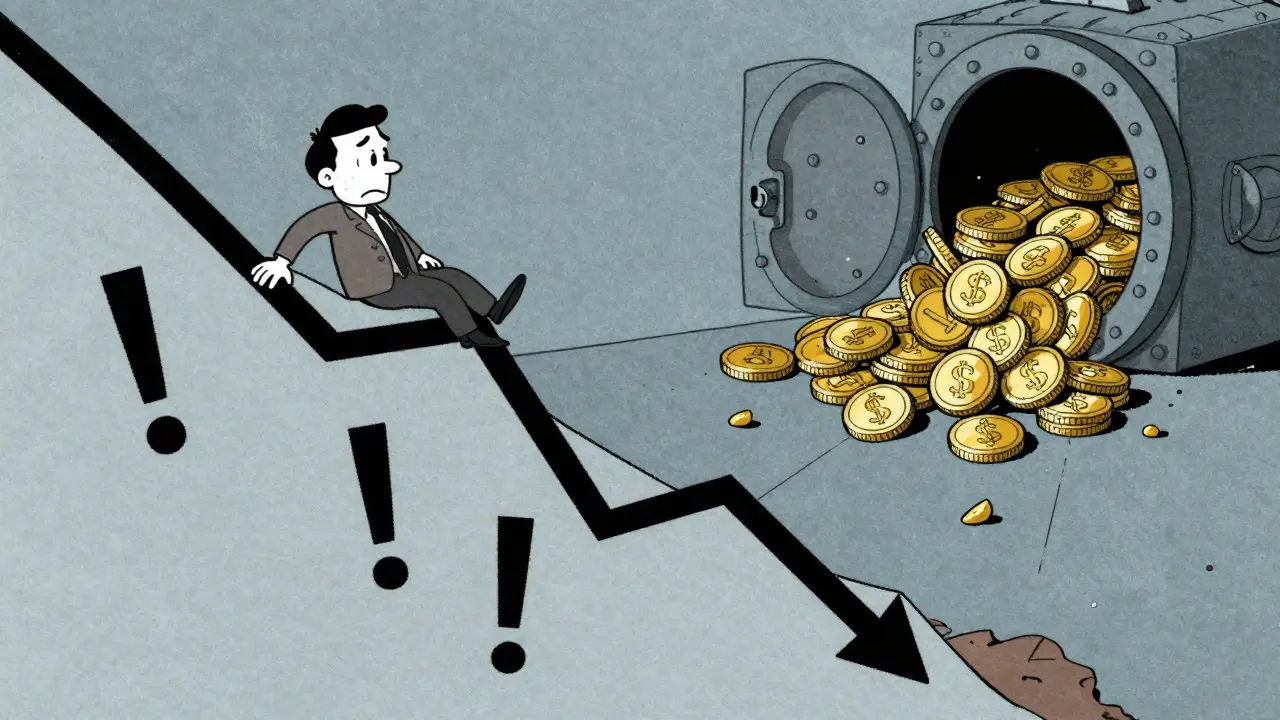
For context, a drop of over 99% from its ATH is standard for failed or stagnant micro-cap tokens. The current price reflects a market that has largely moved on. While there are occasional rallies-such as a 115% jump seen in a single week in June 2026-these are usually driven by low trading volume rather than genuine institutional interest. With daily volumes often dipping below $5,000 USD, it takes very little money to move the price up or down significantly.
Where to Trade CARAT
You won’t find CARAT on every major exchange. Its accessibility is limited to specific venues that cater to smaller assets. The most active trading pair is CARAT/USDT on Gate.io. This centralized exchange handles the bulk of the daily volume.
Other platforms like Kraken, Crypto.com, and Coinbase track the price and sometimes offer trading pairs, but availability varies by region and time. For example, Coinbase listed price data in mid-2025, but that doesn't guarantee immediate tradability for all users today. Always check the specific order book depth before attempting a trade. If you try to sell a large amount of CARAT on a day with low volume, you might suffer significant slippage-meaning you get much less money than the displayed price suggests.
Risks and Red Flags
Before diving in, it is crucial to separate marketing fluff from reality. Here are the key risks associated with holding or playing with CARAT:
- Liquidity Risk: With a market cap under half a million dollars, exiting a position can be difficult. You might hold the token, but finding a buyer at a fair price is another story.
- Ticker Confusion: There are other tokens with similar names. For instance, there is a completely different "CARAT" token on Ethereum with a tiny supply of 2 million tokens, and another called "KARRAT" focused on AI gaming. Ensure you are looking at the correct contract address for Alaska Gold Rush.
- Lack of Transparency: Public documentation lacks details on smart contract audits, developer GitHub repositories, or clear roadmaps for 2026. Without technical verification, you are trusting the team's word on security.
- Economic Sustainability: Play-to-earn models rely on constant user growth. If player counts drop, the reward pool shrinks, or the value of earned tokens crashes. There is no independent data showing strong user retention for Alaska Gold Rush in 2026.
Is CARAT Still Worth It?
For the average investor looking for stable growth, CARAT is likely too risky. It sits firmly in the "high-risk, speculative" category. However, for gamers who enjoy the Alaska Gold Rush experience and want to support the ecosystem, it offers a way to monetize their time. Just remember: treat any earnings as luck, not income. The volatility means your portfolio could double or halve in a matter of hours based on a few thousand dollars of trading activity.
If you decide to participate, start small. Use hardware wallets for storage if possible, and never invest more than you can afford to lose entirely. The crypto space moves fast, and micro-cap tokens can vanish from relevance overnight.
What blockchain is Alaska Gold Rush (CARAT) built on?
While specific technical documentation is sparse, CARAT is traded as a fungible token on major exchanges. Many similar GameFi tokens operate on networks like BNB Smart Chain or Polygon to keep transaction fees low, but you should verify the exact contract address on Gate.io or CoinGecko to confirm the underlying chain before connecting your wallet.
How do I earn CARAT in the game?
Players earn CARAT through three main activities: completing gold-mining missions, winning Player-vs-Player (PVP) battles, and trading or crafting NFTs that enhance their in-game performance. The more efficient your NFT gear, the higher your potential yield.
Why is the CARAT price so low compared to 2023?
The price dropped over 99% from its all-time high due to typical post-hype market corrections in the GameFi sector. Additionally, the gradual unlocking of vested tokens increased the circulating supply, creating selling pressure without a corresponding increase in demand.
Is CARAT the same as the other CARAT token on Ethereum?
No. There is a separate, unrelated token also named CARAT on the Ethereum network with a total supply of only 2 million tokens. Alaska Gold Rush has a supply of nearly 1 billion tokens. Always check the ticker symbol and contract address to avoid confusion.
Where can I buy CARAT safely?
The most liquid venue for trading CARAT is Gate.io, specifically using the CARAT/USDT pair. Other platforms like Kraken and Crypto.com may list it for price tracking or limited trading, but availability varies by region. Always use reputable exchanges and enable two-factor authentication.