

The Reality of Crypto Bans in India Today
If you trade digital assets in India, the landscape looks very different than it did a few years ago. You might remember when buying Bitcoin felt like a wild west adventure, but today, the rules are strict. As of early 2026, the Indian government has taken massive steps to control how you buy and sell cryptocurrency. The core issue isn't that cryptocurrency itself is illegal, but rather that specific platforms are blocked from operating here. This distinction matters because using a blocked exchange can freeze your funds or trigger investigations.
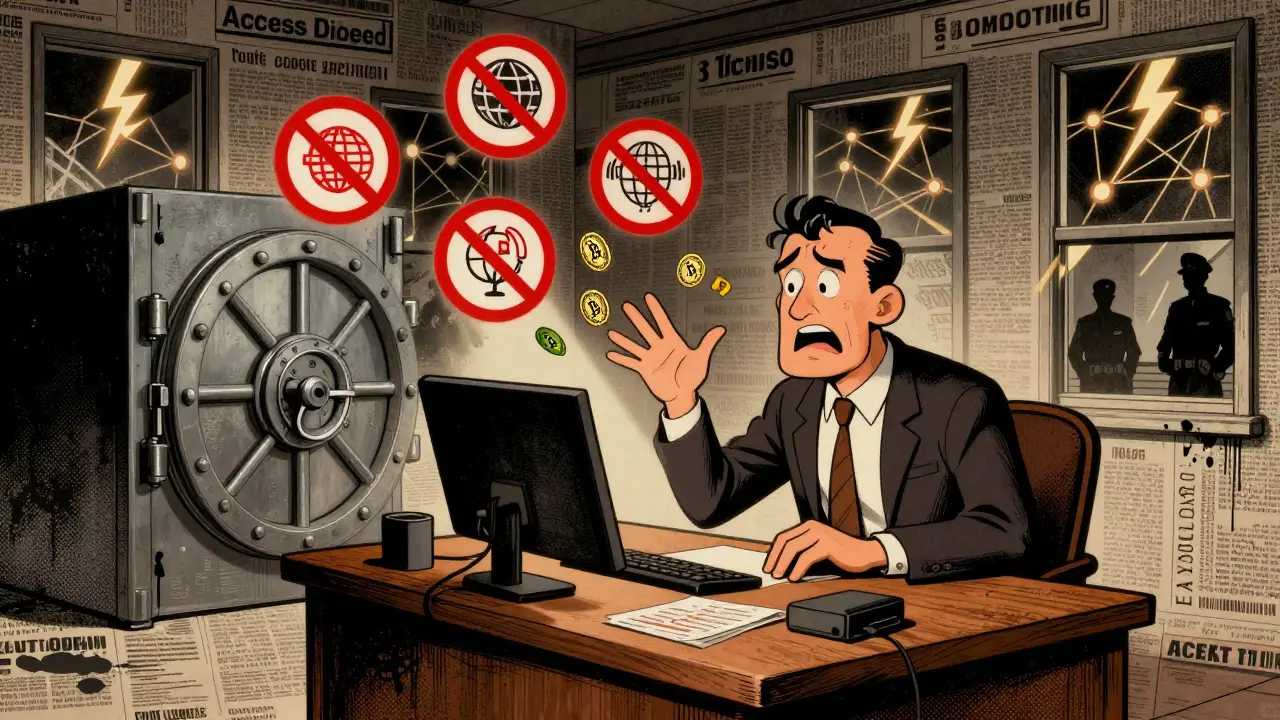
Financial Intelligence Unit-India (FIU-IND) acts as the primary watchdog now. Any platform offering services to Indian residents must register with this body. If they don't, the government blocks their websites and apps through internet service providers. We have seen multiple international giants face these blocks. This creates a clear divide between what you can safely use and what carries heavy risks. Understanding this split is your first step to protecting your investment.
Is crypto banned in India?
No, cryptocurrency trading is legal, but only through registered exchanges. Trading on non-compliant foreign platforms is risky and often blocked.
How the Ban Works: Compliance vs. Blacklist
The situation isn't just a simple "yes or no." It operates on a compliance model. Think of it like driving a car; having a license doesn't mean every vehicle on the road is approved. In January 2024, the Reserve Bank of India (RBI) tightened its grip, pushing for all Virtual Asset Service Providers (VASPs) to report transactions. This led to the Financial Action Task Force (FATF) guidelines being strictly enforced locally.
When an exchange fails to register with the Enforcement Directorate (ED) or FIU-IND, they get blacklisted. The National Cyber Crime Unit often flags these sites. Once flagged, mobile networks cut access to their apps. You cannot simply download the app again; it requires a VPN to bypass, which itself creates a record of intent to circumvent law. The government views unregistered exchanges as money laundering hotspots. Consequently, banks stop processing transactions to these entities instantly.
This mechanism protects your capital indirectly. When a bank cuts off funding, you cannot move Indian Rupees (INR) in or out easily. Imagine trying to withdraw profits to your SBI account, only to find the gateway frozen because the exchange lacks local ties. That is the daily reality for users of banned platforms.
List of Blocked and Compliant Platforms
You need clarity on where your money is safe. We have categorized the major players based on their current status in India as of March 2026. This list updates frequently, so always check the official FIU registry before depositing funds.
| Platform Name | Status | Risk Level | Reason |
|---|---|---|---|
| CoinDCX | Compliant | Low | Fully registered with FIU-IND |
| WazirX | Compliant | Low | Registered, supports INR banking |
| Binance | Restricted | High | Previously blocked, compliance pending review |
| KuCoin | Banned | High | No registration, website blocked |
| Mudrex | Compliant | Low | Domestic partner, verified by ED |
| Bybit | Restricted | Medium | Operates in grey area, payment gateways limited |
Note that even "Restricted" platforms might allow you to log in, but moving actual INR becomes nearly impossible. Banks flag these transfers under anti-money laundering (AML) protocols. Domestic platforms like ZebPay and Unocoin have streamlined this by integrating directly with bank APIs.
Why Foreign Exchanges Face Bans
International companies often struggle with Indian data laws. The IT Act requires specific data sovereignty provisions. Many global exchanges host data in Cyprus or Malta, making it hard for Indian authorities to subpoena records if crimes occur. The government does not tolerate financial opacity. When an exchange ignores summons from the Income Tax Department, they invite shutdowns.
Furthermore, user experience suffers on these banned sites. Customer support teams often disappear when things go wrong. If your account gets frozen, who do you call? There is no physical office in Mumbai or Bangalore. Conversely, registered exchanges must maintain grievance redressal officers. They are legally bound to resolve complaints within set timelines defined by the Consumer Protection Act.
The enforcement also extends to intermediaries. Payment processors like Razorpay or Google Pay may refuse transactions to unlisted wallets. This effectively kills the utility of holding crypto on those platforms since you cannot exit the system. It turns your investment into a digital brick.
Taxation and Reporting Responsibilities
Crypto Taxation in India adds another layer of complexity. Since April 2022, gains from virtual digital assets (VDAs) attract a flat 30% tax rate plus cess. However, reporting is different depending on the exchange. Compliant platforms automatically generate statements for you to file returns. They track TDS (Tax Deducted at Source) at 1% on your transaction volume.
If you trade on a banned exchange, no TDS is deducted at the source. You must manually calculate and pay your tax liability every quarter. Missing this deadline triggers penalties. Under Section 285BAA, authorities can demand information about past trades dating back six years. If you haven't kept records, you face severe penalties up to 60% on undisclosed income.
Record retention is mandatory for registered exchanges. They store your KYC details and trade logs for over six years. While some worry about privacy, this actually helps you when filing annual ITR forms. You simply upload the summary they provide. It reduces the headache of maintaining spreadsheets across five years of complex trading histories.
Risks of Continuing on Banned Sites
Staying on a non-compliant platform exposes you to three major dangers. First is account freezing. Without jurisdiction, these sites can lock accounts indefinitely during audits. Second is lack of insurance. If the platform gets hacked, Indian courts rarely assist in recovering funds held offshore. Third is the social credit aspect. Using blacklisted portals leaves a digital footprint. Banks monitoring cash flow patterns may flag your personal account for suspicious activity if you receive funds from such entities.
Consider the case of mid-2025 crackdowns where several users reported frozen balances. Support channels went silent as server IPs were seized. Those users lost months' worth of profits overnight. Migrating to a registered domestic broker prevents these nightmares entirely. The growth of domestic platforms proves this shift is permanent. User deposits to local exchanges have surged 2,000% following these enforcement waves.

Steps to Migrate Your Portfolio Safely
If you currently hold assets on a restricted site, follow this sequence to protect yourself:
- Verify your current balance and download trade history immediately.
- Open an account with a FIU-registered Indian exchange.
- Transfer your tokens from the old wallet to a private non-custodial wallet (hardware preferred).
- Sell holdings on the new compliant exchange to realize profits.
- Report the income in your next tax return to close any regulatory gaps.
Do not rush the withdrawal. Large transfers on banned networks might trigger external alerts. Small, staggered transfers often pass scrutiny better. Always use a wallet address you control personally, never send directly to another third-party account while transitioning.
Legal Recourse and User Rights
Your rights differ significantly based on the platform. With a compliant exchange, you fall under the Consumer Protection Act, 2019. You can file complaints online via the National Consumer Helpline portal. The resolution process has defined timelines. For banned entities, you have almost zero recourse. Legal costs for suing foreign firms exceed most individual investments.
The Supreme Court of India ruled in favor of traders regarding bans earlier, but the legislature passed tighter bills soon after. The current stance prioritizes financial stability over unrestricted access. Authorities view VDA trading as an economic tool that must remain monitored to prevent terror financing or drug trafficking funding.
Frequently Asked Questions
Which specific international exchanges are currently blocked?
Major platforms like Binance and KuCoin have faced blocking or restrictions due to non-compliance with FIU-IND registration requirements as of 2025-2026.
Can I use a VPN to access banned exchanges?
Using a VPN to access blocked financial services may violate Indian cybersecurity laws and result in fines or legal action against the user.
Are there any taxes on crypto gains in India?
Yes, there is a flat 30% tax on profits plus applicable surcharge and cess, along with a 1% TDS on transaction values.
What happens if my bank freezes my crypto withdrawal?
You should contact your bank's relationship manager immediately. Usually, funds are frozen only for verification checks with the Enforcement Directorate if linked to non-compliant sources.
Is decentralized finance (DeFi) banned too?
DeFi is harder to regulate, but regulators are considering taxing DeFi transactions similarly to centralized ones under broader interpretations of VDA laws.
aravindsai pandla
March 26, 2026 AT 21:24The distinction between banned and compliant platforms is crucial for everyone holding assets right now. Many people think using a VPN solves the problem but regulators track bank flows regardless of access methods. You need to verify exchange status on the FIU portal before committing funds to any account.
Andrea Zaszczynski
March 27, 2026 AT 16:21Why do people care so much about privacy when they are already uploading passports everywhere. The government knows everything anyway and pretending otherwise is delusional. Just accept the KYC process and move on with your life instead of fighting shadows.
vu phung
March 28, 2026 AT 04:58From a technical standpoint the VASP reporting requirements create significant overhead for non-compliant entities. Liquidity pools on offshore platforms often suffer when fiat gateways get severed mid-operation. Traders should prioritize platforms with integrated API banking solutions to mitigate exit risk scenarios.
Lorna Gornik
March 29, 2026 AT 16:29Thats soo crazy that kucoin is completely blockked now!! 😱 I dint realise how fast things changed since early 2025. 🇮🇳 Makes me sad for peeps stuck on binance still waiting for approval. 🤡 Hopefully wazirx stays safe for all the indian folks trading daily. 💰💸😭
Florence Pardo
March 29, 2026 AT 20:48It really feels like the government is trying to protect people from themselves even though nobody asked for it. When you look at how banks handle the INR transfers you see the friction immediately. The tax rates might seem high but at least there is clarity for those who pay up. I remember reading reports about accounts getting frozen for no valid reason last year. It is scary when you put months of profits into a platform that suddenly vanishes. The consumer protection act helps but only if the company actually has an office here. Foreign exchanges ignore legal notices and that makes things hard for regular traders. You end up losing money without knowing where to even file a complaint. The domestic options seem safer now because they register with the FIU-IND body. This transparency ensures that your funds are tracked legally during transactions. Most people just want to earn returns without worrying about sudden regulatory crackdowns. Migrating portfolios takes time but it saves massive headaches later on. The 30 percent tax is manageable if you plan your trades correctly throughout the year. Compliance actually brings stability to what was previously a chaotic market environment. We need to stop using VPNs because that leaves digital footprints for auditors. Safety comes first when dealing with volatile digital assets in this climate.
The reality is simple regarding risk management strategies for 2026.
Kevion Daley
March 30, 2026 AT 17:34While I understand the sentiment the execution leaves much to be desired by authorities. 🙄 Truly sophisticated investors never rely on retail exchanges for capital storage. They utilize cold wallets and decentralized protocols that cannot be easily throttled. 😐 The masses will inevitably lose value due to poor liquidity choices.
Domenic Dawson
April 1, 2026 AT 08:37You can absolutely migrate your portfolio safely if you follow the outlined steps carefully. Taking small staggered withdrawals reduces the chance of triggering automated bank alerts during the transition phase. Remember that you control the private keys once you move off a custodial service entirely. Stay calm and keep all transaction logs for your tax filings to avoid penalties.
YANG YUE
April 3, 2026 AT 06:08The essence of regulation is merely a veil over the chaos of commerce. We trade in invisible sands while hoping the desert floor remains stable beneath our feet. Laws change faster than code but human greed remains the constant variable in every ledger entry.
Anna Lee
April 4, 2026 AT 23:36Huge relief to see this update finally clarifying everything for the communiity! 👏 I alwayss thought i wouldnt find answers to my tax questions till now. Keep staying safe out there friends and use only the legit sites listed. You got this! ✨
Shana Brown
April 5, 2026 AT 11:03Your efforts in organizing this information are truly commendable for all newcomers to the space. Please continue to verify sources because misinformation spreads quickly in encrypted channels. Protecting your personal data is just as important as protecting your capital assets.
Marie Mapilar
April 6, 2026 AT 20:02The interoperabilty issues with legacy payment processors create huge bottlenecks for mass adoption. We need better integration between UPI systems and VDA compliant ledgers for smooth onboarding. Regulatory sandboxes should accelerate testing for fintech solutions in this sector.
Shelley Dunbrook
April 7, 2026 AT 01:20How quaint it is to believe domestic platforms offer superior security against hacks. History shows centralized servers are vulnerable regardless of local registration status. Trust nothing but the math behind the blockchain itself in the end.
Aman Kulshreshtha
April 8, 2026 AT 23:47Honestly the situation on ground is way more complex than this guide suggests bro. Local banks sometimes flag transfers even to registered exchanges due to internal AML filters. It gets frustrating when you sit for days waiting for support to clear the transaction hold.
Mohammed Tahseen Shaikh
April 9, 2026 AT 18:40People ignore the law then cry when they lose money. Why did u not read the rules before trading. Now u want help. Shame on u for risking family savings on grey zones. Stay home next time.
Sarah Terry
April 10, 2026 AT 12:19Always check the official FIU registry before depositing any money.
Jenni Moss
April 11, 2026 AT 16:45I heard stories from friends who lost everything because they ignored these warnings initially. The fear is real when you see the headlines about frozen accounts every week. Please take action before the next enforcement wave hits in June.
Andrew Midwood
April 13, 2026 AT 07:33Network latency issues often occur when accessing restricted APIs through proxy nodes. Security teams should monitor packet loss patterns during cross border data transfer operations. It is vital to optimize bandwidth usage for high frequency trading bots.
Kayla Thompson
April 15, 2026 AT 01:52This entire narrative assumes people actually care about legality more than profit margins. Smart actors will find loopholes regardless of FIU mandates on paper. Regulations are just suggestions to the serious players in the room.
Brijendra Kumar
April 16, 2026 AT 05:44These individuals simply bring bad karma to the financial system by ignoring laws. The state does its best to maintain order yet certain groups always resist progress for selfish gain. Unregulated platforms are breeding grounds for criminals and everyone knows that fact by now.
Justin Credible
April 16, 2026 AT 06:20yeh totally agrees with the tax section man. 30% is steep but better than getting raided by the income tax guys. dont try to hide stuff online anymore it tracks everything. hope u all stay chill and comply lol.
Abhishek Thakur
April 17, 2026 AT 02:15Compliance requires understanding the difference between VDA and traditional securities classification. FIU reporting thresholds vary based on transaction volume limits set by RBI guidelines. Ensure your ledger reflects accurate timestamps for audit trails.
Jackie Crusenberry
April 17, 2026 AT 15:08It hurts so much to watch people panic sell during these updates. The uncertainty drains the energy from everyone involved in the community. I wish we could just trust each other without fearing the authorities constantly.
Neil MacLeod
April 19, 2026 AT 08:29A final observation on the matter reveals a landscape defined by cautious optimism tempered by bureaucratic inertia. The evolution of policy will likely continue to favor centralized oversight mechanisms over decentralization ideals. Stakeholders must navigate this shifting terrain with prudence.