

Imagine building a house where you don't own the land, the bricks are scattered across different countries, and the blueprints change every time someone looks at them. That sounds like a nightmare, right? Yet, that is essentially what developers face when they first try to understand Web3 is a decentralized internet architecture that shifts control of data and identity from centralized corporations to individual users through blockchain technology. Unlike the traditional web, Web3 relies on a complex stack of protocols rather than a single server. The confusion comes from the fact that there is no single "Web3 server" to plug into. Instead, you are dealing with a layered ecosystem designed to be trustless, transparent, and censorship-resistant.
If you have spent years building websites using standard HTML, CSS, and JavaScript, the shift to Web3 feels less like an upgrade and more like learning a new language while navigating a maze. But here is the good news: you already know how computers talk to each other. You just need to learn who holds the keys now. This guide breaks down the entire Web3 technology stack layer by layer, so you can see exactly how these pieces fit together without getting lost in the jargon.
The Core Philosophy: Why Layers Matter
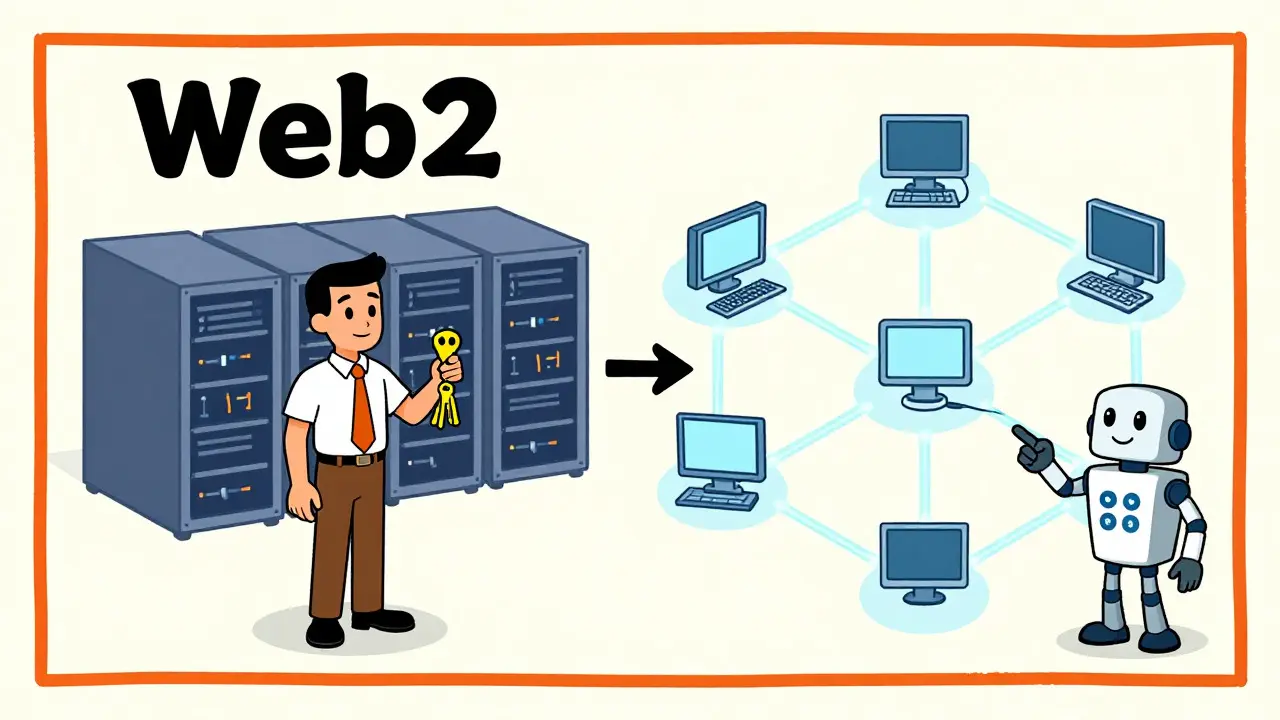
In traditional web development (Web2), the architecture is vertical. You have a frontend that talks to a backend, which talks to a database. It’s clean, simple, and controlled by one entity-usually your company or a cloud provider like AWS. In Web3, the architecture is horizontal and distributed. There is no single point of failure because there is no single point of control.
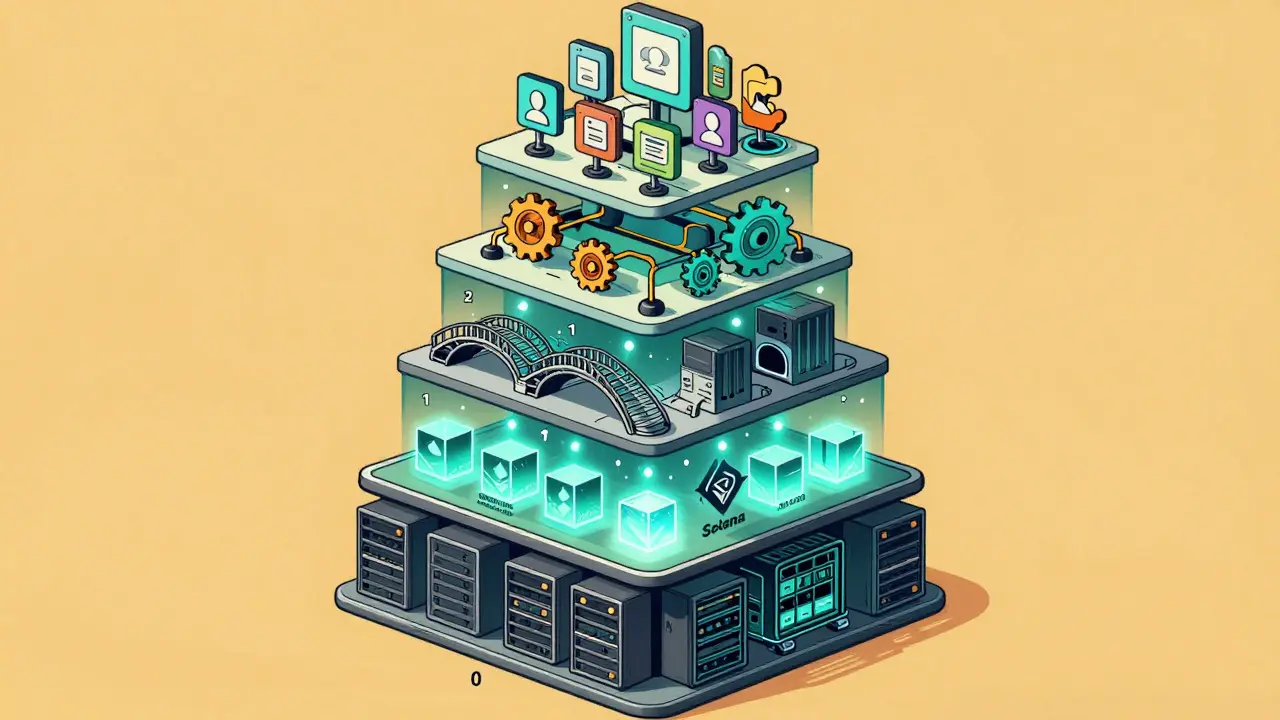
To manage this complexity, the industry has standardized on a multi-layered model. Most experts agree on a five-layer structure:
- Layer 0 (Infrastructure): The physical hardware and network nodes.
- Layer 1 (Protocols): The base blockchain networks like Ethereum or Solana.
- Layer 2 (Utilities): Scaling solutions and bridges that make L1 faster and cheaper.
- Layer 3 (Services): The middleware, APIs, and indexing tools developers use to build apps.
- Layer 4 (Applications): The actual dApps users interact with, like Uniswap or OpenSea.
Understanding these layers is crucial because if your app fails, knowing which layer broke saves you hours of debugging. Is it a gas fee issue (L1/L2)? A broken API call (L3)? Or a bad user interface (L4)? Let's dig into each one.
Layer 0: The Physical Foundation
Before we get to code, we have to talk about the machines. Layer 0 is the physical infrastructure-the servers, computers, and networking equipment that run the blockchain nodes. In Web2, you might rent space on Amazon Web Services. In Web3, anyone with a decent computer can run a node.
This layer ensures the network stays alive. If all the nodes go offline, the blockchain stops. While most developers don't configure this layer directly, understanding it helps explain why decentralization is hard. You aren't just writing code; you're coordinating thousands of independent computers to agree on the same truth. This requires robust networking protocols and significant computational power, especially for Proof of Work chains, though newer consensus mechanisms like Proof of Stake reduce this burden significantly.
Layer 1: The Protocol Layer (The Base Chain)
This is the heart of Web3. Layer 1 consists of the foundational blockchain protocols. When people say "Ethereum," they are talking about a Layer 1 solution. These protocols define the rules of the network: how blocks are created, how transactions are validated, and how consensus is reached.
| Protocol | Consensus Mechanism | Smart Contract Language | Key Characteristic |
|---|---|---|---|
| Ethereum | Proof of Stake (PoS) | Solidity | Largest ecosystem, high security |
| Solana | Proof of History + PoS | Rust | High throughput, low latency |
| Polygon | Proof of Stake | Solidity | Scalability focus, EVM compatible |
The most critical component here is the Virtual Machine. For example, the Ethereum Virtual Machine (EVM) is a decentralized computing engine that executes smart contracts on the Ethereum network, ensuring code runs identically across all nodes. The EVM acts as the CPU for the blockchain. It doesn't care who wrote the code; it just executes it according to the state of the ledger. If you are building on Ethereum-compatible chains, you are likely writing for the EVM. If you are on Solana, you are writing for the Sealevel runtime. This choice dictates your programming language and your development tools.
Layer 2: Scaling and Utilities
Here is the problem with Layer 1: it's slow and expensive. Ethereum can only process about 15-30 transactions per second. Try running a global payment system on that, and fees skyrocket. Enter Layer 2.
Layer 2 solutions sit on top of the base chain to handle transaction processing off-chain, then settle the final results back on Layer 1 for security. Think of it like a coffee shop taking payments via credit card (fast, local) and then batching those transactions to send to the bank (slow, secure) at the end of the day.
Common Layer 2 technologies include:
- Rollups: Optimistic Rollups (like Arbitrum) and ZK-Rollups (like zkSync) bundle hundreds of transactions into one proof.
- Sidechains: Independent blockchains that run parallel to the main chain (like Polygon PoS).
- State Channels: Direct peer-to-peer channels for micro-transactions.
For developers, choosing a Layer 2 often means lower gas fees and faster confirmation times, which makes for a much better user experience. However, it adds complexity because you now have to manage bridging assets between L1 and L2 securely.
Layer 3: Development Services and Middleware
If Layer 1 is the road and Layer 2 is the express lane, Layer 3 is the traffic lights, signs, and GPS. This layer includes the tools developers use to interact with the blockchain without reinventing the wheel every time.
You rarely talk to the blockchain raw HTTP requests anymore. Instead, you use libraries and services:
- Wallet Connectors: Tools like WalletConnect allow users to connect their digital wallets (MetaMask, Coinbase Wallet) to your app.
- Indexers: Reading data from a blockchain is messy. Services like The Graph index blockchain data into queryable APIs, making it easy to fetch NFT ownership or token balances.
- Oracles: Blockchains can't see outside their own walls. Oracles like Chainlink bring real-world data (stock prices, weather data) onto the chain so smart contracts can react to external events.
- Development Frameworks: Tools like Hardhat or Foundry provide environments for writing, testing, and deploying smart contracts.
This layer is where most of your daily development happens. You write Solidity code, test it in Hardhat, deploy it to a testnet, and use The Graph to display that data in your React frontend.
Layer 4: The Application Layer (dApps)
Finally, we reach the part users actually see: the Decentralized Applications (dApps). This is the frontend. Technically, it looks like any other website built with React, Vue, or Angular. The difference is how it interacts with the backend.
Instead of calling a REST API hosted on your server, your frontend calls a smart contract on the blockchain. This requires a few key changes:
- User Identity: No usernames or passwords. Users identify themselves via their wallet address (e.g., 0x123...abc).
- Authentication: Users sign messages with their private key to prove they own the wallet. This signature is verified by the app.
- Data Storage: Storing large files (images, videos) on-chain is prohibitively expensive. Instead, dApps use decentralized storage systems like IPFS is InterPlanetary File System, a peer-to-peer hypermedia protocol designed to persistently and efficiently store and share data in a distributed file system. IPFS allows you to store files across a network of computers, returning a unique Content Identifier (CID) that points to the data. Your smart contract stores the CID, not the image itself.
The UI must also handle asynchronous operations. When a user clicks "Swap Tokens," the app sends a transaction to the wallet. The wallet prompts the user to sign. The transaction goes to the mempool. Then, miners/validators pick it up. Only then does the state change. Your UI needs to show loading states, pending confirmations, and success/error messages clearly, or users will think the app is broken.
Key Differences: Web2 vs. Web3 Architecture
To truly grasp the stack, you need to contrast it with what you already know. Here is a quick comparison of how core components differ:
| Component | Web2 Approach | Web3 Approach |
|---|---|---|
| Database | Centralized SQL/NoSQL (PostgreSQL, MongoDB) | Distributed Ledger (Blockchain) |
| Identity | Email/Password, OAuth | Crypto Wallet Address, DID (Decentralized ID) |
| Storage | AWS S3, Azure Blob | IPFS, Arweave, Filecoin |
| Logic Execution | Server-side code (Node.js, Python) | Smart Contracts (Solidity, Rust) |
| Trust Model | Trust the platform owner | Trust the code/math (Code is Law) |
The biggest shock for new developers is the immutability of smart contracts. Once deployed, you can't easily fix a bug. In Web2, you push a hotfix. In Web3, you might need to deploy a new contract and migrate all user data, which is costly and risky. This forces a higher standard of testing and auditing.
Getting Started: A Practical Roadmap
So, how do you actually start building? Don't try to learn everything at once. Follow this path:
- Pick a Layer 1: Start with Ethereum. It has the most tutorials, tools, and community support. Use Remix IDE (an online compiler) to write your first "Hello World" smart contract in Solidity.
- Learn the Basics of Solidity: Understand variables, functions, modifiers, and events. Learn how to interact with other contracts.
- Set Up a Local Environment: Install Hardhat or Foundry. These let you spin up a local blockchain on your computer for fast, free testing.
- Build a Simple Frontend: Create a React app. Use ethers.js or viem to connect to your local blockchain. Make a button that triggers a function in your smart contract.
- Deploy to Testnet: Get some fake ETH from a faucet. Deploy your contract to Sepolia or Goerli testnets. Share the link with friends and watch them struggle to install MetaMask (you'll learn a lot about UX here).
Remember, the goal isn't to replace Web2 everywhere. Web3 excels at scenarios requiring transparency, shared ownership, or censorship resistance. Use it where it adds value, not just because it's trendy.
What is the difference between Layer 1 and Layer 2?
Layer 1 is the base blockchain protocol (like Ethereum) that handles security and consensus but can be slow and expensive. Layer 2 is a secondary framework built on top of L1 to increase transaction speed and reduce costs by processing transactions off-chain before settling them on the main chain.
Do I need to know Solidity to build Web3 apps?
If you are building on Ethereum or EVM-compatible chains, yes, Solidity is the primary language for smart contracts. However, if you are only building the frontend (Layer 4), you can use standard JavaScript/TypeScript libraries to interact with existing contracts without writing Solidity yourself.
How is data stored in Web3?
Small amounts of data are stored directly on the blockchain within smart contracts. Larger data like images, videos, or documents are stored on decentralized storage networks like IPFS or Arweave. The blockchain only stores a hash or pointer (CID) to that data to keep costs low.
What is a Smart Contract?
A smart contract is self-executing code deployed on a blockchain. It automatically enforces the terms of an agreement when predefined conditions are met, removing the need for intermediaries like banks or lawyers.
Is Web3 more secure than Web2?
Web3 offers cryptographic security for data integrity and ownership, making it resistant to censorship and single-point failures. However, it introduces new risks like smart contract bugs, phishing attacks, and user error (losing private keys). Security depends heavily on proper coding practices and audits.
Prudence Flemming
August 14, 2026 AT 12:42the ontological shift here is profound. we are moving from a vertical hierarchy of trust to a horizontal lattice of verification. the layers you describe are not just technical abstractions but philosophical commitments to a specific type of epistemology where truth is computationally derived rather than socially constructed. it is fascinating how the physical layer L0 becomes the new metaphysical ground for digital existence.
Don Fizy
August 15, 2026 AT 22:56Great breakdown! I really appreciate how you simplified the Layer 2 explanation with the coffee shop analogy. It makes so much sense now. Keep up the good work, this is super helpful for beginners like me who are trying to wrap their heads around all these acronyms. You're doing a great job making Web3 accessible. :)
Dominic Greco
August 17, 2026 AT 01:10They want you to think you own the land but they control the seeds 🌱 The EVM is just a digital panopticon designed to track every micro-transaction while selling your data to the highest bidder in the metaverse. Don't let them gaslight you into thinking 'trustless' means safe. It's all a setup by the central bank elites to monitor our spending habits through blockchain surveillance. Wake up sheeple! 👁️🐑
Sean Rowland
August 17, 2026 AT 02:19One must consider the implications of such a decentralized architecture on the very fabric of societal cohesion. While the author posits that Layer 1 protocols define the rules, one might argue that the lack of centralized authority leads to anarchy rather than freedom. Is it truly efficient to have thousands of independent computers agreeing on truth? Perhaps the inefficiency is the point, a deliberate friction to prevent mass adoption by the unwashed masses who cannot comprehend the cryptographic nuances. Furthermore, the reliance on Solidity suggests a monoculture that is ripe for systemic failure.
Sus Sawyer
August 18, 2026 AT 07:02Hell yeah! This stack is the future. Stop sleeping on ZK-Rollups, they are absolute game changers for scaling. If you are still deploying directly to mainnet without testing on a local Hardhat node, you are doing it wrong. Get out there and build something dope. The code doesn't lie, only the devs do. Let's gooo! 🚀
Aryan MISHRA
August 18, 2026 AT 18:34You missed the critical nuance regarding sharding. Sharding is not merely a Layer 2 solution; it is a fundamental architectural shift in how state is partitioned across nodes. Without understanding parallel execution capabilities, your understanding of throughput remains superficial. Also, Rust is objectively superior to Solidity for smart contract development due to memory safety guarantees. Solidity is a legacy language clinging to relevance. Read the whitepapers again.
Ryan Robinson
August 19, 2026 AT 12:36i mean its pretty cool stuff. i was struggling with ipfs at first but once i got the hang of cids it clicked. thanks for sharing this guide. hope everyone finds it useful too. no need to fight over which chain is better lol.
Earl Kott65
August 20, 2026 AT 01:10Oh wow, another 'guide' to Web3. How original. 🙄 But seriously, if you think Ethereum is the only game in town, you're living in the past. Solana moves faster than your grandma's dial-up connection. And don't get me started on the 'immutability' myth. Smart contracts are mutable if you write them right, or if you have enough governance power. Just saying. 😏
Ethan Yuwono
August 22, 2026 AT 00:37It is interesting to observe how the separation of concerns in Web3 mirrors traditional software engineering principles yet diverges in execution. The emphasis on transparency is commendable. However, one should reflect on the environmental impact of Proof of Work versus Proof of Stake. The shift towards energy-efficient consensus mechanisms is not just technical but ethical. We must ensure that decentralization does not come at the cost of planetary health.
Jack Delasquez
August 23, 2026 AT 00:17yo this helped me understand why my tx failed last week. turns out i was using the wrong rpc endpoint for polygon. thanks man. gonna try hardhat next.
Harman Singh
August 23, 2026 AT 23:26why did you post this now. i am tired of seeing crypto everywhere. it feels like people are ignoring the real world problems. also i lost money on a rugpull last month and it sucks. nobody talks about the emotional toll of volatility. just sad vibes here.
Erica Johnson
August 25, 2026 AT 08:39Actually, you forgot to mention that Layer 3 services are often centralized points of failure themselves. The Graph nodes are run by a small number of entities. So it's not truly decentralized. Just pointing that out because people always oversimplify. ;)
Ken G
August 26, 2026 AT 03:24this is all a scam. the government will ban it soon. they already have. you are wasting your time learning solidity when you could be saving gold bars under your mattress. trust the system not the code. code can be hacked. gold cannot. simple as that.
Lorraine Surringer
August 27, 2026 AT 23:35oh honey you really thought this was easy? i tried to deploy a contract and cried for three days straight. the gas fees alone broke my spirit. but hey if you love pain then go ahead and dive in. just dont say i didnt warn you. xoxo
Alex Di Mango
August 28, 2026 AT 02:24I think both sides have valid points. The technology is promising but the user experience needs work. It's important to keep an open mind and learn from mistakes. Whether you prefer Ethereum or Solana, the goal is innovation. Let's support each other in building better tools for everyone. Peace and love to all developers here. 🌍
Amor Jordan
August 28, 2026 AT 14:35This article is a breath of fresh air. Finally someone explains it without trying to sell me a course. I've been hesitant to jump in because of the complexity, but breaking it down into layers makes it feel manageable. Thank you for taking the time to write this clearly. It gives me hope that maybe I can contribute to this space after all. 💖
Eden Tadesse
August 30, 2026 AT 04:08just a quick note that remix ide is awesome for beginners. dont overcomplicate things with local setups until you get the basics down. happy coding!
Eric Zehr
August 31, 2026 AT 07:21Excellent summary. The distinction between Web2 and Web3 identity models is particularly crucial. Moving away from email/password authentication to wallet signatures enhances security significantly. Developers should prioritize implementing proper error handling for transaction failures to improve user confidence. Well written and informative piece overall.
Namrata Mapgaonkar
September 1, 2026 AT 21:40In India we are seeing a lot of interest in stablecoins for remittances. The layer 2 solutions make it much cheaper to send money home compared to traditional banks. It is exciting to see how global tech adapts to local needs. Hope to see more inclusive designs in the future. :)
Rita Dutta
September 3, 2026 AT 14:56The cosmic dance of blocks and transactions reveals a deeper truth about human nature. We crave ownership yet fear responsibility. Web3 offers a mirror to our collective psyche. But beware the siren song of decentralization. It may lead to chaos before order emerges. Embrace the uncertainty my friends. The universe is writing the code.