
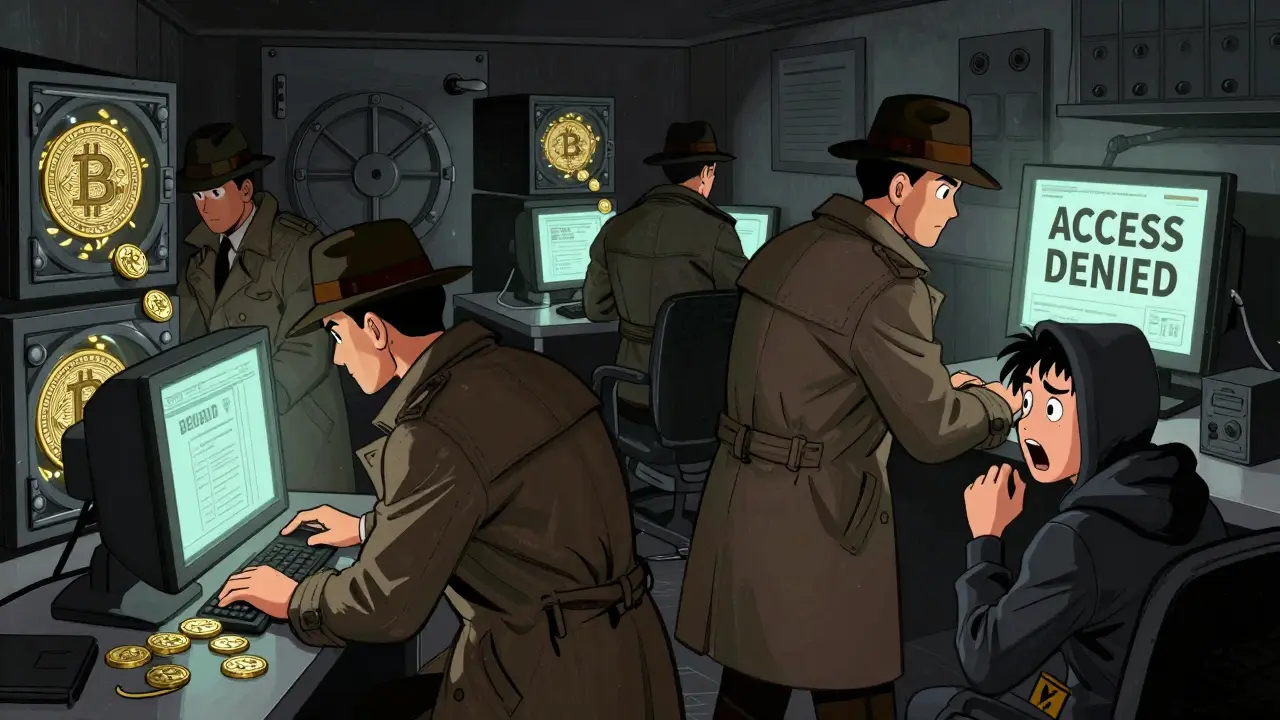
On September 18, 2025, Canada pulled the plug on TradeOgre-one of the last major anonymous cryptocurrency exchanges-and seized CAD$56 million (about US$40 million) in digital assets. It wasn’t just a raid. It was the first time Canadian law enforcement shut down an entire crypto exchange from the inside out. No warning. No notice. Just a silent takedown that left users stranded and the crypto world watching.
What Was TradeOgre?
TradeOgre wasn’t like Binance or Coinbase. It didn’t ask for your name, ID, or address. Launched in 2018, it operated as a privacy-first exchange, built on Tor networks and focused almost entirely on Monero (XMR) and obscure altcoins. You could trade without KYC. No email verification. No phone number. No paper trail. For years, that made it a magnet for users who wanted to stay off the radar-whether they were privacy advocates, journalists in repressive regimes, or people moving illicit funds. Its structure was simple: users deposited crypto, traded anonymously, and withdrew without ever proving who they were. The exchange didn’t report to FINTRAC, Canada’s financial intelligence unit. It didn’t register as a money services business. And it didn’t care about international compliance. That’s what made it dangerous-and ultimately, a target.How Did Canada Find It?
The RCMP didn’t stumble on TradeOgre by accident. The investigation started in June 2024 after Europol flagged suspicious transaction patterns linked to the exchange. Blockchain analytics firm Arkham Intelligence was brought in to trace the money. What they found was a trail of encrypted transactions leading directly to TradeOgre’s wallets-many tied to known criminal networks. What made this case different was how the RCMP handled the evidence. They didn’t just freeze wallets. They traced every movement, mapped out the exchange’s infrastructure, and even identified internal wallet addresses used by operators. By July 2025, TradeOgre’s website and social media vanished. No announcement. No explanation. Just silence. Then, on September 18, 2025, the RCMP dropped the bomb: they’d seized over CAD$56 million in crypto. And they didn’t just take the coins-they left digital messages embedded in blockchain transactions, confirming the seizure. It was a public declaration: we know where your money is, and we can take it.Why This Matters for Everyone
Before TradeOgre, most crypto enforcement actions targeted individual wallets or mixing services. This was the first time an entire exchange was dismantled. That’s a game-changer. It sends a clear message: if you’re running a crypto platform that ignores KYC and AML rules, and you serve Canadian users-even if you’re registered in the U.S. or hosted on Tor-you’re not safe. The RCMP proved they can track Monero transactions, identify hidden service operators, and seize assets without needing a physical location. This isn’t just about Canada. It’s a blueprint for other countries. The U.S., UK, Australia, and the EU have been watching closely. If Canada can take down a privacy-focused exchange with no physical headquarters, what’s stopping them from doing the same elsewhere? For users, this means the era of truly anonymous crypto trading is over. Even Monero, once considered untraceable, can be analyzed at scale with the right tools. Arkham Intelligence didn’t break Monero’s cryptography-they tracked how it moved, when it moved, and who it moved to. That’s enough to build a criminal case.
What Happened to the Money?
The seized assets include Bitcoin, Ethereum, Litecoin, and over 200,000 Monero coins. The RCMP hasn’t released details on the source of the funds, but investigators believe they originated from ransomware payments, darknet market sales, and money laundering operations tied to organized crime. The money isn’t being returned to victims. Instead, it’s being held pending legal proceedings. Canada plans to use part of the funds to support future crypto enforcement efforts. The rest may be auctioned off or held as evidence in potential criminal cases. TradeOgre’s operators have never responded. No lawyers. No press releases. No social media posts. That silence speaks volumes. Either they’ve been identified and are in hiding-or they’ve been arrested quietly. Either way, the exchange is dead.What This Means for Other Privacy Exchanges
TradeOgre wasn’t alone. Platforms like Bisq, LocalCryptos, and smaller Tor-based exchanges still operate without KYC. But now, they’re all on notice. The RCMP’s success proves that:- Privacy coins aren’t untouchable
- Hidden services aren’t safe
- Operating outside regulation is a liability, not a feature
What Should You Do Now?
If you’re a regular crypto user: nothing changes. Use reputable exchanges with KYC. You’re not at risk. If you’re running a platform that avoids compliance: reconsider. The cost of getting caught isn’t just fines-it’s total shutdown, asset seizure, and potential criminal charges. If you’re a privacy advocate: understand that the tools you rely on are being neutralized. Monero’s privacy features are still strong, but the ecosystem around it-exchanges, gateways, trading pairs-is no longer safe from surveillance. The days of "trustless, anonymous, unregulated" crypto trading are ending. Not because the tech failed. Because the law caught up.What’s Next?
Canada is expected to launch a new digital asset compliance framework in early 2026, requiring all exchanges serving Canadian users to register with FINTRAC-even if they’re based overseas. Failure to comply could result in criminal charges against operators. Other countries are likely to follow. The U.S. Treasury has already signaled it’s studying the TradeOgre case as a model. The EU is drafting similar legislation. Even Australia, where I’m based, is tightening rules on anonymous crypto trading. The message is clear: if you want to trade crypto legally, you’ll need to identify yourself. If you don’t, you’re not just breaking rules-you’re risking everything you own.Was TradeOgre a scam?
No, TradeOgre wasn’t a scam in the traditional sense. It didn’t steal users’ funds or run a Ponzi scheme. It was a legitimate exchange that simply operated outside the law. Users could trade, deposit, and withdraw without issues-until the RCMP shut it down. The problem wasn’t fraud-it was non-compliance.
Can you still use TradeOgre?
No. The website has been offline since July 2025. All domain names and Tor addresses linked to the exchange have been seized or taken down. There is no way to access the platform, and no official statements suggest it will return.
Why did Canada seize Monero specifically?
Monero was TradeOgre’s primary trading pair because it’s designed to hide transaction details. But the RCMP didn’t break Monero’s privacy. They tracked how it flowed through the exchange’s wallets and linked those wallets to criminal activity. It’s not that Monero was compromised-it’s that the exchange using it was.
Is my crypto safe on other exchanges?
If you’re using a licensed exchange like Coinbase, Kraken, or Bitstamp, yes-your funds are protected by regulation. If you’re using an unregistered, anonymous exchange, especially one that supports Monero or Tor, you’re at risk. The RCMP’s action proves that even "hidden" platforms can be traced and shut down.
Will other countries follow Canada’s lead?
Already are. The U.S. Department of Justice cited the TradeOgre case in a 2025 policy briefing as a model for cross-border crypto enforcement. The UK’s National Crime Agency and Australia’s AUSTRAC are reviewing similar tactics. Expect more global takedowns of non-KYC exchanges in 2026.
Krista Hoefle
January 9, 2026 AT 16:57Kip Metcalf
January 11, 2026 AT 15:52Frank Heili
January 11, 2026 AT 21:44Sabbra Ziro
January 13, 2026 AT 02:17Dave Lite
January 14, 2026 AT 20:48Natalie Kershaw
January 16, 2026 AT 17:59Jacob Clark
January 17, 2026 AT 10:36Jessie X
January 17, 2026 AT 10:52Dennis Mbuthia
January 17, 2026 AT 11:52Becky Chenier
January 19, 2026 AT 05:17Staci Armezzani
January 19, 2026 AT 10:20Tracey Grammer-Porter
January 20, 2026 AT 02:42sathish kumar
January 21, 2026 AT 06:04jim carry
January 22, 2026 AT 13:42Don Grissett
January 24, 2026 AT 05:35Katrina Recto
January 25, 2026 AT 19:34Veronica Mead
January 27, 2026 AT 15:46Mollie Williams
January 28, 2026 AT 12:08Surendra Chopde
January 30, 2026 AT 10:20Tiffani Frey
January 31, 2026 AT 13:13Tre Smith
February 2, 2026 AT 06:54Sherry Giles
February 3, 2026 AT 12:35Denise Paiva
February 4, 2026 AT 06:50Charlotte Parker
February 4, 2026 AT 19:19Calen Adams
February 6, 2026 AT 14:35Valencia Adell
February 8, 2026 AT 03:21Sarbjit Nahl
February 9, 2026 AT 18:32Paul Johnson
February 10, 2026 AT 05:11Emily Hipps
February 11, 2026 AT 13:50Jennah Grant
February 12, 2026 AT 23:29