
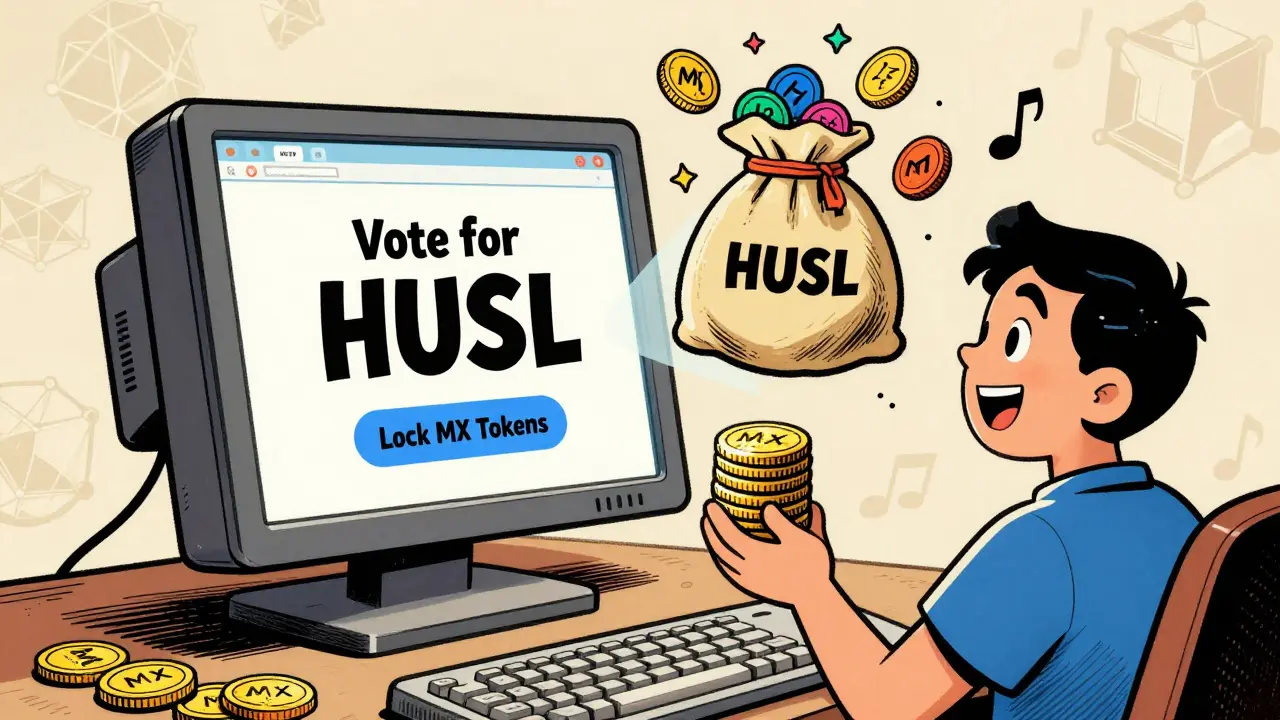
Most people ignore crypto airdrops because they assume it’s just another way for projects to dump low-value tokens on unsuspecting users. But the The HUSL campaign is different. It isn’t just handing out digital receipts; it’s distributing access to a blockchain ecosystem designed to fix one of the most broken industries in history: music. If you are looking at the current MEXC Exchange cryptocurrency trading platform Kickstarter program, you are staring at a potential $50,000 reward pool. The question is not whether the project has merit, but whether you know how to navigate the specific mechanics required to actually claim your share.
Key Takeaways
- The Opportunity: A 50,000 HUSL token airdrop is currently active via the MEXC Kickstarter program, valued at approximately $50,000 total.
- The Cost: You must vote using MX tokens (minimum 10 votes). Your tokens are locked temporarily during the event and unlocked within an hour after it ends.
- Bonus Potential: Users with over 1,000 MX in assets have a chance to win a 10 USDT Futures Bonus if randomly selected.
- Platform Utility: The HUSL is not a meme coin; it powers a DeFi art platform that gives artists commercial rights to their NFTs and uses Chainlink VRF for fair rewards.
- Risk Check: As of mid-2026, The HUSL has a low market cap (~$10k) and high volatility. Treat this as high-risk speculation, not savings.
Understanding the Mechanics: The MEXC Kickstarter Airdrop
To get your hands on these tokens, you need to understand exactly how the distribution works. This isn’t a "sign up and wait" scenario. It requires active participation through the MEXC Exchange centralized cryptocurrency exchange Kickstarter platform. The core mechanic here is voting. The project needs visibility, and you need tokens. In exchange for your attention and capital lock-up, the project distributes rewards.
Here is the step-by-step breakdown of what you need to do:
- Prepare Your Wallet: Ensure you have an account on MEXC and hold MX Token native utility token of MEXC Exchange. You cannot vote without them.
- Vote for The HUSL: Navigate to the Kickstarter section. Find The HUSL listing. Cast your votes. The minimum requirement is 10 votes. There is a maximum cap of 500,000 MX tokens per user, so there is a limit to how much influence one person can exert.
- Understand the Lock-Up: When you vote, your MX tokens are temporarily locked. This prevents you from selling them or using them elsewhere during the campaign. Do not worry about losing them permanently; they are automatically unlocked within one hour after the campaign concludes.
- Claim Proportional Rewards: The 50,000 HUSL tokens are distributed based on your share of the total votes. If you cast 1% of all votes, you get roughly 1% of the airdrop pool.
There is also a secondary layer to this campaign. If you hold more than 1,000 MX tokens in your total assets, you are entered into a random draw. Five hundred lucky users will receive a 10 USDT Futures Bonus. This bonus is distributed within seven working days after the event ends. This is a small incentive to keep larger holders engaged, but the primary value lies in the proportional HUSL token distribution.
What Is The HUSL? Beyond the Speculation
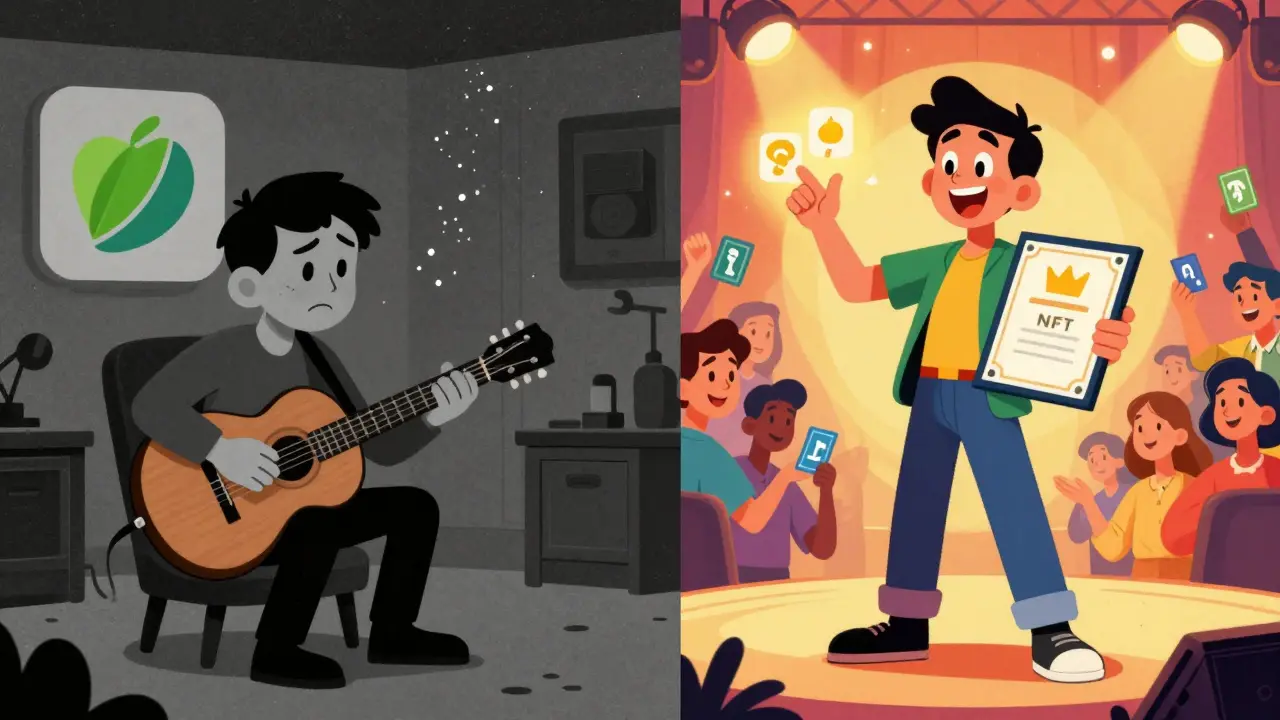
If you treat this purely as a free money grab, you might miss the underlying technology that could drive long-term value-or cause it to crash. The HUSL blockchain-based NFT platform for music industry was founded by CEO Varun Bajaj and launched on September 12, 2021. Its mission is specific: reshape the music industry by connecting artists and fans through decentralized finance (DeFi).
Traditional music streaming platforms like Spotify or Apple Music pay fractions of a cent per stream. Most emerging artists never see meaningful income. The HUSL attempts to solve this by creating a peer-to-peer ecosystem. Artists upload their work for free. Fans buy NFTs that represent ownership or licensing rights. Crucially, buyers often receive full commercial rights to the beats or stems included in the NFT. Imagine buying a beat for a fraction of the $10,000-$50,000 price tag typically charged by top producers, and owning the rights to use it in your own tracks.
This model creates a dual-sided economy. Artists get monetization without intermediaries taking huge cuts. Fans and other musicians get affordable, high-quality production assets with legal clarity. The platform integrates Chainlink VRF Verifiable Random Function service for blockchains to ensure that any experiential rewards or random drops are cryptographically secure and auditable. This addresses a major pain point in NFT gaming and rewards: trust. You can verify that the system didn’t rig the outcome against you.
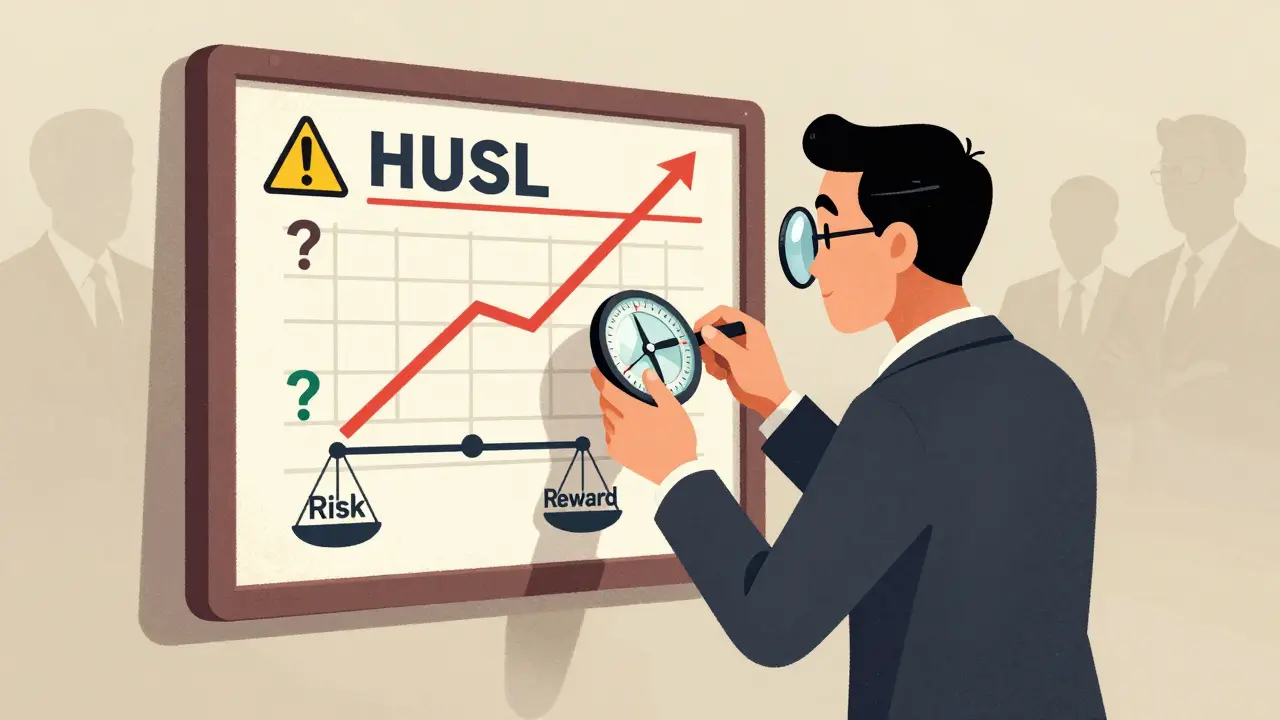
Market Reality Check: Risks and Data
Let’s be brutally honest about the financial picture. As of October 2025, The HUSL had a market capitalization of roughly $10,574 USD. It ranked #3445 on CoinMarketCap. While the token saw a minor 0.11% increase in a recent 24-hour period, the overall volume is extremely low compared to major cryptocurrencies.
This low market cap indicates two things. First, it means the entry barrier for significant percentage gains is low if adoption spikes. Second, it means the asset is highly illiquid and volatile. You could receive 1,000 HUSL tokens in the airdrop, only to find that selling them crashes the price by 20% because there aren’t enough buyers on the order book.
| Feature | The HUSL | OpenSea / SuperRare |
|---|---|---|
| Primary Focus | Music Industry & Audio Assets | General Art, Collectibles, PFPs |
| Upload Fees | Free for artists | Often gas fees or listing costs |
| Commercial Rights | Often included with purchase | Usually personal use only |
| Technology | Ethereum + Chainlink VRF | Ethereum / Polygon / Solana |
| Monetization Model | Play-to-Earn / Compete-for-Attention | Transaction Fees / Royalties |
The comparison above highlights why The HUSL occupies a unique niche. General NFT platforms are saturated with JPEGs and profile pictures. The HUSL focuses on utility-specifically, audio production assets. Partnerships with high-profile producers like members of 808 Mafia (Pvlace and Gunboi) and artists like Styles P add legitimacy. These are people who have worked on Billboard number-one hits. Their involvement suggests the platform aims for professional-grade quality, not just hobbyist content.
How to Maximize Your Airdrop Strategy
If you decide to participate, don’t just throw tokens at the wall and hope something sticks. Use a strategic approach.
- Calculate Your ROI: Before voting, estimate the total voting power expected. If the target is 500% voting rate, calculate how many MX tokens you need to spend to secure a meaningful percentage of the 50,000 HUSL pool. Remember, the reference price is $1.00 per token, but market price may differ upon listing.
- Qualify for the Bonus: If you already hold MX tokens, ensure your total asset balance exceeds 1,000 MX. This doesn’t cost extra, but it enters you into the 10 USDT Futures Bonus draw. It’s free upside.
- Monitor Unlock Times: Set a reminder for one hour after the campaign ends. Once your MX tokens unlock, decide immediately whether to hold, sell, or reinvest. Volatility often spikes right after unlocks.
- Research Liquidity: Before claiming your HUSL tokens, check if there is a live trading pair on MEXC or other exchanges. If liquidity is thin, consider holding longer until the project announces further developments or partnerships.
Long-Term Viability: Will The HUSL Survive?
The NFT space has seen a brutal correction since the 2021 boom. Many projects died because they relied solely on speculative hype. The HUSL tries to avoid this trap by focusing on real-world utility. By giving artists complete commercial rights and providing free uploads, it lowers the barrier to entry for talent. This could lead to a network effect: more artists bring better music, which attracts more fans, which increases demand for HUSL tokens.
However, survival depends on execution. The platform needs to onboard more mainstream artists and prove that its DeFi models generate sustainable revenue. The collaboration with Chainlink provides technical credibility, but user adoption is the true test. If The HUSL can scale its partnerships with producers who normally charge thousands of dollars, it could carve out a defensible niche in the Web3 music sector.
For now, the airdrop is your lowest-risk way to gain exposure. You’re not buying at the peak; you’re earning tokens through engagement. Whether those tokens become valuable depends on the team’s ability to deliver on its promise of democratizing music ownership.
Is the HUSL airdrop free?
Not entirely. While you don't pay to enter directly, you must use MX tokens to vote on the MEXC Kickstarter platform. These tokens are temporarily locked during the campaign but returned within an hour after it ends. So, you need capital to participate, but you don't lose the principal amount used for voting.
When does the HUSL airdrop end?
The exact end date depends on the MEXC Kickstarter campaign schedule. Typically, these campaigns run for a fixed period announced on the MEXC website. You should check the current campaign page for the specific deadline. Rewards are usually distributed shortly after the voting period closes.
What is the value of HUSL tokens?
As of late 2025, HUSL had a reference price of around $0.20 during fundraising, but the airdrop references a $1.00 value for calculation purposes. However, the actual market price fluctuates based on supply and demand. With a low market cap, the price can be highly volatile. Always check the current trading price on exchanges like MEXC before making decisions.
Can I sell my HUSL tokens immediately after receiving them?
Yes, once the tokens are credited to your wallet or exchange account, you can trade them. However, due to low liquidity and market cap, large sales may impact the price. It is advisable to check the order book depth before executing large sells.
Who is behind The HUSL platform?
The HUSL is led by CEO Varun Bajaj. The platform has collaborated with notable music industry figures, including producers from 808 Mafia (Pvlace and Gunboi) and artist Styles P. These partnerships aim to bring professional credibility and high-quality content to the blockchain ecosystem.
How does Chainlink VRF help The HUSL?
Chainlink VRF provides verifiable randomness. In the context of The HUSL, this ensures that any random draws, NFT distributions, or reward allocations are fair and cannot be manipulated by the platform operators. It builds trust among users that the system is transparent and secure.
KEITH WONG
July 11, 2026 AT 11:16yo this is actually pretty legit if u know how to play it 🚀 most people sleep on these kicstarter things but the roi can be insane if the project pops off. just make sure u lock those mx tokens early so u dont miss out on the bonus pool. its free money basically if u already hold the token anyway 🤑
Guy Davis
July 11, 2026 AT 20:36its always the same scam. they promise the moon and deliver dust. music industry is broken yes but blockchain isnt the fix its just another layer of greed for middlemen who now call themselves devs. stop falling for it.
Natalie Lucas
July 12, 2026 AT 22:42i mean its not really a scam if u do ur homework right? i voted with like 50 mx and got some tokens back. its low risk since u get ur mx back after an hour. why not try it lol
Curtis Johnson
July 13, 2026 AT 12:35look i get the skepticism but imagine if artists actually got paid fairly for their work. that would change everything. maybe we should give these new models a chance instead of shutting them down immediately. its a big shift for sure but could be beautiful if executed well...
Steven Briggs
July 14, 2026 AT 13:31the liquidity is scary tho. market cap is tiny. one whale sells and everyone gets rekt. just something to keep in mind before locking up any assets even temporarily.
Hamza k
July 15, 2026 AT 23:10oh my god the volatility on this thing is absolutely wild! i watched the price swing 10% in five minutes yesterday. its like riding a rollercoaster without a seatbelt. terrifying yet exhilarating at the same time honestly.
Kim Kay
July 15, 2026 AT 23:39i tried to claim mine but the website was acting weird. maybe im doing something wrong? hope someone can help me figure out the steps because i dont want to lose my chance at the bonus.
Brad Semp
July 16, 2026 AT 08:10The notion that a decentralized ledger can rectify the systemic inequities of the traditional music industry is, frankly, preposterous. This is merely speculative gambling disguised as technological innovation. The fundamental economics remain unchanged; only the intermediaries have shifted from record labels to venture capitalists seeking quick exits. Do not mistake novelty for value.
Korn Arrieta
July 17, 2026 AT 23:49you guys are missing the point entirely. this isn't about art. its about the token mechanics. chainlink vrf ensures the random draw is fair which means the smart money is betting on the tech stack not the music. analyze the code not the beats.
Jackie D
July 19, 2026 AT 15:44i wonder if the commercial rights part actually holds up in court though? buying a beat online usually comes with shady terms. if this platform makes it legally binding via smart contract that would be huge for indie producers everywhere.
Ruth Williams
July 21, 2026 AT 01:10It is evident that the majority of participants here lack the financial literacy required to understand basic market dynamics. Airdrops are marketing expenses, not gifts. You are providing liquidity and attention for a product that has no proven utility. Proceed with extreme caution or better yet, abstain entirely from such trivial pursuits.
Sophie Nakasako
July 21, 2026 AT 08:19what fascinates me is the intersection of fan engagement and ownership. traditionally fans are passive consumers but here they become stakeholders. does this create a deeper emotional connection to the artist? i think it could revolutionize community building in ways we havent seen before.
Kristy Morrow
July 22, 2026 AT 10:41everyone says its different but its just another pump and dump scheme wrapped in buzzwords. music nfts died years ago. why would this survive when opensea is struggling? contrarian view but i think its dead on arrival.
John Harman
July 22, 2026 AT 15:31listen up folks. if you have mx tokens you vote. period. dont overthink it. the math is simple. you lock tokens you get rewards. if the project fails you still have your mx tokens back. worst case scenario you wasted an hour. best case you made free money. its not rocket science.
Antony Lopez
July 23, 2026 AT 15:14this foreign crypto nonsense needs to be regulated properly. we cant let these unregistered securities trade freely on exchanges based in other countries. it threatens our national financial security. stick to gold and stocks like real americans do.
Kat Barr
July 23, 2026 AT 15:20omg i just claimed my tokens!!! yay!! i feel so lucky 😊✨ the process was super easy once i figured out where the button was. hope the price goes up soon so i can buy myself a coffee with my profits ☕️💖
Logan Edmison
July 24, 2026 AT 04:09is it possible that the entire concept of ownership is flawed? maybe we shouldnt own things at all. just exist in the moment. but then again if i owned this beat i could sell it. so maybe ownership is good. confusing times man.
Michelle Walker
July 25, 2026 AT 20:48stop being naive. the team will rug pull eventually. look at the history of music nfts. every single one failed. this is no different. save your time and go touch grass instead of watching charts.
Shay Thomson
July 25, 2026 AT 22:51its amazing how technology brings us together even in disagreement. whether you love it or hate it the conversation is happening. that dialogue is valuable in itself. lets keep talking respectfully please.
DJ Maleko
July 26, 2026 AT 10:29hey did anyone else notice the partnership with 808 mafia? thats huge credibility. those guys produce for rappers who make millions. if they are using this platform it must be solid. dont sleep on the alpha bro 🐂🔥
Erika Pozzetto
July 27, 2026 AT 09:03I believe that the integration of verifiable randomness through Chainlink VRF represents a significant step forward in establishing trust within decentralized ecosystems, particularly when considering the historical precedents of centralized platforms failing to provide transparent mechanisms for reward distribution, which often led to widespread user dissatisfaction and loss of confidence in the system's integrity overall.
Russ Fincham
July 28, 2026 AT 13:30the data suggests high volatility which correlates with low liquidity. statistically speaking the risk adjusted return is negative for the average holder. however for those with zero cost basis due to airdrop participation the expected value becomes positive assuming non-zero exit probability.
Linda Hilliard
July 28, 2026 AT 17:24let me educate you on what a true utility token looks like. husl integrates directly into the production workflow unlike meme coins that rely on hype cycles. the jargon here is precise: commercial rights transfer via smart contract execution. this is institutional grade architecture not retail toy. 💎🙌