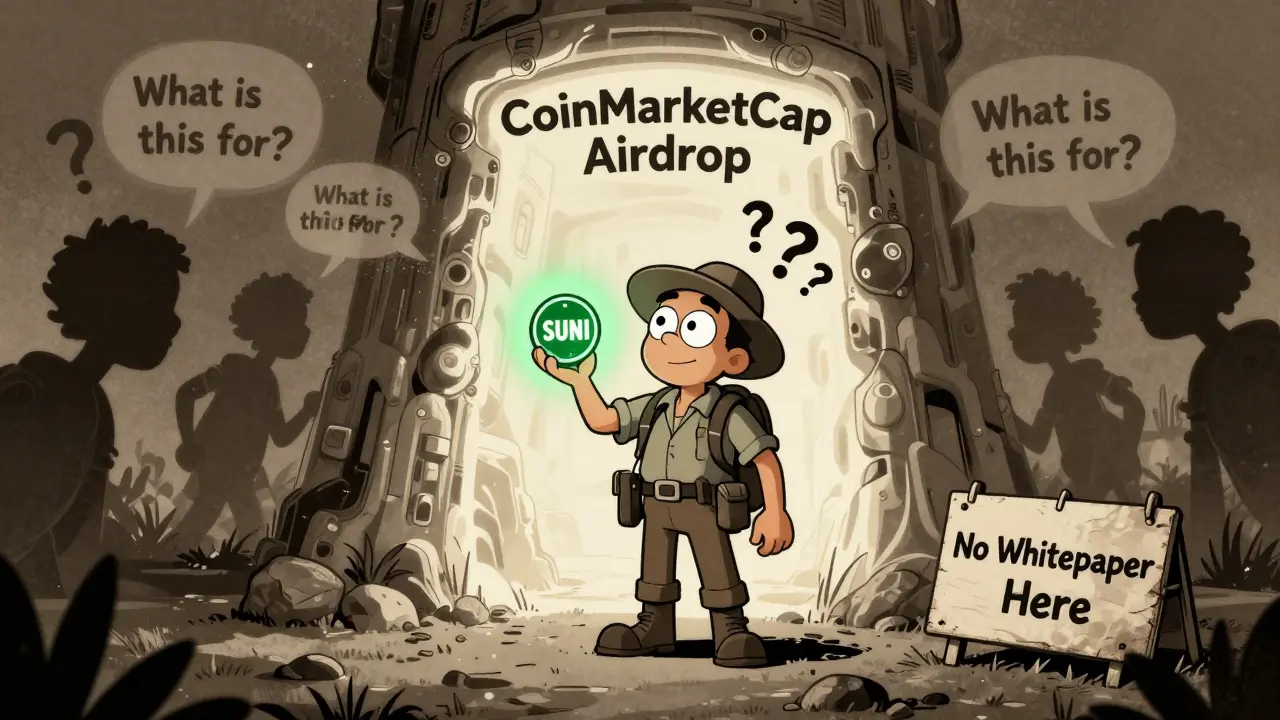
SUNI campaign: What It Is, Why It Matters, and What to Watch For
When you hear about a SUNI campaign, a promotional effort by a blockchain project to distribute tokens to users in exchange for simple actions like following social media or joining a community. Also known as crypto airdrop, it’s meant to build early adoption without requiring upfront investment. But not every campaign is real. Some are just clever phishing traps dressed up as free money.
Real campaigns like the KOM airdrop, a token distribution by Kommunitas that rewards holders with access to early-stage projects or the RACA x BSC MVBIII, a reward system tied to NFT ownership on Binance Smart Chain have clear rules, verifiable contracts, and active teams. They don’t ask for your private key. They don’t pressure you with fake countdowns. And they never promise instant riches. On the other hand, fake campaigns like the FDT Frutti Dino X CMC, a non-existent CoinMarketCap partnership that tricks users into connecting wallets or the DeHero HEROES, a phantom token drop with zero official presence rely on hype, poor grammar, and cloned logos to steal your assets.
What makes a campaign worth your time? It’s not the size of the reward—it’s the proof behind it. Does the project have a live website? A published smart contract on Etherscan or BscScan? A team with real names and LinkedIn profiles? Has it been covered by trusted sources—not just crypto influencers selling hype? The SUNI campaign could be one of the good ones, or it could be another ghost in the machine. The difference is in the details.
Below, you’ll find real-world examples of what works—and what gets people robbed. Some posts break down how to verify an airdrop. Others expose scams that look too good to be true. A few even show how past campaigns faded into oblivion after the initial buzz. Whether you’re looking to claim tokens safely or just want to avoid losing your crypto, these stories give you the tools to tell the difference before you click.