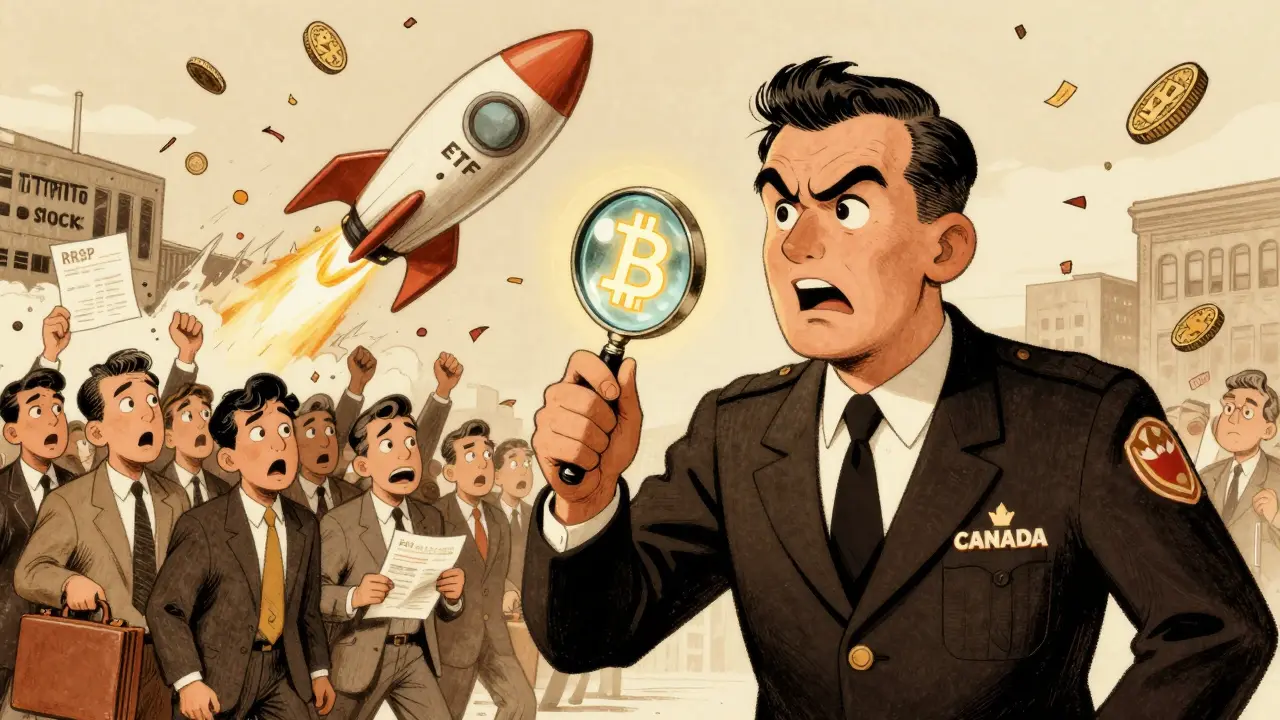
Purpose Bitcoin ETF: What It Is, Why It Matters, and What’s Really Happening
When you hear Purpose Bitcoin ETF, a publicly traded fund that holds actual Bitcoin and lets investors buy shares without storing crypto themselves. Also known as Bitcoin exchange-traded fund, it’s one of the few crypto investment tools approved by financial regulators in North America. Unlike risky crypto exchanges or shady token sales, this isn’t a gamble—it’s a financial product built on real custody, auditing, and legal oversight.
The Bitcoin ETF, a fund that tracks the price of Bitcoin and trades like a stock on major exchanges changes how regular people access crypto. You don’t need a wallet, private keys, or to worry about hacks. You just buy shares through your brokerage, just like you would with Apple or Tesla. The crypto regulations, government rules that control how digital assets are traded, taxed, and held by institutions in Canada and the U.S. made this possible. The Purpose Bitcoin ETF was the first in North America to get approval, and it’s still one of the most trusted options because it’s backed by a licensed asset manager, not a startup with a Discord channel.
Why does this matter? Because it bridges the gap between Wall Street and crypto. Banks, pension funds, and retirement accounts that were banned from buying Bitcoin directly can now get exposure through this ETF. That’s not hype—it’s real money flowing in. And while some people still chase meme coins or fake airdrops, the Purpose Bitcoin ETF is the quiet, regulated alternative that’s quietly changing the game. It doesn’t promise moonshots. It just gives you a clean, legal way to own Bitcoin without the chaos.
What you’ll find below are real stories from people who’ve used this ETF, comparisons with other crypto investment tools, and breakdowns of how regulations are shaping what’s allowed—and what’s not. You’ll see why some platforms shut down while this one keeps growing. No fluff. No promises of free tokens. Just facts about what’s working, who’s behind it, and why it’s still standing when so many others collapsed.