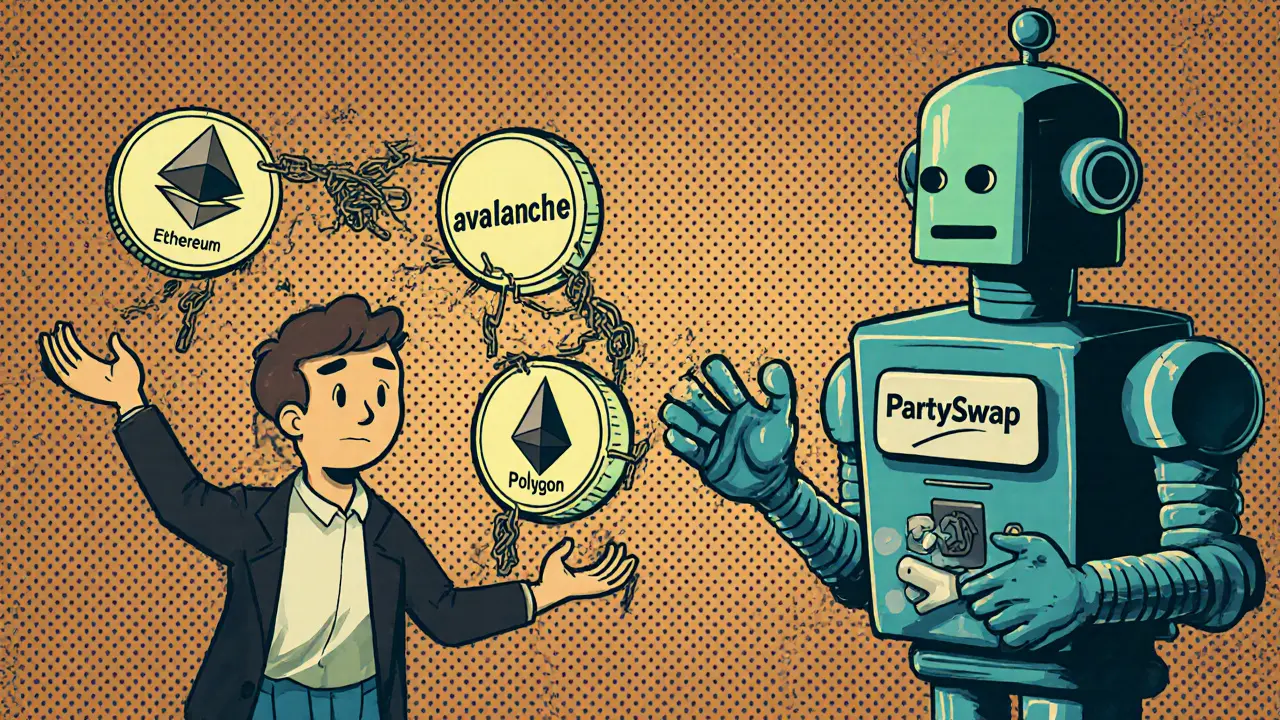
PartySwap: What It Is, Why It Matters, and What You Should Know
When you hear PartySwap, a decentralized exchange that lets users swap tokens without intermediaries. Also known as a community-driven DeFi platform, it aims to make cross-chain trading simple—but many versions of it exist, and most have no real users or liquidity. This isn’t just about one app. It’s part of a bigger trend: hundreds of tiny DeFi platforms pop up every month, promising easy swaps, big rewards, and zero fees. But only a handful survive past the first month.
Most of these platforms, including several that call themselves PartySwap, are built on Binance Smart Chain or Polygon. They rely on liquidity pools, reserves of token pairs that let users trade directly without order books to function. But if no one deposits real money into those pools, the platform is just code sitting idle. You’ll see fake trading volume, bots pretending to be users, and tokens with $0 value. It’s not unusual to find a PartySwap clone with a website, a whitepaper, and a Twitter account—yet zero actual trades in the last 30 days.
What separates real DeFi from the noise? Teams that show up. Code that’s audited. Liquidity locked for months. Real users trading daily. Compare that to the dozens of PartySwap-style sites that vanish after their initial token drop. You’ll find examples of this exact pattern in the posts below: projects like DuckSwap, Coolcat, and CoinWind all looked promising at first—but had no volume, no team, and no future. PartySwap isn’t inherently bad. But unless you know which version you’re using, you’re just gambling on a name.
Below, you’ll see real case studies of platforms that claimed to be like PartySwap—some were scams, others were abandoned experiments, and one or two actually delivered. You’ll learn how to spot the difference before you connect your wallet. No fluff. No hype. Just what works, what doesn’t, and why most of these projects disappear before you can even cash out.