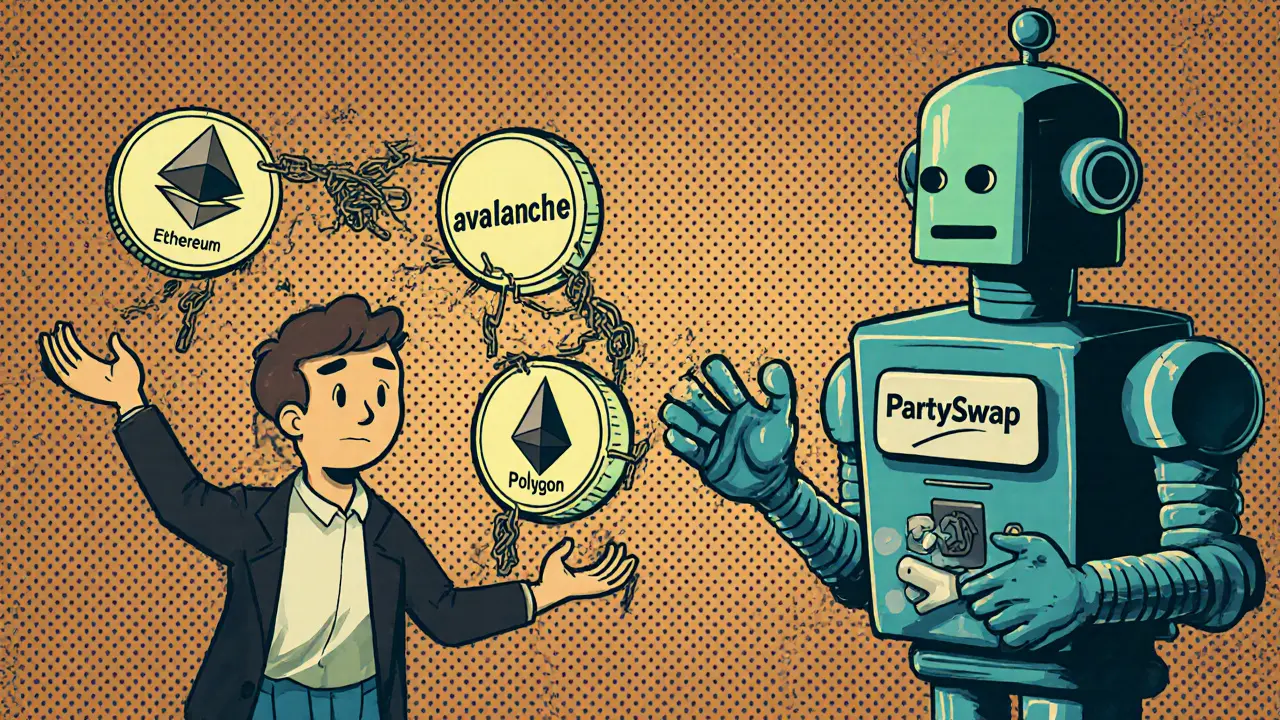
Multi-Chain Crypto: How Cross-Chain Projects Are Changing Crypto Trading
When you trade crypto across different blockchains, you’re dealing with multi-chain crypto, a system that connects separate blockchain networks so tokens and data can move between them without centralized intermediaries. Also known as cross-chain crypto, it’s not just a tech buzzword—it’s the only way to avoid paying high fees, waiting hours for swaps, or losing funds on broken bridges. Before multi-chain solutions, users had to rely on third-party bridges that were hacked over 200 times in the last three years, costing users billions. Now, projects like zkLink, a Layer 3 rollup that unifies liquidity across Ethereum’s fragmented Layer 2s and PLEXUS, a cross-chain DeFi platform that lets you swap tokens in one click are cutting out the middlemen entirely.
But not all multi-chain projects are built the same. Some, like zkLink, use advanced zero-knowledge proofs to keep trades secure and cheap. Others, like PLEXUS, promise simplicity but have zero trading volume and no public team. The difference? One solves real problems; the other just adds more noise. You’ll find both types in the posts below—real tools that work, and hype-driven tokens that vanish. The key is knowing what to look for: native asset support, actual liquidity, and transparent teams. If a project says it’s cross-chain but can’t show you where the money is, it’s not multi-chain—it’s a gamble.
Multi-chain crypto isn’t just about swapping tokens. It’s about access. It’s why traders in Turkey bypass payment bans using DeFi wallets that work across chains. It’s why Thai traders need compliant platforms that support multiple networks to stay legal. It’s why airdrops like RACA on BSC or KOM from Kommunitas only work if they’re tied to real, active blockchains. The posts here don’t just list projects—they show you which ones have users, which ones have code, and which ones are just ghost tokens with fake websites. You’ll see how Layer 3 rollups reduce fees by 90%, how failed chains like Artis Turba taught us what not to trust, and why holding a token on one chain means nothing if you can’t move it elsewhere. This isn’t theory. It’s what’s happening right now.