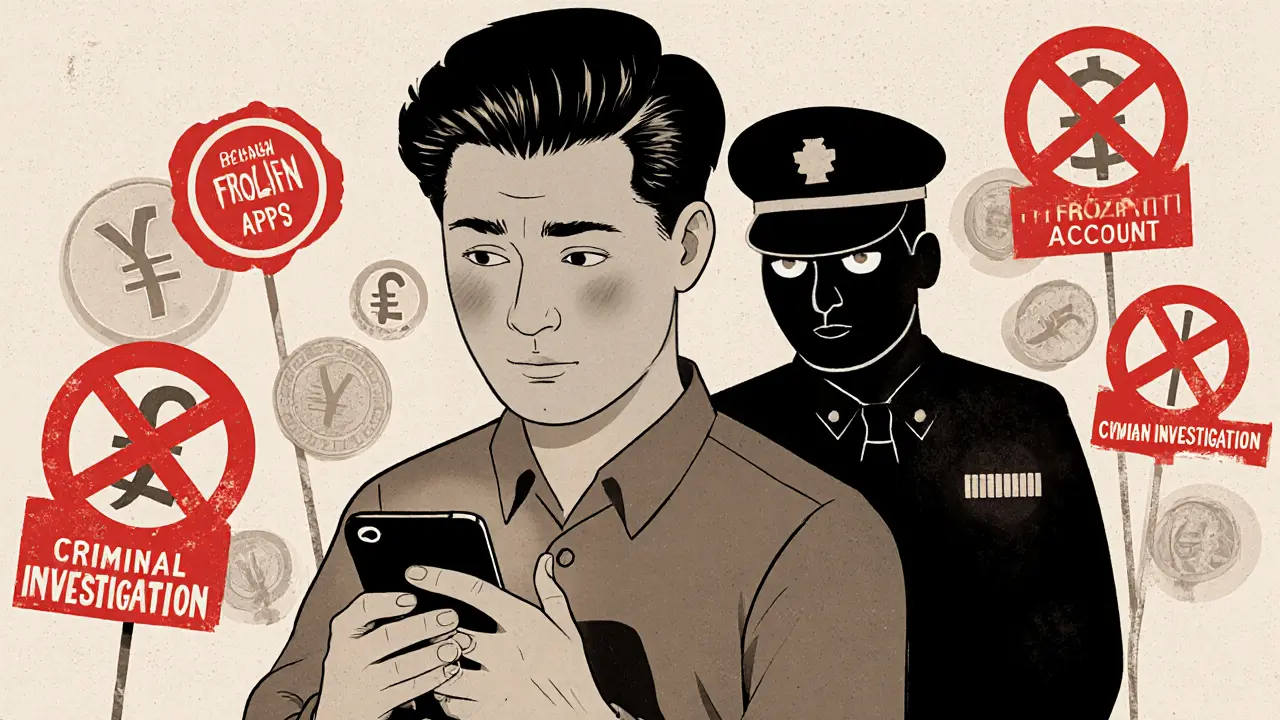
Crypto Legality in China: What's Allowed, What's Banned, and What It Means for Traders
When it comes to crypto legality in China, the Chinese government’s stance on cryptocurrency is one of the strictest in the world. Also known as China’s cryptocurrency ban, this policy doesn’t just discourage crypto—it actively shuts down access to exchanges, mining operations, and peer-to-peer trading platforms within its borders. Unlike countries that regulate crypto with licensing and taxes, China treats it as a financial risk that must be contained, not adopted.
This isn’t about blocking technology—it’s about controlling money. The blockchain China, a government-backed digital ledger system. Also known as Digital Yuan or e-CNY, it’s the central bank’s own blockchain-based currency, designed to replace cash and track every transaction. While private cryptocurrencies like Bitcoin and Ethereum are banned for trading and mining, the state runs its own version with full surveillance. This creates a strange duality: you can’t buy Bitcoin legally in Shanghai, but you can use the government’s digital yuan to pay for groceries.
So what happens to regular people who want to trade crypto? Many use offshore exchanges, P2P platforms, or VPNs to bypass restrictions. Others hold crypto in private wallets, treating it like digital gold—stored, not spent. The crypto trading China, is technically illegal for residents, but enforcement is uneven. Also known as crypto underground market, it thrives in cities like Shenzhen and Guangzhou, where traders rely on cash deposits, WeChat transfers, and trusted contacts to move funds. The government doesn’t arrest every individual holder, but it shuts down exchanges, freezes bank accounts linked to crypto, and blocks websites that promote trading.
Why does this matter if you’re not in China? Because China’s move shaped the entire global crypto market. When the ban hit in 2021, Bitcoin’s price dropped 30% overnight as miners fled to Kazakhstan, the U.S., and Russia. The crackdown also pushed innovation toward privacy tools, decentralized finance, and non-custodial wallets—tools that now help users everywhere protect their assets from overreaching regulators.
Today, the rules haven’t changed. Mining is still illegal. Exchanges are blocked. Crypto payments are banned. But blockchain research? That’s booming. Universities in Beijing and Hangzhou are working on smart contract systems for supply chains and public records—using tech that’s allowed because it doesn’t involve private tokens. This split between control and innovation is what makes China’s approach so unique: they want the power of blockchain without the chaos of decentralized money.
What you’ll find in the posts below are real stories from people caught in this system—how traders in China bypass restrictions, why exchanges like Upbit and WEEX are popular among Chinese users abroad, and how scams like fake airdrops target those desperate to access crypto. You’ll also see how the Digital Yuan is being tested in real cities, and why projects like zkLink and PLEXUS are trying to build cross-chain tools that work even under strict regulation. This isn’t just about China—it’s about what happens when a government decides to own the future of money.