
Imagine finding a new decentralized exchange that promises to revolutionize staking with a unique consensus mechanism. Sounds exciting, right? But what happens when you look closer and find... nothing? No users, no volume, no recent updates. That is the reality of SoupSwap, a platform listed as an untracked decentralized finance protocol on Binance Smart Chain. If you are reading this review because you stumbled upon SoupSwap in your search for the next big DeFi gem, I have some urgent news for you: you need to stop and look elsewhere.
I’ve spent years analyzing crypto projects from my desk in Perth, and I’ve seen countless platforms rise and fall. SoupSwap falls squarely into the 'fall' category-or perhaps it never really rose at all. This isn’t just a negative review; it’s a warning label. In this article, we’ll break down exactly why SoupSwap fails every major safety check, compare it to legitimate alternatives, and help you avoid losing funds to a ghost town in the crypto world.
The Red Flags You Can’t Ignore
When evaluating any decentralized exchange (DEX), liquidity is king. Without liquidity, you can’t trade. Without trading volume, there is no market. As of late 2025 and continuing into 2026, SoupSwap holds an Untracked Listing status on CoinMarketCap. What does that actually mean for you? It means the platform has insufficient trading data to be tracked properly. CoinMarketCap categorizes this under 'Listing Tier B - (3),' which is essentially a flag for 'inadequate liquidity metrics.'
Let’s put that in perspective. Major DEXs like Uniswap processed over $324 billion in volume in Q3 2025 alone. PancakeSwap handled nearly $190 billion in the same period. SoupSwap? Zero verifiable volume. When a platform shows no activity on blockchain explorers and no data on aggregators, it suggests one of two things: either the project is completely dead, or it is a dormant shell waiting to trap unsuspecting users. Neither scenario is safe for your capital.
| Feature | SoupSwap | Uniswap | PancakeSwap |
|---|---|---|---|
| CoinMarketCap Status | Untracked (Tier B-3) | Tracked (Top 10) | Tracked (Top 20) |
| Q3 2025 Volume | $0 / None | $324.7 Billion | $189.3 Billion |
| Security Audits | None Found | Multiple (Trail of Bits, etc.) | Multiple (CertiK, PeckShield) |
| Community Activity | Zero | High (427k+ Twitter followers) | High (Active Discord/Twitter) |
| Blockchain Network | Binance Smart Chain | Ethereum, L2s | Binance Smart Chain |
The Myth of MBPoS Consensus
SoupSwap claims to use a proprietary consensus mechanism called Multi-Bonded Proof of Stake (MBPoS). The pitch sounds technical and impressive: it allegedly allows staked assets to retain value across different digital asset types without restriction. On paper, this might sound like a breakthrough. In practice, it raises more questions than answers.
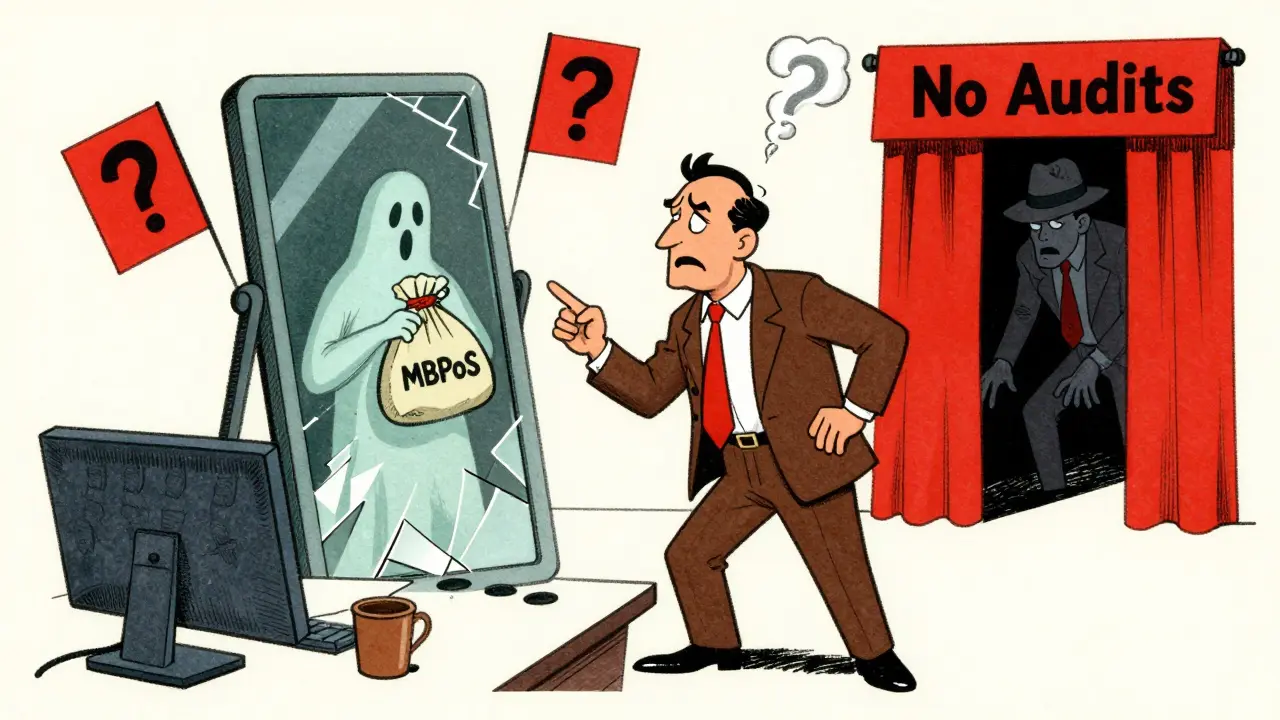
In the decentralized finance space, innovation requires transparency. Legitimate protocols publish their smart contract code on GitHub, undergo rigorous audits by firms like CertiK or Hacken, and provide detailed whitepapers explaining how their consensus works. SoupSwap provides none of this. There are no public audit reports, no verified smart contract addresses linked to active transactions, and no developer activity on code repositories.
Consider the risk profile here. According to Immunefi’s 2025 annual report, 78% of exploited DeFi protocols lacked proper audit coverage. By launching a platform with a complex, unverified consensus mechanism and zero security validation, SoupSwap places itself in the highest danger zone. If you connect your wallet to an unaudited contract, you are giving that contract full permission to interact with your funds. With no community watching and no developers maintaining the code, who stops a malicious actor from draining the pool? Nobody.
Ghost Town: Community and Support
A healthy crypto project thrives on its community. Users discuss features, report bugs, and share strategies. For SoupSwap, silence is deafening. A deep dive into social media and forums reveals absolutely nothing. There are no user reviews on Trustpilot. No discussions on Reddit’s r/cryptocurrency or r/BinanceChain. No threads on Bitcointalk. Even specialized crypto review sites like CryptoSlate have nothing to say about it.
Compare this to even mid-tier competitors. SashimiSwap, a smaller competitor, still maintains an active presence and measurable community interaction. Uniswap boasts over 427,000 Twitter followers and thousands of GitHub stars. SoupSwap’s social footprint is non-existent. This lack of engagement is a critical failure signal. In DeFi, trust is built through visibility. If you cannot find anyone talking about the platform, assume it is because there is nothing there to talk about.
Furthermore, customer support is virtually non-existent. There are no documented support channels, no response time metrics, and no troubleshooting guides on educational platforms like Binance Academy. If you encounter an issue-say, a failed transaction or a locked token-you will have nowhere to turn. You are on your own.
Regulatory Risks and Market Viability
The regulatory landscape for decentralized exchanges tightened significantly in 2025. The SEC’s 'Project Nagano' targeted 17 DeFi protocols for unregistered securities offerings. While SoupSwap hasn’t been specifically named in these filings, its obscurity doesn’t protect it from broader compliance risks. Operating on Binance Smart Chain (BSC) exposes users to specific regulatory scrutiny, especially as global regulators focus on cross-chain activities.
From a business viability standpoint, SoupSwap is failing. A Messari report from November 2025 highlighted that 83% of DeFi protocols with no trading volume for 180+ days become fully inactive. SoupSwap has shown no update history beyond its initial listing. The industry standard for sustaining operations requires a minimum of $500,000 in daily trading volume. SoupSwap demonstrably fails to meet this threshold. Without revenue from fees, development stops, liquidity dries up, and the project dies.
Better Alternatives for BSC Swapping
If you are looking to swap tokens on Binance Smart Chain, you have far better, safer, and more liquid options. Don’t risk your funds on a platform with no track record. Here are three proven alternatives:
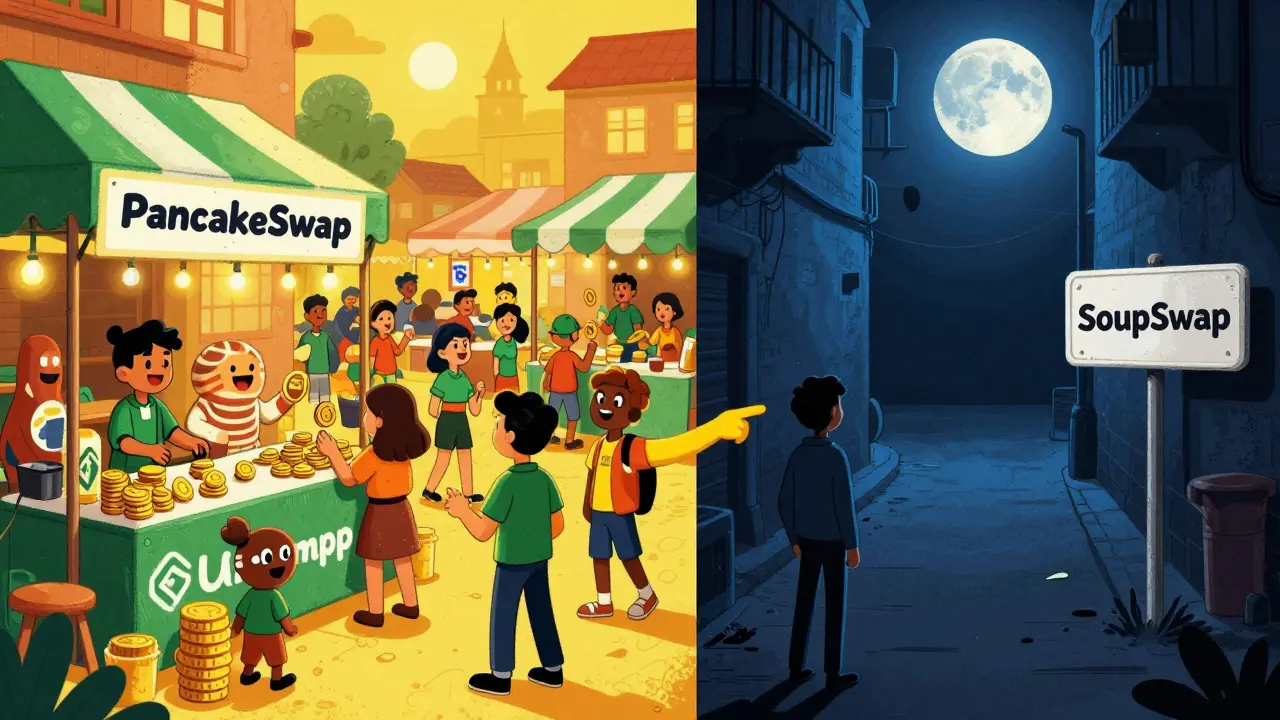
- PancakeSwap: The dominant DEX on BSC. It offers deep liquidity, regular yield farming opportunities, and a robust security track record. With billions in quarterly volume, you know your trades will execute efficiently.
- SimpleSwap: Ideal for beginners. SimpleSwap supports over 1,500 cryptocurrencies and offers fiat on-ramps, making it easy to move money between traditional banking and crypto. Their interface is clean, and they prioritize user privacy without KYC for most swaps.
- GhostSwap: If you prefer anonymity, GhostSwap offers cross-chain swaps without mandatory KYC procedures. It ranks highly for speed and reliability among privacy-focused traders.
These platforms have established reputations, active development teams, and millions of users. They undergo regular security audits and maintain transparent communication channels. Choosing them over SoupSwap isn’t just a preference; it’s a necessity for protecting your assets.
How to Spot Dead DeFi Projects
Use this checklist before connecting your wallet to any new decentralized exchange. These steps can save you from significant financial loss.
- Check Liquidity Data: Visit CoinMarketCap or CoinGecko. If the project is 'Untracked' or has negligible volume, walk away. Liquidity ensures you can actually sell your tokens later.
- Verify Security Audits: Look for links to audit reports from reputable firms like CertiK, Hacken, or Trail of Bits. If the website doesn’t prominently display these, assume the code is unsafe.
- Assess Community Presence: Search Twitter, Discord, and Telegram. Are there real people discussing the project? Or is it just bots posting generic hype? Real communities engage in technical discussions and feedback.
- Inspect Developer Activity: Check the project’s GitHub repository. Are there recent commits? Is the code open-source? Active development is a sign of a living project. Silence indicates abandonment.
- Look for Independent Reviews: Search for reviews on trusted outlets like CoinDesk, Cointelegraph, or Messari. If only low-quality affiliate blogs mention the project, treat it with extreme caution.
SoupSwap fails every single one of these checks. It serves as a perfect case study of what not to do in DeFi. By understanding these red flags, you empower yourself to navigate the crypto space safely.
Final Verdict: Avoid SoupSwap
SoupSwap is not a viable option for trading or staking in 2026. Its lack of liquidity, absence of security audits, nonexistent community, and zero development activity make it a high-risk proposition. The promised 'Multi-Bonded Proof of Stake' remains unproven and unverified. In the world of decentralized finance, trust is earned through transparency and performance. SoupSwap has delivered neither.
Your capital deserves better. Stick to established platforms with proven track records, strong security measures, and active user bases. The crypto market is vast and innovative, but it also harbors traps for the unwary. Stay informed, stay skeptical, and keep your funds safe.
Is SoupSwap a scam?
While we cannot definitively label it a 'scam' without legal evidence of intent to defraud, SoupSwap exhibits all the characteristics of a fraudulent or abandoned project. It lacks liquidity, security audits, and community engagement. Connecting your wallet to such a platform poses a severe risk of fund theft or permanent loss due to unaudited smart contracts.
What is the MBPoS consensus mechanism?
MBPoS stands for Multi-Bonded Proof of Stake. It is a theoretical consensus model claimed by SoupSwap to allow flexible staking across different assets. However, there is no public documentation, code, or audit verifying how this works. In the absence of proof, it should be treated as an unverified marketing claim.
Why is SoupSwap untracked on CoinMarketCap?
CoinMarketCap marks projects as 'Untracked' when they lack sufficient trading volume or liquidity data to be reliably monitored. For SoupSwap, this indicates minimal to no operational activity, placing it in 'Listing Tier B - (3),' which signals inadequate metrics for standard tracking.
Can I withdraw my funds from SoupSwap?
If you have funds stuck in SoupSwap, your ability to withdraw depends on the liquidity available in the pools. Given the platform's reported zero volume, liquidity is likely nonexistent. Attempting to withdraw may result in failed transactions or high slippage. Always check the smart contract address against blockchain explorers first.
What are the best alternatives to SoupSwap on BSC?
For Binance Smart Chain users, PancakeSwap is the leading alternative, offering deep liquidity and security. For cross-chain swaps, SimpleSwap and GhostSwap provide reliable, user-friendly services with extensive cryptocurrency support and transparent fee structures.
Does SoupSwap have a security audit?
No. There are no publicly available security audit reports from reputable firms like CertiK, Hacken, or Trail of Bits for SoupSwap. Using unaudited DeFi protocols is extremely risky, as vulnerabilities in smart contracts can lead to total loss of funds.
Is SoupSwap still active in 2026?
All indicators suggest SoupSwap is inactive. There is no recent development activity on GitHub, no social media engagement, and no trading volume. Industry data shows that 83% of DeFi protocols with no volume for 180+ days become fully inactive, making SoupSwap a likely candidate for being a dead project.
Terry Hyland
June 19, 2026 AT 08:02People need to stop being so greedy. This is why bad things happen in crypto. You chase the shiny object and get burned because you lack basic moral fortitude to do your homework. It is disgusting how many people ignore red flags just for a quick buck.
Monica Pathammavong
June 21, 2026 AT 00:58i mean like... have you actually looked at the code? or are you just trusting this article? i checked github myself and its empty but maybe im missing something obvious here lol. also why does everyone assume it's a scam without proof? that's toxic behavior.
Tim Lefebvre
June 22, 2026 AT 11:15hey man, no worries about checking the code yourself. honestly most of us just look at volume and audits. if there is none, its dead simple really. don't overthink it bro. just stick to pancake swap or uniswap. they work fine and you sleep better at night. trust me on this one.
Rob Aronson
June 24, 2026 AT 05:36The technical analysis here is spot on 🧐 The lack of liquidity depth creates massive slippage risk, rendering any theoretical consensus mechanism irrelevant. MBPoS sounds like vaporware designed to exploit information asymmetry. Always verify smart contract integrity via reputable audit firms before interacting with unknown DEXs on BSC. Stay safe out there! 🛡️💸
Kwon Bill
June 25, 2026 AT 13:27In the global DeFi ecosystem, particularly within emerging markets, we often see these 'ghost' protocols emerge as speculative vehicles rather than functional infrastructure. The absence of cross-chain interoperability standards and verified oracle feeds further isolates SoupSwap from legitimate financial networks. It represents a failure of governance and transparency that contrasts sharply with established protocols like Uniswap or PancakeSwap which adhere to rigorous security frameworks.
ravi mahla
June 26, 2026 AT 15:44Haha, seriously? Who even named this thing SoupSwap? Sounds like something you'd find in a gas station bathroom. But hey, thanks for the warning. I was about to dump my life savings into it because I saw a tweet from some anon account. Good thing I read this first. You guys are lifesavers!
Mark Brunschwiler
June 27, 2026 AT 01:21I feel such a deep emptiness when I see projects like this. It reflects the void in our collective consciousness. We seek connection through tokens but find only silence. Why do we keep building castles on sand? It hurts my soul to watch people walk into traps like this. I am so tired of explaining this to everyone. Do you ever feel alone in this digital desert?
Sonya O'Brien
June 28, 2026 AT 07:51I completely agree with the assessment provided in the article, and I think it is really important that we all take a step back and consider the broader implications of supporting platforms that do not have transparent operations or verifiable security measures in place, because ultimately, the health of the entire decentralized finance ecosystem depends on users making informed decisions based on reliable data rather than hype or fear of missing out, which can lead to significant financial losses and erode trust in legitimate projects that are working hard to innovate responsibly.
Filbert Reeves
June 28, 2026 AT 14:52Wait a minute though. Are you sure it's not just hidden liquidity? Maybe they are using private pools to avoid tracking. CoinMarketCap is owned by Binance who hates competition. This whole narrative is pushed by big tech to crush small innovators. I bet SoupSwap is the next big thing and you sheep are too blind to see it. Wake up people!
Nick Rice
June 30, 2026 AT 02:30Listen up. If you are going to trade, you need to be sharp. SoupSwap is a trap. Period. Don't let anyone tell you otherwise. Real traders check the metrics. Zero volume means zero chance. Stop dreaming and start trading on platforms that actually exist. Get your head out of the clouds and look at the data. It's right there in front of you.
Amit Thakur
July 1, 2026 AT 00:07This is exactly why we need better education in blockchain technology. The concept of Multi-Bonded Proof of Stake is fascinating theoretically, but without implementation details and audit trails, it is useless. As developers, we know that code is law. No code, no law. Just scams. Please protect your assets and use only audited contracts. Your portfolio will thank you.
Eric Scheinberg
July 1, 2026 AT 04:42It is imperative to recognize the systemic risks associated with unaudited smart contracts. The absence of third-party verification constitutes a critical vulnerability. Investors must prioritize protocols with demonstrated security postures. SoupSwap fails to meet these fundamental criteria. Prudence dictates avoidance.
pankaj chawla
July 1, 2026 AT 10:01Good analysis. I always check for active development on GitHub before considering any new platform. Silence is never a good sign. Stick to the proven ones like PancakeSwap. They have been around for years and handle billions. Why risk it on a ghost project?
Charles Pawlikowski
July 2, 2026 AT 17:18Typical foreign scam trying to steal our money. Should ban all these overseas exchanges. We need American crypto made by Americans. SoupSwap is probably run by some shady group overseas. Keep your dollars in US banks where they belong. Not in some fake internet soup pot. :)
Andrea Burd
July 4, 2026 AT 05:01boring article. everything is a scam these days. i dont bother reading reviews anymore. just buy whatever has the most hype on twitter and hope for the best. if you cant handle the risk you shouldnt be in crypto anyway. lazy readers deserve what they get.
Akeem Whittaker
July 4, 2026 AT 12:59You need to understand that safety is non-negotiable in DeFi. SoupSwap offers nothing but risk. There is no community, no support, and no liquidity. Connecting your wallet to an unaudited contract is inviting theft. Protect yourself. Use established platforms. Do not gamble with funds you cannot afford to lose.