

Crypto Tax Comparison Calculator
Compare Crypto Tax Rates
Calculate potential tax liabilities across leading crypto-friendly nations based on your trading volume and holding period
Your Tax Comparison
Calculated for 2025 policiesLong-term holdings ($10k+): No capital gains tax. Short-term: Taxed as income (up to 40%)
No personal income tax on crypto gains. Corporate tax applies at 9% for businesses
Taxed as income (up to 22% for individuals), but zero for institutional entities
Mandatory reporting for transactions over $5,000. Fines up to 75% for non-compliance
12% VAT on exchange fees. No capital gains tax
When you think of crypto innovation, you probably imagine Silicon Valley or Wall Street. But the real action? It’s happening in places you’ve never heard of. Tiny countries with populations under 10 million are outpacing giants like the U.S. and China in crafting clear, smart crypto rules. They’re not just allowing crypto-they’re building entire economies around it. And the rest of the world is watching.
Switzerland: The Quiet Leader of Crypto Regulation
Switzerland didn’t stumble into crypto leadership. It planned it. In 2021, it passed the DLT Act, giving blockchain assets legal status for the first time in Europe. That wasn’t a buzzword-it was a legal revolution. Now, crypto tokens can be issued, traded, and settled under clear rules. No guesswork. No legal gray zones. Zug, a small canton with just 30,000 people, became Crypto Valley. Why? Because it’s simple: no capital gains tax on crypto held over a year. That’s it. No hidden fees. No sudden rule changes. Over 1,000 blockchain firms now operate there, including the foundations behind Ethereum and Cardano. Swiss banks like Bitcoin Suisse and Sygnum are licensed to hold crypto like they hold euros. And the Swiss National Bank? It’s testing tokenized bonds and CBDCs with real banks in a live project called "Helvetia." Even the tax authorities are ahead. Switzerland agreed to automatically share crypto data with 74 countries-including the U.S., UK, and Australia-starting in 2027. That’s not control. That’s credibility. They’re saying: "We’re transparent, so trust us."The UAE: Betting Big on Crypto as National Strategy
The UAE didn’t wait for permission. It built its own playground. In 2022, it created the Virtual Assets Regulatory Authority (VARA), the world’s first standalone crypto regulator. Then it launched two free zones-Dubai’s DMCC and Abu Dhabi’s ADGM-where crypto firms can get licenses in weeks, not years. Unlike Saudi Arabia, which bans financial institutions from trading crypto due to Sharia concerns, the UAE embraced it. And it’s working. Dubai now hosts more crypto startups than Berlin. Goldman Sachs and Rothschild are building tokenized asset platforms there. Even the Dubai government accepts crypto for visa payments. The secret? Speed. While the EU was debating MiCA, the UAE already had rules for NFTs, DeFi, and stablecoins. They didn’t try to ban risk-they regulated it. And they made it easy for businesses to operate. That’s why the UAE is now the top destination for crypto firms fleeing stricter markets.Singapore: The Risk-Adjusted Model
Singapore doesn’t cheerlead crypto. It watches it. Closely. Its approach is called "risk-adjusted licensing." That means not all crypto firms get the same access. Exchanges serving retail users face stricter rules than institutional platforms. In late 2024, it tightened requirements for KYC, AML, and custody standards. Firms that couldn’t meet them? They lost their licenses. But here’s the twist: Singapore still welcomes innovation. It allows crypto ETFs. It permits tokenized bonds. It’s testing cross-border CBDC settlements with Thailand and China. The goal isn’t to be the biggest-it’s to be the most trustworthy. And that’s why global funds still route their Asia crypto operations through Singapore, even after Hong Kong cracked down.
Tax Wars: Who’s Winning the Crypto Attraction Race?
Tax policy is the new battleground. Countries aren’t just regulating crypto-they’re using taxes to lure investors and businesses. Argentina? It gives exporters a 10% tax rebate if they use stablecoins to pay overseas suppliers. That’s not a loophole-it’s a strategy. They’re turning crypto into a trade tool. Brazil? It forces anyone with over $5,000 in annual crypto trades to report everything. Violations mean fines up to 75% of the unreported amount. It’s strict, but clear. The Philippines added a 12% VAT on exchange fees. Nigeria slapped a 5% VAT on crypto services. Kenya charges a 3% Digital Services Tax on every crypto transaction. These aren’t random-they’re revenue plays. Compare that to Switzerland’s zero capital gains tax. Or the UAE’s no personal income tax. The difference? One country wants to tax your gains. The other wants you to move there and spend your money.Why Small Nations Win Big
Big countries are slow. The U.S. has 17 different agencies that could regulate crypto. The EU took four years to pass MiCA. Meanwhile, a country like Bahrain-population 1.5 million-launched its full crypto licensing regime in 18 months. Small nations don’t have legacy systems to protect. They don’t have lobbyists from banks or oil companies blocking change. They can test, fail, and pivot in months. And they’re not trying to control crypto-they’re trying to benefit from it. They’re also more agile in international cooperation. Switzerland shares data with 74 countries. Singapore works with ASEAN on cross-border crypto rules. Mauritius recognizes crypto as a regulated asset under its Financial Services Act. These aren’t just laws-they’re partnerships.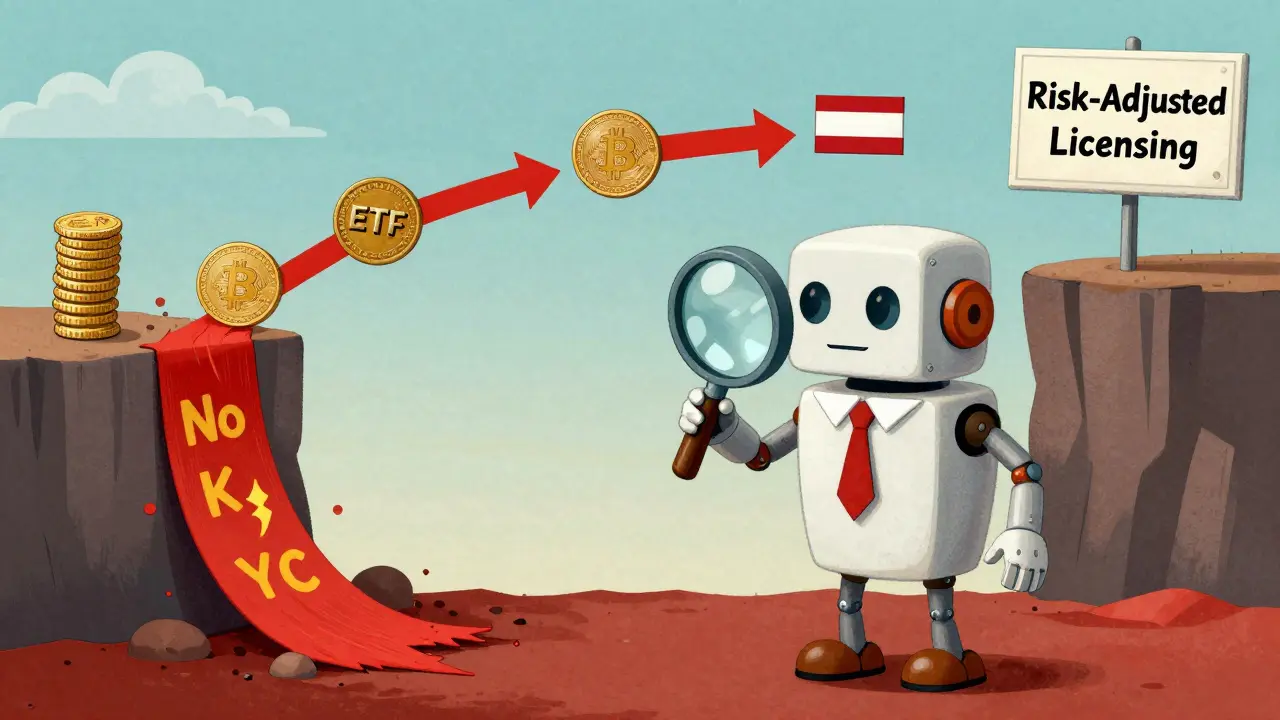
The Real Challenge: Infrastructure and Trust
Not every small nation can be Switzerland. Most lack banking systems, legal expertise, or cybersecurity capacity. Countries like Ghana or Jamaica are trying, but they’re stuck. No clear rules. No licensed exchanges. No tax guidance. That’s why many crypto users there still rely on peer-to-peer platforms like Paxful or Binance P2P. The real winners are the ones who combine three things: clear laws, financial infrastructure, and international trust. You can’t have one without the others. A tax break means nothing if you can’t cash out. A license means nothing if no bank will touch you.What’s Next? The Global Ripple Effect
By 2025, the pattern is clear. Small nations aren’t just adopting crypto-they’re redefining it. They’re proving that regulation doesn’t have to mean restriction. It can mean opportunity. The EU’s MiCA framework is pushing smaller European countries to align. The U.S. Congress is watching Switzerland and Singapore, debating whether to copy their models. Even China, despite its ban, is studying how small states handle CBDCs. The future of crypto isn’t in megacities. It’s in places where one minister can change a law, and a startup can launch a global business by next quarter. That’s power. And it’s no longer just a dream.Which small nations have the most crypto-friendly policies in 2025?
Switzerland, the United Arab Emirates, and Singapore lead in 2025. Switzerland offers zero capital gains tax on long-term holdings and clear legal status for blockchain assets under the DLT Act. The UAE has the world’s first standalone crypto regulator (VARA) and two dedicated free zones. Singapore uses a risk-adjusted licensing model that balances innovation with strict compliance, making it a trusted hub for institutional crypto activity.
Why do small countries succeed where big ones struggle with crypto regulation?
Small nations move faster. They don’t have layers of bureaucracy, legacy financial institutions lobbying for protection, or political gridlock. One minister can approve a new law. One agency can issue licenses. They also have less to lose-so they experiment. Countries like Bahrain and Mauritius built crypto frameworks in under two years, while the U.S. and EU took over a decade to draft similar rules.
Are crypto taxes in small nations really lower than in big countries?
Yes, in key cases. Switzerland and the UAE have no personal capital gains tax on crypto. Singapore taxes crypto only as income, not as a capital asset. Compare that to India’s 30% tax on crypto profits, Brazil’s mandatory reporting for transactions over $5,000, or Turkey’s 7% transaction tax. Small nations use low or zero taxes as a tool to attract businesses and investors-not just to collect revenue.
Can a small country really become a global crypto hub?
Absolutely. Switzerland’s Crypto Valley hosts over 1,000 blockchain firms, including major protocol foundations. The UAE’s free zones now attract top global banks and fintechs. Singapore is the top destination for crypto funds in Asia. These aren’t gimmicks-they’re thriving ecosystems with real infrastructure, licensed banks, and international partnerships. Size doesn’t matter. Clarity and trust do.
What’s the biggest risk for small nations adopting crypto?
The biggest risk is building hype without infrastructure. Many small countries issue licenses but lack banking access, cybersecurity systems, or legal enforcement. Without licensed custodians, AML compliance, or tax reporting tools, crypto adoption becomes risky for users and vulnerable to fraud. The winners are those who pair innovation with real financial systems-not just laws on paper.
Nicholas Ethan
December 13, 2025 AT 19:33Claire Zapanta
December 14, 2025 AT 08:34Caroline Fletcher
December 14, 2025 AT 12:23Kathy Wood
December 16, 2025 AT 04:54Jessica Petry
December 16, 2025 AT 07:14Anselmo Buffet
December 16, 2025 AT 19:55Taylor Fallon
December 18, 2025 AT 12:42PRECIOUS EGWABOR
December 19, 2025 AT 23:35Kathleen Sudborough
December 21, 2025 AT 03:09Vidhi Kotak
December 21, 2025 AT 09:33Kim Throne
December 23, 2025 AT 00:45Heath OBrien
December 23, 2025 AT 16:09Taylor Farano
December 24, 2025 AT 02:55Toni Marucco
December 25, 2025 AT 22:56Kathryn Flanagan
December 27, 2025 AT 16:34amar zeid
December 28, 2025 AT 05:34Alex Warren
December 28, 2025 AT 14:53Andy Walton
December 29, 2025 AT 05:36Nicholas Ethan
December 29, 2025 AT 17:18