
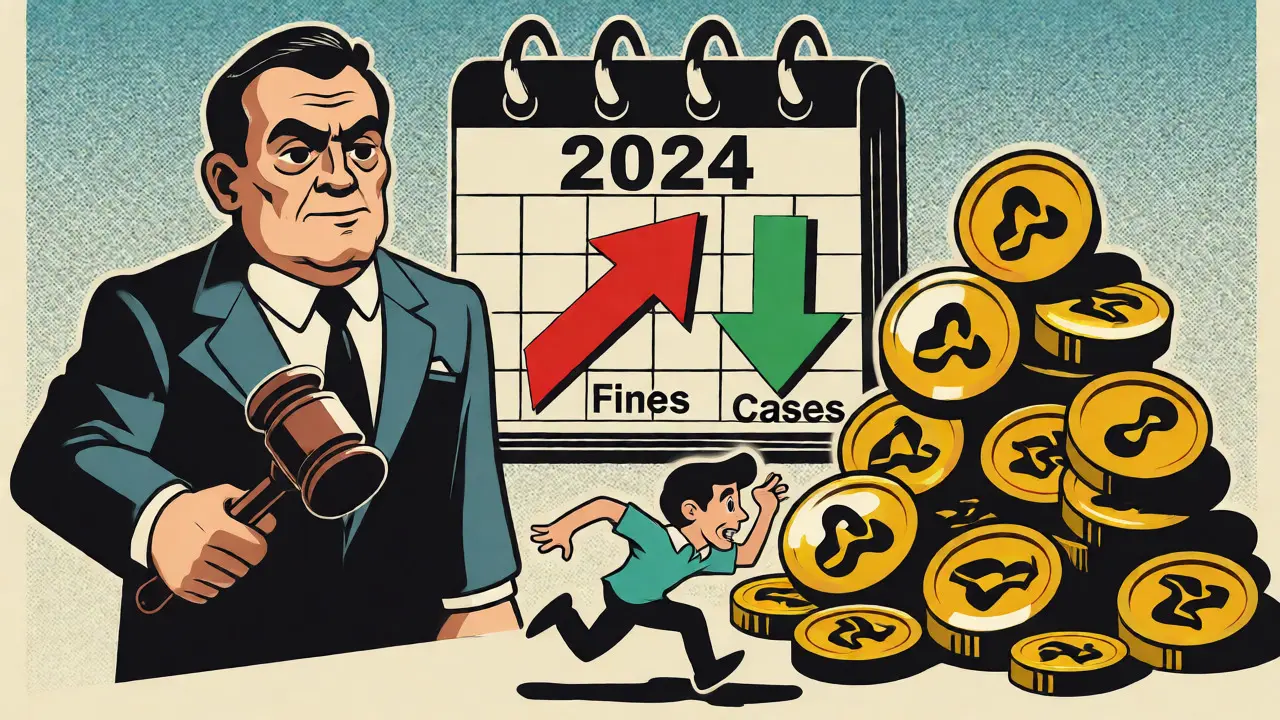
You might have seen the headline screaming about a 3,018% increase in SEC crypto enforcement fines for 2024. It sounds terrifying, doesn't it? Like the regulatory hammer finally dropped with catastrophic force. But here is the twist: the actual number of cases filed went down. So what gives? Did the SEC just get lazier but meaner? Or did they stop chasing small fish and start hunting whales? If you hold any digital assets, this distinction matters more than the raw percentage suggests.
The year 2024 was a turning point for cryptocurrency regulation in the United States. Under Chair Gary Gensler, the Securities and Exchange Commission (SEC) shifted from a broad net approach to targeted, high-impact strikes. This wasn't just about punishing bad actors; it was about setting precedents that would outlast the administration itself. Let's break down what really happened, why the numbers look so weird, and what it means for your portfolio.
The Numbers Game: Fewer Cases, Bigger Checks
If you look at the volume of work, the SEC actually slowed down. In 2024, the agency brought roughly 33 to 49 crypto-related enforcement actions, depending on who you ask. Compare that to previous years, and you see a decline or a slight plateau. Yet, the money collected hit record highs. Why the disconnect?
It comes down to strategy. The SEC stopped filing dozens of minor administrative proceedings and focused on major litigations in federal court. These cases take longer, cost more, but yield massive settlements. One single judgment accounted for $4.5 billion in disgorgement, interest, and penalties. That one case skewed the entire year's statistics. Without it, the "explosion" in fines looks much more like a steady climb.
Think of it like a police department. Last year, they issued 100 speeding tickets totaling $10,000. This year, they caught one bank robber and recovered $1 million. The ticket count dropped, but the revenue skyrocketed. The SEC adopted this "high impact" model under Acting Enforcement Director Sanjay Wadhwa, prioritizing cases that could define the legal boundaries of digital assets.
Why the Spike? The Howey Test Remains King
At the heart of almost every SEC action is the Howey Test. This isn't new tech; it's a Supreme Court standard from 1946 used to determine if an investment contract exists. The SEC argues that most tokens sold via Initial Coin Offerings (ICOs) are unregistered securities.
In 2024, 62% of enforcement actions involved allegations of unregistered offerings. The message is clear: if you sell a token promising profits derived from the efforts of others, the SEC wants you registered. They aren't guessing anymore. They are using established securities law to crack down on projects that raised millions without filing proper paperwork.
Abe Chernin from Cornerstone Research noted that the SEC also pivoted toward market manipulation and broker-dealer failures. It’s no longer just about the sale; it’s about how the asset trades afterward. If a platform acts like a stock exchange but isn’t regulated as one, you can expect a fine.
Resource Expansion: The SEC Got Serious
You don't catch whales with a fishing rod. You need a harpoon gun. The SEC recognized this by expanding its Crypto Assets and Cyber Unit by 20% in 2024. They hired specialized attorneys and forensic accountants who understand blockchain analytics.
This human capital boost paid off. The whistleblower program received over 180 tips related to crypto misconduct, a 25% jump from the prior year. More eyes on the ground mean fewer places to hide. When insiders report fraud, the SEC moves fast. This infrastructure upgrade ensures that even if leadership changes, the capability to investigate complex DeFi protocols remains intact.
Settlements vs. Litigation: The Path of Least Resistance
Not every case goes to trial. About 44% of crypto enforcement actions in 2024 ended in settlement. Companies often choose to pay up rather than drag through years of litigation. Why? Because the risk of losing in court-and having their assets frozen-is too high.
The SEC secured injunctions or asset freezes in 31 cases by early 2025. Imagine trying to run a business when your operating accounts are locked. That pressure drives quick settlements. For investors, this means funds are sometimes recovered faster, though distribution has been slow. The SEC distributed $345 million to harmed investors in fiscal year 2024, down from $930 million the year before. Money collected doesn't always equal money returned immediately.
| Metric | 2023 Status | 2024 Status | Trend |
|---|---|---|---|
| Enforcement Actions | ~42-47 | ~33-49 | Stable/Decline |
| Monetary Penalties | Lower Baseline | $2.6B - $4.98B* | Massive Increase |
| Litigation Focus | Broad | High-Impact/Court | Strategic Shift |
| Whistleblower Tips | Baseline | +25% | Growth |
The Political Context: Gensler’s Final Year
Timing matters. Half of the 2024 enforcement actions came in September and October, right before the presidential election. Chair Gensler announced his departure ahead of the transition to the Trump administration. This rush to file cases wasn't accidental. It was an effort to cement legal precedents before potential policy shifts.
By securing these wins, the SEC built a foundation that will be hard for future leaders to dismantle. Even if the next chair prefers a lighter touch, the case law established in 2024 regarding DeFi lending platforms and token sales remains binding. The agency acted as a "steadfast cop on the beat," ensuring that the rules were written while they still held the pen.

What This Means for You
If you are an investor, the takeaway isn't to panic. It’s to adapt. The era of "move fast and break things" in crypto is ending. Projects must now consider compliance from day one. If you are building a protocol, assume your token might be classified as a security unless proven otherwise.
For traders, expect volatility around regulatory news. A new subpoena can drop a token’s price by 20% overnight. Diversification across compliant jurisdictions becomes crucial. And keep an eye on the Investor Advisory Committee, which recommended prioritizing consumer education. The SEC knows retail investors are vulnerable, and they are preparing to ramp up warnings.
Frequently Asked Questions
Is the 3,018% increase accurate?
The percentage reflects a comparison against a low baseline in certain metrics or specific subsets of data. While total monetary remedies reached billions ($2.6B to $4.98B depending on the source), the percentage spike is heavily influenced by one or two massive multi-billion dollar judgments. Without those outliers, the growth is significant but less dramatic.
Did the SEC file more cases in 2024?
No. The number of enforcement actions actually decreased or remained flat compared to 2023. The SEC shifted focus from quantity to quality, pursuing fewer but larger, more impactful cases in federal court rather than numerous administrative proceedings.
What is the main reason for these fines?
The primary allegation in 62% of cases was the sale of unregistered securities. The SEC applied the Howey Test to argue that many ICOs and token sales were investment contracts that failed to register with the agency.
Will enforcement change under new leadership?
Yes, likely. With the transition to the Trump administration and a new SEC chair, policies may soften. However, the legal precedents set in 2024 remain. The newly formed crypto task force will determine the pace, but the core definition of securities hasn't changed yet.
How do whistleblowers impact crypto enforcement?
Whistleblowers played a huge role in 2024, providing over 180 tips related to crypto misconduct. This represents a 25% increase from the previous year, giving the SEC critical inside information to build strong cases against opaque organizations.