
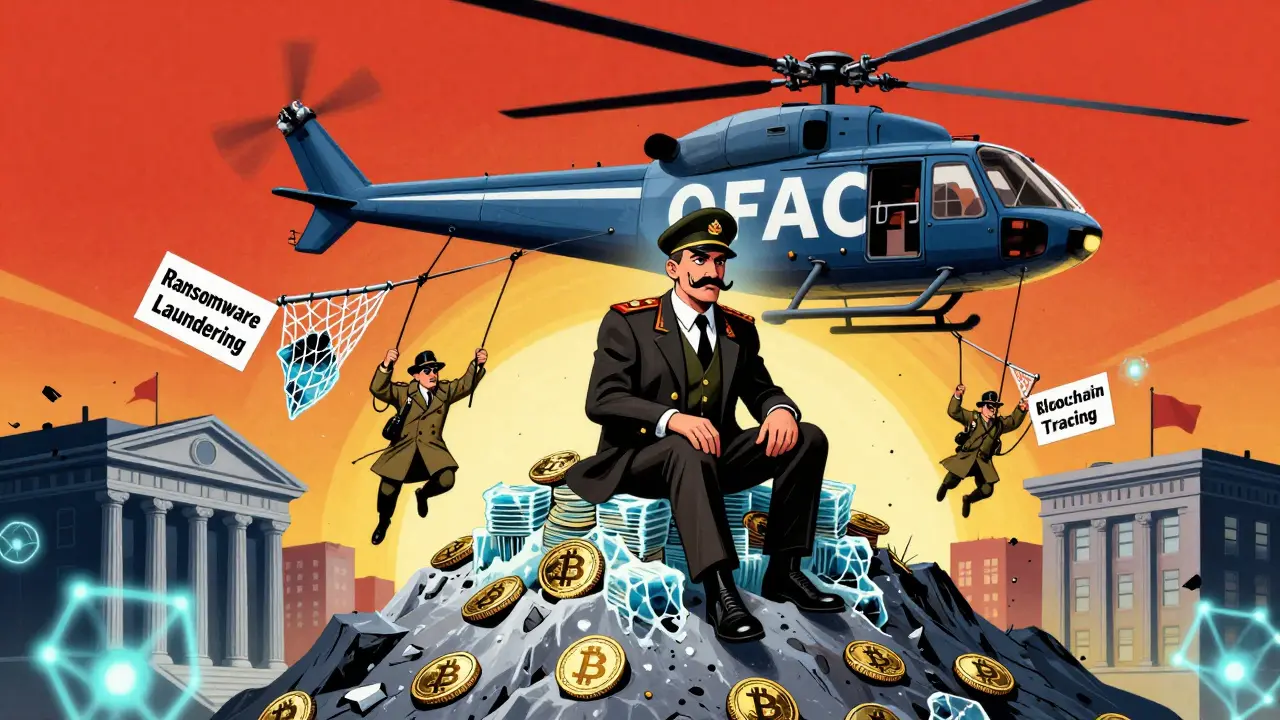
When Russia was cut off from the global banking system after its invasion of Ukraine, cryptocurrency became one of the few lifelines for moving money in and out of the country. But what started as a workaround turned into a high-stakes game of cat-and-mouse between Russian operators and U.S. enforcement agencies. By 2026, the battle over crypto access had reshaped how sanctions work - and who can still use digital assets.
Garantex: The First Target
Garantex wasn’t just another crypto exchange. It was the largest platform in Russia for trading fiat-to-crypto and crypto-to-crypto, handling over $1 billion in monthly volume by 2021. Founded in 2018 by Sergey Mendelev, Aleksandr Mira Serda, and Pavel Karavatsky, it became the go-to service for Russians who couldn’t use Western banks or PayPal. Unlike exchanges that kept strict KYC rules, Garantex allowed anonymous registrations, peer-to-peer trades, and direct ruble deposits through shell companies in Armenia and Kazakhstan. The U.S. Treasury’s Office of Foreign Assets Control (OFAC) first hit Garantex on April 5, 2022, under Executive Order 14024. The official reason? Operating in the financial services sector of the Russian economy. But deeper investigations revealed something more alarming: Garantex was laundering ransomware payments. Between 2019 and 2022, it processed over $100 million in funds tied to LockBit, Conti, and Hive ransomware groups. Blockchain analytics firm Elliptic traced these flows using wallet clustering and transaction graphing, identifying patterns that matched known cybercriminal addresses. By early 2025, the U.S. Secret Service had built a case strong enough to act. On March 6, 2025, agents coordinated a global takedown. Three Garantex domains were seized. Servers in Latvia and Georgia were raided. Over $26 million in USDT was frozen. And Aleksej Besciokov, one of the co-founders, was arrested while vacationing in India - a rare example of an overseas crypto executive being detained on U.S. charges.Grinex: The Replacement That Didn’t Last
Garantex didn’t shut down. It rebooted. Within 48 hours of the March 2025 raids, its engineers launched Grinex. The website even had a banner: "Formed in response to sanctions and asset freezes that affected Garantex." It wasn’t subtle. Grinex kept the same leadership team, the same technical stack, and the same user base. Its only change? A new name and a new token: A7A5. A7A5 was designed to replace USDT. Unlike Tether, which can freeze wallets at the U.S. government’s request, A7A5 was a ruble-backed stablecoin issued by a Kyrgyzstani firm with no ties to Western regulators. It ran on the TRON network, making transactions faster and cheaper than Ethereum. Russian users flocked to it. By June 2025, Grinex was processing over $500 million per month - almost matching Garantex’s peak. But OFAC wasn’t fooled. On August 14, 2025, they designated Grinex under Executive Order 13694, which targets cyber-enabled financial crimes. The designation didn’t just block Grinex - it froze the personal assets of Mendelev, Serda, and Karavatsky. It also sanctioned six companies linked to them across Russia and Kyrgyzstan. The U.S. State Department added a $5 million reward for information leading to Serda’s arrest.The A7 Network: A $8 Billion Underground System
Grinex wasn’t alone. It was part of a much larger network called the A7 ecosystem. This included A7, A71, A7 Agent, InDeFi Bank, Exved, and Old Vector - all interconnected platforms that shared infrastructure, users, and the A7A5 token. Elliptic’s August 2025 report showed that since January 2024, over $8 billion had flowed through wallets linked to these A7 entities. That number is likely higher. Many wallets were hidden behind layered mixers and decentralized bridges. But the same techniques that exposed Garantex were used to trace A7A5. The stablecoin’s issuance was centralized - controlled by a single issuer in Bishkek. That became its weakness. In mid-2025, a security breach exposed private keys used to mint A7A5. Elliptic noticed strange spikes in transaction volume on August 14, 2025 - the same day OFAC announced Grinex’s sanctions. The timing wasn’t a coincidence. The A7 team scrambled to rotate keys and migrate funds. But the damage was done. The U.S. government now had a map of the entire network.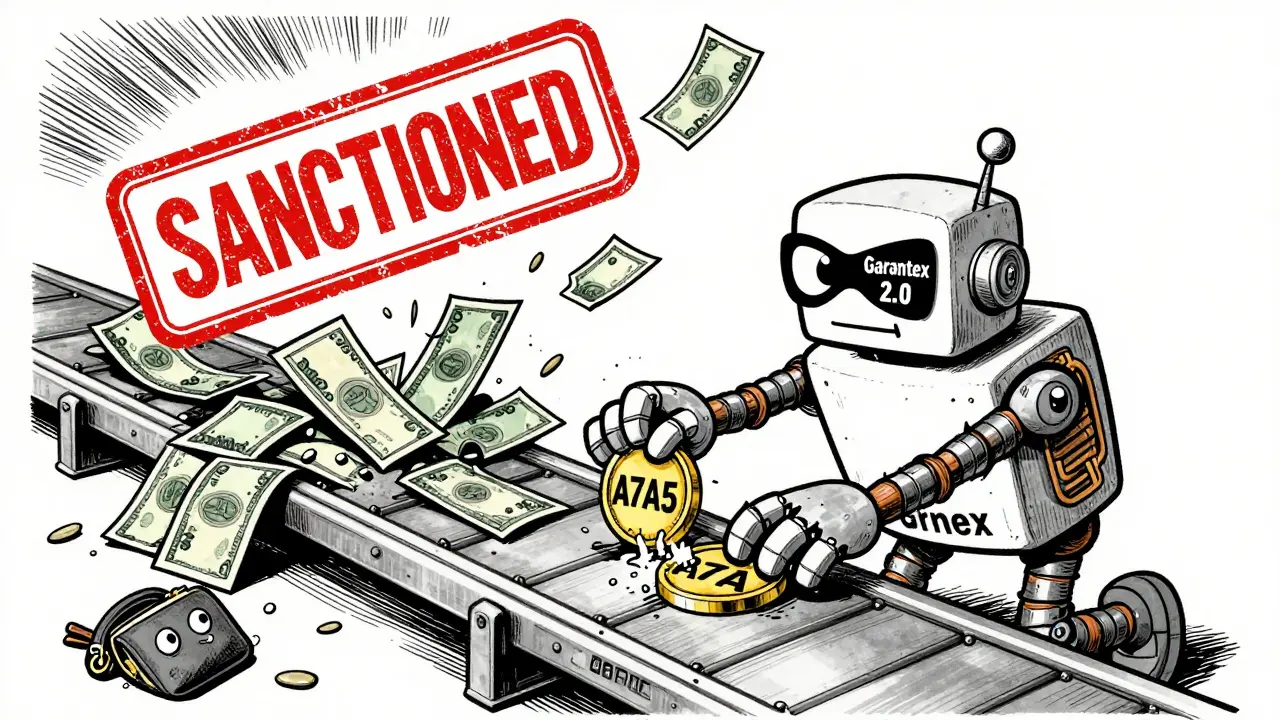
Why USDT Failed and A7A5 Tried
Russian users didn’t turn to crypto because they loved decentralization. They turned to it because the ruble was unstable and banks were cut off from SWIFT. USDT was the default choice - stable, liquid, and widely accepted. But when Garantex was taken offline, users realized USDT could be frozen by Tether’s operators - who answer to U.S. regulators. A7A5 was built to fix that. It was pegged 1:1 to the ruble. It didn’t have a U.S.-based issuer. It didn’t have a corporate headquarters. It was designed to be untraceable. But it wasn’t. The same blockchain transparency that makes crypto revolutionary also makes it vulnerable. Every transaction leaves a fingerprint. And with enough data, even the most hidden wallets can be exposed.What This Means for Users Today
If you’re in Russia or any sanctioned country, accessing crypto exchanges is harder than ever. Major platforms like Binance and Kraken have long since cut off Russian users. Smaller exchanges that remained open - like Garantex and Grinex - are now blocked or under investigation. The A7 network is still active, but it’s shrinking. Wallets linked to A7A5 are now flagged by major blockchain explorers. Exchanges that once accepted it now reject it. Even peer-to-peer traders are wary - selling A7A5 could mean getting flagged by regulators. The lesson is clear: no crypto asset is truly immune to sanctions. If it’s tied to a centralized issuer, a known team, or a jurisdiction under pressure, it becomes a target. The days of using crypto as a free pass around sanctions are over.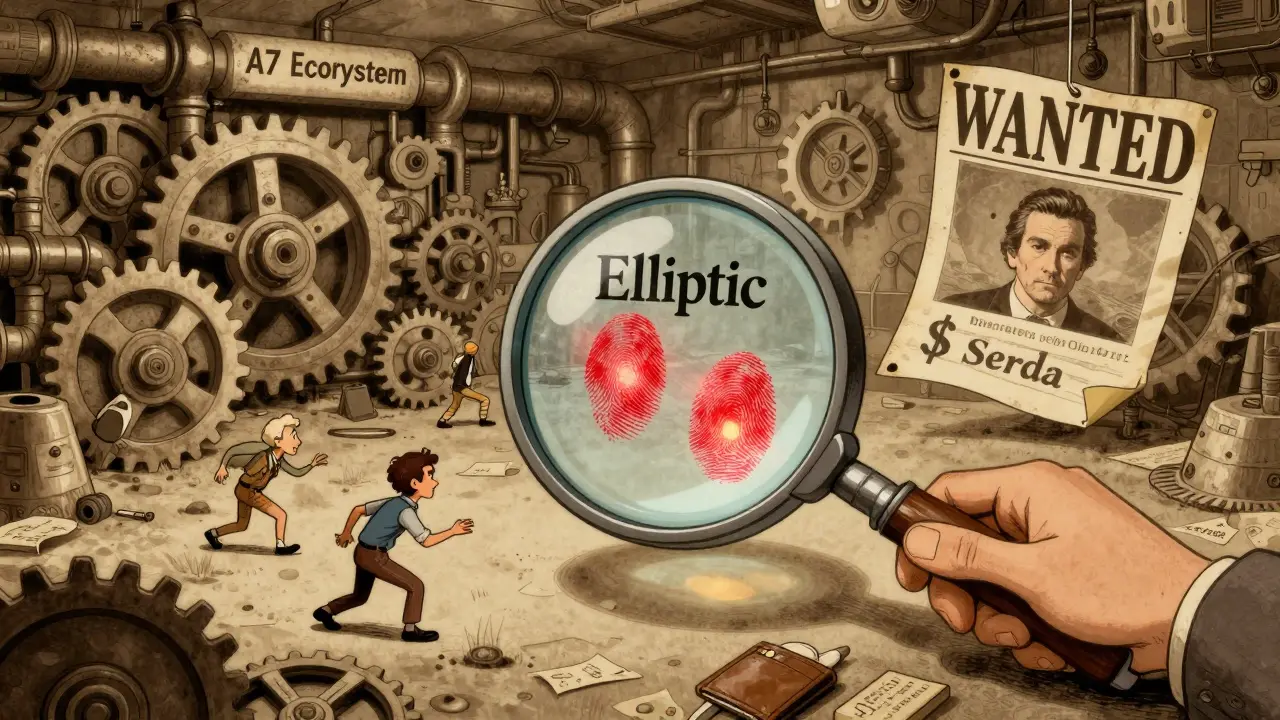
How Enforcement Got Smarter
This isn’t just about seizing wallets. It’s about dismantling entire ecosystems. The U.S. didn’t just sanction Garantex. They went after its founders, its successor, its token issuer, its supporting companies, and its financial network. They used private sector analytics (Elliptic), international law enforcement (Secret Service), and financial rewards (State Department) in one coordinated push. It’s a new model: blockchain intelligence + global arrests + asset freezes + public pressure. This approach is being copied in other regions. The EU is now building its own crypto tracking unit. The UK has started freezing crypto assets tied to Iranian and North Korean networks. For users, this means two things: first, if you’re trying to bypass sanctions, you’re not just risking your money - you’re risking your freedom. Second, if you’re just trying to hold crypto, you need to know which assets are flagged - and which are still usable.What’s Next?
The next wave of evasion might involve decentralized stablecoins - ones without any issuer at all. Or it could mean using privacy coins like Monero or Zcash. But even those aren’t safe. In 2025, Chainalysis added Monero tracing to its platform. It’s not perfect - but it’s getting better. One thing is certain: sanctions are no longer just about banks and wire transfers. They’re about code. About wallets. About who controls the keys. And if you’re on the wrong side of that line, there’s no hiding anymore.Can Russians still use crypto exchanges today?
Yes - but only on a very limited scale. Major global exchanges like Binance, Coinbase, and Kraken have blocked Russian users since 2022. Smaller platforms tied to the A7 network still operate, but they’re under constant surveillance. Transactions involving A7A5 or Grinex are now flagged by most blockchain analytics tools. Any attempt to deposit or withdraw funds from these services risks freezing assets or triggering regulatory alerts.
Why was Garantex targeted instead of other Russian exchanges?
Garantex was the largest and most active exchange linked to ransomware payments. Elliptic’s data showed it processed over $100 million in cybercriminal funds between 2019 and 2022. Other exchanges were smaller or less involved in illicit flows. The U.S. chose Garantex because it was the most visible and profitable node in the network - taking it down had the biggest impact.
Is A7A5 still usable in 2026?
A7A5 is technically still on the TRON and Ethereum blockchains, but it’s effectively unusable for most users. Wallets holding A7A5 are now marked as high-risk by major crypto platforms. Exchanges refuse to list it. Peer-to-peer traders avoid it. Even decentralized bridges block transfers from A7-linked addresses. Its value has dropped over 70% since the August 2025 sanctions due to lack of liquidity and trust.
Can the U.S. freeze crypto wallets outside its borders?
Yes - if the wallet uses a service or infrastructure tied to the U.S. financial system. Most major blockchains (like Ethereum and TRON) rely on U.S.-based nodes, wallet providers, or analytics firms. When OFAC designates a wallet, companies like Chainalysis or Elliptic flag it. Exchanges and custodians then freeze those addresses to avoid legal liability. Even if the wallet is in Russia, it’s still frozen if it interacts with a U.S.-connected system.
What happened to the founders of Garantex and Grinex?
One co-founder, Aleksej Besciokov, was arrested in India in March 2025 and is currently awaiting extradition to the U.S. The other two, Sergey Mendelev and Aleksandr Mira Serda, are believed to be in Russia or Kyrgyzstan. Both are under U.S. sanctions, with a $5 million reward offered for Serda’s capture. Their personal assets - including crypto, real estate, and bank accounts - have been frozen globally.
Christina Young
March 7, 2026 AT 13:29Stop pretending crypto is some magical sanctions bypass. It’s just digital cash with more fingerprints. Garantex got taken down because they were lazy and centralized. No surprise. The real lesson? If you’re building a financial system on a blockchain, you better have zero ties to anyone who ever touched a keyboard in the U.S. Otherwise, you’re just asking for a federal visit.
And A7A5? That’s not innovation. That’s desperation with a whitepaper.
Ian Thomas
March 9, 2026 AT 07:24Interesting how we call this ‘sanctions enforcement’ while ignoring that the same tech that froze A7A5 wallets is the same tech that lets Wall Street track your grocery spending. We’re not fighting crypto - we’re weaponizing transparency. The real crime here isn’t laundering ransomware cash. It’s that we built a system where every transaction is a potential crime scene.
And now we’re surprised when people use it to survive? Pathetic.
Austin King
March 9, 2026 AT 16:09People are so quick to call this a ‘war on crypto’ but honestly? If you’re using a stablecoin backed by a Kyrgyzstani shell company to move ransomware cash, you’re not a freedom fighter - you’re a janitor for criminals. The system isn’t broken. People just refuse to accept that crypto isn’t magic. It’s code. And code has rules. Even if you ignore them, the code remembers.
Julie Potter
March 9, 2026 AT 18:07OKAY BUT DID YOU KNOW THE FOUNDER OF GARANTEX WAS ARRESTED IN INDIA WHILE ON VACATION?? LIKE HE THOUGHT HE COULD JUST TAKE A BREAK FROM BEING A CRIMINAL?? 😭😭😭
AND THEN THEY LAUNCHED GRINEX WITH A BANNER THAT SAID ‘FORMED IN RESPONSE TO SANCTIONS’ LIKE THEY WERE A STARTUP AT A HACKATHON??
I CAN’T EVEN. THIS IS THE MOST DRAMATIC THING I’VE SEEN SINCE THE BORIS JOHNSON TIKTOK SCANDAL.
Jonathan Chretien
March 11, 2026 AT 12:35Ah, the irony of it all. We live in a world where blockchain promises decentralization, yet the only thing that truly matters is who controls the keys - and who owns the lawyers.
Garantex didn’t fail because of technology. It failed because it trusted the illusion of anonymity. The truth? No wallet is anonymous. Only the ignorant believe otherwise.
And now, the A7 network? A beautiful monument to human hubris. A temple built on sand, with a single, glittering, centralized minting key at its altar.
How poetic. How tragic. How… inevitable.
Bill Pommier
March 12, 2026 AT 00:23Let me be perfectly clear: This is not a story about sanctions. This is a story about jurisdictional supremacy. The U.S. government did not target Garantex because it was laundering money. It targeted Garantex because it was operating outside the U.S.-controlled financial ecosystem. The fact that ransomware payments were involved? That was merely the pretext. The real crime was sovereignty violation.
And if you think this ends here, you are gravely mistaken. The next target will be decentralized exchanges. Then privacy coins. Then non-custodial wallets. The endgame is total financial control. And they are winning.
Olivia Parsons
March 12, 2026 AT 08:21So if I’m understanding this right - A7A5 was supposed to be a ruble-backed coin with no U.S. ties… but they still used TRON, which has U.S. nodes, and minted it through a company in Bishkek that got hacked? So the whole thing was just one big vulnerability chain?
It’s like building a secret tunnel under the border… but leaving the entrance signposted with neon lights.
Just… wow. No wonder it collapsed.
Datta Yadav
March 13, 2026 AT 01:14You all are missing the point entirely. This isn’t about crypto. This is about the collapse of the dollar’s global dominance. The U.S. didn’t shut down Garantex because it was bad - they shut it down because it was *successful*. Russia didn’t need SWIFT anymore. They built their own. And now, instead of fighting with tanks, they’re fighting with code. And guess what? The code is winning. The dollar is weakening. The EU is panicking. The BRICS bloc is laughing.
They’re not banning crypto - they’re banning competition. And if you don’t see that, you’re not just naive - you’re willfully blind.
Lydia Meier
March 14, 2026 AT 02:20So let me get this straight. A group of Russians created a stablecoin, tied it to their currency, used a blockchain with U.S. infrastructure, didn’t bother with any real decentralization, got caught because they were sloppy, and now we’re supposed to be impressed by how clever they were?
No. Just… no.
This isn’t a case study. It’s a cautionary tale about incompetence dressed up as innovation.
jay baravkar
March 14, 2026 AT 20:16Look, I get it - people are scared. Sanctions hurt. Families go hungry. Banks freeze accounts. But that doesn’t mean we should cheer on criminals. The fact that Garantex was moving ransomware cash? That’s not ‘resistance.’ That’s just evil with a UI.
Let’s not romanticize this. Let’s not turn hackers into heroes. Let’s just say: this is why we need better systems. Not more loopholes. Better ones.
Josh Moorcroft-Jones
March 16, 2026 AT 18:11Let’s be honest - the entire narrative here is built on a fundamental misunderstanding of blockchain. The U.S. didn’t ‘freeze’ wallets. They froze *access points*. The blockchain itself didn’t change. The transactions still happened. The coins still moved. But now, if you want to convert A7A5 into USD, or EUR, or even BTC - you’re out of luck. Because every exchange, every wallet provider, every node operator - they’re all scared of a subpoena.
So it’s not crypto that’s broken. It’s the financial system. It’s terrified of code. And it’s using its legal muscle to make code behave like a bank.
Which… is kind of hilarious.
Bonnie Jenkins-Hodges
March 17, 2026 AT 13:55AMERICA WON. 🇺🇸
These guys were trying to build a financial empire to undermine the U.S. economy. And we shut it down. We froze their money. We arrested their leader. We offered a $5 MILLION reward. That’s not justice - that’s POWER.
And if you think Russia is going to win this war? You’re not just wrong. You’re dangerous.
Stay woke. Stay American. Stay SAFE.
Melissa Ritz
March 18, 2026 AT 15:44It’s funny how everyone acts like this was some grand technological battle. The truth? It was a series of corporate blunders. A7A5 was just USDT with a different logo and a Russian accent. They didn’t innovate. They copied. And then they got lazy. They didn’t even bother to decentralize the minting key. They just moved it from one basement to another.
It’s not a revolution. It’s a reboot with worse code.
Basil Bacor
March 20, 2026 AT 13:28so like… garanex? grinex? a7a5? sounds like a bad video game level. like ‘stage 3: evade the feds’
and then they got caught because they used the same wallet address? lol. i mean… come on. even my 12 year old cousin knows not to reuse addresses.
these guys were running a bank with duct tape and a dream.
Emily Pegg
March 20, 2026 AT 22:43I just want to say - if you’re in Russia and you’re using crypto right now, you’re not some brave hacker. You’re just trying to feed your kid. The fact that we’re treating this like a spy thriller while people are choosing between medicine and internet access? That’s the real crime here.
Sanctions hurt the people. Not the leaders. Never the leaders.
And we call this justice?
Jamie Hoyle
March 22, 2026 AT 16:23Oh wow, so the U.S. government is now the world’s blockchain police? Next they’ll be auditing every DeFi protocol for ideological compliance. ‘Sorry, your liquidity pool is too socialist. Please liquidate and re-list under U.S. jurisdiction.’
And here I thought blockchain was supposed to be immune to this kind of control. Turns out - it’s just a new frontier for American hegemony.
Who’s next? Iran? North Korea? Venezuela? Or maybe… Canada? 😏
Jeffrey Dean
March 24, 2026 AT 04:10There’s a philosophical vacuum here. We speak of ‘sanctions’ as if they are moral acts. But morality is not enforced through blockchain analytics. Morality is chosen. And when we choose to weaponize financial infrastructure - we are not defending freedom. We are replacing one tyranny with another.
The real question isn’t ‘how did they get caught?’
It’s: what kind of world do we want to live in?
One where every transaction is monitored?
One where your right to financial privacy is forfeited the moment you live in the wrong country?
Or one where code is free - even when it hurts?
Brian T
March 25, 2026 AT 06:00Why does everyone keep acting like this was a technical failure? It wasn’t. It was a social one. The founders thought they could outsmart the world by hiding behind a token. But people don’t hide behind tokens. They hide behind people. And people get careless. They get greedy. They get arrogant.
Garantex didn’t fall because of code.
It fell because its creators forgot they were still human.
Nash Tree Service
March 25, 2026 AT 07:37Let’s not romanticize the victims here. The fact that A7A5 was used to launder ransomware payments - money stolen from hospitals, schools, emergency services - means we are not dealing with ‘resistance.’ We are dealing with criminal infrastructure.
And while I agree that the U.S. government has overreached in many areas - this? This was necessary. When a system enables the theft of life-saving funds, the moral obligation is clear: shut it down.
Even if it’s built on blockchain.
Especially if it’s built on blockchain.
Jane Darrah
March 27, 2026 AT 01:29Okay, so let me get this straight - Garantex was the biggest, then Grinex was the reboot, then A7A5 was the token, then the whole network collapsed because someone accidentally leaked the minting key? And now we’re supposed to be impressed?
This isn’t a saga. This is a soap opera written by a teenager who just watched ‘Mr. Robot’ for the first time.
And the worst part? People are still trying to turn this into a ‘crypto vs. the state’ narrative. Like we’re living in a dystopian thriller and not a textbook case of poor risk management.
I’m just… exhausted.
Denise Folituu
March 27, 2026 AT 16:25They thought they were building a revolution.
They were building a Ponzi.
And now, the whole thing is a graveyard of wallets and broken promises.
And the saddest part? The people who lost everything weren’t the founders.
They were the ordinary Russians trying to buy medicine.
So who really won?
Not the U.S.
Not Russia.
Just… silence.
jack carr
March 29, 2026 AT 00:43huh. so the whole thing was just one big domino chain? one leak, one arrest, one sanction, and it all came tumbling down?
kinda beautiful, in a sad way.
kinda like a house of cards.
but… yeah. still sad.
Eva Gupta
March 30, 2026 AT 23:53As someone from India, I see parallels everywhere. We’ve had our own crypto crackdowns. We’ve seen how governments fear innovation when it escapes control. But here’s the truth: you can’t stop people from using technology because it’s inconvenient. You can only make it harder.
And when you make it harder, you don’t stop crime - you just push it underground.
Maybe the real solution isn’t more enforcement. Maybe it’s better access. More options. Less fear.
Just a thought.
Nancy Jewer
April 1, 2026 AT 22:13From a systemic perspective, this case study is a textbook example of regulatory arbitrage collapse. The A7 ecosystem exploited jurisdictional fragmentation - a known vulnerability in the global financial architecture. The response wasn’t merely legal - it was infrastructural. By coordinating with blockchain analytics firms and leveraging U.S.-centric node operators, OFAC effectively re-centralized the decentralized.
This is the future of financial regulation: not bans, but orchestration.
And it’s terrifyingly elegant.
Drago Fila
April 2, 2026 AT 03:16Look - I get why people want to use crypto. I really do. But this whole saga? It’s not about freedom. It’s about failure to build something sustainable.
Real innovation doesn’t rely on a single minting key. Real innovation doesn’t need a Russian bank account to back a token.
It’s about resilience.
And these guys? They built a house on quicksand.
And now, everyone’s asking - why didn’t they just build on solid ground?
Steven Lefebvre
April 2, 2026 AT 16:44Here’s what nobody’s saying: the real victory here wasn’t seizing wallets. It was changing behavior.
Before this, people thought crypto = freedom.
Now? They know: crypto = risk.
And that’s the most powerful sanction of all.
Because when people stop using something because they’re afraid - you don’t need to ban it.
You just need to make them scared enough to walk away.