
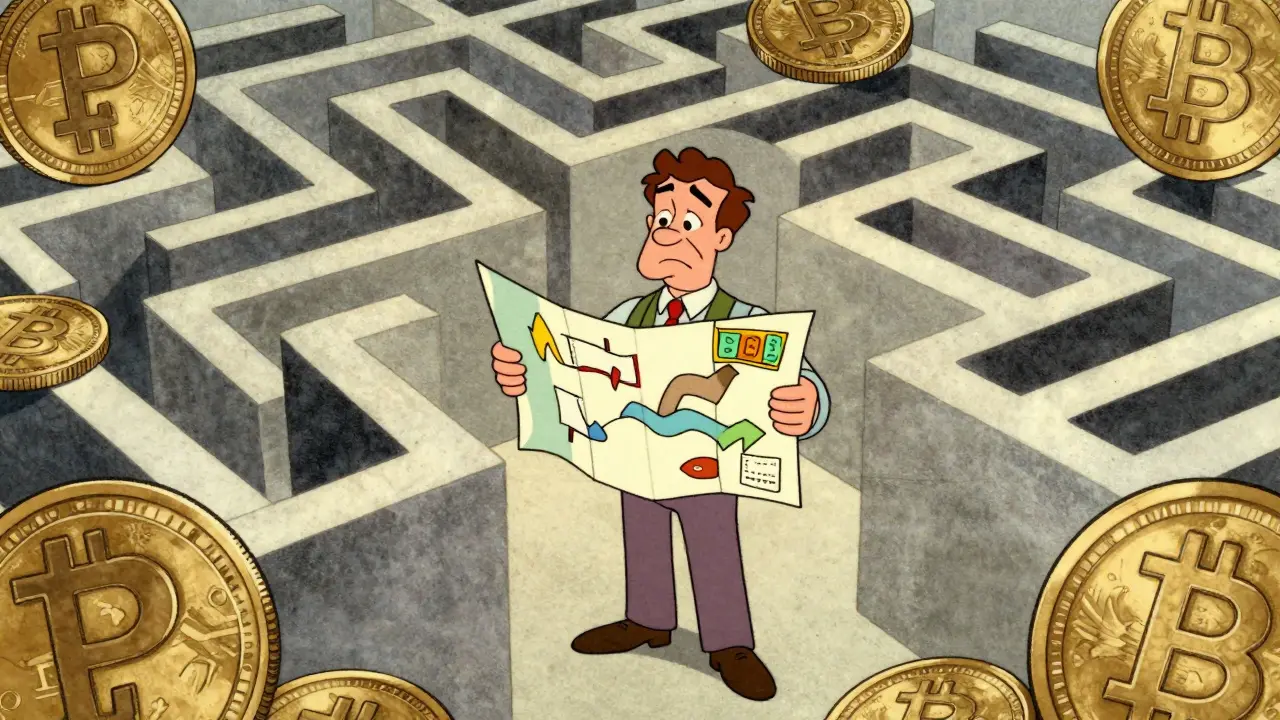
Trying to trade crypto with rubles in 2026 feels like navigating a maze where the walls move every few months. One day you hear that the government is banning everything, and the next, they're using Bitcoin to bypass international sanctions. If you're looking for a simple "yes" or "no" on whether you can trade, the answer is: it depends entirely on where the money is going and who you are in the eyes of the law.
The core problem for most people is the split personality of Russian regulation. On one hand, the government wants to keep a tight grip on the Russian ruble as the only legal tender inside the country. On the other, they've realized that digital assets are a lifeline for international business when traditional banking systems shut them out. This has created a high-stakes environment where doing things "the wrong way" could lead to serious legal trouble, while the "right way" is often reserved for the wealthy or the corporate elite.
The Divide Between Domestic and International Trade
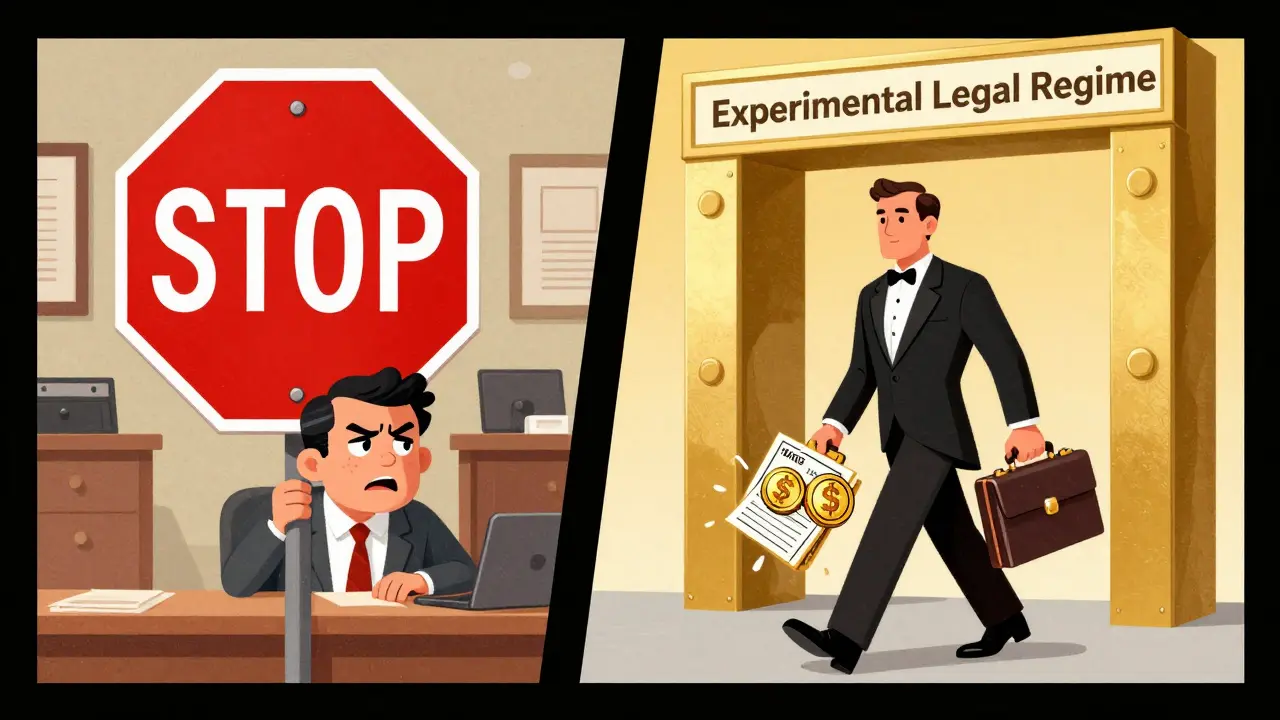
The most critical thing to understand is that Russian ruble crypto trading restrictions are split into two completely different worlds: domestic payments and international settlements. Since 2021, using cryptocurrency to buy a coffee or pay for a service inside Russia has been strictly illegal. The government is adamant that the ruble-and eventually the Digital Ruble-must remain the only way to settle debts within the border.
However, things change when you cross the border. In 2024, the government introduced the Experimental Legal Regime (ELR), a three-year trial that essentially creates a "safe zone" for crypto. Under this regime, specific exporters and importers are allowed to use digital currencies to pay for goods and services internationally. This isn't just a legal loophole; it's a strategic move to keep the economy moving despite Western financial sanctions. By 2025, this specific pathway saw a massive 1 trillion rubles in volume, proving that while the average citizen is restricted, the state-sanctioned corporate world is moving fast.
Who Actually Gets to Trade? The Qualified Investor Gap
If you're a regular retail trader, you've probably noticed that the "official" doors are mostly closed. The Central Bank of Russia (CBR) has a very specific definition of who is "safe" enough to handle crypto derivatives. To be labeled a "qualified investor," you need to meet some pretty steep financial bars: either holding assets worth over 100 million rubles or proving an annual income of more than 50 million rubles.
For those who hit these marks, the world opens up. They can trade Bitcoin futures and other complex crypto products. In fact, when these became available in May 2025, qualified investors poured $16 million into them within the first month. While the Finance Ministry has pushed to lower these requirements to let more people in, the Central Bank is playing hardball, fearing that uncontrolled crypto access would destabilize the domestic ruble market.
| User Type | Domestic Payments | International Trade | Crypto Derivatives | Requirement |
|---|---|---|---|---|
| Retail User | Prohibited | Restricted | No | None |
| Qualified Investor | Prohibited | Permitted (via ELR) | Yes | 100M+ Ruble Assets |
| Approved Corporation | Prohibited | Permitted (via ELR) | Limited | ELR Certification |
The Institutional Pivot and Infrastructure Build-out
Despite the restrictions on the public, the "big players" are moving in. Major banks like Sber and the Moscow Exchange aren't ignoring crypto; they're building the pipes for it. They offer financial instruments tied to crypto prices, allowing institutional investors to bet on the market without necessarily holding the coins themselves.
There's also a massive push for "homegrown" infrastructure. Deputy Finance Minister Ivan Chebeskov has been vocal about the need for Russia to own its mining hardware and exchange systems rather than relying on foreign platforms. This is part of a broader strategy to make the country self-sufficient. We're seeing regions with cheap, idle energy being encouraged to start massive Crypto Mining operations, treating digital asset production like a natural resource industry.

Compliance, Taxes, and the "Shadow Market"
If you are operating within the legal frameworks, the paperwork is intense. The state isn't just watching what you trade; they're watching how you move the money. Any cryptocurrency transaction exceeding 600,000 rubles must be declared to the tax authorities. If you skip this, you're not just dodging taxes-you're potentially triggering anti-money laundering (AML) red flags.
The Bank of Russia has issued strict guidelines for identifying suspicious P2P (peer-to-peer) transactions. Since most regular people can't use a domestic exchange, they turn to P2P markets. This is where the "shadow market" lives. Estimates suggest that Russian citizens hold over $25 billion in digital assets, most of which are tucked away in foreign wallets or on international platforms. This creates a weird paradox: the government bans domestic use, but a huge portion of the population is heavily invested in the very assets the state is trying to control.
What to Expect by 2027
We are currently in a transition period. The Experimental Legal Regime isn't permanent-it's a test. By 2027, the three-year trial will end, and the government will decide which parts of the ELR become permanent law. There are signals that the Central Bank is softening its stance. Recently, reports surfaced that they are studying Bitcoin as a hedge against the debasement of fiat currencies-a massive shift for an institution that once called crypto a "bubble."
Furthermore, investment funds are expected to get the green light to include crypto in their portfolios by 2026. If this happens, it will open a new floodgate of capital into the market, moving crypto from a "risky hobby' for individuals to a legitimate asset class for professional fund managers. Whether this leads to more freedom for the average trader or just more tools for the elite remains to be seen.
Can I use Bitcoin to pay for things inside Russia?
No. Domestic cryptocurrency payments are strictly prohibited by law. Only the Russian ruble is recognized as legal tender for internal transactions. Using crypto for domestic payments can lead to legal penalties.
What is the Experimental Legal Regime (ELR)?
The ELR is a temporary legal framework introduced in 2024 that allows selected companies and qualified investors to use cryptocurrencies for international trade and settlements to circumvent financial sanctions.
Do I have to report my crypto trades to the tax office?
Yes, if the transactions exceed 600,000 rubles. Failure to declare these transactions can result in tax evasion charges and increased scrutiny from financial authorities.
How do I become a "qualified investor" for crypto trading?
To be recognized as a qualified investor by the Central Bank, you generally need to prove you have assets worth over 100 million rubles or an annual income exceeding 50 million rubles.
Are Russian banks allowed to hold cryptocurrency?
Generally, financial institutions are banned from investing in cryptocurrencies directly. However, they can offer derivatives and instruments that track the price of cryptocurrencies, as seen with Sber and the Moscow Exchange.
Noel Mandotah
April 30, 2026 AT 01:35Classic. Only the ultra-rich get to play with the shiny toys while everyone else stays in the dark. Truly a shocker. 🙄
Robert Smith
May 1, 2026 AT 14:49Wild times 🚀
Nitin Gupta
May 3, 2026 AT 14:22It seems the ELR is actually a very clever way to maintain liquidity during sanctions. If you look at how other emerging markets handle digital assets, this strategic pivot makes sense from a macroeconomic perspective, even if it feels unfair to the retail trader. The 1 trillion ruble volume is a significant indicator that the infrastructure is working as intended for the state.
Michael Repak
May 5, 2026 AT 00:53Wow!!! This is such an interesting breakdown!!! I love how the data is presented!!!
Livvy Cooper
May 6, 2026 AT 20:04Just another way for the rich to hide money. It is not "strategic," it is just greedy. Boring.
Kristi Swartz
May 8, 2026 AT 12:52the laws are clear and people should follow them regardless of the outcome
Wayne Gillis
May 10, 2026 AT 09:00Who is actually using this? 😂 I bet the P2P markets are absolutely chaotic right now! 💥 Imagine trying to move 600k rubles without the tax man sniffing around! 🕵️♂️
Arti Jain
May 10, 2026 AT 20:24Pathetic. Only a few can access it. Typical.
Felix Eduardo Velasquez
May 11, 2026 AT 04:23The paradox mentioned here is a fundamental clash between the decentralized nature of blockchain and the centralized desire for state control. When a government attempts to wall off a digital asset while simultaneously utilizing it for state-level survival, they create a duality that inevitably empowers the shadow market. This is not merely a regulatory hurdle but a philosophical contradiction that usually ends with the state eventually conceding to the utility of the asset.
Ryan Nakielny
May 11, 2026 AT 06:06Oh, absolutely. Because nothing says "financial stability" like a government that bans you from buying a latte with BTC but lets a billionaire bet 100 million rubles on a derivative. Truly the peak of logic here.
Emily A
May 12, 2026 AT 01:09The distinction between domestic and international trade is the only part of this system that functions with any degree of logical consistency. Most users fail to realize that the Central Bank is not combating crypto itself, but rather the erosion of the ruble's monetary sovereignty within its own borders.
edie rosa
May 12, 2026 AT 04:31This whole thing is just a disaster waiting to happen. The people are being lied to while the elite feast on the remains of the economy. It's honestly sickening how the "shadow market" is just a byproduct of a broken, oppressive system that pretends to care about compliance while ignoring its own hypocrisy.
Harvey Alford
May 13, 2026 AT 07:51I feel the stress of this. Total nightmare.
Lloyd I
May 15, 2026 AT 07:10Keep pushing forward everyone! It is a bit complex now but things will likely open up by 2027 for the rest of us!
Alex Mazonowicz
May 15, 2026 AT 20:50I really think the 2027 shift will be great!!! Everything will be so much easier soon!!!
Gabby Puche
May 16, 2026 AT 20:53Just vibing with the chaos lol ✨ stay safe out there traders!
AP Fisher
May 17, 2026 AT 23:17The part about using crypto to bypass sanctions is crazy. I didn't know they were doing that. It seems like the rules change so fast that no one can really keep up. If the big banks are already building the pipes, maybe the ban for regular people won't last long. It feels like a slow move toward making it legal for everyone eventually, just in a very controlled way. I wonder how the digital ruble fits into this since that is also a government thing. It is a lot to take in. The 600k reporting limit is a huge jump for most people. I guess that is why everyone uses foreign wallets. The shadow market sounds like the only real option for most. It's kind of wild that 25 billion is just sitting there. I hope it doesn't lead to more scams. The qualified investor limit is just insane though. Who even has 100 million rubles just sitting around. It's basically a club for the super rich. The whole system feels like a tiered cake where you can only eat the top layer if you're already wealthy. It's a weird world. I'm just glad I'm not trying to trade there right now. Still, it's a good guide to understand the mess. I'll be watching to see what happens in 2027.