

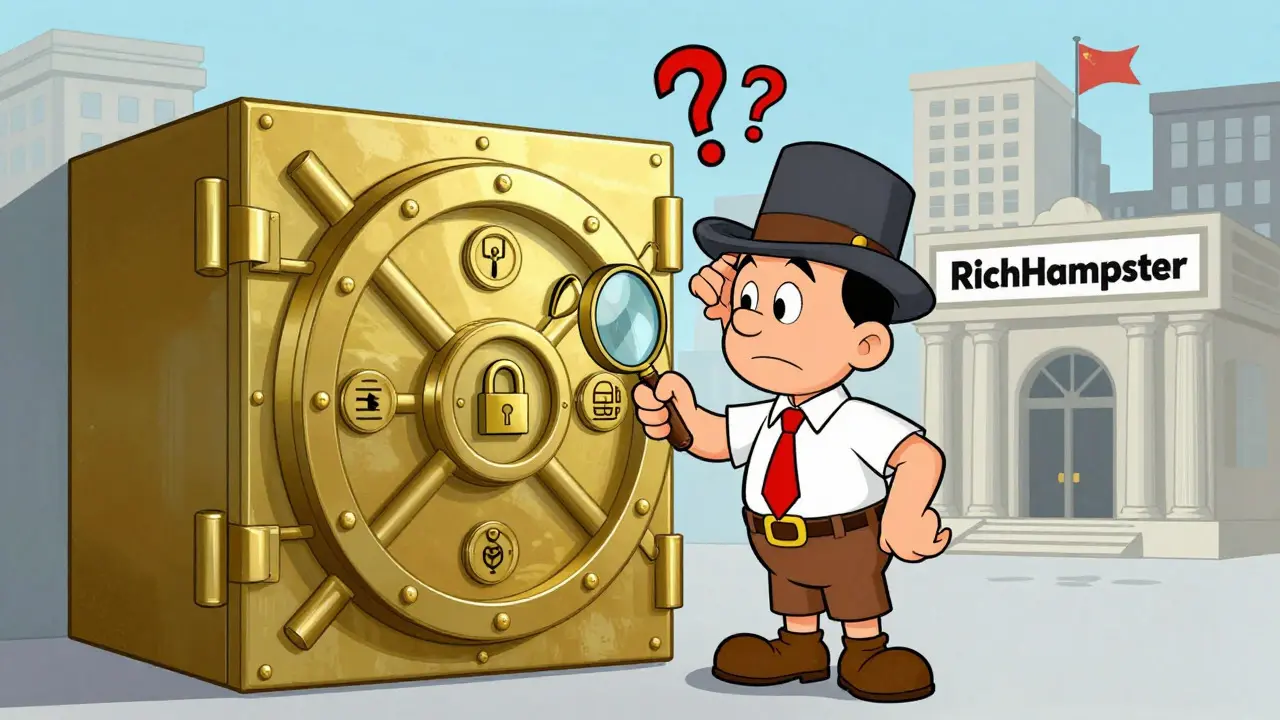
You found a new RichHamster crypto exchange online. The interface looks clean. The fees seem low at 0.25%. You’re ready to buy some Bitcoin. But before you link your bank account, pause. Most users assume every website with a "Buy Crypto" button is a fully operational, regulated financial institution. That’s not always true.
Here is the hard truth about RichHamster. It doesn’t look like a standard trading platform. It looks like a product demo. Specifically, it appears to be a white-label solution created by a Ukrainian web development agency called WebCase. If you are looking for a place to store millions in assets, this might not be it. If you are a developer wanting to launch your own exchange brand quickly, this is exactly what it is. Let’s break down why this distinction matters for your wallet.
What Is RichHamster Actually?
Most people search for "RichHamster" expecting reviews from traders who have been using it for years. Instead, they find technical documentation from WebCase. This is the first major red flag for retail investors. RichHamster isn’t primarily an independent exchange competing with Binance or Coinbase. It is a turnkey software package.
WebCase, the developers behind the project, launched it around 2021. Their goal wasn’t to become a global trading hub. Their goal was to sell a ready-made exchange infrastructure to other businesses. Think of it like buying a pre-built house. You can move in, but the foundation was designed by a contractor, not a structural engineer specializing in high-frequency trading.
The technology stack supports six main cryptocurrencies: Bitcoin (BTC), Ethereum (ETH), Litecoin (LTC), Dogecoin (DOGE), Cardano (ADA), and Karbo (KRB). That’s a very limited selection compared to top-tier exchanges that list hundreds of tokens. If you want to trade niche altcoins, you won’t find them here. The platform runs on Python/Django for the backend and Vue.js for the frontend. It’s solid tech, but it’s built for customization, not necessarily for massive scale right out of the box.
The Trust Gap: No Reviews, No History
Search for "RichHamster reviews" on Trustpilot, Reddit, or Sitejabber. What do you get? Almost nothing. Zero verified user complaints. Zero five-star raves. Just silence.
This absence of data is more concerning than bad reviews would be. When an exchange has issues, users complain loudly. When an exchange works well, users mention it in forums. A total lack of organic conversation suggests one of two things:
- The platform has extremely low adoption rates.
- The platform is used primarily as a demo environment rather than a live trading venue for the public.
Compare this to CEX.IO or Gemini. They have thousands of reviews detailing withdrawal delays, customer support interactions, and fee structures. RichHamster has no such footprint. Its social media presence is minimal, with fewer than 50 followers on Twitter/X and no organic engagement. For a financial platform handling real money, community trust is currency. Without it, you are flying blind.
Security Claims vs. Reality
RichHamster claims to use robust security measures. They state that 95% of funds are kept in cold storage. They promise two-factor authentication (2FA) for all accounts. They also cite SSL/TLS 1.3 encryption for data transfer.
These sound good. But here is the catch: there are no independent audit reports available. Major exchanges hire firms like CertiK or Hacken to verify their code and reserves. RichHamster relies on internal testing data from WebCase. There is no proof-of-reserves document showing that the exchange actually holds the Bitcoin it says it does.
Dr. Elena Rodriguez, a blockchain security specialist, noted in general industry commentary that any exchange lacking published audits should be treated with extreme caution. In the world of crypto, "trust me" is rarely enough. You need verifiable evidence. Until RichHamster publishes third-party security assessments, their security claims remain unverified promises.

Fees and Trading Features
If you decide to test the waters, the fee structure is straightforward. RichHamster charges a flat 0.25% per trade. This is competitive. Binance, for example, often starts at 0.1% but uses a complex tiered system based on volume and BNB holdings. RichHamster’s flat rate is easier to understand.
However, simplicity comes at a cost. The platform lacks advanced trading tools. You won’t find margin trading, futures contracts, or stop-loss orders. These are standard features on established exchanges that help traders manage risk. On RichHamster, you are likely limited to simple market or limit orders. This makes it unsuitable for active day traders but potentially okay for someone making a one-time purchase.
Order execution speed is claimed to average 120 milliseconds. In fast-moving markets, every millisecond counts. While this is decent for a small platform, it may struggle during high-volatility events when liquidity dries up. With only six supported assets, liquidity pools are shallow. Large buy or sell orders could significantly impact the price you receive.
Regulatory Status: The Biggest Risk
This is where RichHamster faces its toughest hurdle. The website does not clearly display regulatory licenses. Compare this to LCX, which holds VASP registration in Europe, or CEX.IO, which is registered with the FCA in the UK. Regulatory compliance protects you if the company goes bankrupt or gets sued.
Without clear licensing information, you don’t know which jurisdiction governs your contract. If RichHamster freezes your funds, who do you call? Which court has authority? In many countries, operating without a license puts the exchange at risk of being shut down by authorities. The SEC in the United States, for instance, has cracked down heavily on unregistered platforms. If you are in a regulated market, using an unlicensed exchange carries significant legal and financial risk.
| Feature | RichHamster | Binance / Coinbase |
|---|---|---|
| Primary Purpose | White-label software / Demo | Global trading marketplace |
| Supported Assets | 6 Cryptocurrencies | 100+ Cryptocurrencies |
| Trading Fees | Flat 0.25% | Tiered (0.1% - 0.6%) |
| Regulatory Transparency | Low / Unclear | High (Multiple Licenses) |
| User Reviews | Negligible | Thousands (Trustpilot, etc.) |
| Advanced Tools | No (Basic Spot Only) | Yes (Futures, Margin, Staking) |
Who Should Use RichHamster?
So, should you avoid it entirely? Not necessarily. It depends on who you are.
Avoid RichHamster if:
- You are investing life savings.
- You need regulatory protection and insurance.
- You want to trade diverse altcoins or use leverage.
- You require responsive 24/7 customer support with proven track records.
Consider RichHamster if:
- You are a developer or entrepreneur building your own branded exchange.
- You are testing a small amount of capital to understand the interface.
- You prefer a simplified, no-frills trading experience for basic BTC/ETH purchases.
For most retail investors, the lack of historical data and regulatory clarity makes RichHamster a risky choice. Established exchanges offer peace of mind that a template-based platform cannot match.
Final Verdict
RichHamster is a competent piece of software, but it is not yet a trusted financial institution. It shines as a B2B solution for companies wanting to launch their own crypto brands quickly. As a direct-to-consumer exchange, it falls short due to limited asset variety, missing advanced features, and a glaring lack of public verification regarding security and regulation.
If you value transparency and security above all else, stick with major players like Coinbase, Kraken, or Gemini. If you are intrigued by the tech and willing to take on higher risk for lower fees, test RichHamster with a tiny amount first. Never deposit more than you can afford to lose while waiting for independent audits and user testimonials to emerge.
Is RichHamster a scam?
It is not necessarily a scam, but it is not a traditional exchange either. It is primarily a white-label software solution developed by WebCase. The lack of user reviews and regulatory disclosures raises caution flags for retail investors, but there is no evidence of fraudulent activity like rug pulls. Treat it as a new, unproven platform.
Which cryptocurrencies does RichHamster support?
Currently, RichHamster supports six major cryptocurrencies: Bitcoin (BTC), Ethereum (ETH), Litecoin (LTC), Dogecoin (DOGE), Cardano (ADA), and Karbo (KRB). This is a much smaller selection than competitors like Binance or Coinbase.
What are the fees on RichHamster?
RichHamster charges a flat transaction fee of 0.25% per trade. This is simpler than the tiered fee structures used by larger exchanges, but you should check for any hidden withdrawal fees, which are less transparently documented.
Does RichHamster have mobile apps?
As of recent updates, RichHamster operates primarily through a responsive web interface. Native iOS and Android applications are listed on potential roadmaps but are not widely confirmed as stable, production-ready releases for the general public.
Is RichHamster regulated?
There is little to no publicly available information confirming specific regulatory licenses for RichHamster. Unlike regulated entities like Gemini or CEX.IO, it does not prominently display FCA, SEC, or VASP registrations, which poses a compliance risk for users in strict jurisdictions.