
Everyone loves free money. In crypto, that usually comes in the form of airdrops, which are distributions of tokens to users who have previously interacted with a protocol or platform. But not all airdrops are created equal. Some require months of grinding on testnets, while others reward simple wallet activity. If you’ve been hearing whispers about the RARA project and its connection to Unifarm, you’re probably wondering if it’s worth your time and gas fees.
Here is the reality check: as of September 2026, specific confirmed details for a "RARA Unifarm" airdrop remain scarce in mainstream aggregators. This doesn’t mean it isn’t happening; it often means the project is either in stealth mode, has rebranded, or is targeting a very specific niche of early adopters. Unlike massive drops like Arbitrum or Uniswap, smaller projects often fly under the radar until the snapshot date hits. So, how do you position yourself? You don’t wait for the news. You act before the news exists.
Understanding the RARA and Unifarm Connection
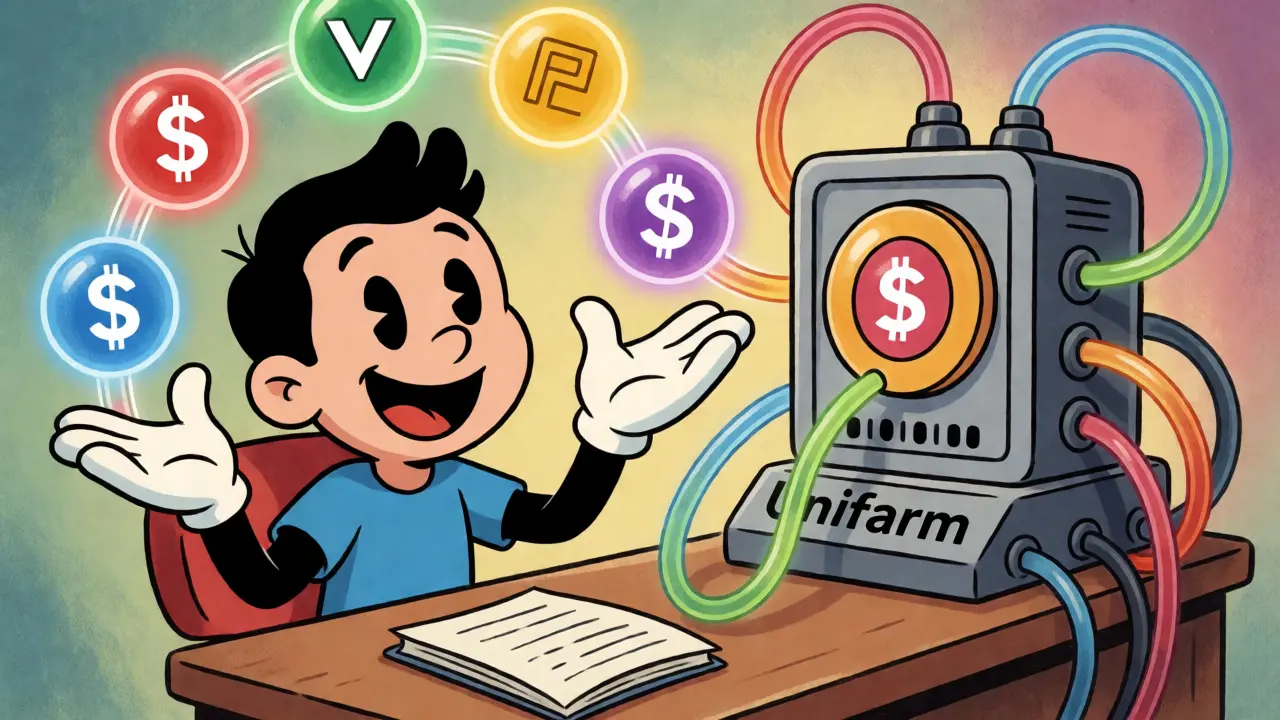
To understand the potential value of this drop, you need to know what these entities actually do. Unifarm is a decentralized finance (DeFi) aggregator designed to simplify yield farming across multiple blockchains. It allows users to stake their assets in one place and earn rewards from various protocols without manually managing dozens of positions. Think of it as a universal remote control for your crypto earnings.
RARA, depending on the specific iteration of the project, generally refers to a rarity-based asset layer or a specific governance token within the broader Unifarm ecosystem. The name itself hints at scarcity-rara means rare in Latin. In many Web3 projects, tokens named after rarity concepts are tied to NFTs (Non-Fungible Tokens) or unique access passes rather than just pure currency. If RARA is indeed linked to Unifarm, it likely serves as a utility token for accessing premium farming strategies or exclusive liquidity pools.
| Entity | Type | Primary Function | Blockchain Network |
|---|---|---|---|
| Unifarm | DeFi Aggregator | Cross-chain yield farming automation | Ethereum, BSC, Polygon, Solana |
| RARA | Utility/Governance Token | Access rights, rarity verification, or staking rewards | Likely Ethereum or Layer 2 (e.g., Arbitrum) |
| Airdrop Mechanism | Retroactive Distribution | Rewarding early users based on TVL and activity | N/A |
Why Retroactive Airdrops Still Matter in 2026
You might think the airdrop era peaked in 2021. Wrong. According to data from CoinGecko’s recent annual reports, retroactive airdrops continue to add billions to market caps. Why? Because they solve the cold-start problem. New protocols need users, but users need incentives. By promising future tokens, projects get cheap user acquisition.
The model pioneered by Uniswap-distributing UNI tokens to anyone who traded before a certain date-is now standard practice. For a project like RARA, if it leverages Unifarm’s infrastructure, the eligibility criteria will likely mirror those of other DeFi aggregators. They want to see:
- Transaction Volume: Did you swap or provide liquidity?
- Time Weighted Value: Did you keep assets in the protocol for weeks or months?
- Unique Wallets: Are you a real person or a bot farm?
If you haven’t interacted with Unifarm recently, you might be out of luck. But if you have, even small amounts of activity can qualify you. The key is consistency over intensity. Ten transactions spread over six months look better to an algorithm than ten transactions in one hour.
How to Position Yourself for the RARA Drop
Since official snapshots are often announced too late to react, you need a proactive strategy. Here is a step-by-step guide to maximizing your chances, assuming the RARA/Unifarm connection holds true.
- Connect Your Wallet to Unifarm: Use MetaMask or Rabby. Ensure you have some ETH or MATIC for gas fees. Don’t use a fresh wallet with zero history; algorithms flag new wallets as suspicious.
- Stake Assets: Deposit a modest amount into a Unifarm vault. You don’t need thousands. Even $50-$100 shows commitment. Choose a stablecoin pair (like USDC/USDT) to minimize impermanent loss risk while you farm.
- Interact with RARA-Specific Features: If there is a dedicated RARA dashboard or NFT integration within Unifarm, mint a low-cost item or claim a badge. These micro-transactions are often weighted heavily in eligibility calculations.
- Bridge Assets: If Unifarm supports cross-chain functionality, try bridging a small amount of assets between networks (e.g., Ethereum to Arbitrum). Cross-chain activity is a strong signal of an active power user.
- Document Everything: Take screenshots of your transaction hashes. If the airdrop happens via a claim portal, having proof of interaction can help resolve support tickets quickly.
Potential Pitfalls and Scams
The biggest danger in chasing obscure airdrops is phishing. Scammers love hype. When rumors of a "RARA airdrop" start circulating on X (formerly Twitter), fake websites pop up overnight. They look identical to the real thing but steal your seed phrase when you try to "claim" tokens.
Always verify the contract address. Never sign a transaction that asks for unlimited allowance unless you trust the protocol implicitly. And remember: legitimate airdrops rarely ask you to send crypto first. If a site says "Send 0.1 ETH to unlock your RARA tokens," close the tab. That’s a scam.
Another pitfall is gas fee exhaustion. If you spend $50 in gas fees trying to qualify for a $20 airdrop, you’ve lost money. Calculate your break-even point. If the expected value of the drop is uncertain, keep your interactions minimal and cost-effective.
Comparing RARA to Other Recent DeFi Airdrops
It helps to look at historical precedents. Let’s compare the potential structure of a RARA drop against established benchmarks like Arbitrum (ARB) and dYdX (DYDX).
| Metric | Arbitrum (ARB) | dYdX (DYDX) | Hypothetical RARA |
|---|---|---|---|
| Eligibility Basis | Network usage & bridge volume | Trading volume & referrals | Farming duration & NFT ownership |
| Average Allocation | ~1,000 ARB per eligible user | Varied widely ($1k-$10k+) | Unknown (Likely lower due to niche scope) |
| Vesting Schedule | Immediate unlock | Linear vesting over years | Could be immediate or short-term lockup |
| Community Sentiment | Highly positive initially | Mixed due to dilution concerns | Dependent on transparency of criteria |
Notice the trend: newer projects are becoming stricter with eligibility. They want quality users, not sybil attackers (people creating hundreds of wallets to farm drops). This makes your single, active wallet more valuable than five empty ones.
What Happens After the Snapshot?
Once the snapshot date passes, the waiting game begins. Typically, there is a lag of two to four weeks between the cutoff date and the actual claim announcement. During this time, the team analyzes data, filters out bots, and finalizes allocations.
When the claim window opens, act fast but carefully. Check the official Discord or Telegram channels for the correct URL. Do not click links sent in DMs. Once claimed, decide immediately whether to hold or sell. Many airdropped tokens experience high volatility in the first 48 hours post-listing. If you don’t believe in the long-term vision of RARA, selling half your allocation covers your initial investment and lets you ride the rest for free.
Final Thoughts on Managing Expectations
Is the RARA Unifarm airdrop going to make you rich? Probably not. Most mid-tier DeFi airdrops range from $50 to $500 per wallet. But that’s still free money for clicking buttons and holding assets you already own. The real win is learning the mechanics of DeFi participation. The habits you build-bridging, staking, interacting with smart contracts-are transferable skills for the next big opportunity.
Keep an eye on official announcements. If the RARA team remains silent, assume the project is either delayed or has pivoted. In crypto, silence is often a signal to reassess, not necessarily to abandon. Stay curious, stay skeptical, and never invest more than you can afford to lose in pursuit of a token that hasn’t launched yet.
Has the RARA airdrop officially launched?
As of September 2026, there is no widely confirmed live claim page for a major "RARA" token specifically branded under Unifarm in top-tier aggregators. Users should monitor official social media channels for a surprise launch, as many small-cap projects announce drops with less than 48 hours' notice.
Do I need to pay taxes on RARA airdrop tokens?
In most jurisdictions, including Australia and the US, airdropped tokens are considered income at their fair market value upon receipt. You must record the USD value at the moment of claiming. Consult a tax professional for your specific local regulations.
What if my wallet was ineligible for the snapshot?
If you missed the snapshot, you cannot retroactively qualify. However, some projects offer secondary sales or community rounds where you can buy tokens directly. Alternatively, focus on other upcoming protocols like Monad or Abstract, which are currently in pre-airdrop phases.
Can I use multiple wallets to increase my RARA allocation?
Yes, but beware of Sybil detection. If wallets share funding sources (the same main wallet funded them all) or exhibit identical behavior patterns, they may be grouped together and receive a reduced allocation or be disqualified entirely.
Where can I trade RARA tokens once they launch?
Typically, new DeFi tokens list on Decentralized Exchanges (DEXs) like Uniswap or SushiSwap first. Centralized exchanges (CEXs) like Binance or Coinbase may list them later if trading volume supports it. Always check the contract address before adding liquidity.