
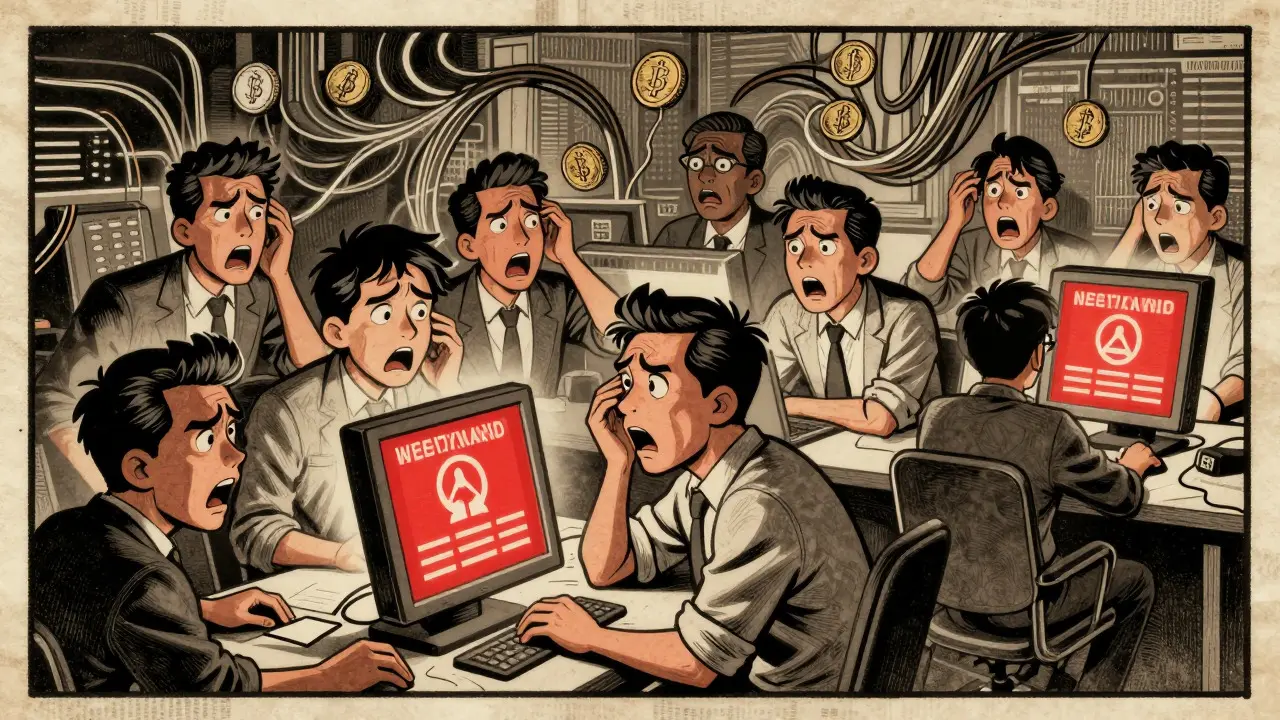
Imagine logging into your favorite crypto exchange in Manila only to find it blocked or demanding new documents. That reality hit many Filipino traders in mid-2025 when the Securities and Exchange Commission (SEC) fully enforced its new rules for Crypto Asset Service Providers (CASPs). The shift was sudden but necessary, moving the country from a "wild west" of unregulated platforms to one of the most structured crypto markets in Southeast Asia.
If you are an investor, a startup founder, or an exchange operator looking at the Philippine market, understanding these Philippines crypto licensing requirements is no longer optional-it's the price of entry. As of August 2026, the regulatory landscape has settled into a clear framework that prioritizes investor protection and financial stability. Here is what you need to know to navigate this new environment without getting caught off guard.
The Core Framework: SEC Memorandum Circulars No. 04 and 05
The backbone of current regulation comes from two key documents issued on May 30, 2025: SEC Memorandum Circular No. 04 and No. 05, Series of 2025. These circulars established the mandatory licensing regime for all entities acting as CASPs. A CASP is defined broadly to include exchanges, custodians, brokers, and any platform facilitating the buying, selling, or holding of crypto-assets for users in the Philippines.
Before these rules, international giants like Binance could operate with minimal local oversight. Now, every service provider must register with the SEC’s PhiliFintech Innovation Office. This office acts as the single point of contact for applications, supervision, and enforcement. The goal isn't to ban crypto; it's to ensure that if something goes wrong-like a hack or insolvency-there is a regulated entity accountable to Filipino investors.
Financial Barriers: Capital and Physical Presence
Let's talk numbers, because they are significant. To get licensed, a CASP must be registered as a domestic corporation in the Philippines. You can't just use a foreign shell company. The minimum paid-up capital requirement is PHP 100 million (approximately $1.8 million USD). Crucially, this capital must be in cash or equivalent liquid assets, not in crypto holdings. This ensures the company has real-world resources to cover operational risks and potential liabilities.
Beyond money, you need bricks and mortar. The SEC requires a physical office presence in the country. This rule was designed to prevent offshore operators from disappearing when problems arise. For smaller startups or international exchanges used to remote operations, this creates a substantial hurdle. It forces companies to commit locally, hire staff, and establish a tangible legal footprint.
| Requirement | Specification | Purpose |
|---|---|---|
| Corporate Structure | Domestic Corporation | Ensures local legal accountability |
| Minimum Paid-Up Capital | PHP 100 Million (~$1.8M USD) | Covers operational risks and liabilities |
| Physical Presence | Office in the Philippines | Prevents offshore evasion and enables inspection |
| Fund Segregation | Strict separation of customer vs. company funds | Protects user assets during insolvency |
The Application Process and Documentation
Applying for a license is not a simple form-filling exercise. You must submit a comprehensive dossier to the PhiliFintech Innovation Office. This includes detailed business rules, proof of capital, and a robust compliance plan. The SEC looks closely at your Anti-Money Laundering (AML) and Know Your Customer (KYC) systems. Given the Philippines' status as a remittance hub, regulators are particularly sensitive to illicit flows through crypto channels.
You also need to present risk control mechanisms. How will you handle smart contract risks? What happens if a stablecoin depegs? Your application must answer these questions concretely. Additionally, you must file disclosure plans 30 days before starting any marketing activities. This ensures that investors have time to review the terms before committing funds. The process is rigorous, but it filters out fly-by-night operators who lack serious intent.
Marketing and Disclosure Rules
Once licensed, how you talk about your product matters. Under MC 4-2025, crypto-assets cannot be sold or offered without proper regulatory compliance. You must produce disclosure documents filed with the SEC and published on your website and social media channels at least 30 days before launching a new token or service. This transparency requirement aims to curb hype-driven speculation.
There are strict limits on what you can promise. Generally, you cannot assert future values of a crypto-asset unless allowed under specific sections of the regulations. No more "guaranteed 10x returns" promises. Marketing must be factual, clear, and consistent with the filed disclosures. Violating these marketing standards can lead to fines even if your core license is valid. The SEC monitors social media ads and influencer partnerships closely, so compliance teams need to stay on top of every public statement.
Enforcement: What Happens If You Ignore the Rules?
The SEC hasn't been shy about enforcing these rules. On August 1, 2025, the Commission issued public advisories targeting ten major exchanges, including OKX, Bybit, KuCoin, and Kraken, for operating without licenses while serving Filipino users. This followed the earlier blocking of Binance in 2024, where users were given 90 days to exit the platform before access was cut off.
Penalties are steep. Violations can result in fines ranging from PHP 50,000 to PHP 10 million per instance. If the violation continues, you face an additional daily penalty of PHP 10,000. Beyond fines, the SEC has the power to block websites, which effectively kills a business in a mobile-first market like the Philippines. For non-compliant platforms, the risk of being shut down overnight is real. Compliant players, however, benefit from increased trust as consumers learn to distinguish between licensed and unlicensed services.

Market Impact and Future Outlook
Despite the strictness, the Philippine crypto market is still growing. Adoption rates are projected to reach 10.86% by the end of 2026, with over 12.79 million active users. Revenue from crypto activities is expected to hit ₱1.1 billion. Why? Because regulation brings legitimacy. Institutional investors and cautious retail traders are more likely to enter a market where their assets are protected by law.
The high capital requirements do create barriers for smaller competitors, potentially consolidating the market around larger, well-capitalized firms. However, this may be a feature, not a bug. It reduces fragmentation and lowers systemic risk. The central bank maintains a watchful eye but remains largely neutral, focusing on monetary policy rather than direct participation. As the Philippines positions itself as a regional crypto hub, the SEC's framework serves as a model for other emerging markets balancing innovation with consumer protection.
Frequently Asked Questions
Do I need a license to buy crypto in the Philippines?
No, individual investors do not need a license. The licensing requirement applies to Crypto Asset Service Providers (CASPs), such as exchanges, wallets, and brokers, that offer services to the public. As long as you trade on a licensed platform, you are compliant.
Can foreign exchanges operate in the Philippines without a local office?
Not anymore. Since July 2025, all CASPs targeting Filipino users must register as a domestic corporation and maintain a physical office presence in the Philippines. Operating solely from abroad without this setup is considered a violation.
How much does it cost to get a CASP license?
The primary cost is the minimum paid-up capital of PHP 100 million ($1.8 million USD). In addition, there are registration fees based on gross revenue and ongoing supervision fees. Legal and compliance setup costs for establishing the domestic entity and office should also be factored in.
What happens if my exchange is not licensed?
You face fines of up to PHP 10 million per violation, plus daily penalties for continued operation. The SEC can also order your website blocked. Users on unlicensed platforms may have limited recourse if the platform fails or engages in fraud.
Does the SEC regulate all types of crypto assets?
The CASP rules apply to service providers dealing with digital assets. While the SEC focuses on securities-like tokens and exchange services, the broader definition of 'crypto-asset' covers most mainstream cryptocurrencies traded on licensed platforms. Stablecoins and utility tokens fall under similar scrutiny regarding disclosure and AML compliance.
Sonia Gomez Gomez
August 18, 2026 AT 02:33So basically if you don't have $1.8M in cash you can't even touch the market? That sounds like a huge barrier to entry for anyone who isn't already rich :P I just think it's unfair that small startups get pushed out while the big guys keep playing by their own rules. It feels like they are trying to protect the whales from the minnows. Who decided that only the wealthy deserve financial freedom anyway?
SHIV SHANKAR KANTA
August 19, 2026 AT 12:46The soul of finance is being crushed under the weight of bureaucracy and cold hard numbers
We speak of innovation but we build cages
The individual trader is now a statistic not a person
They say protection but I see control
The digital frontier is closing its gates
Who watches the watchers when the code becomes law
It is a tragedy of modernity wrapped in a regulatory decree
We lose our freedom to gain safety which is a false trade
The system is rigged for those with capital and connections
The rest of us are just data points in their ledger
Do not let them convince you this is progress
It is stagnation dressed up as order
The future belongs to the unregulated or the dead
Choose your side wisely before the door locks shut
This is the end of an era and the beginning of a prison
Daniel Brown
August 20, 2026 AT 18:52One thing people miss is the physical office requirement. You cannot just set up a server in Singapore and serve Manila users anymore. The SEC wants local accountability, which means hiring local staff and paying local taxes. This changes the competitive landscape significantly because remote-first exchanges now have to compete on operational efficiency, not just user acquisition. It forces a real commitment to the Philippine market rather than just treating it as an afterthought for offshore revenue.
Marco Maldonado
August 22, 2026 AT 04:22Finally some sense! The US could learn a lesson or two from this. We have no clear federal framework and states are all over the place. If the Philippines can do it, why cant we? Its about time we stop letting tech bros run wild without any oversight. The SEC doing this shows real leadership and strength. We need more countries following suit to keep the bad actors in check. Strong regulation equals strong economy. Simple as that. Don't let the libertarians tell you otherwise, they just want to keep their tax havens open.
Darren Moon
August 23, 2026 AT 00:33While the narrative suggests a 'structured market,' one must critically evaluate whether such rigid capitalization thresholds merely entrench incumbent monopolies under the guise of consumer protection. The dichotomy between 'innovation' and 'compliance' is often overstated; in practice, the friction introduced by mandatory domestic incorporation and segregated fund accounting may stifle the very agility that decentralized finance purports to offer. Furthermore, the reliance on a single supervisory body-the PhiliFintech Innovation Office-creates a single point of failure in the regulatory architecture, potentially leading to bottlenecks in approval processes that disproportionately affect smaller, agile firms seeking to disrupt the status quo.
Quang Thai Tran
August 23, 2026 AT 03:04Let us be clear: this is not about protecting the people, it is about controlling the flow of capital. The SEC is merely an extension of the global banking cartel seeking to maintain their monopoly on trust. By requiring domestic corporations, they ensure that every transaction is visible to the state apparatus. The 'investor protection' rhetoric is a smokescreen for surveillance. Those who understand the deeper game will move their assets to truly sovereign jurisdictions before the net tightens further. Do not be fooled by the language of safety; it is the language of captivity.
Dianne Ritter
August 25, 2026 AT 01:43I think it's actually a good step forward. Having clear rules makes it easier for normal people to trust the platforms again. After all the scams in 2024, having a license gives me peace of mind knowing there is someone to hold accountable if things go wrong. It might be stricter, but better safe than sorry.
Kate Staab
August 25, 2026 AT 18:14Oh, how noble of them to 'protect' us. As if the government has ever done anything right for the little guy. They always find a way to make life harder for the average citizen while the rich slip through the cracks. Typical. Just another example of how regulation benefits the powerful and punishes the weak. Can't wait to see how this plays out for the small traders who are left behind. Truly inspiring work, SEC. Bravo.
Calliope Clio
August 27, 2026 AT 16:15Ugh, another bureaucratic nightmare 🙄💸 Why do they always make it so complicated? I just want to buy some BTC without filling out 40 forms. The elites love their red tape. Makes me sick to my stomach how much power they have over our wallets. #CryptoWinterIsBack #RegulationSucks
Tasha Davis
August 28, 2026 AT 10:46Hey everyone! I think this is actually super exciting! 🚀 It means the market is getting serious and professional. If you are thinking about starting a crypto business in the Philippines, now is the time to get ready! The rules are clear, so just follow them and you will be fine. Let's support local innovation and growth! Keep pushing forward, team! 💪✨
Abigail Sparks
August 29, 2026 AT 12:46You need to look at the AML requirements specifically. Since the Philippines is a remittance hub, the SEC is laser-focused on preventing illicit flows. Your KYC process needs to be robust enough to handle high-volume retail transactions without slowing down user onboarding. Many startups fail here because they underestimate the compliance overhead. Build your systems with scalability in mind from day one, or you will regret it later. Do not cut corners on data storage either; regulators will ask for audit trails.
OLIVER CHRISTIAN
August 31, 2026 AT 01:45Great summary of the requirements. One practical tip for anyone considering this path: start the dialogue with the PhiliFintech Innovation Office early. Do not wait until your dossier is complete to reach out. Their feedback on your risk management plan can save you months of rework. Also, consider joining local fintech associations; they often have insights into the unwritten norms of the regulatory environment. It is a collaborative effort, not just a transactional one. Good luck to all navigating this new landscape!
Kelsey Anne
September 1, 2026 AT 09:49Capital requirement is too high. Kills small competition. Bad for consumers. Long term. Prices go up. Service goes down. Only big players survive. Classic monopoly play. Watch closely.
Mike Baca
September 3, 2026 AT 03:32Man this is wild right? Like seriously who thought $1.8m was a fair bar to set? i mean sure we need rules but does it really have to be this heavy handed? feels like they are trying to scare off the scrappy guys who actually bring the cool new stuff. but then again maybe that is the point? to clean up the mess? im torn. on one hand i hate seeing the gatekeepers win but on the other hand i dont want my money stolen by some shady exchange either. its a tough balance to strike. what do yall think is the best way to handle this? or am i just overthinking it? probably overthinking it lol
Teri W
September 4, 2026 AT 01:24Oh my gosh, did you see the part about blocking websites?! 😱 That is terrifying! Imagine logging in one day and just... gone? No warning? Well, okay, 90 days, but still! It feels so dramatic and intense. Like a soap opera where the villain cuts the phone line. I hope my favorite exchange gets licensed soon so I don't have to worry about this. It is such a stressful time for traders. Let's pray for stability! 🙏📉
Leah Humphrey
September 4, 2026 AT 16:15The bifurcation of custody responsibilities introduces significant operational latency in settlement cycles, particularly when cross-border fiat rails are involved. Moreover, the mandate for strict fund segregation complicates treasury management for mid-tier CASPs, necessitating sophisticated yield-maximization strategies on idle reserves to offset the opportunity cost of capital lock-up. This dynamic inherently favors institutions with existing balance sheet depth, thereby accelerating market consolidation among top-tier operators.
Rod Sidoroff
September 5, 2026 AT 05:06Most people here are missing the forest for the trees. The real story is not about the license fee, it is about the shift in liability. Previously, if an exchange failed, the recourse was limited to civil suits in foreign jurisdictions. Now, the domestic entity bears direct statutory liability. This changes the risk profile for institutional investors dramatically. It is a subtle but profound legal restructuring that few retail traders will appreciate until the first major insolvency event occurs. Until then, enjoy the illusion of safety.
Jay Johhnston
September 5, 2026 AT 15:06It is interesting to see how different cultures approach regulation. In many Asian markets, there is a stronger social contract regarding collective responsibility. The Philippines seems to be embracing this model by prioritizing community protection over pure individual liberty. It is a valid approach that balances innovation with social stability. We should respect their choice to define their own path.
Niall O'Rourke
September 5, 2026 AT 17:28regulation is just a fancy word for restriction. they call it protection but its really just control. everyone loves to talk about innovation but hates the rules that come with it. typical. the moment you try to do something new they throw a spanner in the works. why bother trying if you are going to get fined for breathing wrong? just stick to the old ways and be safe i guess. whatever. its not like they care about the little guys anyway
Ami Elizabeth
September 6, 2026 AT 11:44honestly just glad they are finally doing something. the wild west days were scary. at least now we know who to blame if things go south. not saying its perfect but its a start. hopefully the fees stay reasonable too though. dont wanna pay extra for the privilege of trading safely. but hey progress is progress i guess. just hoping the user experience doesnt suffer too much from all this paperwork. fingers crossed it goes smoothly for everyone involved. lets see how it shakes out in the next few months. staying optimistic but cautious.
Alexander Scheel
September 6, 2026 AT 14:27How delightful. Another instance of the state inserting itself into the private sphere of commerce. We are told this is for 'our own good,' as if we are children incapable of managing our own risks. The irony is palpable: the entities most likely to fail due to bureaucratic incompetence are the very ones tasked with regulating complex financial instruments. Enjoy your 'safety,' citizens. It comes at the price of your autonomy and your wallet. Sarcasm aside, it is a fascinating study in regulatory overreach.