

Have you ever wondered if running a simple node could actually pay you back in real tokens? That is exactly the premise behind the Phala Network privacy-preserving blockchain protocol. Unlike those flashy social media campaigns where you just retweet and hope for the best, this project demands actual technical participation. If you are looking at the PHA airdrop, you need to understand that it isn't free money handed out to everyone with a Twitter account. It is a reward for helping secure the network using specialized hardware.
The core promise here is straightforward but technically demanding. Participants who successfully run Phala miner nodes receive exactly 30 PHA tokens. At current market rates, that is roughly $2.60 to $3.09 depending on daily fluctuations. Sure, it doesn't sound like a fortune right now, but consider the potential upside if the network gains traction. More importantly, this airdrop filters for users who genuinely care about privacy infrastructure rather than just speculators chasing quick flips.
What Makes Phala Network Different?
To get why this airdrop matters, you have to look under the hood. Trusted Execution Environment (TEE) technology is the backbone of Phala. Most blockchains execute smart contracts in plain text-anyone can see what data is being processed. Phala changes that by running confidential contracts inside miner nodes equipped with Trusted Computing capable hardware. This ensures that while the execution is verifiable, the data remains secret.
This distinction places Phala in a unique niche alongside competitors like Oasis Network and Akash Network. While those projects also focus on privacy or decentralized compute, Phala’s specific implementation of TEE allows for complex smart contract logic without exposing sensitive inputs. The network raised $1.43 million across four funding rounds, which might seem modest compared to billion-dollar valuations elsewhere, but it signals a lean, focused development approach.
| Metric | Value / Detail |
|---|---|
| Token Symbol | PHA |
| Airdrop Reward | 30 PHA per node |
| Current Price (Approx) | $0.10 - $0.11 USD |
| Market Cap | $76.98 Million |
| Funding Raised | $1.43 Million |
| Key Tech | Trusted Execution Environment (TEE) |
The Technical Requirements for Participation
Here is where most people drop out. You cannot participate in this airdrop from your smartphone. You need a computer capable of handling Intel SGX or similar Trusted Computing standards. Why? Because the software needs to prove to the network that it is running inside a secure enclave. If your hardware does not support this, you simply cannot mine.
The process involves downloading specific mining software files provided by Phala. Once installed, you must execute designated commands to start the node. But it doesn't end there. To verify your work and qualify for the airdrop, you typically need to submit screenshot proof of successful node operation. This manual verification step adds friction, but it prevents bots from flooding the network with fake nodes.
- Hardware: CPU with Intel SGX or AMD SEV support.
- Software: Official Phala miner client (often Docker-based).
- Verification: Screenshots or log files proving uptime and task completion.
- Timeline: Rewards are tied to the "Darth Vader" pre-mainnet launch.
The reference to "Darth Vader" isn't a joke; it is the codename for Phala's pre-mainnet version. The distribution of airdrop rewards is contingent upon the activation of this phase. This means patience is required. There is no fixed date for when every participant gets paid, as it depends on network milestones and governance decisions.
Migration Challenges: Polkadot to Ethereum Layer 2
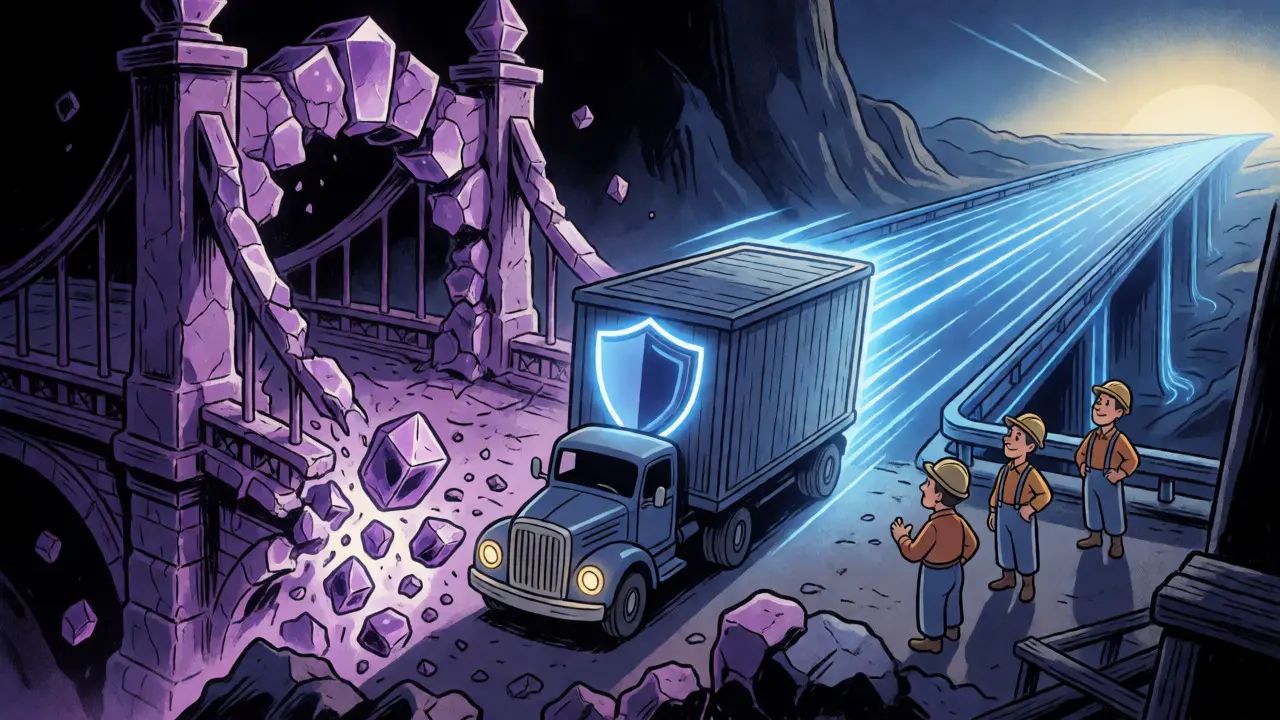
If you are holding PHA or planning to earn it, you need to be aware of a major architectural shift. As of late 2025, Phala Network faces a critical transition. Its parachain slot on Polkadot expires on November 20, 2025. Instead of renewing that expensive slot, the community voted to migrate fully to Ethereum Layer 2 infrastructure.
This move makes sense financially. Renting a parachain slot costs significant DOT tokens, which locks up capital. By moving to an Ethereum L2 rollup, Phala reduces overhead and taps into Ethereum's massive liquidity pool. They already launched a new Layer 2 rollup in January 2025, so the groundwork is laid. However, this transition creates uncertainty. Will the utility of PHA change? How will staking mechanics differ on L2 versus a parachain? These are valid concerns for anyone expecting long-term value appreciation.
Industry observers note that this shift aligns with broader trends favoring Layer 2 scaling solutions. Privacy coins often struggle with high gas fees on mainnets, so moving to L2 could make Phala more accessible for developers building privacy-preserving dApps. Yet, executing a migration of this scale without downtime or loss of functionality is tricky. Keep an eye on official announcements regarding the bridge mechanisms between Polkadot and the new Ethereum-based chain.
Is the Reward Worth the Effort?
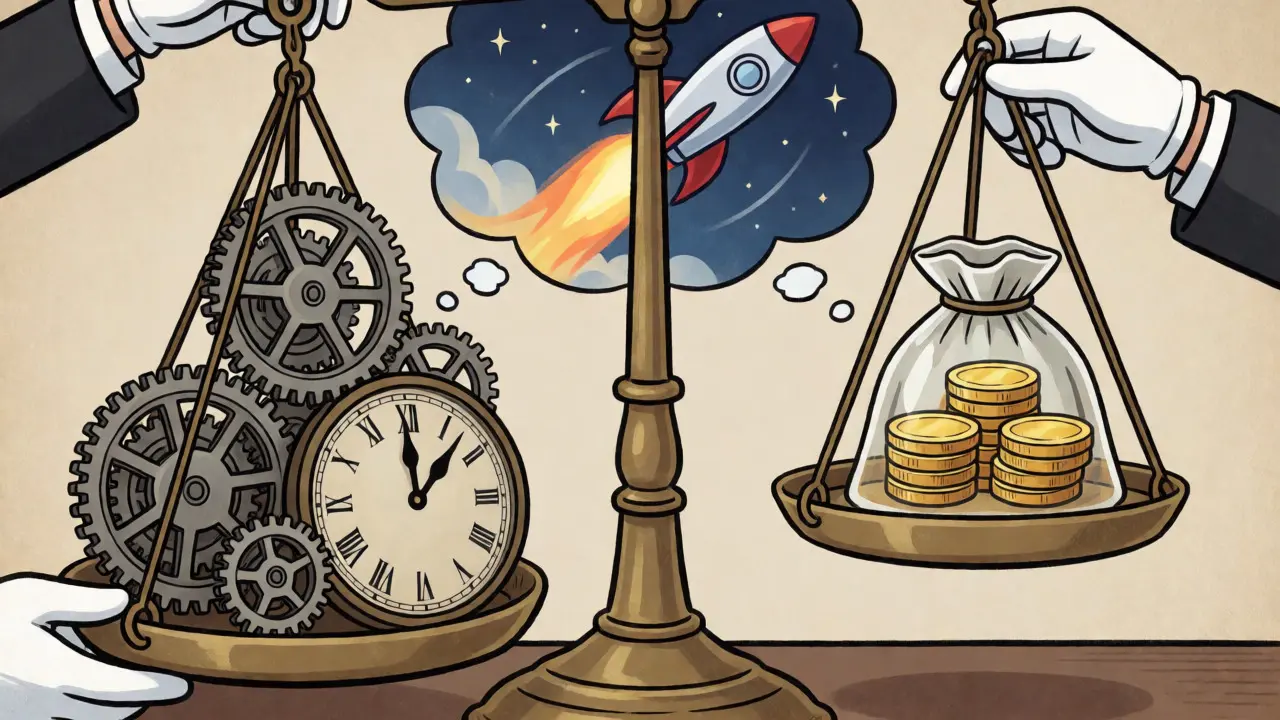
Let's do the math. You spend 2-4 hours setting up the node, troubleshooting hardware compatibility issues, and monitoring its status. In return, you get 30 PHA. At $0.10 per token, that is $3.00. If you factor in electricity costs and the wear on your hardware, the immediate ROI looks thin. So why bother?
First, speculation. Crypto markets are volatile. If PHA hits $1.00, your $3 becomes $30. If it hits $5, you are looking at $150. Given the growth trajectory of privacy tech, betting on a price increase isn't entirely irrational. Second, early adopter status. Participating in testnets and pre-mainnet phases often grants you priority access to future features or larger allocations in subsequent token sales. Third, learning. Understanding how TEE works gives you insight into a growing sector of Web3 that goes beyond simple DeFi swaps.
Compare this to other airdrops. Many require zero effort but offer negligible rewards or come with heavy lock-up periods. Phala’s requirement for active mining acts as a quality filter. It ensures that the community consists of users who actually run infrastructure, which strengthens the network's decentralization claims.
Community Sentiment and Risks
User feedback highlights two main pain points: technical complexity and timeline uncertainty. Newcomers often report frustration with hardware incompatibility. Not all CPUs support SGX, and enabling it in BIOS can be confusing. Additionally, the lack of a specific payout date for the "Darth Vader" launch leaves participants guessing. Community discussions show moderate enthusiasm tempered by caution. People like the idea of privacy, but they worry about whether Phala can compete against giants like The Graph or newer AI-focused chains.
Risk-wise, the migration to Ethereum L2 is the biggest variable. If the migration encounters bugs or delays, token velocity could suffer. Furthermore, the privacy coin sector is crowded. With regulations tightening globally, some jurisdictions may restrict privacy-focused tokens, impacting demand. Always diversify your portfolio and never invest time or money you cannot afford to lose in speculative assets.
Final Thoughts on Getting Started
If you have compatible hardware and enjoy tinkering with command-line interfaces, the Phala airdrop is worth a shot. It won't make you rich overnight, but it connects you to a serious piece of infrastructure. Check your CPU specifications first. If you have Intel SGX support, download the miner, set it up, and let it run. Document everything. Submit your proofs when asked. And keep an eye on the news regarding the November 2025 parachain expiration. Your timing around that event could determine how quickly you see returns.
How many PHA tokens do I get for participating in the airdrop?
Participants who successfully run a Phala miner node and complete the verification tasks receive exactly 30 PHA tokens. Additional referral bonuses may apply depending on the specific campaign rules at the time.
What hardware is required to mine for the PHA airdrop?
You need a computer with a CPU that supports Trusted Execution Environments, such as Intel SGX or AMD SEV. Standard cloud servers or older computers without these security features usually cannot run the Phala miner effectively.
When will the PHA airdrop rewards be distributed?
Reward distribution is tied to the activation of Phala's pre-mainnet version, codenamed 'Darth Vader.' There is no fixed calendar date; payouts occur once the network reaches specific development milestones and governance approves the release.
Why is Phala Network migrating from Polkadot to Ethereum?
The migration aims to reduce costs associated with renting a Polkadot parachain slot and to leverage Ethereum's larger ecosystem and liquidity. The transition to an Ethereum Layer 2 rollup began in early 2025 and coincides with the parachain slot expiration in late 2025.
Is the PHA airdrop worth the time investment?
For immediate cash value, likely not, as 30 PHA is worth only a few dollars. However, for those interested in privacy technology, gaining early access to the network, and potentially benefiting from future price appreciation, it can be a worthwhile educational and speculative opportunity.