

After China’s September 2021 ban on all cryptocurrency transactions, you’d think crypto trading vanished overnight. But it didn’t. Instead, it went underground-and it’s still going strong. Millions of Chinese citizens continue to trade Bitcoin, Ethereum, and especially USDT through peer-to-peer (P2P) networks, using encrypted apps, fake bank transfers, and clever workarounds to avoid detection. This isn’t a fringe activity. It’s a full-blown, high-stakes underground economy that’s adapting faster than regulators can keep up.
How P2P Trading Survived the Ban
The Chinese government didn’t just shut down exchanges like Huobi and OKX. They also banned banks from processing crypto-related payments and fined companies that helped users access foreign platforms. But here’s the catch: the ban only targeted centralized exchanges. It didn’t outlaw private, person-to-person trades. That loophole became the lifeline for crypto traders. Chinese law still recognizes cryptocurrency as virtual property. Courts in Shenzhen, Hangzhou, and Shanghai have ruled that owning Bitcoin or Ethereum isn’t illegal-only trading it through formal channels is. This created a legal gray zone. If you buy Bitcoin directly from someone in a WeChat group, you’re not breaking the law by owning it. You’re just breaking the rules by moving money across borders without approval. This distinction is everything. It means traders don’t need a platform-they just need a phone, a VPN, and someone willing to swap cash for crypto.How It Actually Works
Most P2P trades in China happen through international platforms like LocalBitcoins, Paxful, or Bisq. But users don’t log in directly. They use VPNs to bypass the Great Firewall, then connect with sellers through encrypted apps like Telegram or WeChat. Transactions are done in Chinese yuan (CNY), with buyers paying via Alipay or WeChat Pay. Sellers send crypto to a wallet address provided by the buyer. Here’s how a typical trade unfolds:- Buyer finds a seller in a private WeChat group (often named something like "Gold Group 7" or "Dragon Trading Circle").
- They agree on price, usually 1-3% above the global market rate to cover risk.
- Buyer sends CNY via Alipay to the seller’s personal account-never a business account.
- Seller waits for the payment to clear (sometimes 10 minutes, sometimes 2 hours).
- Once confirmed, seller sends Bitcoin or USDT to the buyer’s wallet.
- Both parties leave feedback. Reputation matters more than ever.
The Hidden Costs
This isn’t free. Traders pay a heavy price for privacy.- Transaction fees: Pre-ban, fees were around 0.5%. Now they’re 3-5%. That’s because sellers assume more risk-bank freezes, scams, police raids.
- Scams: Fake payment screenshots are common. One user on Reddit lost $25,000 after a seller sent a forged Alipay confirmation. No recourse. No chargeback.
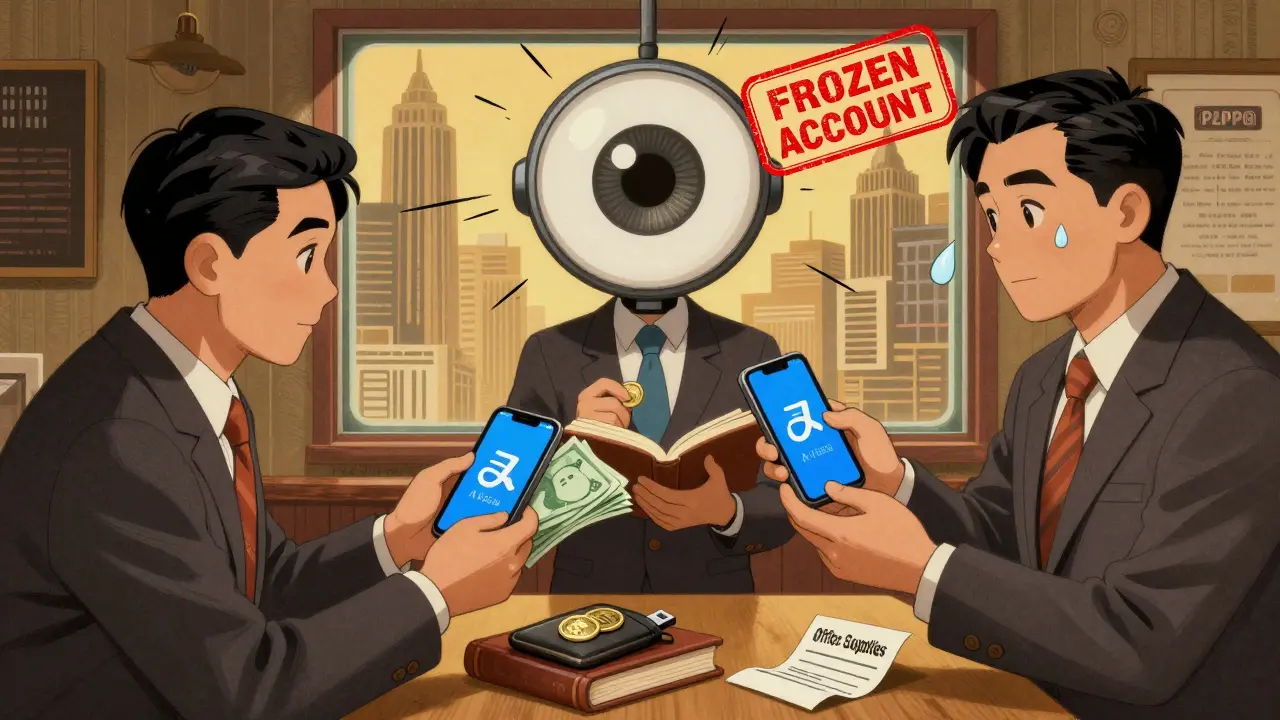
- Bank freezes: 38.7% of users report their accounts being frozen after crypto-related payments. Banks use AI to flag keywords like "BTC," "USDT," or "crypto" in transaction notes.
- Time: A single trade can take hours. You need to verify the sender, wait for bank clearance, and confirm blockchain receipt. No instant gratification.
Who’s Still Trading?
It’s not just speculators. The biggest users are urban professionals aged 25-45 with international ties.- Business owners sending money overseas to pay suppliers.
- Families sending money to relatives abroad without using formal remittance channels.
- Investors moving wealth out of China before capital controls tighten further.
- Miners who kept their rigs running after the ban, now selling hash power for USDT.
The Numbers Don’t Lie
China’s ban didn’t kill crypto-it just moved it underground. Chainalysis data shows:- In 2020, China accounted for 23% of global crypto transactions.
- In 2022, it was still 4.2%-despite the ban.
- P2P volume from Chinese IP addresses jumped 300% year-over-year in early 2022.
- LocalBitcoins saw a 63% increase in Chinese users in 2022.
How the Government Is Fighting Back
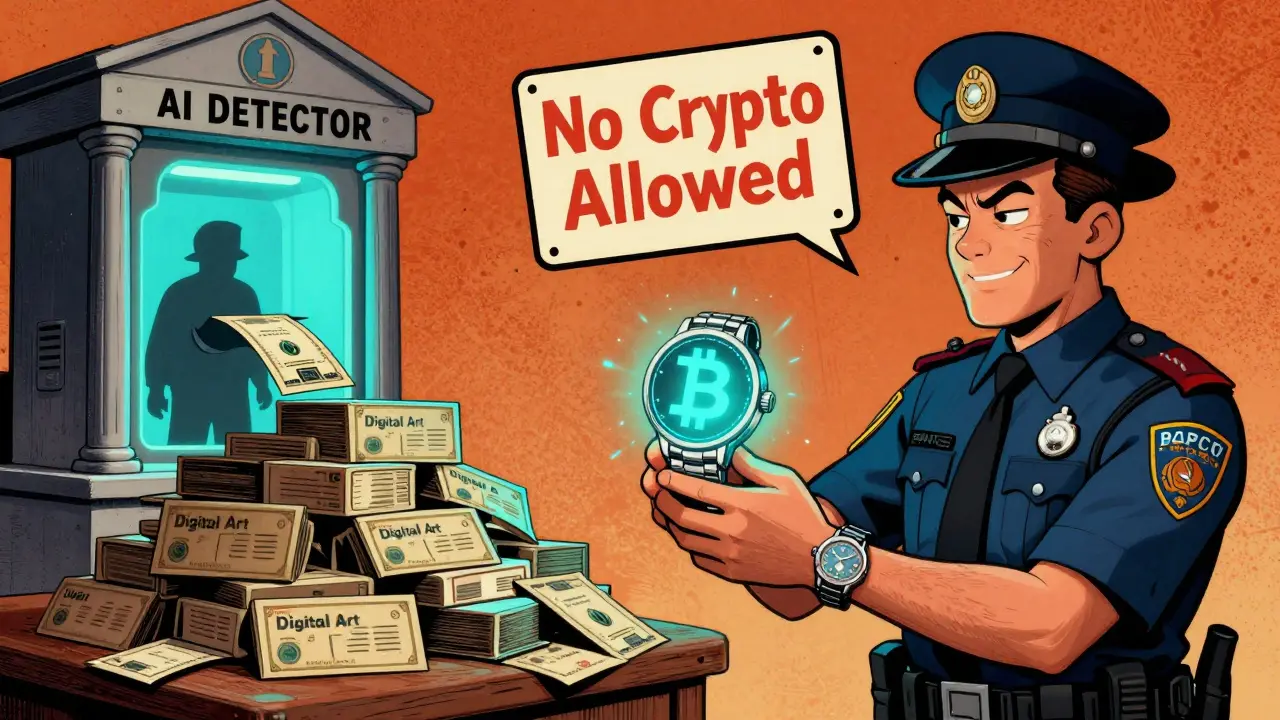
The State Administration of Foreign Exchange (SAFE) investigated 1,247 crypto cases in 2022. They convicted 895 people and fined them over 1 billion RMB ($151 million). They’ve also trained bank employees to flag suspicious transactions. AI systems now scan payment descriptions for keywords like "crypto," "BTC," or "wallet." In January 2023, the People’s Bank of China issued Notice No. 2023-017, explicitly targeting "any form of decentralized transaction." That sounds like a death sentence. But traders adapted again. Now, some are using "crypto barter"-trading USDT for physical goods like electronics, luxury watches, or even gold bars. Others use NFTs as value carriers, selling "digital art" for yuan and claiming it’s just a collectible. It’s not perfect, but it’s working.The Future: Will It Last?
No one thinks this will last forever. But no one thinks it will die either. Binance Research predicts P2P trading will stay between 3-5% of global volume through 2025. HSBC says China can’t fully stop it without crippling its own economy. The IMF called it a "fundamental challenge"-one that no country has solved. What’s clear is this: when you ban something people need, they find a way. In China, that way is through encrypted chats, burner phones, and a quiet, relentless determination to move money on their own terms. The ban didn’t end crypto trading. It just made it more personal. More dangerous. And more resilient than anyone expected.Is it still legal to own Bitcoin in China?
Yes. Chinese courts have ruled that cryptocurrency is legally recognized as virtual property. Owning Bitcoin or Ethereum is not illegal. What’s banned is using banks or formal exchanges to trade it. The law separates ownership from transaction methods, which is why P2P trading continues.
Can Chinese banks detect P2P crypto trades?
Yes, but not perfectly. Banks use AI to scan transaction notes for keywords like "BTC," "USDT," or "crypto." If you send money with a note like "paying for software," it’s less likely to trigger a freeze. Most successful traders avoid any mention of crypto and use small, frequent transfers under 50,000 RMB to stay under the radar.
Why is USDT so popular in China’s P2P market?
USDT is pegged to the U.S. dollar, so its value doesn’t swing like Bitcoin. This makes it ideal for trading-buyers and sellers know exactly what they’re getting. It’s also easier to move across borders without triggering capital control alerts. Most P2P trades in China happen in USDT, not Bitcoin or Ethereum.
How do traders avoid getting caught?
They use a mix of tactics: VPNs to access foreign platforms, burner phones for communication, non-Chinese email accounts for wallets, and Alipay/WeChat Pay transfers with no crypto-related labels. Many split large trades into dozens of small ones under 50,000 RMB. Some even use NFTs or physical goods as intermediaries to disguise value transfers.
What happens if you get caught trading crypto in China?
Penalties vary. Most first-time offenders face bank account freezes and fines up to 100,000 RMB ($14,000). Repeat offenders or those involved in large transfers can face criminal charges. In 2022, over 895 people were convicted, with fines totaling 1.07 billion RMB. But arrests are rare-enforcement focuses on freezing funds and shutting down groups, not jailing individuals.
Derek Lynch
March 16, 2026 AT 02:25Let me tell you something real: this isn't about crypto. It's about autonomy. When a government tells you you can't move your own money, people don't just obey-they innovate. The fact that this underground network is still thriving after years of pressure? That's human resilience in action. No app, no law, no AI can erase that drive. This is the raw, unfiltered version of financial freedom. And honestly? It's beautiful to watch.
They're not gambling. They're building a parallel economy. One that doesn't need permission.
Forget Bitcoin. This is about the right to transact without surveillance. And China's citizens? They're winning.
shreya gupta
March 17, 2026 AT 08:31How quaint. You call this resilience. I call it delusion. The Chinese state has more than enough resources to crush this-eventually. The fact that it hasn’t yet is not a victory. It’s a bureaucratic delay. These traders are playing Russian roulette with their bank accounts, their careers, their freedom. And you’re calling it heroic?
Wake up. This isn’t a revolution. It’s a slow-motion implosion.
Ross McLeod
March 18, 2026 AT 00:55Let’s not romanticize this. The data is clear: 38.7% of users report bank freezes. That’s not a feature-it’s a systemic failure. People are risking everything for a currency that has no intrinsic value, traded via encrypted chats with strangers who could be cops, scammers, or both. The fact that this persists speaks less to innovation and more to desperation.
And let’s not forget: USDT is not money. It’s a promise. A promise backed by a company in the Cayman Islands that has no legal obligation to honor it. So you’re not moving wealth-you’re moving faith. And faith gets you nothing when the blockchain goes dark and your Alipay account is permanently locked.
This isn’t a workaround. It’s a trap dressed up as a solution. The government knows this. That’s why they don’t bother arresting anyone-they just freeze accounts and wait for the panic to set in.
Sarah Zakareckis
March 18, 2026 AT 04:25Y’all are missing the real story here. This isn’t just about crypto-it’s about financial literacy in a post-digital world. These traders are *learning* how to navigate capital controls, anti-money laundering systems, and blockchain infrastructure without formal training. They’re becoming self-taught experts in distributed ledger tech, fiat-to-crypto arbitrage, and risk mitigation. That’s not underground activity-that’s grassroots financial education.
And guess what? The next generation of global fintech leaders? They’re coming out of WeChat groups in Chengdu and Shenzhen. This is the future of decentralized finance. Not Wall Street. Not Binance. Not Coinbase. *Them.*
Stop calling it a loophole. Call it a curriculum.
Heather James
March 19, 2026 AT 04:49USDT is the real MVP. No capes. No drama. Just stable. And that’s all people need.
Marie Vernon
March 19, 2026 AT 16:23I love how this shows that people will always find a way when they’re locked out. It’s not just China-this is global. Look at Venezuela, Argentina, Nigeria. The same patterns. Same apps. Same desperation. Same ingenuity.
What’s beautiful is that none of this was planned. No CEO. No VC. Just ordinary people using phones and Wi-Fi to outsmart systems built to control them. It’s poetry. It’s protest. It’s power.
And honestly? The fact that they’re using NFTs as gold bars? Genius. The system thinks it’s catching them. But they’re already three steps ahead.
Arlene Miles
March 21, 2026 AT 01:27You’re all missing the bigger picture. This isn’t about money. It’s about dignity. When you’re told you can’t own your wealth, you don’t rebel with protests-you build a parallel system. That’s what’s happening here.
These traders aren’t criminals. They’re engineers of freedom. They’ve turned surveillance into a game they’ve already won. They split transactions, use burner phones, avoid keywords, and still move billions. That’s not evasion. That’s engineering.
And the government? They’re stuck in 2015 thinking they can ban code. But code doesn’t care about borders. It doesn’t care about laws. It just runs.
This is the quiet revolution. And it’s not coming. It’s already here.
rajan gupta
March 22, 2026 AT 13:42OMG this is the most epic thing I’ve ever read 😭😭😭
Imagine: millions of people, just using WECHAT to outsmart the entire Chinese state. It’s like a movie. A dystopian masterpiece. I’m crying. I’m screaming. I’m sharing this with everyone I know.
They’re not traders. They’re warriors. 🐉⚔️
And USDT? That’s the holy grail. The one ring. The digital gold. The answer to all their prayers. 💎🪙
Someone make a Netflix doc on this. NOW. I need to see this in 4K with orchestral music.
Sarah Hammon
March 24, 2026 AT 00:24i just read this whole thing and honestly i had no idea it was this complex. the part about splitting transactions into under 50k rmb is genius. and the fact that courts still recognize btc as property? that’s wild. i thought it was all banned. wow. i’m impressed by how clever these people are. also the nft barter thing? that’s next level. i never thought about that. thank you for sharing this. it’s eye opening.
Billy Karna
March 24, 2026 AT 01:24There’s a reason this works: China’s financial infrastructure is too centralized to adapt. Banks are slow, rigid, and over-reliant on keyword detection. But humans? Humans are adaptive. They use context, timing, and social trust to bypass systems built for automation.
Consider this: AI scans for "BTC" in transaction notes. So traders use "gift for birthday," "rent payment," "medical expense." But the real trick? They build reputation networks. A seller with 127 positive trades in a WeChat group? That’s more reliable than any bank. Trust is the new blockchain.
And here’s the kicker: this system is self-correcting. Scams happen. But the community purges bad actors fast. No need for regulators. Just karma and feedback.
This isn’t a workaround. It’s a new financial operating system. Built on social trust. Powered by necessity. And it’s more efficient than anything the state has ever created.
Cheri Farnsworth
March 24, 2026 AT 06:49The State Administration of Foreign Exchange has convicted over eight hundred individuals and imposed fines exceeding one billion RMB. This is not a failure of enforcement. It is a demonstration of state power. The fact that P2P trading persists does not indicate weakness-it indicates the system’s capacity to absorb, contain, and neutralize dissent without overt violence. The state does not need to jail everyone. It needs to freeze accounts, instill fear, and wait for attrition.
This is not rebellion. It is a slow bleed. And the state is winning.
Gene Inoue
March 25, 2026 AT 14:56Let’s be real. These people aren’t heroes. They’re suckers. They’re risking everything for a digital token that’s backed by nothing. They’re using Alipay to pay strangers for crypto that could vanish tomorrow. They’re not moving wealth-they’re gambling with their life savings.
And the worst part? They think they’re smart. They’re not. They’re just desperate. And desperation makes people stupid.
Stop glorifying this. It’s not innovation. It’s financial suicide with a VPN.
Ricky Fairlamb
March 26, 2026 AT 22:24This entire narrative is a distraction. The real story? The Chinese government is using this underground economy as a testing ground for digital surveillance. Every transaction, every WeChat message, every Alipay transfer is being logged, analyzed, and stored. The "freedom" these traders think they have? It’s a honeypot.
They believe they’re anonymous. They’re not. They’re data points in a vast AI-driven financial monitoring system. The moment they trust a "reputation score," they’ve already lost.
And the NFT barter? That’s not clever. That’s a trap. Every NFT minted, every digital "artwork" sold, is a blockchain signature that ties their identity to illicit value transfer. The state doesn’t need to ban crypto. It just needs to wait for them to sign their own confession on the public ledger.
john peter
March 27, 2026 AT 22:59It is an incontrovertible fact that the persistence of peer-to-peer cryptocurrency transactions in contravention of sovereign monetary policy constitutes a fundamental challenge to the legitimacy of state authority over capital flows. The fact that such activity has not only survived but expanded under intensified regulatory scrutiny suggests a systemic failure in the epistemological foundations of centralized financial governance.
One might posit, with reasonable rigor, that the Chinese populace has, through decentralized praxis, reconstructed a form of monetary sovereignty ex nihilo-an act of economic self-determination that renders obsolete the Hobbesian contract between citizen and state. The individual, by virtue of technological access and social trust, has become the sovereign issuer of value.
This is not merely an evasion of regulation. It is a metaphysical reclamation of economic personhood. And in this, the Chinese people have achieved, perhaps unintentionally, the most profound act of political philosophy in the 21st century.
Jessica Beadle
March 28, 2026 AT 20:33USDT is not a currency. It is a financial instrument with a peg that is neither audited nor enforceable. The entire P2P ecosystem is built on a house of cards made of unregulated stablecoins, anonymous wallets, and transactional obfuscation. This is not innovation. This is a regulatory arbitrage that will collapse under its own weight.
Moreover, the notion that this is "resilience" is dangerously naive. The Chinese government has not yet deployed its most powerful tools: facial recognition linked to wallet addresses, blockchain forensics tied to mobile device IDs, and AI-driven behavioral profiling of transaction patterns. When that happens, the entire network will be exposed in real time.
And when it does, those who thought they were clever will be the first to be named, shamed, and fined. This isn’t a revolution. It’s a countdown.