
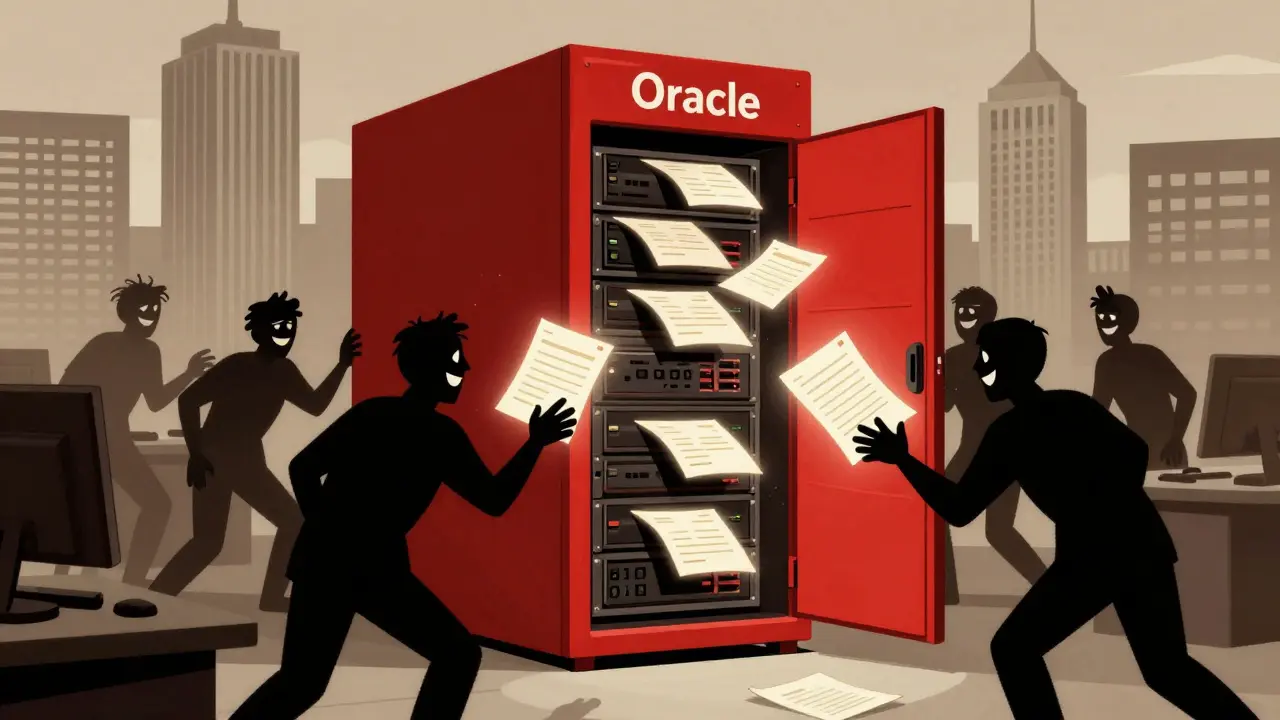
Imagine your company’s entire financial ledger, customer database, and supply chain logic sitting on a server that anyone with an internet connection can access without a password. That is not a hypothetical nightmare scenario for many organizations running Oracle E-Business Suite, which is a comprehensive suite of business applications used by enterprises for resource planning, finance, and human resources management. In October 2025, this exact reality became public knowledge when a critical vulnerability known as CVE-2025-61882, which is a zero-day exploit allowing unauthenticated remote code execution in Oracle E-Business Suite versions 12.2.3 through 12.2.14 was disclosed. This wasn’t just a bug; it was a sophisticated attack chain that turned complex enterprise software into an open door for attackers.
The term "oracle" often conjures images of blockchain oracles-systems that feed real-world data into smart contracts. However, in the context of enterprise security, we are talking about Oracle Corporation’s massive ecosystem of mission-critical software. The risks here are not about manipulating decentralized ledgers but about compromising the centralized systems that run Fortune 500 companies. When we discuss manipulation risks in this context, we refer to the ability of threat actors to alter data, execute unauthorized commands, and extort organizations by threatening to leak sensitive information.
The Anatomy of CVE-2025-61882
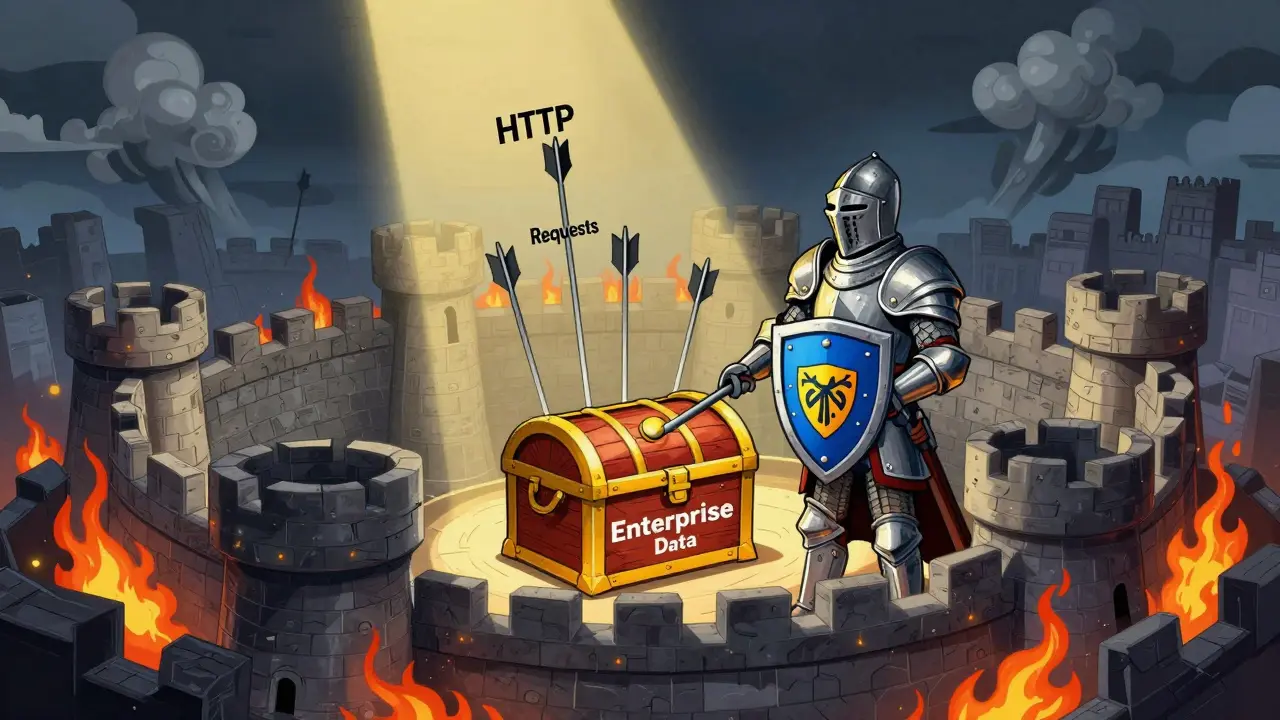
To understand why this vulnerability is so dangerous, you have to look at how it works. Most security flaws require an attacker to trick a user into clicking a link or guess a password. CVE-2025-61882, which is a pre-authenticated remote code execution vulnerability affecting Oracle Concurrent Processing, bypasses all of that. It targets the Oracle Concurrent Processing, which is the background job scheduler component within Oracle E-Business Suite responsible for running batch processes and reports. Attackers could send HTTP requests to vulnerable servers and gain full control without any credentials.
What makes this particularly alarming is the complexity involved. Security researchers at WatchTowr Labs, which is a cybersecurity research firm specializing in threat analysis and vulnerability disclosure discovered that exploiting this flaw required chaining together at least five distinct security bugs. This isn’t a simple mistake in one line of code. It represents a sophisticated understanding of the system’s architecture. The researchers described the proof-of-concept exploit as having "dangerously fallen from a moving truck," implying that functional exploit code was already circulating in underground markets before the official patch was released.
This incident highlights a broader trend in enterprise software security. Complex systems like Oracle E-Business Suite have huge attack surfaces. Every module, every API endpoint, and every background process is a potential entry point. When these components interact poorly, they create opportunities for advanced persistent threats (APTs) to weave multiple small weaknesses into a devastating attack chain.
A Pattern of Authentication Failures
CVE-2025-61882 did not appear in a vacuum. Throughout 2025, Oracle faced a series of security challenges that pointed to systemic issues in how their products handle authentication. In April 2025, patches were released for Oracle TimesTen In-Memory Database, which is a high-performance relational database designed for low-latency transaction processing, addressing two vulnerabilities (CVE-2025-24970 and CVE-2024-47554) that allowed remote exploitation without user credentials. Later, in July 2025, the Critical Patch Update included nine fixes for Oracle E-Business Suite, three of which were remotely exploitable without authentication.
This pattern suggests that authentication bypass is a recurring theme across Oracle’s portfolio. Whether it’s the database layer, the middleware, or the application suite, attackers are finding ways to skip the login screen entirely. For organizations relying on these systems, this means that traditional perimeter defenses like firewalls are no longer sufficient. If an attacker can reach the service over HTTP, they may not need to break in-they might just walk in.
| Vulnerability ID | Affected Product | Exploitation Type | Authentication Required? | Disclosure Date |
|---|---|---|---|---|
| CVE-2025-61882 | E-Business Suite | Remote Code Execution | No | October 4, 2025 |
| CVE-2025-24970 | TimesTen Database | Remote Exploitation | No | April 2025 |
| CVE-2024-47554 | TimesTen Database | Remote Exploitation | No | April 2025 |
| Multiple (July CPU) | E-Business Suite | Various | 3 out of 9 No | July 2025 |

Real-World Impact: Data Extortion Campaigns
The most chilling aspect of CVE-2025-61882 is its use in active attacks. Before Oracle issued its emergency Saturday advisory, threat actors had already exploited the vulnerability in the wild. Reports indicated that these exploits were tied to data extortion campaigns. Attackers would compromise systems, steal sensitive data, and then demand ransom payments under threat of leaking the information publicly.
This timeline raises serious questions about responsible disclosure. Did the attackers discover the flaw independently? Or was there insider knowledge that leaked before the patch was ready? Regardless of the source, the result was the same: production systems were compromised while organizations were still unaware of the risk. For businesses running affected versions of Oracle E-Business Suite, the window between exposure and patching was dangerously narrow.
The impact extends beyond immediate financial loss. A breach of this magnitude can damage reputation, lead to regulatory fines, and erode customer trust. For government organizations and large corporations using Oracle systems, the blast radius is significant. As Oracle itself noted, the number of affected installations is not "small." This means thousands of organizations were potentially exposed to complete system compromise.
Defensive Strategies for Enterprise Organizations
If you manage IT infrastructure that includes Oracle products, what should you do? First, immediate patching is non-negotiable. Any system running Oracle E-Business Suite versions 12.2.3 through 12.2.14 must be updated to the latest patched version as soon as possible. Delaying updates leaves you vulnerable to automated scanners and manual attackers alike.
Second, implement network segmentation. Not all Oracle systems need to be accessible from the public internet. By isolating critical databases and application servers behind internal networks, you reduce the attack surface. Even if an attacker finds a vulnerability, they cannot reach it if it is not exposed to external traffic.
Third, enhance monitoring capabilities. Look for unusual HTTP requests to Oracle endpoints, especially those originating from unexpected IP addresses. Tools provided by security firms like WatchTowr Labs can help identify signs of prior exploitation. You should also maintain a comprehensive asset inventory to ensure you know exactly where every instance of Oracle software is deployed. Shadow IT-untracked installations of enterprise software-is a major blind spot that attackers love to exploit.
The Future of Oracle Security
Looking ahead, Oracle faces continued scrutiny from both security researchers and malicious actors. The complexity of their enterprise stack, which spans databases, middleware, and applications, will always present challenges. Each new feature adds potential vulnerabilities. Each integration point creates another vector for attack.
Organizations must accept that regular quarterly patches may not be enough. Emergency alerts like the one for CVE-2025-61882 will continue to happen. Your security strategy needs to be agile, capable of responding to sudden threats with minimal downtime. This means having robust backup plans, tested incident response procedures, and a culture of security awareness among IT staff.
Ultimately, the lesson from 2025 is clear: complexity breeds vulnerability. As enterprises rely more heavily on integrated software ecosystems, the cost of failure increases. Protecting these systems requires more than just buying the right tools-it demands a proactive approach to identifying and mitigating risks before they become headlines.
What is CVE-2025-61882?
CVE-2025-61882 is a critical security vulnerability in Oracle E-Business Suite versions 12.2.3 through 12.2.14. It allows unauthenticated attackers to execute remote code via HTTP requests, potentially leading to complete system compromise without needing login credentials.
Which Oracle products are affected by recent authentication bypass vulnerabilities?
Recent vulnerabilities have affected Oracle E-Business Suite, Oracle TimesTen In-Memory Database, and Oracle Commerce. These products have seen multiple instances of remote exploitation without authentication throughout 2025.
How can organizations protect themselves from Oracle security threats?
Organizations should immediately patch affected systems, implement network segmentation to limit exposure, enhance monitoring for suspicious activity, and maintain a comprehensive inventory of all Oracle software installations.
Was CVE-2025-61882 exploited in the wild before disclosure?
Yes, security experts confirmed that CVE-2025-61882 was actively exploited in data extortion campaigns before Oracle issued its official security alert, indicating that threat actors had advance knowledge of the vulnerability.
Why is Oracle E-Business Suite considered a high-value target?
Oracle E-Business Suite is widely adopted by Fortune 500 companies and government organizations. It handles critical business functions including finance, HR, and supply chain, making it attractive for attackers seeking valuable data or leverage for extortion.