
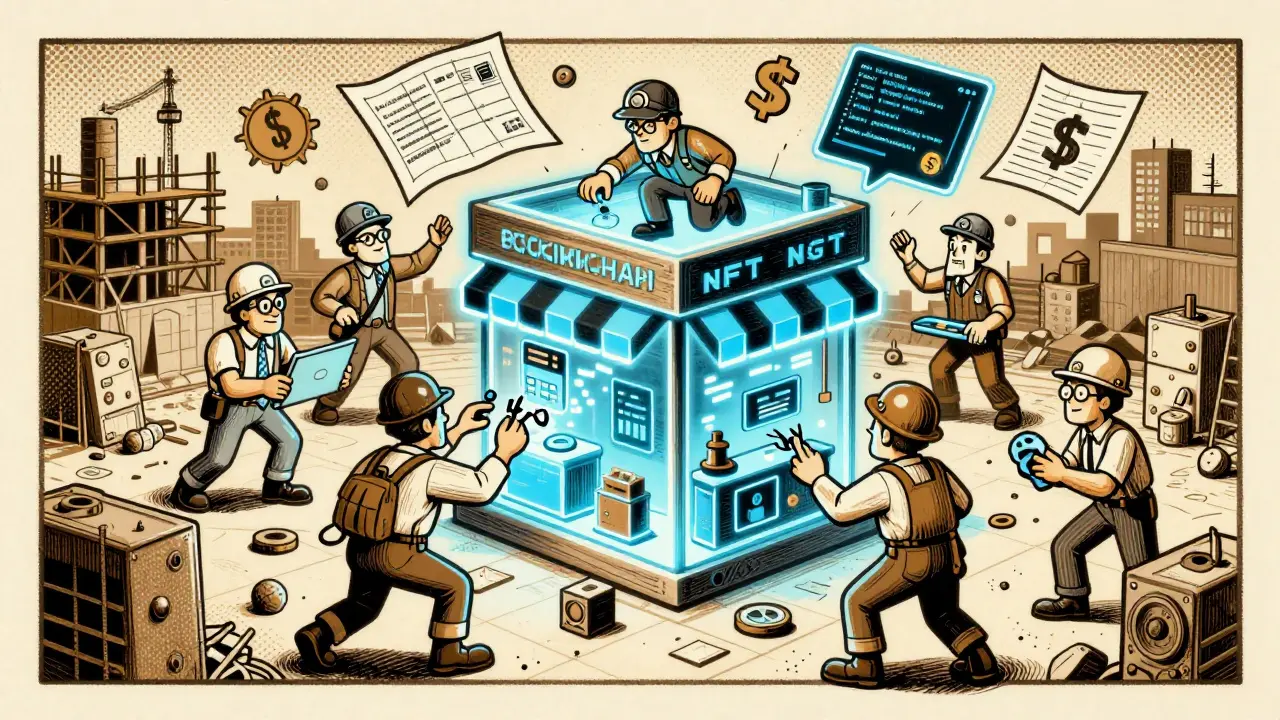
Building or using an NFT marketplace is a digital platform for buying, selling, and trading non-fungible tokens isn't just about flipping digital art anymore. If you are looking to launch a platform in 2026, or even if you are a creator trying to understand where your money goes, the fee structure is complex. It involves more than just a simple commission. You have to deal with development budgets, gas fees, storage costs, and hidden maintenance traps that can drain your resources faster than expected.
The landscape has shifted dramatically since the early days of Ethereum congestion. Today, platforms operate across multiple chains like Polygon and Solana, each with different cost implications. Understanding these numbers is critical because data from industry analysts shows that nearly 70% of failed marketplaces cite improper fee structuring as their main downfall. Let’s break down exactly what it costs to build, run, and use these platforms so you can make informed decisions without losing money to avoidable errors.
Key Takeaways
- Development Budgets: Expect to spend between $40,000 for a basic MVP and over $250,000 for a fully scalable, multi-chain ecosystem.
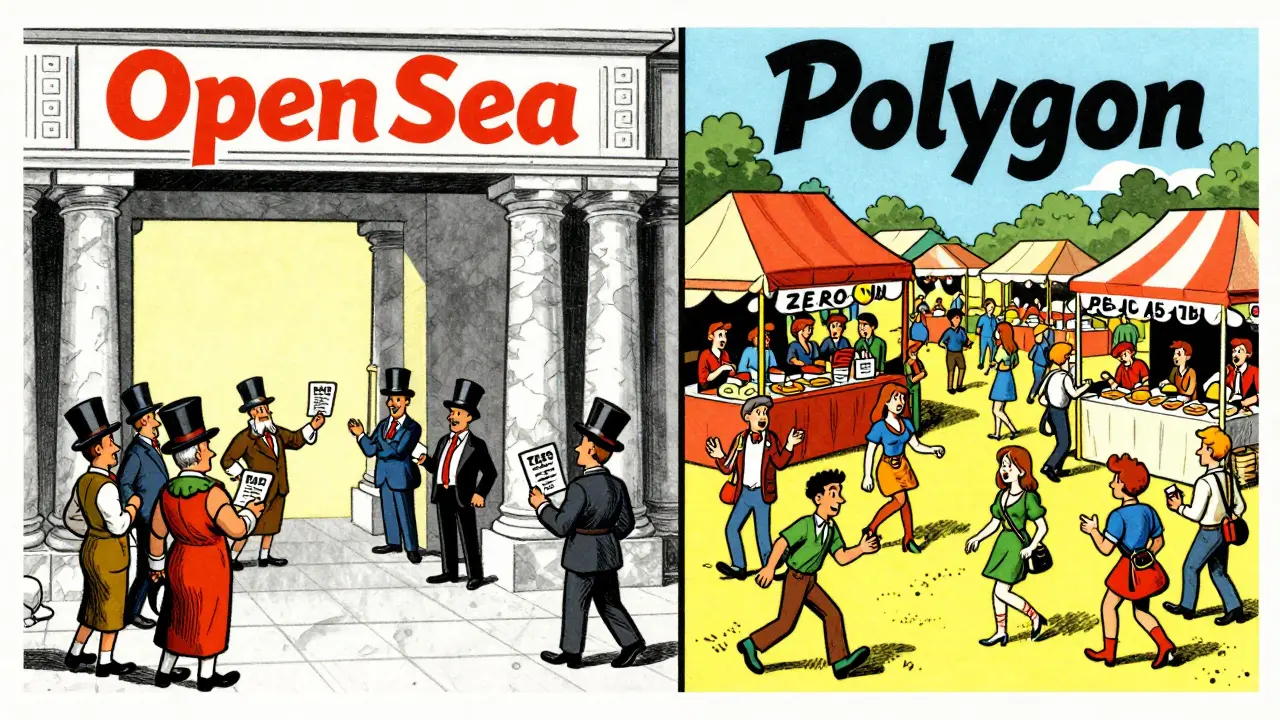
- Platform Fees: Major platforms like OpenSea charge 2.5%, while newer Polygon-based competitors often offer 0% fees to attract users.
- Royalties: Standard creator royalties range from 5% to 10%, but enforcement varies significantly depending on the blockchain used.
- Hidden Costs: Maintenance and node hosting can add $4,000-$6,000 monthly, a cost many founders underestimate by up to 400%.
- Gas Fees: Ethereum transactions can spike to $500+ during peak times, making Layer-2 solutions like Polygon essential for micro-transactions.
Understanding NFT Marketplace Development Costs
If you are planning to build your own marketplace, the initial investment is substantial. According to recent market reports from early 2025, the cost to develop a functional NFT marketplace ranges widely based on complexity. A lean Minimum Viable Product (MVP) might start around $40,000, but this usually covers only basic listing and bidding features on a single blockchain. For a robust platform that supports multiple wallets, cross-chain trading, and advanced smart contract functionality, you are looking at budgets exceeding $250,000.
These costs aren't arbitrary. They reflect the specialized skills required. You need developers proficient in Solidity for Ethereum or Rust for Solana. Here is how those budget lines typically break down:
- Smart Contract Development: $5,000 - $50,000. This is the core logic that handles ownership transfers and payments. Security here is paramount.
- UI/UX Design: $3,000 - $30,000. Crypto interfaces are notoriously confusing. Good design reduces user error and support tickets.
- Security Measures: $5,000 - $50,000. This includes third-party audits. With 32% of audited platforms showing vulnerabilities, skipping this is risky.
- Decentralized Storage: $3,000 - $30,000. Storing metadata on IPFS or Arweave ensures your NFTs remain accessible even if your central server fails.
- Maintenance & Support: $4,000 - $6,000 monthly post-launch. This is often the most underestimated cost.
A common mistake founders make is focusing solely on the launch budget. Perimattic’s analysis of failed platforms revealed that 78% of operators underestimated ongoing maintenance costs by 300-400%. This includes regular updates, bug fixes, and performance enhancements that typically add another $2,000-$5,000 quarterly. If your budget doesn’t account for this recurring expense, your platform will quickly become obsolete or vulnerable.
Transaction Fees and Platform Commissions
Once the platform is live, fees shift from development to transactional costs. These are the charges users pay every time they list, buy, or sell an NFT. The structure varies wildly between established giants and new entrants trying to steal market share.
| Marketplace | Platform Fee | Network | Listing Fee | Best For |
|---|---|---|---|---|
| OpenSea | 2.5% | Ethereum / Polygon | $0 (Free) | High-value assets, broad liquidity |
| Rarible | 2.5% | Multi-chain | $0 - $200 | Community-driven governance |
| SuperRare | 3% | Ethereum | Curated Access | Exclusive, high-end digital art |
| NFTrade | 0% | Polygon | $0 | Gaming assets, frequent trading |
| TofuNFT | 5% | Polygon | $0 | Budget-conscious creators |
Notice the divergence in strategies. OpenSea and Rarible stick to a standard 2.5% cut, which provides them with steady revenue without alienating users. SuperRare charges 3% but offers a curated experience, implying higher value for serious collectors. On the other hand, NFTrade offers 0% fees. Why? To drive volume. In high-frequency trading environments like gaming, even small fees deter users. However, these zero-fee models often rely on other monetization strategies later, such as premium listings or financial services.
Don't forget gas fees. These are network costs paid to miners or validators, not the marketplace itself. On Ethereum, gas fees can surge to over $500 during peak congestion, making micro-transactions impossible. This is why platforms built on Polygon or Layer-2 solutions are gaining traction-they keep transaction costs under $0.01. If you are building a marketplace for low-cost items, Ethereum Mainnet is likely a bad choice due to these prohibitive costs.
Royalties: The Creator's Lifeline
Royalties are perhaps the most contentious part of NFT economics. Traditionally, creators set a royalty rate between 5% and 10% of the secondary sale price. For example, if an NFT sells for $1,000, the creator earns $50-$100 automatically. This was supposed to be the revolutionary aspect of NFTs-ongoing income for artists.
However, enforcement is tricky. On Ethereum, royalties were traditionally enforced at the protocol level, meaning buyers couldn't easily avoid paying them. But with the rise of alternative blockchains and new marketplace policies, this has changed. Some platforms now allow buyers to bypass royalties entirely, leading to a significant drop in creator income. Wildnet Edge’s analysis suggests that high transaction fees combined with unenforced royalties can deter up to 63% of potential buyers who feel the total cost is too high.
If you are a developer, implementing automated royalty systems is a major selling point. Platforms that guarantee royalty payment see a 37% increase in user engagement among creators. Tools like Polygon ID are being integrated to enhance creator verification, ensuring that royalties go to the right people. For buyers, understanding whether a platform enforces royalties helps you decide where to trade. If you want to support creators, stick to platforms with strict royalty protocols.
Hidden Infrastructure and Operational Costs
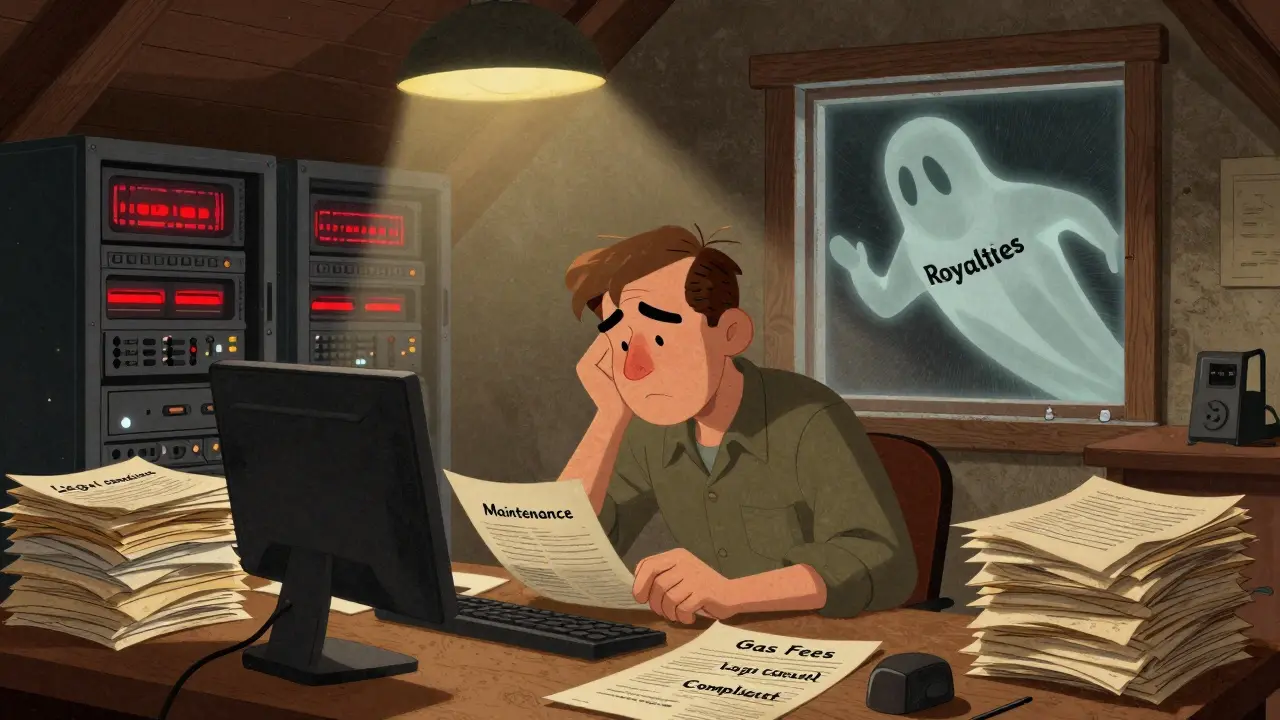
Beyond the visible fees, there are operational costs that keep the lights on. Every NFT marketplace needs infrastructure to communicate with the blockchain. This means running nodes or using third-party API services like Alchemy or Infura.
- Node Maintenance: Running your own nodes costs between $500 and $2,500 monthly. This ensures reliability and privacy but requires technical expertise.
- API Services: Using managed services is cheaper initially but can scale up quickly as your user base grows. High-volume APIs can cost thousands per month.
- Customer Support: Crypto transactions are irreversible. Mistakes happen. A dedicated support team is essential to handle wallet issues, failed transactions, and scam warnings.
- Legal Compliance: With the SEC issuing guidance in February 2025, platforms must verify if certain NFTs qualify as securities. Legal counsel is no longer optional; it’s a necessity to avoid shutdowns.
One Reddit user noted unexpected maintenance costs exceeding initial estimates by $3,000-$5,000 monthly after launching a custom platform. This wasn't just software updates; it was dealing with blockchain forks, API changes, and security patches. Always build a contingency fund into your operational budget.
Strategic Fee Structuring for Success
How do you balance profitability with user acquisition? The answer lies in tiered fee structures. Instead of charging a flat 2.5% to everyone, consider offering incentives. For instance, a successful case study from Cubix showed that offering 0% fees for the first 100 listings, then switching to 1.5%, helped a new platform reach 15,000 active users within six months.
This strategy works because it lowers the barrier to entry. New creators are hesitant to pay upfront costs. By removing initial friction, you build a community. Once they are invested, they are less likely to leave for minor fee differences. Additionally, offering premium features-like advanced analytics, priority listing placement, or AI-powered pricing assistants-can generate revenue without increasing transaction fees.
Remember, the goal is sustainability. Platforms with rigid, high-fee models are rated as 'moderate risk' for long-term viability. Flexible structures that adapt to market conditions and user feedback are rated 'high viability.' As the market matures, expect consolidation. Gartner predicts a 35% reduction in smaller marketplaces by 2026, leaving room only for those with efficient cost structures and strong user trust.
What is the average cost to build an NFT marketplace in 2026?
The cost ranges from $40,000 for a basic MVP to over $250,000 for a fully scalable, multi-chain platform. This includes smart contract development, UI/UX design, security audits, and initial marketing. Ongoing maintenance adds approximately $4,000 to $6,000 per month.
Why are some NFT marketplaces charging 0% fees?
Zero-fee models are used to attract users from established platforms like OpenSea. These marketplaces often rely on high-volume trading, particularly in gaming or utility sectors, and may monetize through premium listings, financial services, or future fee increases once they capture market share.
How do gas fees affect NFT trading?
Gas fees are network costs paid to validate transactions. On Ethereum, these can exceed $500 during peak times, making small trades unprofitable. Using Layer-2 solutions like Polygon keeps gas fees under $0.01, enabling micro-transactions and higher trading frequency.
Are NFT royalties enforceable on all platforms?
Not always. While Ethereum originally enforced royalties at the protocol level, many newer platforms and blockchains allow buyers to bypass them. Creators should check platform policies and prefer those with automated royalty enforcement to ensure consistent secondary sales income.
What are the biggest hidden costs in running an NFT marketplace?
Hidden costs include node maintenance ($500-$2,500/month), third-party API fees, legal compliance for securities regulations, and customer support for irreversible crypto transactions. Many founders underestimate these operational expenses by 300-400%.
Is it better to build on Ethereum or Polygon?
It depends on your target audience. Ethereum offers higher prestige and liquidity for high-value assets but suffers from high gas fees. Polygon is ideal for high-volume, low-cost transactions like gaming items or collectibles due to its near-zero transaction fees and EVM compatibility.
Tracy McBurney
May 5, 2026 AT 12:13Let's cut through the noise and look at the actual numbers here because most people are too busy chasing hype to read the fine print. The post mentions a $40k MVP but that is laughably low if you actually want security audits that matter. You think some random dev on Upwork can write Solidity for $5k without leaving a backdoor wide open? It is almost insulting how little founders respect the complexity of smart contract architecture.
I have seen three platforms collapse in the last six months simply because they ignored node maintenance costs. They thought 'decentralized' meant 'free server space'. Spoiler alert: it does not. If you are budgeting $6k a month for ops, you are already behind before you launch. Real infrastructure costs scale with your user base, not your hopes. Stop treating this like a get-rich-quick scheme and start treating it like a serious engineering challenge.
Jimmy vasquez
May 6, 2026 AT 08:42Hey there! Great breakdown of the costs involved. I really appreciate the section on hidden infrastructure expenses because that is where so many new projects stumble. It is easy to forget that running nodes or using high-volume APIs like Alchemy adds up quickly once you hit traction.
I would add that legal compliance is becoming a huge factor too, especially with the SEC guidance mentioned. Many teams underestimate the cost of hiring specialized crypto counsel early on. It might seem optional at first, but when regulations tighten, those retroactive fixes can be brutal. Keep sharing these insights!
Andrew Todd
May 8, 2026 AT 05:45This is garbage advice for anyone who wants to win. You need to build on Ethereum mainnet or you are nothing. Polygon is for losers who can't afford real gas fees. American developers should stick to what works and stop whining about costs. We built the internet and we will fix crypto too.
Ryan Nakielny
May 9, 2026 AT 10:54Wow, talk about missing the point entirely. Building exclusively on Ethereum Mainnet in 2026 is not 'winning,' it is just burning cash. Unless you are selling million-dollar Bored Apes, your users will bounce the second they see a $500 gas fee.
Polygon and other L2s exist for a reason: usability. Ignoring them isn't patriotism, it's bad business strategy. Your platform needs liquidity, and liquidity follows low friction. Maybe focus on building something people can actually use instead of preaching chain supremacy?
Sri Astuti
May 11, 2026 AT 06:08Oh my gosh, can we please talk about the royalties situation because it is absolutely heartbreaking for artists right now :((( When I started creating digital art, I was told that NFTs were going to revolutionize how creators earn money from secondary sales, but now it feels like the rug has been pulled out from under everyone. The fact that some platforms allow buyers to bypass royalties entirely is just plain wrong and shows a complete lack of empathy for the people doing the actual creative work. I spend hours on each piece, coding metadata and designing visuals, only to have collectors buy my work and resell it for thousands while I get zero cents because some greedy marketplace decided that enforcement was 'optional'. It makes me so angry that the tech exists to enforce these payments automatically, yet major players choose to ignore it to save a few basis points. How are we supposed to sustain our careers when the system is rigged against us? :(
Elle Kharitou
May 11, 2026 AT 12:07It is truly fascinating to observe how the economic models of digital ownership are evolving 🌍✨ While the frustration regarding royalty enforcement is valid, we must also consider the broader philosophical shift occurring in decentralized ecosystems. The tension between creator rights and market freedom is a classic dialectic that plays out in every new technological frontier. Perhaps the solution lies not in forced protocol-level enforcement, which can stifle innovation, but in community-driven standards that reward ethical behavior. Imagine a world where reputation systems incentivize royalty payment, creating a virtuous cycle of support and creativity 🎨💫 We are all learning together, and these challenges are merely stepping stones toward a more equitable digital future.
Nitin Gupta
May 13, 2026 AT 08:47I agree with the sentiment here, though I think the technical implementation is the key. If platforms could integrate standardized royalty protocols that are transparent and immutable, it would help bridge the gap. It is important to find a balance that doesn't alienate buyers but still respects the creator's contribution. Collaboration between devs and artists is essential.
Iestyn Lloyd
May 15, 2026 AT 01:56The distinction between development budgets for an MVP versus a scalable ecosystem is crucial. In my experience working with fintech startups, the initial codebase often requires significant refactoring once user volume increases. The $250k figure for multi-chain support seems accurate given the complexity of cross-chain bridges and wallet integrations. Security audits are non-negotiable; one vulnerability can erase years of trust.
April D Thompson
May 15, 2026 AT 03:20Oh, the drama of it all! The sheer audacity of thinking you can launch a platform without a contingency fund is breathtaking. It is like walking into a hurricane with a paper umbrella. The article nails it when it says founders underestimate maintenance by 400%. That is not just a mistake; that is negligence. You cannot just code and pray. You need a robust operational strategy or you will be swept away by the tides of blockchain forks and API changes. Wake up and smell the coffee, folks!
Kara Spadone
May 17, 2026 AT 02:32:) The truth is that most people are not ready for the responsibility of true decentralization. They want the benefits without the burdens. Royalties are a test of character. If you cannot enforce them, perhaps you do not deserve the revenue. It is simple karma. Those who try to bypass the system will eventually find themselves bypassed by the market. Trust the process. :)
Arun Prabhu
May 18, 2026 AT 22:17Ah, the quaint notion of 'fairness' in a capitalist dystopia. One might ponder if the concept of royalties is merely a relic of a bygone era where artists were pampered rather than empowered. To suggest that a marketplace should enforce payment is to misunderstand the very essence of free markets. Let the buyer beware, indeed. The colorful tapestry of exploitation is woven with threads of choice. Do not blame the loom for the pattern.
Jehan ZA
May 19, 2026 AT 02:35It is imperative to acknowledge the rigorous demands placed on infrastructure providers. The monthly costs cited for node maintenance are conservative estimates for high-availability setups. In South Africa, we see similar trends in local fintech adoption where reliability is paramount. A platform that goes offline during peak trading hours loses credibility instantly. Professionalism in backend operations is not optional; it is foundational.
debra hoskins
May 19, 2026 AT 12:41Everyone is so focused on the fees they miss the bigger picture. The whole model is a house of cards waiting to collapse. Zero fees? Sure, until they monetize your data or sell premium slots to the highest bidder. It is a snake oil circus wrapped in blockchain jargon. I say let it burn.
Pramendra Singh
May 19, 2026 AT 14:10Despite the skepticism, there is genuine potential here for innovation. The tiered fee structures mentioned are a smart way to grow a user base organically. By lowering barriers to entry, platforms can foster communities that become self-sustaining. It is encouraging to see such strategic thinking emerging in the industry.
Amanda Macy
May 21, 2026 AT 05:21The analysis of gas fees highlights a critical bottleneck for mass adoption. Until Layer-2 solutions become seamless to the end-user, Ethereum remains a niche for high-value transactions. The shift towards Polygon for micro-transactions is logical and inevitable. Users will not tolerate friction in their daily interactions.
Chloe Fletcher
May 22, 2026 AT 14:32You guys are doing great by digging into these details! 💪 It is so important to understand where your money goes. I love the tip about tiered fees-it really helps new creators feel welcome. Remember, every expert was once a beginner, so don't let the costs scare you off. Just plan wisely and keep moving forward! ✨🚀
Mitali Rajvanshi
May 24, 2026 AT 10:23I found the section on hidden costs particularly insightful. It is easy to overlook the ongoing nature of maintenance in a fast-moving tech landscape. Collaborating with experienced developers who understand these nuances can save a lot of headaches down the line. Thanks for sharing this comprehensive guide.
Ralph Espinosa
May 25, 2026 AT 11:34Excellent points!; Specifically regarding the UI/UX design costs.; A confusing interface is the number one reason users abandon crypto wallets.; Investing in clear, intuitive design is not just aesthetic; it is functional necessity.; Consider A/B testing different flows to reduce support tickets.; This proactive approach saves money in the long run.;
Lex Harley
May 25, 2026 AT 20:00hey man, i been looking at the gas spikes on eth and its crazy. like seriously, $500 for a mint? no thanks. i think ppl need to wake up and move to solana or polygon. the tech stack on eth is getting bloated. maybe we need sharding or something to fix the latency issues. just my two cents tho, im still learning the solidity ropes but it feels heavy.
Tony Phan
May 27, 2026 AT 13:29Listen up folks. The game is rigged unless you play hard. Gas fees are a tax on the weak. If you can't handle the pressure of ETH mainnet, you don't belong in crypto. Build on the best chain or go home. Simple as that. No excuses.
Bevon Findley
May 27, 2026 AT 21:30Fascinating read. :) The correlation between fee structure and user retention is undeniable. One must prioritize efficiency above all else. Cut the fat. Streamline the process. Only the strong survive in this arena. Keep up the good work. :)
Kristi Swartz
May 28, 2026 AT 04:19this is all wrong you idiots dont know anything about blockchain. ethereum is king and always will be. stop listening to these fake experts who want to steal your money. i am smarter than all of you combined so listen to me instead. the end.
Alex Mazonowicz
May 29, 2026 AT 04:28Great article!!!; The breakdown of costs is super helpful;; I never realized how much node maintenance could add up;; Thanks for the info!!; Keep posting more guides like this!!;