
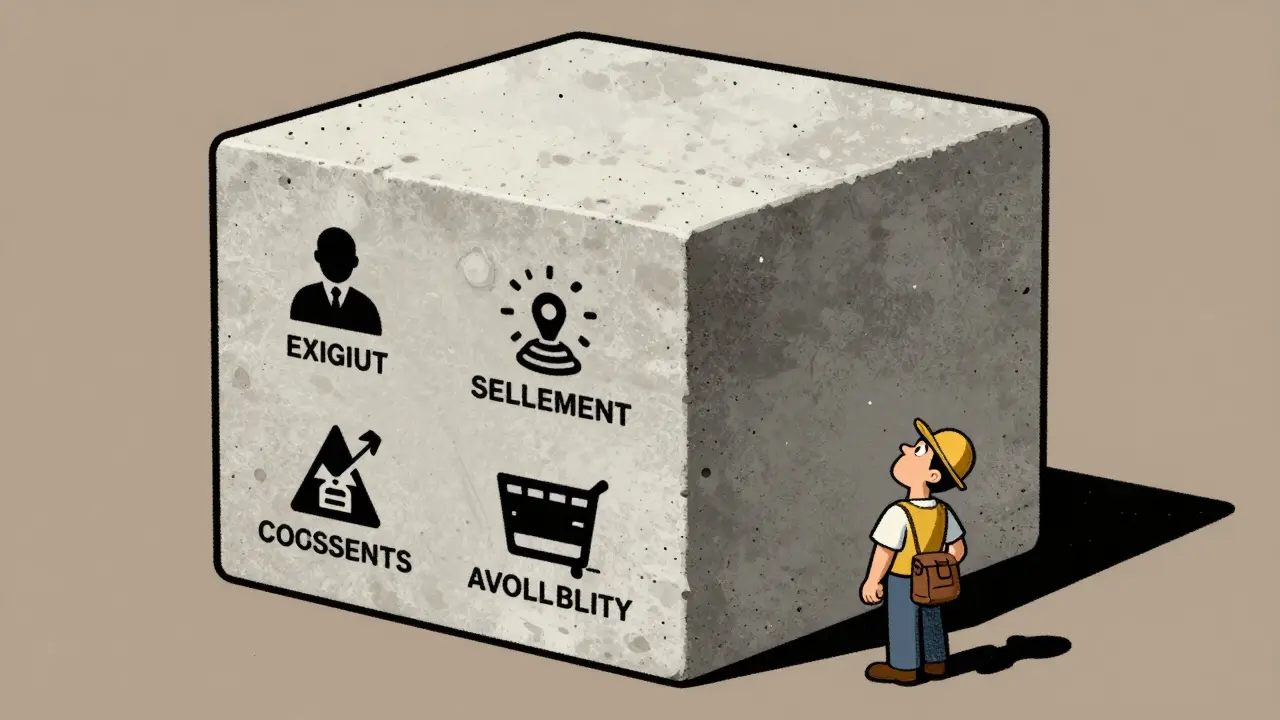
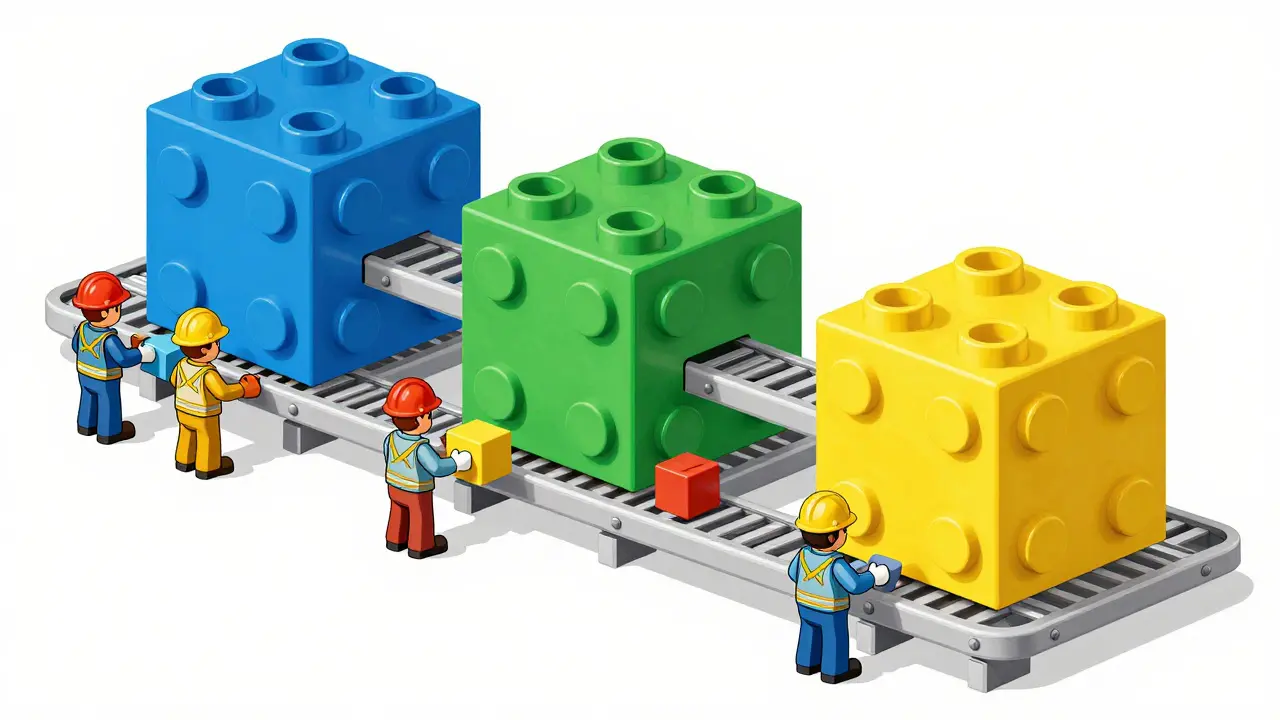
Imagine building a house where the foundation, plumbing, electrical wiring, and interior design are all poured into a single, massive block of concrete. That is essentially how early Monolithic Blockchains are blockchain architectures where a single layer handles execution, settlement, consensus, and data availability simultaneously work. Now imagine a construction site where specialized teams handle each part independently, passing materials between them efficiently. This is the promise of Modular Blockchains are blockchain architectures that separate core functions like execution, consensus, and data availability into distinct, interoperable layers.
If you have been following crypto news, you have likely heard these terms thrown around constantly. But what do they actually mean for your projects, investments, or understanding of the technology? The debate isn't just academic; it defines the future speed, cost, and security of the entire digital economy. As we move through 2026, choosing between these two architectural philosophies is one of the most critical decisions in Web3 development.
The Core Difference: All-in-One vs Specialized Layers
To understand why this split matters, we need to look at the four main jobs every blockchain must perform:
- Execution: Processing transactions and running smart contracts.
- Settlement: Finalizing transactions so they cannot be reversed.
- Consensus: Agreeing on the order and validity of those transactions.
- Data Availability: Ensuring transaction data is accessible to anyone who needs to verify it.
In a Monolithic Architecture, one network does all four. Think of Bitcoin is the first decentralized cryptocurrency launched in 2009 by Satoshi Nakamoto. When you send Bitcoin, the same nodes that validate the transaction also store the history and agree on its finality. It is simple, secure, but hard to scale because every node must process every single transaction.
In a Modular Architecture, these tasks are split up. One chain might focus only on security and settlement (like Ethereum is a programmable blockchain platform created by Vitalik Buterin in 2015), while other layers (Layer 2s) handle the actual transaction execution. This allows different parts of the system to grow independently without breaking the whole thing.
Monolithic Blockchains: The Powerhouse Approach
Monolithic chains prioritize simplicity and raw performance within a single ecosystem. The biggest player here today is Solana is a high-performance blockchain platform known for its high throughput and low transaction costs.
Solana uses a unique combination of Proof-of-History and Proof-of-Stake to sequence transactions before validating them. This allows it to achieve incredible speeds-often cited around 65,000 transactions per second (TPS) with finality in just a few seconds. For users, this means near-instant payments and micro-transactions that are impossible on slower networks.
However, there is a catch. Because every validator node must process everything, the hardware requirements are steep. Running a full validator on Solana requires significant resources, including high-speed NVMe storage and gigabit internet connections. This centralization pressure is a common criticism: if only powerful entities can run nodes, is the network truly decentralized?
Additionally, monolithic systems can struggle with stability under extreme load. In 2022, Solana experienced several network outages totaling over 40 hours of downtime. When the entire system relies on one integrated stack, a bottleneck in one area can bring down the whole house.
Modular Blockchains: The Scalability Solution
Modular blockchains emerged as a response to the scalability limits of early monolithic designs. Ethereum is the prime example. Instead of trying to cram everything onto Layer 1, Ethereum researchers proposed a "rollup-centric roadmap."
In this model, Layer 2 Rollups are scaling solutions that process transactions off-chain and post compressed data back to the main Ethereum chain like Arbitrum is an optimistic rollup solution built on Ethereum to increase transaction throughput and Optimism is another major optimistic rollup protocol operating on the Ethereum network handle the heavy lifting of execution. They bundle thousands of transactions together and post a summary proof to Ethereum. Ethereum then provides the security and finality.
This separation allows for massive scalability. While Ethereum mainnet might process 15-30 TPS, Layer 2s can handle thousands. Arbitrum and Optimism regularly process tens of thousands of transactions daily with much lower fees than the base layer. The trade-off is complexity. Users now need to manage assets across multiple chains, use bridges to move funds, and understand different security models for each layer.
Head-to-Head Comparison
| Feature | Monolithic (e.g., Solana) | Modular (e.g., Ethereum + L2s) |
|---|---|---|
| Throughput (TPS) | High (65,000+ theoretical) | Variable (L1: ~30, L2: 2,000-4,500+) |
| Transaction Fees | Very Low ($0.00025 avg) | Low on L2s, High on L1 during congestion |
| Security Model | Single source of truth | Distributed security via settlement layer |
| Decentralization | Higher hardware barriers for validators | Lower barriers for L1 nodes, complex L2 setup |
| Developer Experience | Single stack (Rust/C++) | Multi-stack (Solidity, Cairo, etc.) |
| Stability | Risk of network-wide outages | L1 remains stable even if L2 fails |
Which One Should You Choose?
The answer depends entirely on what you are building or investing in. There is no universal winner, only trade-offs.
Choose Monolithic if:
- You are building high-frequency applications like gaming, social media feeds, or payment processors where speed and low latency are non-negotiable.
- You want a simpler user experience where users don't need to worry about bridging assets between different chains.
- Your team prefers working with a single programming language and toolset (like Rust for Solana).
Choose Modular if:
- Security and decentralization are your top priorities, especially for financial applications like DeFi.
- You need to scale indefinitely without worrying about the base layer becoming too expensive or slow.
- You are comfortable navigating a more complex ecosystem with multiple tools, bridges, and security audits required for cross-layer interactions.
The Future: Convergence and Hybrids
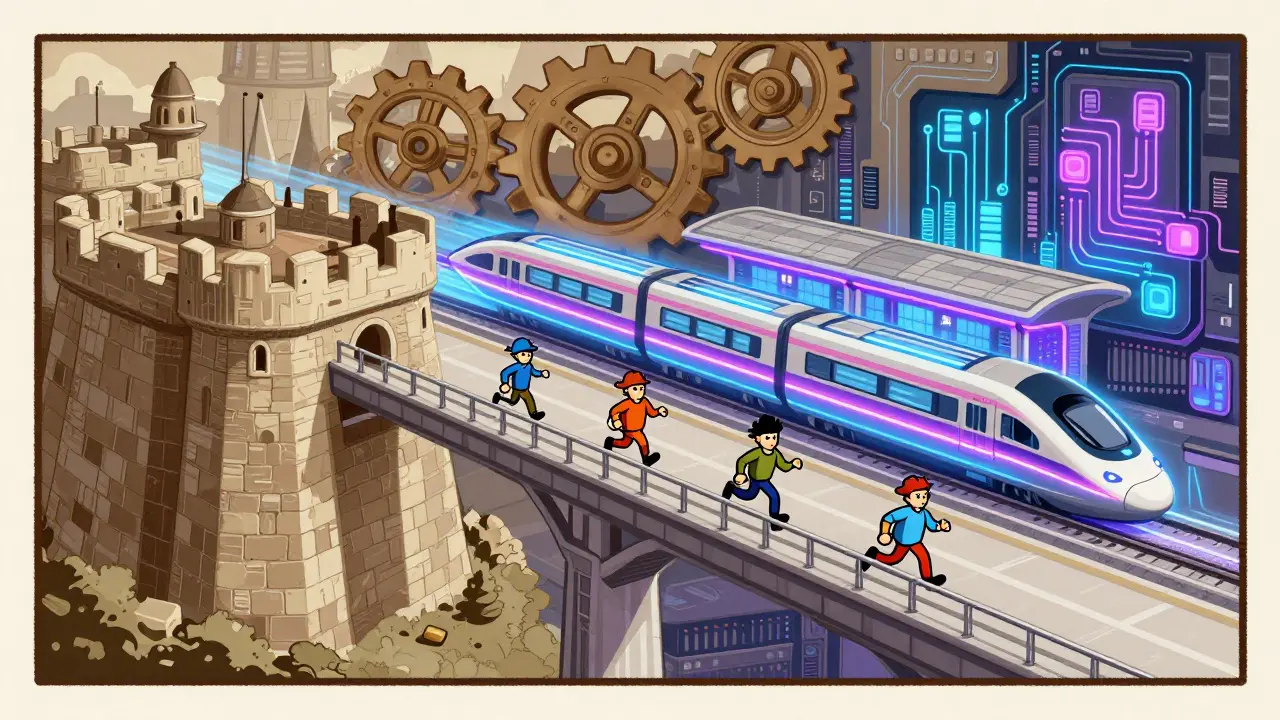
Interestingly, the lines between these two approaches are blurring. We are seeing a trend toward hybrid models. Solana has introduced modular components like its Firedancer client to improve stability and throughput. Meanwhile, Ethereum continues to evolve its data availability layer with upgrades like Dencun (EIP-4844), which makes it cheaper for Layer 2s to post data.
New projects like Celestia is a modular data availability network designed to support multiple rollups are emerging specifically to provide data availability as a standalone service, allowing any blockchain to become more modular without rebuilding from scratch. By 2026, many experts predict that most successful blockchains will adopt elements of both architectures, taking the best of simplicity and the best of scalability.
Frequently Asked Questions
Is Solana better than Ethereum?
It depends on your needs. Solana offers higher speed and lower fees, making it ideal for consumer apps and gaming. Ethereum offers superior security, decentralization, and a vast ecosystem of DeFi protocols, making it better for financial infrastructure. Neither is objectively "better"; they serve different purposes.
What are Layer 2 rollups?
Layer 2 rollups are scaling solutions built on top of a base blockchain (Layer 1). They process transactions off-chain and then submit a compressed batch of data back to the main chain for security. This reduces costs and increases speed without compromising the underlying security of the base layer.
Why do monolithic blockchains sometimes go down?
Monolithic blockchains require every node to process every transaction. If the volume of transactions exceeds the network's capacity, nodes can fall behind, leading to synchronization issues and potential network halts. Modular systems isolate this risk, as the base layer remains stable even if a specific execution layer gets congested.
Which architecture is more secure?
Generally, modular architectures like Ethereum are considered more secure due to their high level of decentralization and robust economic incentives. However, monolithic chains like Solana offer strong security through high throughput and efficient consensus mechanisms. The key difference is that in modular systems, security is shared across layers, whereas in monolithic systems, a failure in one component affects the entire network.
Will modular blockchains replace monolithic ones?
Unlikely. Both architectures have distinct advantages. Monolithic chains excel in user experience and simplicity for high-frequency applications. Modular chains excel in scalability and security for complex financial systems. The future likely involves a multi-chain ecosystem where both coexist and interoperate, with hybrid models becoming increasingly common.
Natalie Lucas
July 7, 2026 AT 05:16omg this is so helpful!! i was totally confused abt all the jargon but this house analogy makes it click instantly. thanks for breaking it down simply 🙌
Brad Semp
July 8, 2026 AT 02:05The author’s conflation of architectural paradigms with mere “simplicity” is intellectually lazy. Monolithic architectures are not chosen for their ease of use, but for their cohesive security model which avoids the trust assumptions inherent in modular bridges. To suggest that Solana’s throughput comes at the cost of decentralization ignores the fact that Ethereum’s L2s rely on centralized sequencers for most practical purposes. The ‘modular’ narrative is largely a marketing construct designed to obscure the centralization risks of rollup operators.
Korn Arrieta
July 8, 2026 AT 04:39You’re missing the point entirely. It’s not about marketing. It’s about physics. You can’t have high throughput and low hardware requirements simultaneously without compromising one or the other. Solana compromises on node accessibility. Ethereum compromises on user experience. Stop pretending there’s a free lunch here. The data availability problem isn’t solved by just throwing more layers at it; it creates new attack vectors. Bridges are where the money bleeds out.
Brad Semp
July 8, 2026 AT 16:06Your assertion that bridges are the sole point of failure is reductive. While bridge exploits are prevalent, they are often due to poor implementation rather than an inherent flaw in modularity. Furthermore, the argument regarding node accessibility on Solana is overstated; consumer-grade hardware has improved significantly, and the barrier to entry remains lower than running a full Ethereum validator with historical state bloat. The real issue is economic security, which Ethereum currently holds superior due to its vast staking capital.
John Harman
July 9, 2026 AT 14:09Look, I’ve been coding smart contracts since 2017. Rust is just better. Period. Trying to do everything in Solidity is like trying to build a skyscraper with LEGOs. Sure, it works for small stuff, but when you need speed and efficiency, you go with the right tool. Solana devs know what they’re doing. The outages were growing pains, not architecture failures. Firedancer fixes the client bottleneck, which was never really a consensus issue.
Steven Briggs
July 10, 2026 AT 07:26i hear you. rust does feel faster. but the learning curve is steep. i spent weeks just getting my environment set up right. maybe solana is better for pros but regular users just want things to work without reading docs for hours.
John Harman
July 10, 2026 AT 19:44That’s just how engineering works. You pay upfront with time to save later with performance. If you can’t handle a compiler error, maybe Web3 dev isn’t for you. But yeah, once you get it, it’s smooth sailing.
Michelle Walker
July 12, 2026 AT 15:58This entire article is garbage. Modular blockchains are a scam to keep fees high on L1 while selling you expensive L2 tokens. Solana is the only viable chain because it actually scales. Everyone else is just talking about scaling while charging $50 per transaction during congestion. Wake up.
Ruth Williams
July 13, 2026 AT 15:05Such vitriol is unbecoming. The reality is far more nuanced than your binary choice suggests. Ethereum’s modular approach ensures that no single entity controls the execution layer, which is crucial for censorship resistance. Solana’s monolithic design, while efficient, concentrates power among a smaller set of validators who must meet stringent hardware requirements. This is not a matter of preference; it is a fundamental trade-off between scalability and decentralization. One cannot exist without sacrificing the other.
Michelle Walker
July 15, 2026 AT 11:23Censorship resistance means nothing if the network goes down every month. I don’t care about your philosophical purity tests. I care about my app working. Solana works. That’s all that matters.
Kristy Morrow
July 15, 2026 AT 16:42you think solana is decentralized? please. it’s run by a handful of whales and venture capitalists. ethereum might be slow but at least you know who owns it. everyone. nobody. it’s chaotic but that’s freedom. chaos is good. order is control.
Jackie D
July 17, 2026 AT 02:23I love how we’re still debating this in 2026! 😂 Honestly, Celestia changed the game for me. Being able to spin up a rollup without worrying about DA costs was huge. It feels like the best of both worlds now. Less complexity than pure ETH L2s, more flexibility than SOL. Just my two cents though!
Logan Edmison
July 17, 2026 AT 07:49celestia is cool but daas is just another layer of abstraction. why do we need more layers? cant we just make the base layer better? seems like we are overcomplicating simple problems. blockchain should be simple. now its a puzzle.
Jackie D
July 19, 2026 AT 02:28Because simple doesn’t scale! You can’t fit the world’s transactions on one chain without making it super centralized or super slow. Abstraction is the only way to grow. Think of it like the internet. We have TCP/IP, HTTP, DNS... lots of layers. But it works seamlessly for us. That’s the goal here too.
Kat Barr
July 20, 2026 AT 23:00OMG yes!! 🌟 The internet analogy is perfect! I always tell people it’s like building a house vs renting an apartment complex. Both have pros and cons. I’m just happy fees are finally low everywhere! No more crying over gas prices 💸✨
Curtis Johnson
July 22, 2026 AT 10:51It is truly fascinating how these technologies evolve. I find myself leaning towards the modular approach simply because it allows for innovation in specific areas without disrupting the whole system. However, I completely understand the appeal of the monolithic simplicity for everyday users. Perhaps the future is indeed a hybrid, as the article suggests. It is a delicate balance we are walking.
Sophie Nakasako
July 23, 2026 AT 21:48What if the distinction itself is becoming obsolete? As clients like Firedancer mature and L1s become cheaper via danksharding, the line blurs. Maybe we shouldn’t choose sides but look at interoperability. How well can these systems talk to each other? That’s the real metric for success in 2026. Not TPS, but composability across chains.
Curtis Johnson
July 24, 2026 AT 12:52That is a profound perspective. Interoperability is indeed the holy grail. If I can move assets and data seamlessly between a Solana-based app and an Ethereum L2 without thinking about it, then the underlying architecture becomes irrelevant to the end user. That would be a true victory for the space.
Erika Pozzetto
July 26, 2026 AT 10:29It is imperative to consider the long-term implications of these architectural choices on regulatory compliance and institutional adoption. Monolithic chains offer a clearer audit trail which may be preferred by traditional financial entities seeking clarity and predictability. Conversely, the fragmented nature of modular ecosystems introduces complexities in terms of legal jurisdiction and liability allocation across multiple layers. Therefore, the decision should not be based solely on technical metrics such as throughput or cost but also on the broader socio-economic and regulatory landscape that will govern the deployment of these technologies in the coming years. A holistic approach is necessary to ensure sustainable growth and integration into the global financial infrastructure.
Antony Lopez
July 27, 2026 AT 17:25Let’s be real. American tech leads the world. Ethereum was built here. Solana was built here. We don’t need foreign interference or overly complex regulations stifling innovation. Keep it simple, keep it fast, and let the market decide. Don’t overthink it with your ‘regulatory landscapes’. Code is law.
Erika Pozzetto
July 28, 2026 AT 05:40While national pride is commendable, the digital economy is inherently borderless. Ignoring regulatory frameworks is not a strategy but a risk factor. Institutions require certainty. Without clear guidelines, capital will flow to jurisdictions that provide them, regardless of technological superiority. We must engage with regulators proactively rather than dismissively to ensure the longevity of our industry.