
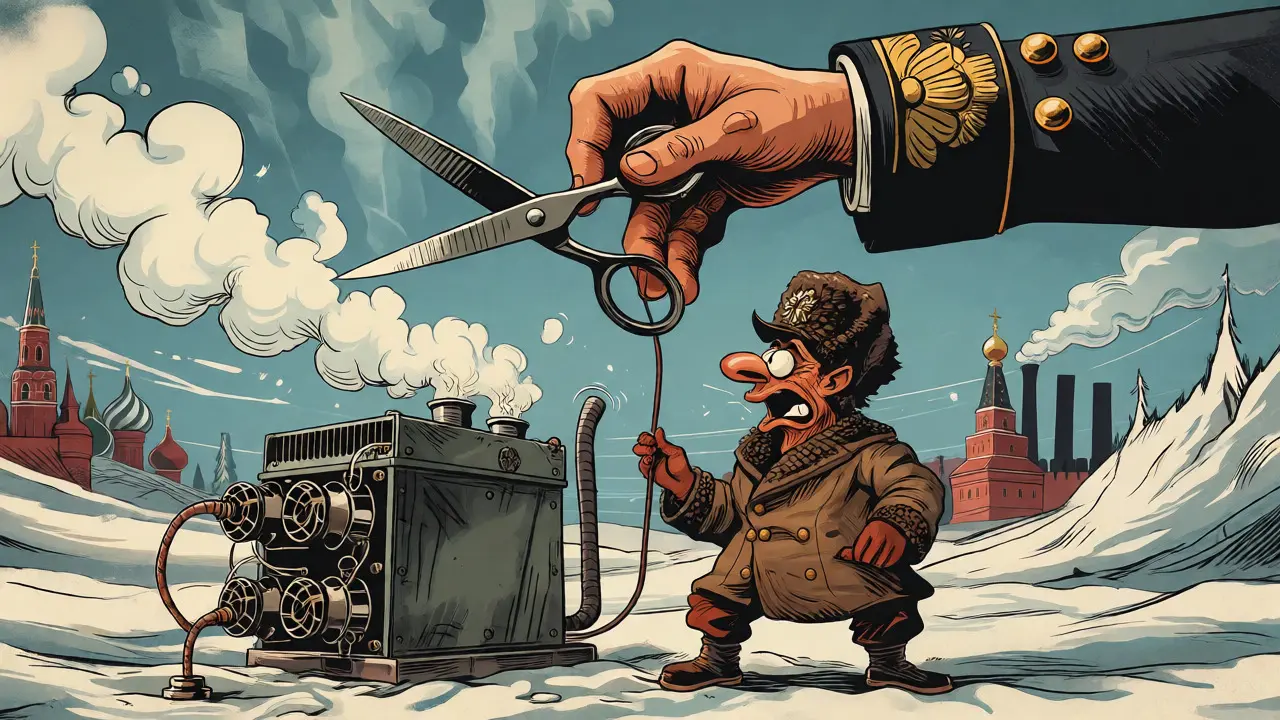
Imagine buying a high-end ASIC miner, setting it up in your garage, and having the government remotely flip a switch to kill your power because winter is coming. That’s not a dystopian novel; it’s the reality for cryptocurrency miners in Russia right now. If you’re looking at mining crypto in Russia, you need to know that the wild west era is over. The days of quietly humming rigs in Siberian basements without anyone noticing are gone. Since January 1, 2025, strict new laws have turned mining into a highly regulated, bureaucratic affair with geographic bans, mandatory registries, and hefty fines.
The Big Shift: From Shadow Economy to State Control
Russia used to be a haven for cheap electricity and lax oversight. But President Putin signed comprehensive legislation in late 2024 that fundamentally changed the game. The goal? To stop mining from straining the national power grid while still allowing the state to tax the profits. It’s a balancing act between economic opportunity and energy security. The government decided they couldn’t just ban it entirely-too much money was being left on the table-but they couldn’t let it run unchecked either.
Here is the core problem miners face today: You are no longer just an entrepreneur; you are a "fourth category" consumer. In the hierarchy of the Russian power grid, you sit at the bottom. When demand spikes, homes, hospitals, and critical industries get priority. Your miners get cut off first. This isn’t just policy talk; authorities now have the technical capability to remotely disconnect equipment during peak load periods.
| Aspect | Old Status (Pre-2025) | New Status (Post-Jan 2025) |
|---|---|---|
| Legal Status | Gray area / Unregulated | Legal but strictly regulated |
| Registration | Not required for most | Mandatory registry for businesses |
| Taxation | Ambiguous | 15% tax on mining profits |
| Penalties | Minimal enforcement | Fines up to 2 million rubles (~$25k) |
| Geographic Limits | National access | Bans in 10 regions + seasonal bans in 3 |
Where Can You Actually Mine? The Geographic Map
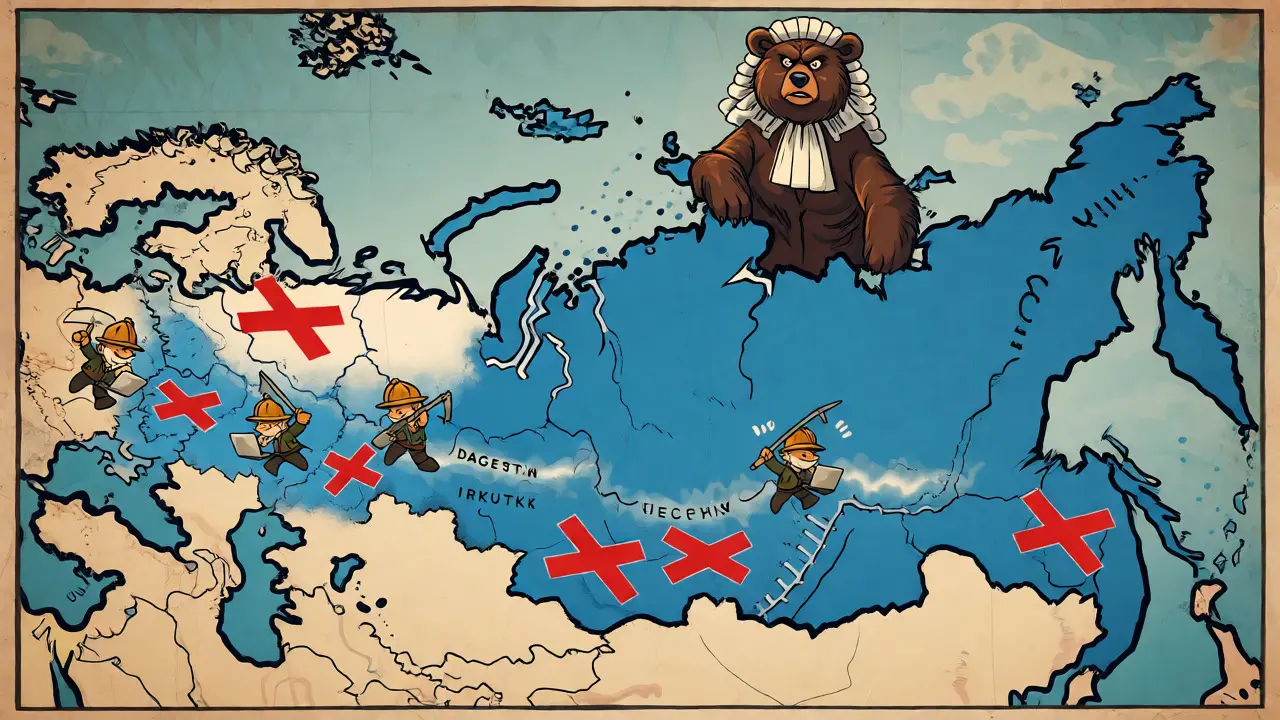
You can’t just plug in anywhere. The government has drawn hard lines on the map. Ten regions are completely banned from mining until March 2031. This includes Dagestan, Ingushetia, Kabardino-Balkaria, Karachay-Cherkessia, North Ossetia, Chechnya, and the disputed territories of Donetsk, Lugansk, Zaporizhzhia, and Kherson. If you set up shop there, you’re operating illegally, plain and simple.
Then there’s the seasonal squeeze. Three major mining hubs-Irkutsk, Buryatia, and Zabaikalsky-are hit with winter bans. Why? Because heating needs skyrocket in Siberian winters, and the grid can’t handle both keeping people warm and hashing blocks. Initially, this ban ran from January 1 to March 15, 2025. Going forward, it extends from November 15 through March 15 every year. So, if you’re mining in these areas, you effectively lose four months of operation annually. That hits your ROI hard.
Who Needs to Register? The 6,000 kWh Rule
Do you need to register your rig? It depends on how much juice you burn. There’s a specific threshold: individual miners using less than 6,000 kWh per month are exempt from registration. For context, a modern Antminer S19 XP uses about 3,010 watts. Running it 24/7 consumes roughly 2,160 kWh per month. So, a single high-end machine might keep you under the radar. But stack three or four of them, and you’re over the limit.
Businesses and entrepreneurs don’t get this exemption. If you’re running a commercial operation, you must register with the national miners’ registry. This involves labeling your hardware and certifying imported equipment. The state wants to track every watt consumed by mining operations. They’ve implemented a system where imported hardware gets tagged, allowing authorities to monitor usage patterns and enforce those remote shutdowns we talked about earlier.
The Taxman Cometh: 15% on Profits
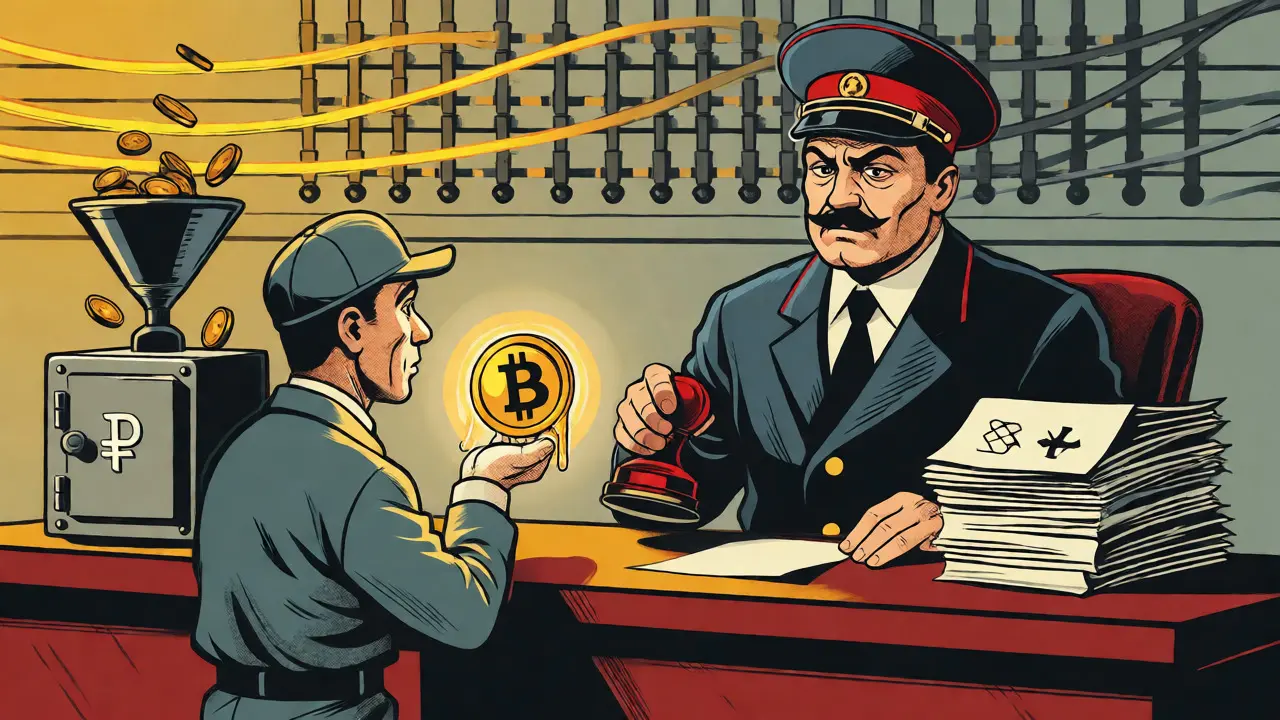
Money talks, and the Russian treasury is listening. As of November 2024, a 15% tax applies to Bitcoin mining profits. This wasn’t optional. If you mine legally, you pay. If you mine illegally, you risk fines ranging from 200,000 rubles to potentially 2 million rubles ($25,500). And trust me, the enforcement is getting stricter. Deputy Minister of Finance Ivan Chebeskov noted that only about 30% of miners were registered as of mid-2025. The other 70% are playing a dangerous game of hide-and-seek.
It’s worth noting that while mining is taxed, using cryptocurrency to buy goods and services remains illegal in Russia. You can mine, sell, and hold, but you can’t walk into a grocery store and pay with Bitcoin. Transactions exceeding 600,000 rubles must be reported to tax authorities. This keeps the ruble as the sole legal tender while allowing crypto to exist as an investment asset.
Compliance Headaches and Enforcement Reality
Let’s be real: compliance is messy. The transition from shadow operations to a regulated industry is far from complete. Authorities are struggling to bring everyone into the fold. The Digital Development Ministry is even considering raising fines further to force compliance. Why? Because unregistered miners distort the market. They don’t pay taxes, and they strain the grid without contributing to infrastructure upgrades.
If you’re planning to enter the Russian market, factor in the administrative burden. You’ll need to navigate the Federal Tax Service, ensure your hardware is certified, and monitor regional energy alerts. One day your miners are running full tilt; the next, a regional governor declares a peak load event, and your revenue drops to zero for several hours. This unpredictability adds a layer of risk that doesn’t exist in more stable jurisdictions.
Is It Still Worth It?
Despite the hurdles, interest hasn’t died. In fact, demand for industrial mining equipment tripled in Q4 2024 compared to the previous year. Why? Because legalization brings credibility. Large-scale operators feel safer investing millions when the rules are clear, even if those rules are strict. Cheap electricity in places like Irkutsk (outside the winter ban window) still offers competitive margins.
However, the landscape favors big players. Small home miners face disproportionate regulatory pressure relative to their output. If you’re a hobbyist, check your local region’s status carefully. If you’re a business, budget for compliance costs and potential downtime. The era of "set it and forget it" is dead. In Russia, you manage your miners actively, watching both the blockchain difficulty and the weather forecast.
Is cryptocurrency mining legal in Russia in 2026?
Yes, mining is legal but heavily regulated. You must comply with registration requirements, pay a 15% tax on profits, and adhere to geographic and seasonal restrictions. Unauthorized mining can result in fines up to 2 million rubles.
Which regions in Russia ban cryptocurrency mining?
Ten regions have a complete ban until March 2031: Dagestan, Ingushetia, Kabardino-Balkaria, Karachay-Cherkessia, North Ossetia, Chechnya, Donetsk, Lugansk, Zaporizhzhia, and Kherson. Additionally, Irkutsk, Buryatia, and Zabaikalsky have seasonal bans during winter months.
Do I need to register my home mining rig?
Individual miners consuming less than 6,000 kWh per month are exempt from registration. If you exceed this limit or operate as a business, you must register with the national miners' registry and label your equipment.
What is the tax rate for crypto mining in Russia?
A 15% tax is applied to profits derived from Bitcoin mining. This law came into effect in November 2024. Businesses must also report transactions exceeding 600,000 rubles to the tax authorities.
Can the government turn off my miners remotely?
Yes. Miners are classified as "fourth category" consumers, meaning they have the lowest priority on the power grid. During periods of high electrical demand, authorities can remotely disconnect mining equipment to prioritize homes and essential services.