
Iran allows cryptocurrency mining - but only if you follow a moving target of rules that change every few months. What started as a loophole for cheap electricity turned into a high-stakes game of regulatory whiplash. By 2025, mining isn’t illegal, but it’s far from free or safe. The government wants control, not innovation. And if you’re not connected to the right people, you’re just another target.
Legal Mining? Only With a License
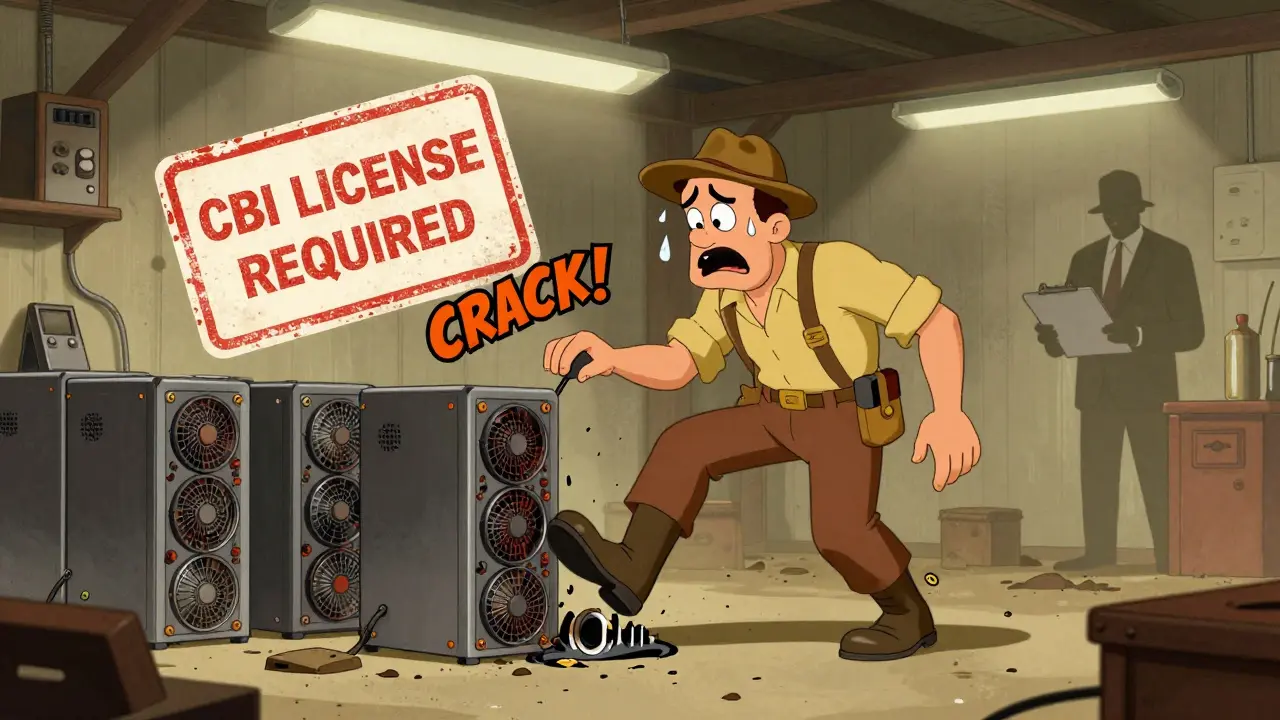
As of January 2025, the Central Bank of Iran (CBI) is the only body that can issue mining licenses. No exceptions. If you’re running ASICs in your garage, you’re breaking the law - even if you pay your electricity bill. Legal miners must register with both the Ministry of Industry, Mine and Trade and the CBI. You need proof of hardware, energy usage projections, and financial records tied to government-approved bank accounts. No cash. No offshore transfers. Everything goes through the state.
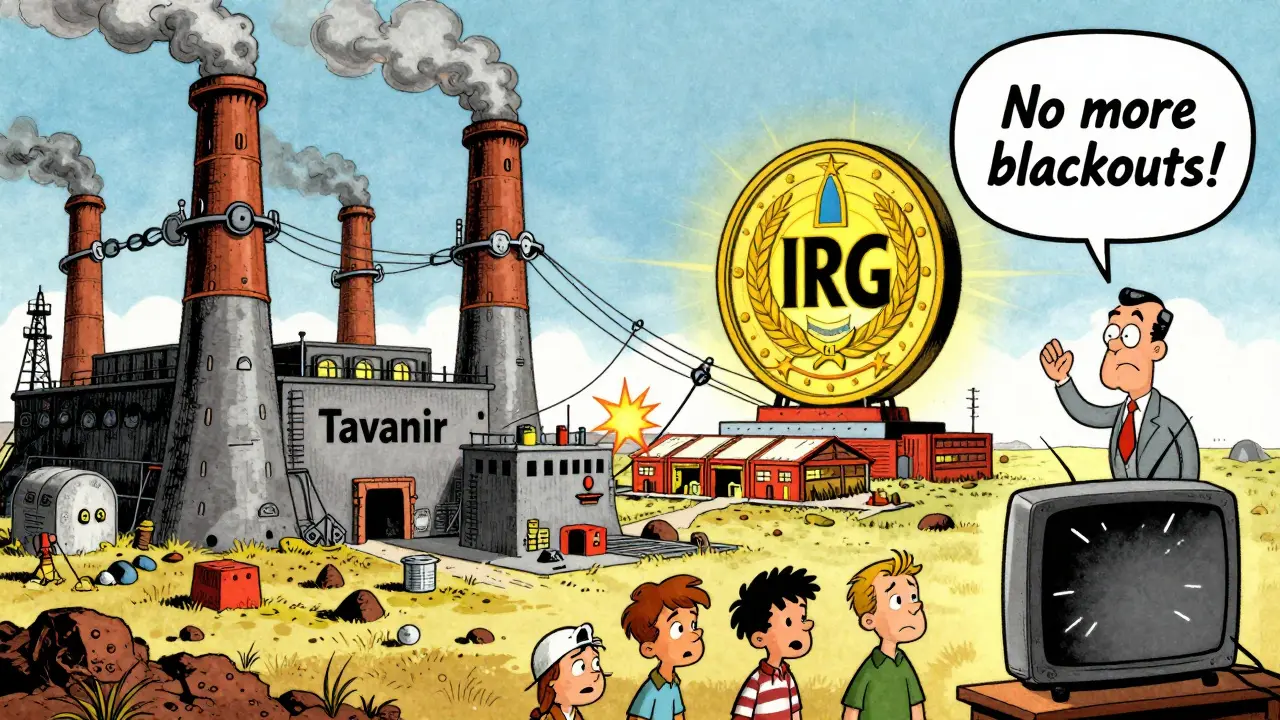
And the electricity? It’s not cheap anymore. While Iran still has some of the lowest power rates in the world - around $0.004 per kWh for industrial users - mining operations now pay the highest tariff of any energy-intensive industry. Tavanir, the state power company, sets these rates specifically to discourage mining. The goal isn’t to stop it. It’s to make sure only those who can afford the price - and the bureaucracy - get to play.
The Power Crisis That Changed Everything
In summer 2024, Iran’s power grid collapsed. Cities went dark for days. The government blamed Bitcoin miners. Tavanir claimed illegal operations were siphoning 2,000 megawatts - enough to power a small country. The response? A four-month nationwide ban on all mining. Thousands of machines shut down. Workers lost jobs. Investors vanished.
After the ban lifted, the rules changed. Now, every mining facility must be licensed and monitored. The CBI tracks real-time energy use. If your consumption spikes during peak hours, your power gets cut. No warning. No appeal. The government isn’t punishing miners for being inefficient - they’re punishing them for being visible.
The Hidden Miners: Who Gets to Play?
Here’s the truth no one talks about: the biggest miners in Iran aren’t private companies. They’re tied to the Islamic Revolutionary Guard Corps (IRGC). A 175-megawatt Bitcoin farm in Rafsanjan, Kerman province, runs on free electricity - no bills, no licenses, no oversight. It’s a joint venture between IRGC-linked firms and Chinese investors. These operations don’t follow the rules. They make the rules.
Meanwhile, legal miners struggle to get enough power. Tavanir prioritizes homes, hospitals, and factories. Miners get leftovers. Some try to hide in mosques or religious centers that get free power from the state. It’s not legal, but enforcement is selective. If you’re not politically connected, you’re at risk. If you are, you’re untouchable.
Why Foreign Investors Are Walking Away
Iran once welcomed foreign crypto miners. The government even advertised low electricity costs as an investment opportunity. But the reality is brutal. One day you’re licensed. The next, your machines are seized during a surprise raid. In 2025, international investors are pulling out. Why? Because the risk isn’t just financial - it’s existential.
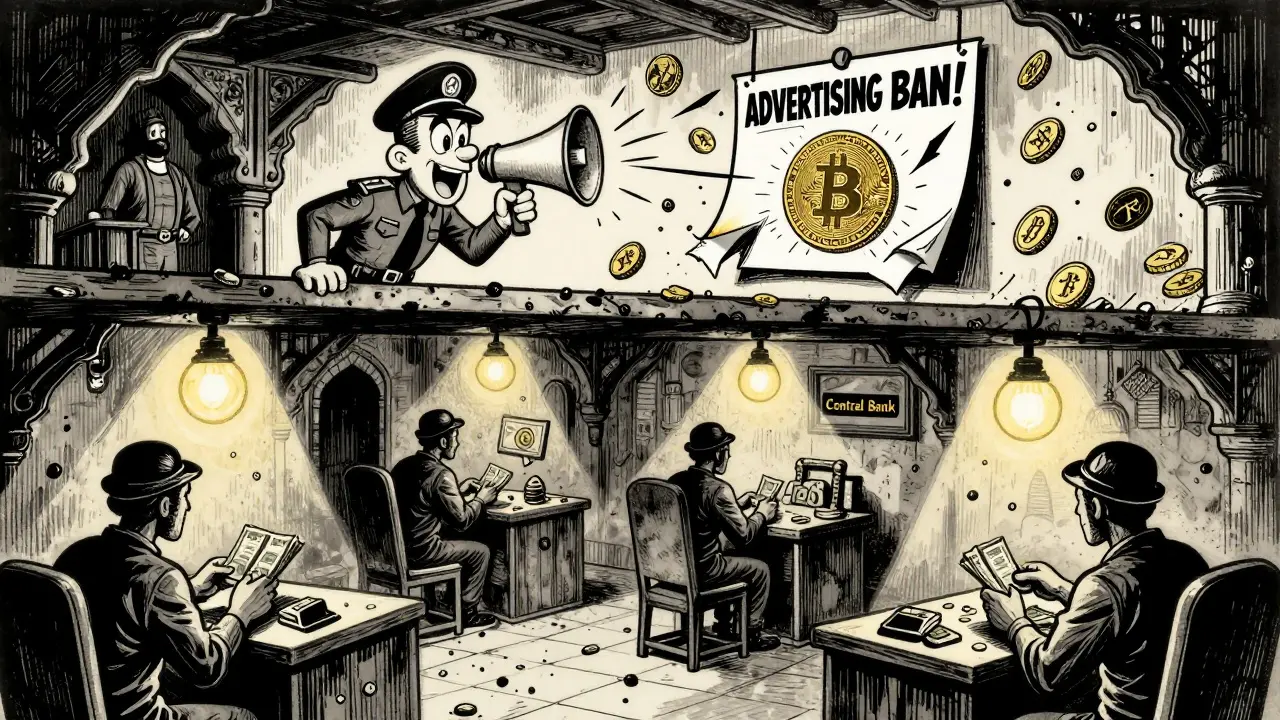
Sanctions make it hard to buy new hardware. Banks freeze accounts without notice. The CBI can shut down your operations for “energy violations” with zero transparency. And the advertising ban - passed in February 2025 - makes it illegal to promote any crypto service online or in public. No ads. No websites. No social media. Even mentioning mining in a post can get you fined or arrested.
What Happens to Regular Iranians?
It’s not just miners who suffer. Everyday Iranians are caught in the crossfire. In January 2025, over a million people couldn’t buy cryptocurrency for 23 days. No exchanges worked. No peer-to-peer platforms processed payments. People couldn’t pay for medicine, food, or rent because their crypto savings were frozen.
The government claims it’s protecting the rial. But the result is economic strangulation. LocalBitcoins saw a 78% jump in Iranian P2P trades after the December 2024 payment blockade. People are turning to cash exchanges, hidden meetups, and smuggled wallets just to survive. The official digital currency - the “Rial Currency” - is being pushed as the future. But it’s not decentralized. It’s not mineable. It’s a state-controlled digital dollar with no privacy, no freedom, and no real value.
The Future: Control or Collapse?
Iran’s crypto mining industry is caught between two impossible goals: needing foreign currency and needing stable electricity. The government wants the money without the chaos. But you can’t have one without the other.
Miners are being squeezed out. Legal operators are drowning in paperwork. Illegal ones are protected by power. And the people? They’re paying the price in lost access, frozen savings, and broken trust.
The only thing that’s certain is that the rules will keep changing. If summer 2025 brings another blackout, expect another ban. If the economy gets worse, expect more restrictions. If the IRGC needs more power, expect more seizures.
There’s no long-term future for private crypto mining in Iran. Not because it’s too hard. But because the state doesn’t want it to exist - unless it’s theirs.
Is crypto mining legal in Iran in 2025?
Yes, but only if you have a license from the Central Bank of Iran and the Ministry of Industry, Mine and Trade. All mining must use government-approved hardware, pay the highest electricity tariffs, and operate under real-time energy monitoring. Unlicensed mining is illegal and subject to seizure.
Can foreigners mine crypto in Iran?
Technically yes - the government still invites foreign investment. But in practice, it’s extremely risky. Sanctions make hardware purchases difficult, banking is unstable, and operations can be shut down without warning. Most foreign miners have left since 2024 due to unpredictable enforcement and political interference.
Why does Iran keep banning crypto mining?
Iran’s power grid is fragile and overloaded. During summer heatwaves or energy shortages, the government blames mining for blackouts - even though experts say aging infrastructure and mismanagement are the real causes. Banning mining is a quick political fix to reduce demand. It’s not about sustainability - it’s about control.
Are there any safe places to mine crypto in Iran?
No. Even licensed operations in special economic zones are vulnerable to sudden power cuts or raids. The only facilities with reliable power are those linked to the IRGC or other state entities - and those aren’t open to the public. There’s no truly safe option for private miners.
Can I use crypto to pay for things in Iran?
Not through official channels. Since December 2024, domestic exchanges have been blocked from converting crypto to rials online. Peer-to-peer trades still happen, but they’re risky and often involve cash meetups. The government is pushing its own digital currency, the Rial Currency, which can’t be mined and is fully controlled by the Central Bank.
What’s the penalty for illegal crypto mining?
Penalties include confiscation of mining equipment, fines, and in some cases, criminal charges. Authorities have raided homes and warehouses across multiple provinces. Miners caught using free electricity from mosques or public institutions face additional charges for energy theft.
Why did Iran ban crypto advertising in 2025?
The February 2025 advertising ban was meant to reduce public interest and discourage new entrants. The government wants to shrink the crypto market, not regulate it. Ads were seen as encouraging risky behavior and undermining the rial. The ban applies to all forms - online, billboards, social media, even word-of-mouth promotion in public.
How much of Iran’s electricity does crypto mining use?
Official estimates claim illegal miners used 2,000 megawatts before the 2024 ban. After licensing, legal mining is capped at a fraction of that. Experts believe the total current usage is around 1,200-1,500 megawatts, but this includes state-run operations that don’t report usage. The real number is unknown.
Is Bitcoin mining profitable in Iran today?
For licensed operators, barely. High electricity tariffs, equipment costs, and regulatory delays eat into profits. For unlicensed miners, the risk of seizure makes it not worth it. Only state-backed operations with free power and no oversight are still profitable - and they’re not open to outsiders.
What’s the outlook for crypto mining in Iran in 2026?
The outlook is bleak. The government is moving toward full state control. The Rial Currency digital coin will replace decentralized crypto for official use. Private mining is being phased out. Unless Iran fixes its power grid - which it hasn’t done in 15 years - mining will continue to be a tool for political control, not economic growth.
Alexandra Wright
December 29, 2025 AT 07:06Let me get this straight - Iran’s government wants crypto money but hates the people who make it? Classic. They’re not regulating mining, they’re running a extortion racket with electricity bills and licensing bureaucracy. Meanwhile, the IRGC gets free power and zero oversight. This isn’t crypto policy - it’s state-sponsored theft dressed up as fiscal responsibility.
Andy Reynolds
December 31, 2025 AT 06:37Man, I read this and I just felt sad. Not because I’m a crypto bro, but because regular people are getting crushed. Imagine needing to buy insulin and your savings are frozen because the state decided to flip a switch on crypto. This isn’t about energy - it’s about control. And control always hurts the people least able to fight back.
Alex Strachan
December 31, 2025 AT 08:16So… the government bans mining to fix blackouts… then lets the IRGC run a 175MW farm with no bills? 😂😂😂 The only thing more ironic than this is how they call it ‘economic stability.’ Bro, your economy’s on life support and you’re still trying to flex on miners? I’m not even mad - I’m impressed.
Jackson Storm
December 31, 2025 AT 16:26Wait so if you’re a normal guy with a few rigs in your basement you get raided, but the IRGC gets a free pass? That’s not regulation, that’s a joke. And the fact that they banned advertising? That’s not about protecting the rial - that’s about hiding how broken the system is. People are turning to cash meetups because the official system is rigged. This isn’t crypto being banned - it’s truth being banned.
Amy Garrett
January 1, 2026 AT 13:18so like… if you’re poor and you mine to survive… you’re a criminal… but if you’re connected… you’re a national hero?? i mean… wow. just wow. the system is literally designed to crush the little guy. and no one talks about it. why? because everyone’s too scared or too numb. but i’m not. i’m mad.
Raja Oleholeh
January 1, 2026 AT 16:52India also has strict crypto rules. But we don’t let military run mines. Iran’s system is corrupt. Not crypto’s fault.
Haritha Kusal
January 2, 2026 AT 06:47i dont get why people think crypto is a solution when the goverment is this broken… but i also dont blame them for trying. if your money is worth less every day… you do what you gotta do. even if its risky. even if its illegal. even if its just to buy rice.
Rajappa Manohar
January 3, 2026 AT 04:55iran always do this… blame miners for blackouts… but never fix grid… classic
alvin mislang
January 4, 2026 AT 20:16People think crypto is freedom? Nah. This is exactly what happens when you let chaos rule. Governments have to step in. If you can’t control energy use, you don’t deserve to mine. This is common sense, not oppression.
dayna prest
January 5, 2026 AT 03:35Oh wow, so the state is the only one allowed to be a capitalist? That’s not socialism - that’s fascism with a blockchain logo. They’re not banning crypto. They’re banning competition. And the fact that they’re pushing their own digital currency? That’s not innovation - that’s surveillance with extra steps.
Antonio Snoddy
January 5, 2026 AT 12:49There’s a beautiful, tragic irony here - the very technology that promised decentralization, autonomy, and liberation… is now being crushed by the most centralized, authoritarian system on Earth. And yet… people still mine. Still try. Still risk everything. Isn’t that the human spirit? To keep building, even when the walls are made of bureaucracy, electricity bills, and military tanks? We don’t need permission to believe in something better. Even if it’s illegal. Even if it’s dangerous. Even if the world tells us to stop. We keep going. Not because it’s smart. But because it’s true.
Mike Reynolds
January 7, 2026 AT 10:43I’ve seen this play out in so many countries. The state says ‘we’re protecting you’… but really they’re protecting their own power. The miners aren’t the problem - the lack of infrastructure is. Instead of fixing the grid, they just shut down the thing that’s keeping people alive. That’s not policy. That’s cruelty.
Monty Burn
January 7, 2026 AT 10:44Power is the new oil. And the state is the new oil baron. The miners are just peasants with ASICs. The real question isn’t whether mining is legal - it’s whether any system that lets one group own the means of production while crushing everyone else deserves to survive
nayan keshari
January 9, 2026 AT 00:17Ian Koerich Maciel
January 10, 2026 AT 21:59It is, indeed, a profoundly disconcerting development - one that underscores the inherent tension between emergent decentralized technologies and centralized, authoritarian governance structures. The state’s reliance on coercive mechanisms - such as arbitrary power cutoffs, opaque licensing regimes, and selective enforcement - not only undermines the rule of law, but also betrays a fundamental misunderstanding of market dynamics, technological innovation, and human agency. One cannot suppress an idea by suppressing its infrastructure - one can only delay its inevitable evolution.
Brandon Woodard
January 11, 2026 AT 21:02Let me be clear: this is not about energy. This is about power. The Iranian regime doesn’t fear Bitcoin. It fears what Bitcoin represents - a world where money isn’t owned by the state, where transactions can’t be censored, where people don’t need permission to survive. That’s why they’re banning ads. That’s why they’re seizing rigs. That’s why they’re freezing accounts. They’re not trying to fix the grid. They’re trying to kill hope.
Ryan Husain
January 13, 2026 AT 07:13It’s a tragedy, really. The world needed Iran’s cheap power to help decentralize mining. Instead, the state turned it into a tool of oppression. But I still believe in the resilience of the people. Even if the machines are taken, the knowledge remains. Even if the accounts are frozen, the ideas don’t die. And one day - maybe not soon, maybe not here - the grid will be fixed, and the people will be free.
Michelle Slayden
January 14, 2026 AT 13:26The structural contradictions inherent in this scenario are not merely economic; they are existential. The state seeks to extract value from a technology that, by design, resists extraction. The result is not innovation - it is institutional decay masked as regulation. The Rial Currency, as proposed, is not a currency - it is a ledger of control. And the miners? They are the last dissenters in a system that refuses to acknowledge dissent.
christopher charles
January 15, 2026 AT 17:02bro… if you’re mining to pay for your kid’s medicine… you’re not a criminal. you’re a parent. and if the government shuts you down… they’re the ones who lost. not you.
Alison Hall
January 16, 2026 AT 03:51My heart goes out to the miners. Not the ones with IRGC backing - the ones hiding in mosques, selling their gold to buy power, just to keep their families fed. This isn’t a crypto story. It’s a human story. And it’s heartbreaking.
Jack and Christine Smith
January 17, 2026 AT 17:12Y’all think this is unique? Look at China in 2021. Same playbook. Same lies. Same ‘energy crisis’ excuse. The only difference? Iran’s worse because they’re not even trying to hide it. They’re proud of the corruption. And the world just watches. Again.
Vernon Hughes
January 17, 2026 AT 21:45Iran’s crypto policy is a perfect metaphor for its entire economy - everything is broken, but they won’t fix it. Instead they blame the people trying to fix it themselves. The state doesn’t want innovation. It wants obedience. And if you’re not obedient, you’re a criminal. Even if you’re just trying to eat.
Bianca Martins
January 19, 2026 AT 20:49I’ve been following this for years. Every time there’s a blackout, they blame the miners. Every time the economy tanks, they freeze crypto. But they never fix the grid. Never fix the banks. Never fix the corruption. They just keep pushing the same broken script. And the people? They keep adapting. That’s the real story here - not the tech. Not the politics. The people.
Kenneth Mclaren
January 21, 2026 AT 07:41What if this is all a distraction? What if the blackouts are planned? What if the government needs the chaos to justify more control? What if the IRGC isn’t just mining crypto - they’re mining data? What if every ASIC is also a surveillance node? What if your mining rig isn’t just generating Bitcoin… it’s generating your location, your habits, your contacts? They’re not banning mining. They’re weaponizing it. And you’re the test subject.
Phil McGinnis
January 22, 2026 AT 16:46It is undeniable that the Iranian state, in its current iteration, exhibits a pathological aversion to private enterprise and technological autonomy. The licensing regime is not a regulatory framework - it is a mechanism of exclusion. The electricity tariffs are not market-based pricing - they are punitive measures. The advertising ban is not consumer protection - it is ideological suppression. To characterize this as a ‘policy’ is to dignify tyranny with the language of governance.
Rick Hengehold
January 23, 2026 AT 18:17Stop pretending this is about energy. It’s about power. The state doesn’t want to stop mining. It wants to own it. And if you’re not part of the system? You’re not a miner. You’re a target.
Prateek Chitransh
January 25, 2026 AT 10:22India has similar issues with power, but we don’t let the military run mines. Iran’s system is broken because it’s controlled by fear, not rules. The miners are just trying to survive. The state? They’re just trying to stay in power.
Johnny Delirious
January 27, 2026 AT 01:07Every time I read about this, I think: the future isn’t in the blockchain. It’s in the people who still risk everything to use it. They’re not tech bros. They’re moms. Students. Doctors. They’re not trying to get rich. They’re trying to stay alive. And that’s the most powerful thing in the world.
Brooklyn Servin
January 28, 2026 AT 09:38Just deleted my mining rig last week. Too risky. But I still hold BTC. Not for profit. For freedom. One day, when the grid’s fixed and the regime’s gone, someone will find my seed phrase. And they’ll know - someone believed in this even when it was illegal.